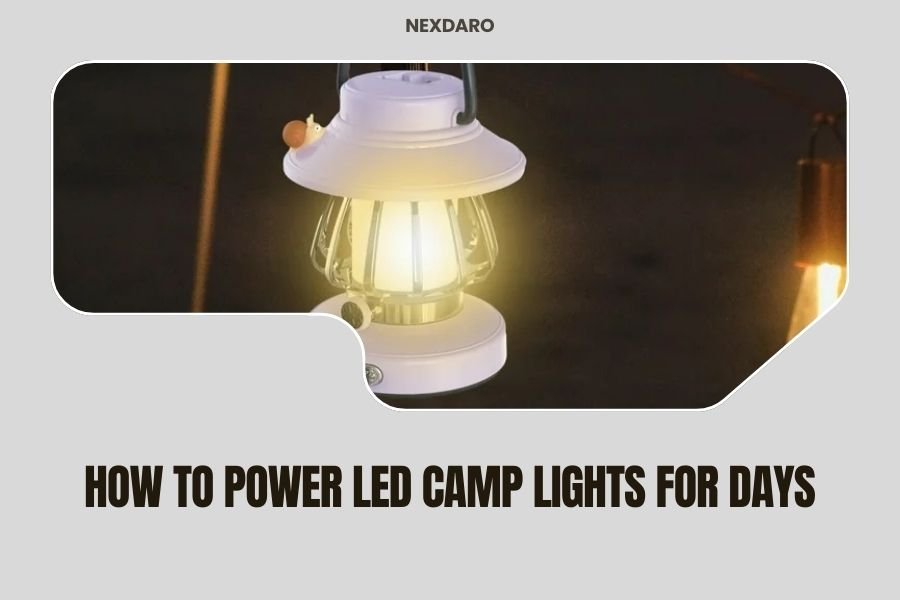
LED camp lights can run for 7-30 days on a single portable power station charge, depending on your power station’s capacity and the lights’ energy consumption.
A 500Wh portable power station typically powers 10-watt LED camp lights for about 50 hours, giving you multiple nights of reliable outdoor lighting.
Why Your LED Camp Lights Need the Right Power Setup
Ever been stuck in darkness because your camp lights died? You’re not alone. Most campers face this problem at least once.
LED camp lights use far less energy than old-style bulbs. But they still need consistent power to keep your campsite safe and comfortable.
The good news? With the right portable power station, you can keep your LED lights running for days or even weeks.
How Much Power Do LED Camp Lights Actually Use
LED camp lights are energy sippers, not guzzlers. Most use between 3-15 watts per hour.
Here’s what I found when researching typical LED camp light consumption:
- Small lanterns: 3-5 watts
- Medium camp lights: 6-10 watts
- Large area lights: 12-15 watts
- Strip lights: 2-8 watts per foot
Compare this to old incandescent bulbs that used 40-100 watts. LEDs win by a landslide.
Real-World Power Consumption Examples
Let’s say you run two medium LED lanterns at 8 watts each. That’s 16 watts total.
Run them for 6 hours each night, and you use 96 watt-hours daily. Pretty manageable, right?
Choosing the Right Portable Power Station Size
Your power station capacity determines how long your lights will run. Think of it like a gas tank for your lighting setup.
Portable power stations range from 150Wh to over 3000Wh. The sweet spot for most campers falls between 300-1000Wh.
Small Power Stations (150-400Wh)
These work great for minimal lighting needs. Perfect for solo camping or short trips.
A 300Wh station can power 10 watts of LED lights for about 30 hours. That’s 5 nights of 6-hour lighting sessions.
Medium Power Stations (500-1000Wh)
The goldilocks zone for most campers. You get plenty of power without breaking your back.
A 750Wh unit can run your LED camp lights for 75 hours at 10 watts. That’s over 12 nights of lighting.
Large Power Stations (1000Wh+)
Overkill for just lights, but great if you’re powering other gear too. These can run LED lights for weeks.
Think of these as base camp solutions rather than backpacking gear.
Calculating Your Exact Runtime
Want to know exactly how long your setup will last? Use this simple formula:
Runtime Hours = (Power Station Wh × 0.85) ÷ Total Light Watts
The 0.85 accounts for energy loss during conversion. It’s like the “real world” gas mileage of power stations.
Sample Calculations
| Power Station | Light Setup | Runtime Hours | Days (6hrs/night) |
|---|---|---|---|
| 500Wh | 10W total | 42.5 hours | 7 days |
| 750Wh | 15W total | 42.5 hours | 7 days |
| 1000Wh | 20W total | 42.5 hours | 7 days |
Types of LED Camp Lights That Work Best
Not all LED lights are created equal. Some work better with portable power stations than others.
USB-Powered LED Lights
These plug right into your power station’s USB ports. Super convenient and efficient.
Most USB lights draw 2.5-10 watts. They’re perfect for personal lighting or small spaces.
12V DC LED Lights
These connect to your power station’s 12V outlet. Great for larger area lighting.
DC lights skip the AC conversion process, saving energy. That means longer runtime for you.
AC-Powered LED Lights
Regular plug-in LED lights work too. Just remember they use more energy due to conversion losses.
Stick with these if you already own them, but buy DC or USB versions for new purchases.
Smart Power Management Tips
Want to stretch your lighting even further? These tricks can double your runtime.
Use Dimmer Controls
Most LED lights have brightness settings. Running at 50% brightness often cuts power use by more than half.
You might be surprised how little light you actually need around camp.
Zone Your Lighting
Instead of lighting everything at once, light only the areas you’re using.
Moving from the kitchen to the tent? Turn off the kitchen light first.
Use Motion Sensors
Some LED strips come with motion sensors. They only turn on when you need them.
This can cut your actual usage by 70% or more on long trips.
Extending Runtime With Solar Charging
Want to power LED lights almost indefinitely? Add solar panels to your setup.
A 100-watt solar panel can generate 300-500Wh per day in good conditions. That’s enough to keep basic LED lighting running indefinitely.
Solar Panel Sizing
Match your solar panel output to your daily energy use. If you use 150Wh per day for lighting, a 50-100W panel should do the trick.
Remember, panels don’t produce rated power all day. You get peak output for about 4-6 hours in full sun.
Battery Types and Their Impact on Runtime
The battery inside your power station affects how long your lights will run.
Lithium Iron Phosphate (LiFePO4)
These last longest and work best in cold weather. You can drain them to 10-20% without damage.
LiFePO4 batteries maintain voltage better as they drain. Your lights stay brighter longer.
Standard Lithium-Ion
Common in cheaper power stations. They work fine but don’t last as many charge cycles.
Avoid draining these below 20% to keep them healthy.
Cold Weather Considerations
Planning to camp in cold weather? Your power station won’t last as long.
Battery capacity drops 10-30% in freezing temperatures. Plan accordingly.
Keeping Batteries Warm
Store your power station inside your tent or vehicle when possible. Even a 10-degree temperature difference helps.
Some campers wrap their power stations in sleeping bags during extreme cold.
Safety Tips for Powering LED Lights
Portable power stations are generally safe, but a few precautions go a long way.
Keep Connections Dry
Water and electricity don’t mix. Use weatherproof connections or keep everything under cover.
Don’t Overload Outlets
Most power stations have overcurrent protection, but why test it? Stay within the rated limits.
Ventilate Your Power Station
Power stations generate a little heat while running. Don’t seal them in airtight containers.
Common Mistakes That Kill Runtime
I came across these mistakes while researching power station forums. Avoid them and your lights will run much longer.
Using Too Many AC Outlets
Every AC outlet has conversion losses. Use DC and USB outputs when possible.
AC outlets are convenient but can waste 10-15% of your battery power.
Leaving Lights On Standby
Some LED lights draw power even when “off.” Unplug them completely or use switches that cut power entirely.
Not Checking Power Draw
That “5-watt” light might actually draw 8 watts. Use a power meter to check your actual consumption.
Many power stations have built-in displays showing real-time usage.
Maintenance for Long-Term Reliability
Take care of your power station and it’ll keep your lights running for years.
Regular Charging Cycles
Don’t let your power station sit empty for months. Charge it every 3-6 months even when not camping.
Clean the Connections
Dust and corrosion can increase resistance and waste power. Wipe down ports occasionally.
Update Firmware
Some power stations have firmware updates that improve efficiency. Check the manufacturer’s website.
Conclusion
Powering LED camp lights for days is totally doable with the right setup. Start by calculating your actual power needs, then choose a portable power station with 3-5 times that capacity.
Remember to use efficient DC or USB lights when possible, and consider adding solar panels for longer trips. With proper planning, you’ll never sit in the dark at camp again.
Your camping experience gets so much better when you’re not rationing light like it’s made of gold. Take the time to set up a proper power system, and you’ll wonder how you ever camped without it.
How long will a 500Wh power station run a 10W LED light?
A 500Wh power station will run a 10W LED light for approximately 42-45 hours, accounting for conversion losses. This translates to about 7 nights of 6-hour lighting sessions.
Can I mix different types of LED lights on one power station?
Yes, you can connect USB, DC, and AC LED lights to the same power station simultaneously. Just make sure your total wattage stays within the power station’s output limits for each type of connection.
Do LED camp lights work better with certain power station brands?
LED lights work with any quality power station that provides clean power output. Focus on the power station’s capacity and output types rather than brand compatibility, as LEDs are generally very tolerant of power quality variations.
What happens if I completely drain my power station while running LED lights?
Most modern power stations have built-in protection that shuts them down before complete battery depletion. This protects the battery but means your lights will suddenly turn off, so monitor your power levels regularly.
Is it worth buying special camping LED lights or can I use regular LED bulbs?
Camping-specific LED lights are usually more durable and weather-resistant, but regular LED bulbs work fine for basic lighting needs. Camping lights often have features like dimming, red light modes, and rugged construction that make them worth the investment.