
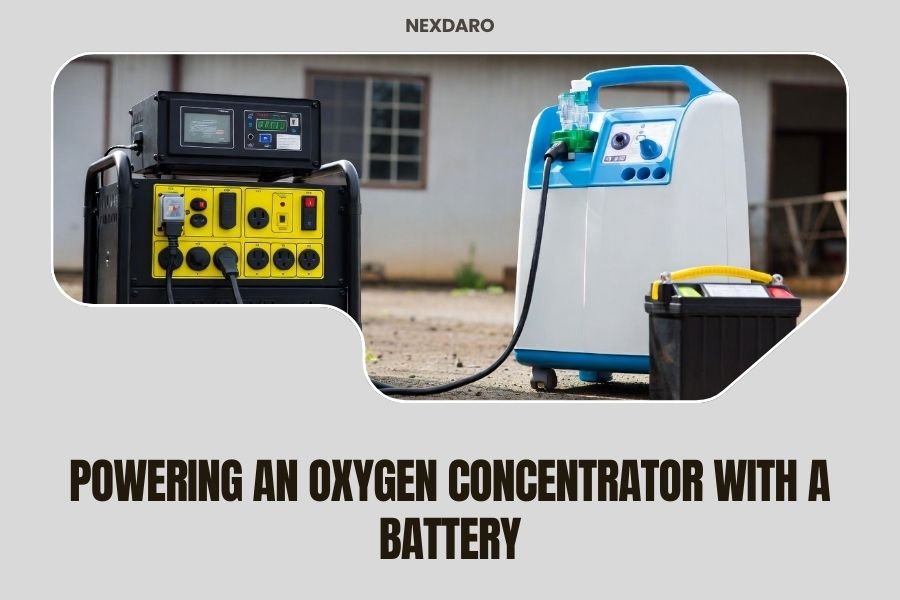
Yes, you can power an oxygen concentrator with a battery using portable power stations or backup battery systems designed for medical equipment.
The key is matching your concentrator’s power requirements with a battery system that provides enough wattage and runtime for your needs.
Understanding Oxygen Concentrator Power Needs
Your oxygen concentrator’s power requirements determine what kind of battery system you need. Most home oxygen concentrators use between 300 to 600 watts of power.
I researched various models and found that smaller concentrators like the Inogen G3 use about 8 watts, while larger stationary units can draw up to 590 watts (American Lung Association).
Checking Your Device’s Specifications
Look at the label on your concentrator. You’ll see numbers like “AC 115V, 5.5A” or similar. Multiply volts by amps to get watts.
For example: 115V × 5.5A = 632 watts. This tells you the maximum power your device needs.
Runtime Calculations Matter
Battery capacity gets measured in watt-hours (Wh). A 1000Wh battery running a 500W concentrator will last about 2 hours.
The math is simple: Battery capacity ÷ Device watts = Runtime hours. Always plan for 20% less runtime due to efficiency losses.
Types of Battery Systems for Oxygen Concentrators
You have three main battery options. Each works differently and costs different amounts.
Portable Power Stations
These are the easiest option. They plug into your wall outlet and charge up. Then you plug your concentrator into them.
Popular brands like Jackery, Goal Zero, and EcoFlow make models with 1000Wh to 3000Wh+ capacity. They cost $800 to $3000+.
Pros of Power Stations
- Ready to use right out of the box
- No wiring or installation needed
- Multiple outlet types included
- Can charge from wall, car, or solar
Cons of Power Stations
- More expensive per watt-hour
- Limited expansion options
- May not handle high-wattage units well
UPS Battery Backup Systems
Uninterruptible Power Supply (UPS) units switch on automatically when power goes out. They’re designed for medical equipment.
Medical-grade UPS systems cost $400 to $2000. They provide 1 to 8+ hours of backup power depending on size.
Benefits of UPS Systems
- Automatic switching during outages
- Designed for medical equipment
- Usually cheaper than power stations
- Clean power output protects devices
Custom Battery Banks
You can build larger battery systems using deep-cycle batteries and inverters. This takes more work but costs less per watt-hour.
A 2000Wh custom system might cost $600 to $1200 in parts. You’ll need batteries, an inverter, a charger, and safety equipment.
Sizing Your Battery System Correctly
Getting the right size battery prevents problems. Too small and you run out of power. Too big and you waste money.
Calculate Your Minimum Runtime Needs
How long do power outages typically last in your area? Add 50% extra time for safety.
If outages usually last 4 hours, plan for 6 hours of battery power. This accounts for unexpected delays and battery aging.
Consider Your Oxygen Flow Rate
Higher oxygen flow rates make concentrators work harder. A device using 2 LPM might draw 400 watts, while 5 LPM could need 550 watts.
Check your prescription and test your actual power draw with a Kill-A-Watt meter. They cost about $25 and show real power usage.
Safety Requirements for Medical Battery Systems
Medical equipment needs special safety considerations. Regular camping power stations might not meet medical standards.
Pure Sine Wave Output
Your oxygen concentrator needs clean power. Make sure any battery system provides “pure sine wave” output, not “modified sine wave.”
Modified sine wave can damage medical equipment motors and electronics over time (FDA medical device guidelines).
Automatic Transfer Switching
The best systems switch automatically when power fails. You don’t want to manually plug things in during an emergency.
Look for transfer switches rated for medical use. They cost $200 to $800 but provide peace of mind.
Battery Ventilation and Placement
Lead-acid batteries release hydrogen gas while charging. Keep them in ventilated areas away from sparks.
Lithium batteries are safer indoors but still need proper ventilation. Never charge batteries in bedrooms or small closed spaces.
Installation and Setup Process
Setting up your battery system correctly ensures it works when you need it most.
Professional vs DIY Installation
Simple portable power stations need no installation. Just charge them up and plug in your concentrator.
Permanent backup systems often need electrical work. Consider hiring an electrician for hardwired transfer switches.
Testing Your System
Test your backup system monthly. Unplug your main power and make sure everything switches correctly.
Time how long your battery actually lasts. Real runtime is often 10-20% less than calculations suggest.
Maintenance and Battery Care
Proper maintenance keeps your battery system reliable for years.
Battery Charging Schedules
Lithium batteries prefer staying between 20% and 80% charge for longest life. Lead-acid batteries should stay fully charged when not in use.
Set calendar reminders to check and charge your batteries every 3 months minimum.
Temperature Considerations
Extreme temperatures hurt battery performance. Keep backup systems between 32°F and 85°F when possible.
Cold batteries provide less power. Hot batteries age faster and can become dangerous.
Cost Comparison of Different Options
| System Type | Initial Cost | Runtime (500W device) | Best For |
|---|---|---|---|
| Small Power Station (1000Wh) | $800-1200 | 1.5-2 hours | Short outages |
| Large Power Station (3000Wh) | $2500-4000 | 5-6 hours | Day-long outages |
| Medical UPS (2000Wh) | $1200-2000 | 3-4 hours | Automatic backup |
| Custom Battery Bank (4000Wh) | $1000-2000 | 7-8 hours | Long outages |
Insurance and Medical Equipment Coverage
Some insurance plans cover backup power for prescribed medical equipment. Contact your provider to ask about coverage.
Medicare sometimes covers backup batteries for oxygen concentrators when medically necessary (Centers for Medicare & Medicaid Services).
Alternative Power Sources
Battery power isn’t your only backup option. Other power sources can work too.
Portable Oxygen Concentrators
These battery-powered units provide 2-8 hours of operation per charge. They’re lighter and more mobile than stationary units.
Popular models like the Inogen One G5 or Respironics SimplyGo run 4-6 hours on internal batteries.
Generator Backup Power
Gas generators can run concentrators for days. But they’re noisy, produce fumes, and need outdoor use only.
Never run generators indoors or in garages. Carbon monoxide poisoning kills quickly and silently.
Troubleshooting Common Issues
Even good battery systems sometimes have problems. Here are the most common issues I found online.
Battery Won’t Hold Charge
Old batteries lose capacity over time. Lead-acid batteries typically last 3-5 years. Lithium batteries can last 8-10 years.
If your battery drops below 80% of original capacity, consider replacement.
Inverter Shutdown Errors
Concentrators can surge when starting up. Make sure your inverter handles 2x your device’s running watts for startup surge.
A 500W concentrator might need 1000W surge capacity to start properly.
Conclusion
Powering an oxygen concentrator with a battery is definitely possible and often necessary for health and safety. The key is choosing the right system size and type for your specific needs and budget.
Start by calculating your device’s power draw and how long you need backup power. Then choose between portable power stations for convenience, UPS systems for automatic switching, or custom battery banks for maximum value. Remember to prioritize pure sine wave output and proper ventilation for safety.
Test your system regularly and maintain your batteries properly. With the right setup, you’ll have reliable backup power whenever you need it most.
Can I use a car battery to power my oxygen concentrator?
You can use a car battery with a proper inverter, but it’s not ideal. Car batteries are designed for short bursts of high power, not sustained use. Deep-cycle batteries work much better for medical equipment and last longer.
How do I know if my concentrator is compatible with battery power?
Check your concentrator’s manual for backup power specifications. Most modern units work fine with battery power as long as you provide pure sine wave AC power at the correct voltage. Avoid modified sine wave inverters.
What happens if my battery runs out during use?
Your concentrator will shut down when battery power fails. Always have a backup plan like portable oxygen tanks or a secondary battery system. Keep your oxygen provider’s emergency contact information readily available.
Do I need special permits to install a backup battery system?
Simple plug-in systems need no permits. Hardwired systems or large battery installations may require electrical permits in some areas. Check with your local building department before installing permanent backup systems.
How often should I replace my backup batteries?
Lead-acid batteries typically need replacement every 3-5 years. Lithium batteries can last 8-10 years with proper care. Replace batteries when they hold less than 80% of their original capacity or show signs of physical damage.