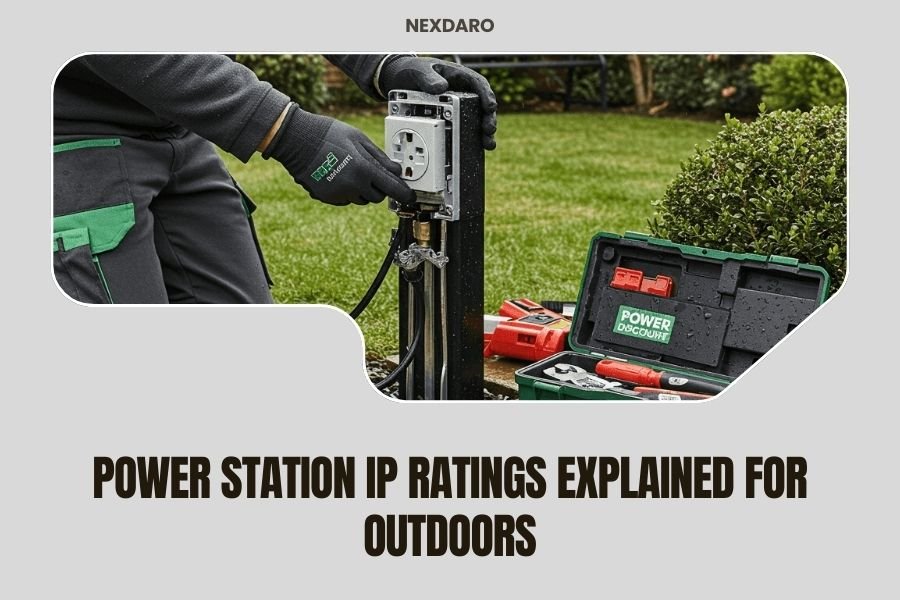
Power station IP ratings tell you how well your device handles dust and water exposure outdoors. An IP rating uses two numbers – the first shows dust protection (0-6), and the second shows water resistance (0-9).
Most outdoor power stations have IP ratings between IP21 and IP67, with higher numbers meaning better protection against the elements.
What Do IP Ratings Mean for Your Power Station?
Think of IP ratings like a report card for your power station’s toughness. The letters “IP” stand for Ingress Protection, which sounds fancy but just means “keeping bad stuff out.”
You’ll see these ratings written as IP followed by two numbers, like IP65 or IP54. Each number has a job to do.
The First Number: Dust Protection
This number goes from 0 to 6. Zero means no protection at all. Six means your power station is completely dust-tight.
Here’s what each level means for your outdoor adventures:
- 0: No protection (avoid these for outdoor use)
- 1: Protects against objects larger than 50mm
- 2: Protects against objects larger than 12mm
- 3: Protects against objects larger than 2.5mm
- 4: Protects against objects larger than 1mm
- 5: Limited dust ingress (some dust gets in but won’t hurt function)
- 6: Dust-tight (perfect seal against all dust)
The Second Number: Water Resistance
Water protection ranges from 0 to 9. This number matters a lot when you’re camping in unpredictable weather.
The scale works like this:
- 0: No water protection
- 1: Dripping water protection (vertical drops only)
- 2: Dripping water when tilted up to 15 degrees
- 3: Spraying water protection
- 4: Splashing water from any direction
- 5: Water jets from any direction
- 6: Powerful water jets
- 7: Temporary immersion up to 1 meter
- 8: Continuous immersion beyond 1 meter
- 9: High-pressure, high-temperature water jets
Common IP Ratings You’ll Find on Outdoor Power Stations
Most portable power stations fall into a few common categories. Let me break down what you’ll actually see in stores.
IP21: Basic Protection
This rating protects against large objects and vertical water drops. It’s okay for covered camping but not great for harsh weather.
You might find this on budget models. They work fine under a canopy or inside an RV.
IP54: Good All-Around Choice
IP54 gives you limited dust protection and splash resistance. This rating handles light rain and dusty conditions pretty well.
Many mid-range power stations use this rating. It’s solid for most camping trips and outdoor work.
IP65: Excellent for Most Outdoor Use
This is the sweet spot for serious outdoor enthusiasts. You get complete dust protection and water jet resistance.
An IP65 power station can handle heavy rain, dusty trails, and accidental spills. It’s what I’d recommend for regular outdoor use.
IP67: Premium Protection
These units can survive temporary dunking underwater. You pay more, but you get serious peace of mind.
IP67 power stations work great for marine use, extreme weather camping, and professional outdoor work.
How IP Ratings Get Tested
Companies don’t just slap ratings on their products. There are strict tests involved.
Dust Testing Process
For dust protection, testers put the power station in a chamber filled with talcum powder or sand. They create air currents and see what gets inside.
The device has to keep working normally after hours of exposure. If it passes, it earns its dust rating.
Water Testing Methods
Water tests get more intense as the numbers go up. Low ratings face gentle dripping water. Higher ratings face fire hoses and submersion tanks.
Each test has specific water pressure, spray angles, and time limits. The power station must function perfectly afterward.
Real-World Scenarios and IP Rating Needs
Let’s talk about what you actually need for different outdoor activities. This helps you avoid paying for protection you won’t use.
Car Camping and RV Use
IP21 to IP44 works fine here. You have some shelter, and conditions aren’t too extreme.
Save your money for battery capacity instead of maximum weather protection.
Backpacking and Hiking
Go for IP54 or higher. Weather changes fast in the wilderness. You need protection from sudden storms and trail dust.
The extra cost is worth it when you’re miles from help.
Beach and Marine Activities
Salt spray is brutal on electronics. Look for IP65 or IP67 ratings for beach use.
Sand gets everywhere, and waves can splash unexpectedly. Don’t skimp on protection near water.
Construction and Work Sites
Dust and debris are constant threats. IP54 is the minimum, but IP65 is better for heavy construction.
Power tools kick up a lot of material. Your power station needs to handle the abuse.
Understanding IP Rating Limitations
IP ratings aren’t perfect. They have limits you should know about.
Temperature Isn’t Covered
IP ratings say nothing about heat or cold resistance. Your IP67 power station might still fail in extreme temperatures.
Check the operating temperature range separately. This matters for desert camping or winter use.
Chemical Resistance Not Included
These ratings only cover pure water, not chemicals, oils, or other liquids. Gasoline spills or cleaning chemicals can still cause damage.
Use common sense around harsh chemicals, regardless of IP rating.
Long-Term vs. Short-Term Protection
IP tests are usually short-term. Your power station might pass a 30-minute water test but fail after hours of exposure.
Don’t treat IP ratings as permanent guarantees. They’re more like safety margins.
How to Verify IP Ratings
Not all manufacturers are honest about their ratings. Here’s how to check.
Look for Testing Certificates
Legitimate IP ratings come with test certificates. Good companies will show you these documents or mention testing labs.
If a company won’t share testing info, be suspicious of their claims.
Check User Reviews
Real users quickly discover if IP ratings are fake. Look for reviews that mention water damage or dust problems.
Pay attention to patterns. One bad review might be user error. Ten similar complaints suggest real problems.
Compare Similar Products
If one brand claims much higher ratings at a lower price, ask why. Real protection costs money to engineer and test.
Be skeptical of deals that seem too good to be true.
Maintaining Your Power Station’s Protection
Even the best IP rating won’t help if you don’t maintain your device properly.
Keep Ports Clean
Dust and debris around charging ports can compromise seals. Clean these areas regularly with compressed air or soft brushes.
Don’t force plugs into dirty ports. You might damage the protective sealing.
Check Seals Regularly
Rubber seals wear out over time. Inspect them for cracks, hardening, or missing pieces.
Replace damaged seals quickly. A small crack can let in a lot of water or dust.
Store Properly
Don’t leave your power station in extreme conditions when not in use. Constant heat and cold stress the sealing materials.
Store in a cool, dry place when possible. Your IP rating will last longer.
Cost vs. Protection Trade-offs
Higher IP ratings cost more money. You need to balance protection with your budget.
When to Spend More
If you use your power station frequently outdoors, higher protection pays off. One water damage incident costs more than the rating upgrade.
Professional users should almost always choose higher ratings. Downtime costs money.
When to Save Money
Occasional users in mild conditions can choose lower ratings. If you camp twice a year in good weather, IP44 might be plenty.
Use the saved money for accessories like solar panels or extra batteries.
| Use Case | Recommended Rating | Why |
|---|---|---|
| Indoor backup only | IP20-IP32 | Basic protection is sufficient |
| Occasional camping | IP44-IP54 | Good balance of cost and protection |
| Regular outdoor use | IP54-IP65 | Handles most weather conditions |
| Marine/beach use | IP65-IP67 | Salt spray and sand require maximum protection |
| Professional/construction | IP65-IP67 | Harsh conditions demand premium protection |
Conclusion
Understanding IP ratings helps you choose the right power station for your outdoor adventures. Remember that higher numbers mean better protection, but they also mean higher costs. Match your IP rating to your actual use case – don’t pay for submarine-level protection if you’re just car camping. Most outdoor enthusiasts do well with IP54 to IP65 ratings. These provide solid protection against dust and water without breaking the bank. Whatever rating you choose, maintain your power station properly and respect its limits. No IP rating makes a device completely bulletproof, but the right one gives you reliable power when you need it most.
What happens if I use a low IP-rated power station in harsh weather?
Your power station could suffer permanent damage from water or dust getting inside. This usually voids warranties and can be expensive to repair. You might also lose power at the worst possible moment, like during a storm when you need it most.
Can I improve my power station’s IP rating with accessories?
Yes, you can buy protective cases, covers, and bags that add extra protection. While these don’t officially change the IP rating, they can provide additional barriers against water and dust. Just make sure any covers allow proper ventilation and don’t block cooling vents.
Do IP ratings affect battery performance or charging speed?
Higher IP ratings can slightly reduce charging speed because better sealing limits airflow for cooling. The battery performance itself isn’t affected, but the power station might run slightly warmer during heavy use. This is usually not noticeable in normal operation.
How long do IP rating protections typically last?
IP ratings gradually decrease over time as seals age and wear. Most quality power stations maintain their full rating for 2-3 years with normal use. After that, you might notice reduced protection, especially around ports and seams that get used frequently.
Are there any outdoor conditions that no IP rating can protect against?
Extreme temperatures, corrosive chemicals, high-pressure impacts, and prolonged submersion beyond design limits can damage even the highest-rated devices. IP ratings also don’t protect against electromagnetic interference, altitude changes, or UV radiation from sunlight over long periods.