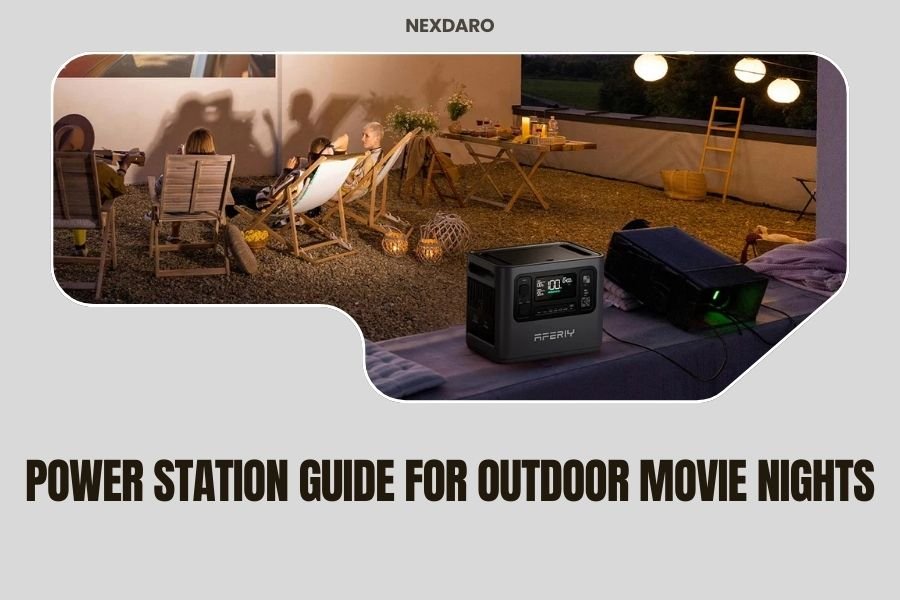
A 500-1000 watt portable power station will run most outdoor movie setups for 3-8 hours, depending on your projector and speaker power needs.
Your power station should have AC outlets for the projector, USB ports for devices, and at least 500Wh capacity for a complete movie night experience.
What Size Power Station Do You Need for Movies?
Let’s cut straight to what matters most. Your projector is the biggest power hog in your outdoor movie setup.
Most portable projectors use between 65-150 watts. Home projectors can push 200-400 watts. I researched popular outdoor projector models and found that budget LED projectors typically stay under 100 watts.
Here’s your power math made simple. A 100-watt projector running for 4 hours needs 400 watt-hours of energy. Add speakers, phone charging, and some buffer time. You’re looking at 600-800 watt-hours total.
Battery Capacity You Actually Need
Power stations don’t give you 100% of their rated capacity. Most deliver about 80-90% of what’s on the label due to energy conversion losses.
A 500Wh power station gives you roughly 400-450Wh of usable power. That’s cutting it close for a full movie night. Go with 750Wh or higher for comfort.
Small Setup: Under 500Wh
You’re using a small LED projector under 80 watts. Maybe some small Bluetooth speakers. This works for short films or kids’ movies that run 90 minutes.
Medium Setup: 500-1000Wh
This covers most outdoor movie nights. Your projector runs 100-150 watts. You can charge phones and run decent speakers. Perfect for full-length movies with some power left over.
Large Setup: 1000Wh+
You want the full cinema experience. Bigger projector, powered speakers, string lights for ambiance. Maybe a small popcorn maker. This gives you multiple movies or all-night events.
Essential Power Station Features for Movie Nights
Not all power stations work the same for outdoor movies. Some features make or break your movie night experience.
Multiple AC Outlets
You need at least two AC outlets. One for your projector, one for speakers or other equipment. Three outlets give you flexibility for lights or a laptop.
I found that many budget power stations only have one AC outlet. That’s a problem when you’re running multiple devices.
Pure Sine Wave Output
Your projector’s sensitive electronics need clean power. Pure sine wave inverters protect your equipment and reduce noise in audio systems.
Modified sine wave power can cause humming in speakers or damage projector bulbs over time. Don’t risk your expensive gear.
Quiet Operation
Nothing ruins a movie like a noisy power station fan. Look for units with quiet cooling systems or fanless designs under moderate loads.
Most quality power stations stay quiet under 200-300 watts of load. That covers typical movie setups perfectly.
Top Power Station Sizes for Different Movie Setups
| Setup Type | Power Needed | Recommended Capacity | Runtime |
|---|---|---|---|
| Mini projector + phone speakers | 50-80W | 300-500Wh | 4-6 hours |
| Portable projector + Bluetooth speakers | 100-150W | 750-1000Wh | 5-8 hours |
| Home projector + powered speakers | 250-400W | 1500Wh+ | 4-6 hours |
Calculating Your Exact Power Needs
Want to get precise with your power planning? Here’s how to calculate exactly what you need.
Step 1: Add Up Your Wattage
Check the power label on every device you’ll use. Projectors usually list their consumption in the manual or on a sticker.
Don’t forget about these power draws:
- Projector: 65-400 watts
- Bluetooth speakers: 10-50 watts
- Powered speakers: 50-200 watts
- Phone charging: 10-20 watts
- LED string lights: 5-25 watts
- Laptop: 45-90 watts
Step 2: Multiply by Runtime
How long will your movie night last? A typical movie runs 2 hours. Add setup time, intermission, maybe a second movie.
Plan for 4-5 hours of total runtime. Better to have extra power than run out during the climax.
Step 3: Add Safety Buffer
Add 25-30% more capacity than your calculation shows. Power stations lose efficiency as they discharge. Cold weather also reduces capacity.
Best Power Station Types for Outdoor Movies
Different power station technologies work better for different situations. Here’s what I found works best for movie nights.
Lithium Iron Phosphate (LiFePO4)
These last the longest and handle deep discharges well. Perfect if you plan regular movie nights. They cost more upfront but give you years of reliable service.
LiFePO4 batteries also work better in cold weather. Great for fall and winter outdoor movies.
Standard Lithium-Ion
Most portable power stations use standard lithium-ion batteries. They’re lighter and cheaper than LiFePO4 but don’t last as many charge cycles.
Fine for occasional movie nights. The weight savings matter if you’re carrying gear to remote locations.
Weight Considerations
Power stations get heavy fast. A 1000Wh unit typically weighs 20-30 pounds. Plan how you’ll transport it to your movie spot.
Some units have wheels or better handles. Worth considering if you’re not setting up in your backyard.
Charging Your Power Station for Movie Night
Dead power station equals cancelled movie night. Plan your charging strategy ahead of time.
AC Wall Charging
Most power stations take 6-8 hours to fully charge from a wall outlet. Larger units can take 10-12 hours.
Start charging the morning of your movie night. Don’t wait until the last minute.
Solar Charging Options
Solar panels let you charge during the day for evening movies. You need about 200-400 watts of solar panels for decent charging speed.
I researched solar charging times and found that 300W of panels can charge a 1000Wh power station in 4-6 hours of good sun.
Car Charging
Most power stations charge from your car’s 12V outlet. Charging is slow but works for topping off or emergency situations.
Car charging typically takes 10-15 hours for a full charge. Better than nothing if you forgot to charge at home.
Setting Up Your Power Station for Movies
Where you place your power station affects both safety and convenience.
Location Planning
Keep your power station close enough to reach all devices but away from foot traffic. Nobody wants to trip over cables in the dark.
Put it on level ground away from dew or potential spills. Most power stations aren’t waterproof.
Cable Management
Bring extension cords to keep the power station in a safe spot. Tape cables down or use cord covers to prevent tripping.
LED strip lights along cables help people see them in the dark. Safety first, especially with kids around.
Weather Protection
Even a little dew can damage your power station. Bring a small tarp or plastic cover for unexpected weather.
Don’t run power stations in enclosed spaces. They need airflow for cooling, especially under heavy loads.
Power Station Maintenance for Movie Nights
A little care keeps your power station ready for impromptu movie nights.
Regular Charging
Don’t let your power station sit discharged for months. Lithium batteries prefer staying between 20-80% charge for storage.
Charge it every 3-4 months if you’re not using it regularly. This prevents battery damage from deep discharge.
Cleaning and Storage
Keep the vents clean and dust-free. A small brush or compressed air works well.
Store your power station in a cool, dry place. Extreme heat or cold shortens battery life.
Troubleshooting Common Movie Night Power Issues
Things go wrong. Here’s how to fix common power station problems during movie night.
Power Station Shuts Off
Most likely overload protection kicked in. Check if you’re pulling too many watts for your unit’s capacity.
Turn off some devices and restart the power station. Most have a reset button or power cycle procedure.
Short Runtime
Cold weather reduces battery capacity by 10-20%. Your power station might need replacement if it’s old and won’t hold a charge.
Check the battery health indicator if your unit has one. Time for a new power station if capacity drops below 70%.
Device Won’t Charge
Try different outlets on your power station. One outlet might have failed while others work fine.
Check your device’s power requirements. Some laptops need more wattage than smaller power stations provide.
Conclusion
The perfect power station for outdoor movie nights balances capacity, features, and your specific setup needs. A 750-1000Wh unit with multiple AC outlets handles most movie night scenarios comfortably. Remember to charge ahead of time, plan your power needs carefully, and keep safety in mind when setting up your outdoor cinema. With the right power station, you’ll never miss another movie under the stars due to dead batteries.
How long will a 500Wh power station run a projector?
A 500Wh power station will run a 100-watt projector for about 4-5 hours, accounting for efficiency losses. Smaller LED projectors using 65-80 watts can run 6-7 hours on the same capacity.
Can I charge my power station while using it for movies?
Yes, most power stations support pass-through charging, letting you charge while powering devices. This works well with solar panels during day events or car charging for extended movie marathons.
Do power stations work in cold weather for outdoor movies?
Power stations work in cold weather but lose 10-20% capacity below 40°F. Lithium iron phosphate batteries perform better in cold than standard lithium-ion. Keep the unit insulated if possible.
What’s the quietest power station for movie nights?
Look for power stations with fanless designs or quiet cooling systems rated under 45 decibels. Most quality units stay silent under 200-300 watts load, which covers typical projector and speaker setups.
How do I know if my projector will work with a power station?
Check your projector’s wattage rating and ensure your power station can handle continuous output at that level. Make sure the power station has pure sine wave output to protect sensitive projector electronics from power quality issues.