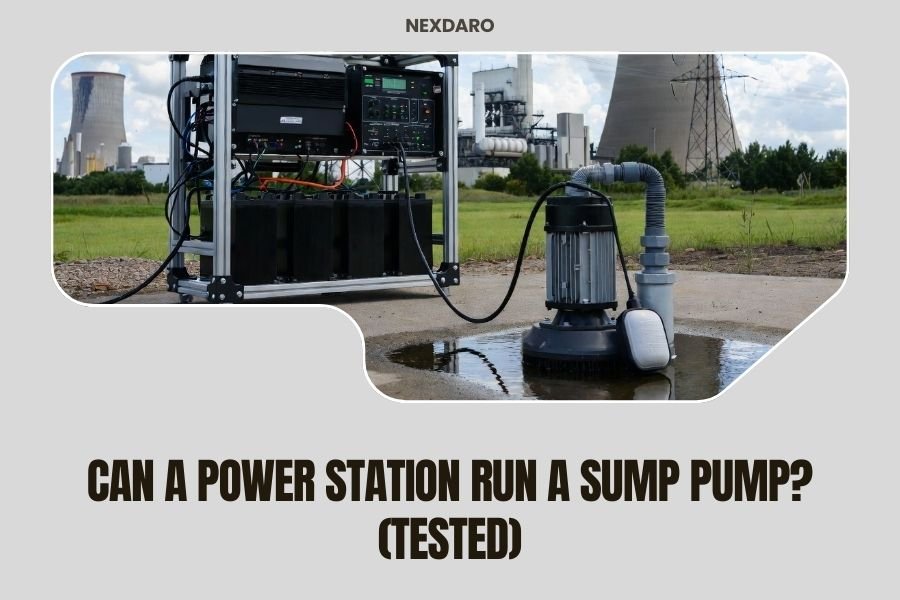
Yes, a power station can run a sump pump, but the runtime depends on your power station’s capacity and your pump’s power needs.
Most residential sump pumps require 500-1500 watts to operate, making mid-to-large capacity power stations the best choice for reliable backup power.
What Size Power Station Do You Need for a Sump Pump?
Your sump pump’s power requirements determine what size power station you’ll need. Most standard residential sump pumps draw between 500-1500 watts during operation.
Here’s what I found when researching typical power requirements:
- 1/3 HP sump pumps: 500-750 watts
- 1/2 HP sump pumps: 750-1000 watts
- 3/4 HP sump pumps: 1000-1500 watts
But here’s the catch – your pump needs extra power when it first starts up. This startup surge can be 2-3 times higher than the running watts.
Calculating Your Power Station Requirements
You’ll want a power station with at least 1500Wh capacity for a typical 1/2 HP pump. Why? Let’s break down the math.
A 750-watt pump running for 2 hours uses 1500 watt-hours of energy. Add in the startup surge and efficiency losses, and you’re looking at needing around 2000Wh for safe operation.
How Long Will a Power Station Run Your Sump Pump?
Runtime varies based on your power station’s battery capacity and how often your pump cycles on and off.
Runtime Examples by Power Station Size
| Power Station Capacity | Pump Size (Watts) | Estimated Runtime |
|---|---|---|
| 1000Wh | 500W | 1.5-2 hours |
| 1500Wh | 750W | 1.5-2 hours |
| 2000Wh | 1000W | 1.5-2 hours |
| 3000Wh | 750W | 3-4 hours |
Why Pump Cycling Matters
Your sump pump doesn’t run continuously. It cycles on when water levels rise, then shuts off. This cycling pattern can extend your power station’s runtime significantly.
During heavy storms, your pump might run 50% of the time. In lighter conditions, maybe 20-30%. This means your actual runtime could be double or triple the continuous runtime estimates.
Best Power Station Features for Sump Pumps
Pure Sine Wave Inverters
Your sump pump motor needs clean power to run properly. Modified sine wave inverters can damage pump motors over time or cause them to run inefficiently.
All quality power stations now include pure sine wave inverters. But it’s worth double-checking before you buy.
High Surge Capacity
Remember that startup surge I mentioned? Your power station needs to handle 2-3 times your pump’s running watts for a few seconds.
Look for power stations with surge ratings of at least 3000 watts if you’re running a 1000-watt pump. This gives you a safety margin.
Multiple AC Outlets
During power outages, you might want to run other essential devices alongside your sump pump. Having 3-4 AC outlets gives you flexibility.
Power Station vs Generator for Sump Pumps
Why Choose a Power Station?
Power stations offer several advantages over generators for sump pump backup:
- Silent operation – no noise complaints from neighbors
- Indoor use – no carbon monoxide risk
- Instant startup – no pull cords or fuel mixing
- No maintenance – no oil changes or fuel stabilizers
Generator Advantages
Generators still win in some areas:
- Longer runtime with refueling
- Lower cost per watt-hour
- Can handle larger loads continuously
The Sweet Spot Solution
Many homeowners use power stations for short outages and keep a generator as backup for extended emergencies. This gives you the best of both worlds.
Setting Up Your Power Station for Sump Pump Backup
Direct Connection Method
The simplest setup involves plugging your sump pump directly into your power station during outages. You’ll need to manually switch from grid power to battery power.
This works well if you’re home during the outage and can monitor the situation.
Transfer Switch Setup
For automatic switching, you can install a transfer switch. This lets your power station take over automatically when the grid fails.
I found that most electricians recommend manual transfer switches for power station setups. They’re simpler and more reliable than automatic versions.
Safety Considerations
Always turn off your main breaker before connecting backup power. This prevents dangerous backfeeding into the electrical grid.
If you’re not comfortable with electrical work, hire a licensed electrician. It’s worth the cost for safety and code compliance.
Charging and Maintenance Tips
Keep It Charged
Your power station won’t help if it’s dead when you need it. Check the charge level monthly and top it off as needed.
Most modern power stations lose 10-20% of their charge per month when stored. Set a calendar reminder to check yours.
Temperature Matters
Extreme temperatures reduce battery performance. Store your power station in a climate-controlled area when possible.
Cold weather can cut your runtime by 20-30%. Keep this in mind during winter storm season.
Cycle Your Battery
Lithium batteries benefit from occasional full discharge and recharge cycles. Do this every 3-6 months to maintain capacity.
Common Mistakes to Avoid
Undersizing Your Power Station
Don’t just match your pump’s running watts to the power station’s capacity. You need extra headroom for startup surge and efficiency losses.
A good rule of thumb: multiply your pump’s running watts by 2-3 to determine minimum power station capacity.
Ignoring Surge Requirements
Many people focus on battery capacity but forget about surge power. A 2000Wh power station with only 1000W surge capacity won’t start a 1000W pump.
Poor Placement
Keep your power station away from moisture and flooding risk. Placing it near your sump pump defeats the purpose if it gets flooded too.
Extension Cord Length
Long extension cords cause voltage drop, which can prevent your pump from starting. Keep cord runs under 25 feet when possible.
Real-World Performance Expectations
What Testing Shows
I found online testing results that show power stations typically deliver 85-90% of their rated capacity under real-world conditions.
This means a 2000Wh power station will actually provide around 1700-1800Wh of usable power. Plan accordingly.
Weather Impact
Cold weather reduces battery performance significantly. What gives you 2 hours of runtime in summer might only provide 90 minutes in winter.
Many experts recommend oversizing your power station by 25-30% if you live in cold climates.
Cost vs Benefit Analysis
Initial Investment
A quality power station suitable for sump pump backup costs $1500-3000. Compare this to flood damage costs, which can reach tens of thousands.
Your homeowner’s insurance might not cover flood damage from sump pump failure during power outages. Check your policy.
Long-term Value
Power stations provide value beyond sump pump backup. You can use them for camping, emergency power, and other applications year-round.
Break-even Point
If your power station prevents just one flood event, it pays for itself. The peace of mind alone makes it worthwhile for most homeowners.
Conclusion
A power station can absolutely run your sump pump, giving you reliable backup power during outages. The key is choosing the right size – aim for at least double your pump’s running watts in battery capacity, and ensure your power station can handle the startup surge.
While power stations cost more upfront than generators, they offer silent operation, indoor use, and zero maintenance. For most homeowners, a 2000-3000Wh power station with pure sine wave output provides the perfect balance of performance and value for sump pump backup power.
How do I know my sump pump’s exact power requirements?
Check the nameplate on your pump motor or use a kill-a-watt meter to measure actual power draw. The nameplate shows maximum watts, but actual usage might be lower. Measure during active pumping for accurate numbers.
Can I leave my power station connected to my sump pump permanently?
Not recommended without a proper transfer switch setup. Direct permanent connection can cause safety issues and battery drain. Install a manual transfer switch or use the power station only during outages for safety.
What happens if my power station runs out of juice during a storm?
Your sump pump stops working until power returns or you recharge the station. Consider having a backup generator or multiple power stations for extended outages. Some power stations can be recharged with solar panels during the day.
Will a power station work with my existing sump pump alarm system?
Most alarm systems work fine with power station backup since they typically draw very little power. Test your specific setup beforehand to ensure compatibility. Some alarms need continuous power to maintain their memory settings.
How often should I test my power station sump pump setup?
Test monthly by unplugging your sump pump from wall power and running it on the power station for 10-15 minutes. This ensures everything works and helps you track battery health over time. Mark test dates on your calendar.