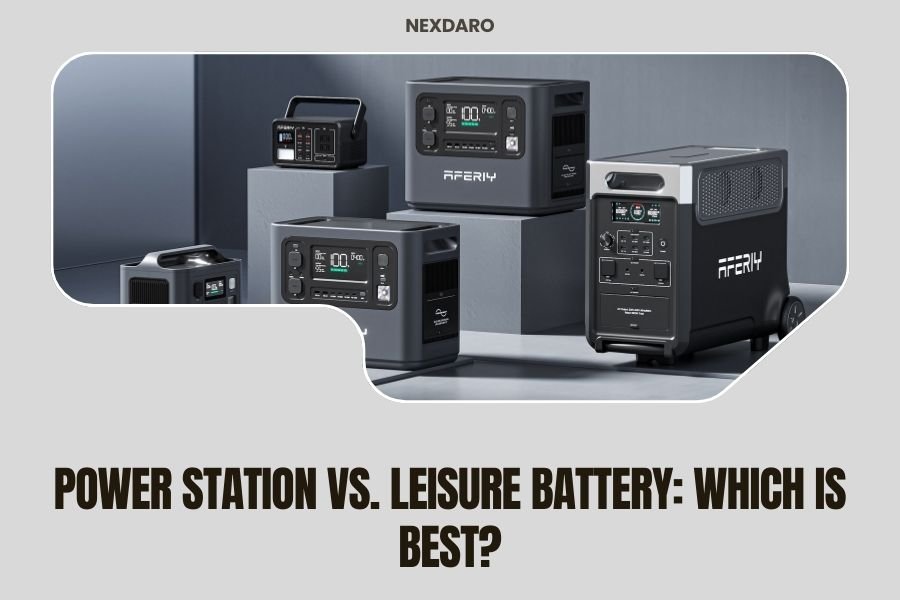
Power stations offer better versatility and portability, while leisure batteries provide more cost-effective long-term power for fixed setups like caravans and boats.
The best choice depends on whether you need portable power for multiple devices or dedicated power for a single recreational vehicle setup.
What Makes Power Stations Different from Leisure Batteries?
Think of a power station as a portable energy hub. It’s like having a mini power plant you can carry anywhere. These compact units pack batteries, inverters, and charging ports into one neat package.
Leisure batteries work more like dedicated workhorses. They’re designed to power your caravan, boat, or RV for extended periods. You’ll find them tucked away in battery compartments, doing their job quietly.
Key Design Differences
Power stations come ready to use straight from the box. You get multiple output options – USB ports, AC outlets, and DC sockets all built in.
Leisure batteries need extra equipment to be useful. You’ll need an inverter for AC power, charge controllers for solar panels, and separate charging systems.
Power Output: Who Wins the Energy Game?
Power stations typically range from 200Wh to 6000Wh capacity. That’s enough to charge phones dozens of times or run small appliances for hours.
Leisure batteries often provide more raw capacity. A typical 100Ah leisure battery at 12V gives you 1200Wh of power. Large setups can store much more.
Surge Power Capabilities
Many power stations can handle surge loads well. They’re designed to start motors and handle sudden power draws.
Leisure battery systems depend on your inverter choice. A good inverter paired with the right battery can handle big surge loads too.
Real-World Power Comparison
A 1000Wh power station might run a small fridge for 10-15 hours. A 200Ah leisure battery could power the same fridge for 20-30 hours with a quality inverter.
Portability: The Mobility Factor
This is where power stations shine. Most weigh between 10-50 pounds and include carrying handles. You can easily move them from your car to your campsite to your RV.
Leisure batteries aren’t meant to move around much. They’re heavy (40-80 pounds typical) and designed for permanent installation.
Setup Speed
Power stations win here hands down. Plug and play takes seconds. No wiring, no installation, no technical knowledge needed.
Leisure battery systems require proper installation, wiring, and safety considerations. You might need a professional installer.
Cost Analysis: Initial Investment vs Long-Term Value
Power stations cost more upfront per watt-hour of capacity. A decent 1000Wh unit runs $800-1500.
Leisure batteries offer better value for raw capacity. A 200Ah AGM battery costs $300-600, plus inverter and charging equipment.
| Item | Power Station (1000Wh) | Leisure Battery Setup (1200Wh) |
|---|---|---|
| Main Unit | $1000-1200 | $400-500 |
| Inverter | Included | $200-400 |
| Charger | Included | $100-200 |
| Installation | None needed | $200-500 |
| Total Cost | $1000-1200 | $900-1600 |
Replacement Costs
Power stations are harder to repair. When they break, you often replace the whole unit.
Leisure battery systems let you replace individual components. Battery dies? Replace just the battery. Inverter fails? Swap it out.
Charging Options: Keeping the Power Flowing
Power stations typically offer multiple charging methods. Wall outlets, car adapters, and solar panels all work.
Leisure batteries need separate charging systems for different power sources. You might need different chargers for mains, alternator, and solar charging.
Solar Charging Comparison
Many power stations include solar charge controllers built in. Just connect panels and you’re charging.
Leisure battery setups need separate solar charge controllers. But you can often install larger solar arrays more easily.
Charging Speed Differences
Some power stations charge incredibly fast. You might fully recharge in 1-2 hours from a wall outlet.
Leisure batteries typically charge slower but can handle larger charging currents with the right equipment.
Lifespan and Durability: The Long Game
I found that most power stations use lithium batteries rated for 2000-3000 charge cycles. That’s roughly 6-10 years of regular use.
Quality leisure batteries vary widely. AGM batteries might last 4-7 years. Lithium leisure batteries can last 10+ years with proper care.
Maintenance Requirements
Power stations need almost zero maintenance. Keep them clean and charged occasionally.
Leisure battery systems need more attention. Check connections, clean terminals, and monitor battery health regularly.
Best Use Cases: When to Choose What
Choose a power station if you:
- Need portable power for camping, tailgating, or emergencies
- Want plug-and-play simplicity
- Power multiple different activities or locations
- Don’t want to deal with installation or wiring
Leisure Battery Advantages
Pick a leisure battery system if you:
- Have a dedicated RV, boat, or caravan setup
- Need maximum power capacity for the money
- Want to customize your power system
- Plan to use large solar arrays
Technology Types: Understanding Your Options
Most modern power stations use lithium iron phosphate (LiFePO4) batteries. These offer good safety and longevity.
Leisure batteries come in several types. Lead-acid AGM batteries cost less. Lithium options cost more but last longer and weigh less.
Battery Chemistry Comparison
LiFePO4 batteries in power stations handle temperature changes well and charge faster than most alternatives.
AGM leisure batteries work fine in most conditions but don’t like deep discharge cycles. Lithium leisure batteries perform similarly to power station batteries.
Safety Considerations
Both options are generally safe when used properly. Power stations often include more built-in safety features like automatic shutoffs.
Leisure battery systems rely on proper installation and quality components for safety. Poor wiring can create fire risks.
Size and Weight: Space Constraints Matter
Power stations pack a lot into small spaces. A 1000Wh unit might measure 12″ x 8″ x 10″ and weigh 25 pounds.
Equivalent leisure battery systems take more space. The battery alone might be 12″ x 7″ x 9″, plus space for inverter and charging equipment.
Installation Space Requirements
Power stations need no permanent installation space. Store them anywhere safe and dry.
Leisure batteries need dedicated installation areas with proper ventilation and secure mounting.
Performance in Different Conditions
Power stations generally handle temperature changes well. Most work fine from 32°F to 104°F.
Leisure battery performance varies by type. AGM batteries lose capacity in cold weather. Lithium options maintain performance better across temperature ranges.
Cold Weather Performance
Many power stations include battery warming features for cold conditions. Some won’t charge below freezing but will still provide power.
AGM leisure batteries provide less power when cold. Lithium leisure batteries perform better but may need protection from extreme cold.
Hot Weather Considerations
Power stations often include cooling fans and thermal protection. They’ll shut down before overheating.
Leisure battery systems need proper ventilation, especially AGM batteries which can vent gases when hot.
Expandability: Growing Your Power System
Some power stations can link together or accept external batteries. But options are limited to compatible units from the same manufacturer.
Leisure battery systems offer more flexibility. You can add more batteries, upgrade inverters, or expand solar arrays as needed.
Future-Proofing Your Investment
Power stations work great as-is but offer limited upgrade paths. When you outgrow capacity, you often need a completely new unit.
Leisure battery systems grow with your needs. Start small and add components over time.
Environmental Impact: The Green Factor
Both options are more environmentally friendly than gas generators. No emissions during use and much quieter operation.
Lithium batteries in both systems are recyclable, though the process isn’t widespread yet. Research shows battery recycling is improving rapidly.
Making Your Decision: Key Questions to Ask
What’s your primary use case? Portable power for various activities suggests a power station. Dedicated RV or boat power points toward leisure batteries.
How important is setup simplicity? Power stations win for plug-and-play convenience.
What’s your budget for capacity? Leisure batteries often provide more power per dollar spent.
Consider Your Technical Comfort Level
Are you comfortable with electrical installations? Leisure battery systems require more technical knowledge.
Do you want to tinker and customize? Leisure battery systems offer more flexibility.
Conclusion
Both power stations and leisure batteries solve the same basic problem – providing reliable power away from the grid. Your choice depends on how you’ll use that power.
Power stations excel when you need portable, versatile power that works immediately. They’re perfect for camping trips, emergency backup, or any situation where you need power in different locations.
Leisure batteries make more sense for dedicated installations where you want maximum capacity for your money. They’re ideal for RVs, boats, and off-grid cabins where space allows proper installation.
Consider your specific needs, technical comfort level, and long-term plans. Either choice will serve you well when matched to the right application.
Can you use both power stations and leisure batteries together?
Yes, many RV owners use leisure batteries for basic power needs and carry a power station for portable applications like outdoor cooking or charging devices away from the RV.
Which option works better for emergency home backup power?
Power stations are usually better for home emergencies because they’re ready to use immediately, store easily, and don’t require installation. You can quickly move them to power different appliances as needed.
Do power stations last as long as leisure batteries?
Quality power stations with LiFePO4 batteries typically last 6-10 years with regular use. Good leisure batteries can last similar timeframes, but you can replace individual components rather than the entire system when parts fail.
Which charges faster from solar panels?
Power stations often charge faster from solar because they include optimized charge controllers built-in. But leisure battery systems can handle larger solar arrays, potentially collecting more total power throughout the day.
Are there any safety differences between the two options?
Both are safe when used properly. Power stations typically include more built-in safety features like automatic shutoffs and overload protection. Leisure battery systems are very safe too but depend more on proper installation and quality components.