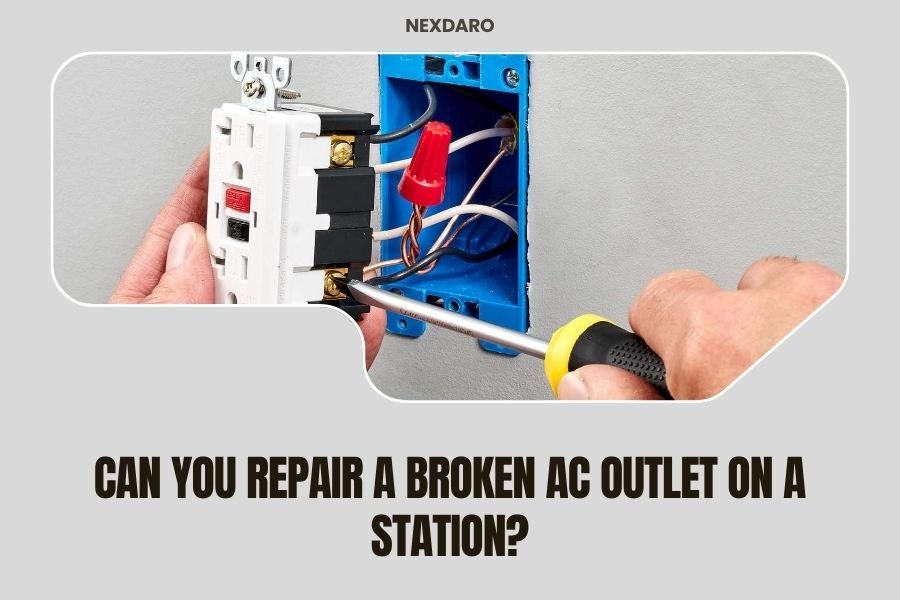
Yes, you can repair a broken AC outlet on a portable power station in many cases. The repair depends on whether it’s a simple wiring issue, blown fuse, or damaged internal components.
Most AC outlet problems stem from loose connections, tripped internal breakers, or worn outlet housings that you can fix with basic electrical knowledge and tools.
What Causes AC Outlets to Break on Power Stations?
Your power station’s AC outlet can fail for several reasons. Understanding the cause helps you decide if it’s worth fixing.
The most common problem I found from repair forums is loose wiring connections. These happen when screws work loose from vibration during transport. You might notice the outlet feels wobbly or sparks occasionally.
Overloading causes another frequent issue. When you plug in devices that draw more power than your station can handle, it can damage the internal inverter or blow protective fuses.
Signs Your AC Outlet Needs Repair
Watch for these warning signs that tell you something’s wrong:
- No power output even when the station shows full battery
- Intermittent power that cuts in and out
- Burning smell or visible scorch marks
- Outlet feels hot to the touch during use
- Sparking when you plug things in
Stop using your power station immediately if you see sparks or smell burning. These signs point to serious electrical problems that could be dangerous.
Safety First: Turn Off and Disconnect Everything
Before you touch anything, make sure your power station is completely off. Unplug all devices and turn off the main power switch.
Remove the battery if possible. Many portable stations let you disconnect the battery pack for safety during repairs. Check your manual for specific steps.
Wear safety glasses and insulated gloves. Even with the power off, capacitors inside might hold a charge that could shock you.
Gather Your Repair Tools
You’ll need these basic tools for most AC outlet repairs:
- Phillips and flathead screwdrivers
- Multimeter for testing voltage and continuity
- Wire strippers and electrical tape
- Needle-nose pliers
- Replacement fuses (check your manual for the right type)
Step-by-Step Repair Process
Start with the easiest fixes first. Many outlet problems turn out to be simple issues you can solve in minutes.
Check the Internal Fuses
Most power stations have fuses that protect the AC outlets. When these blow, your outlets stop working completely.
Open your power station’s case according to the manual. Look for small glass or ceramic fuses near the AC outlet connections. They’re usually labeled clearly.
Use your multimeter to test each fuse for continuity. A good fuse will show near zero resistance. If the meter reads infinite resistance, the fuse is blown and needs replacement.
Finding the Right Replacement Fuses
Never use a fuse with higher amperage than the original. This is like removing a safety valve – it might seem to work but could cause fires or damage.
Check the fuse body for markings like “10A 250V” or similar. You can find replacements at electronics stores or online. Many experts recommend keeping spare fuses with your power station.
Inspect the Outlet Wiring
Look at the wires connected to your AC outlet. They should be tight and show no signs of burning or corrosion.
Gently tug each wire to test the connection. Loose wires often cause intermittent power problems that come and go.
If you find loose connections, turn off the power completely and tighten the screws. Make sure each wire sits properly under its terminal screw.
Dealing with Damaged Wires
Sometimes you’ll find wires with burned or corroded ends. Cut off the damaged section with wire strippers and strip about half an inch of fresh copper.
Twist the copper strands tightly and reconnect under the terminal screw. This often fixes outlets that worked intermittently.
Testing Your Inverter Circuit
The inverter changes your battery’s DC power into AC power for the outlets. When inverters fail, you get no AC power at all.
Use your multimeter to check for DC voltage at the inverter input. You should see your battery voltage (usually 12V, 24V, or 48V) when the station is on.
If you have DC input but no AC output, your inverter likely needs professional repair or replacement. Inverter repair requires advanced electronics knowledge.
Simple Inverter Troubleshooting
Before giving up on your inverter, try these quick fixes:
- Check all internal connections to the inverter board
- Look for blown capacitors (they bulge at the top when bad)
- Clean any corrosion from circuit board connections
- Make sure cooling fans work properly
Overheating kills inverters faster than anything else. If your cooling fan stopped working, fix that first before running your outlets again.
When to Replace vs Repair
Sometimes replacement makes more sense than repair. Here’s how to decide what’s worth your time and money.
| Problem | Repair Cost | Difficulty | Recommendation |
|---|---|---|---|
| Blown fuse | Under $5 | Easy | Always repair |
| Loose wiring | Free | Easy | Always repair |
| Bad outlet housing | $10-20 | Medium | Usually repair |
| Failed inverter | $50-200 | Hard | Consider replacement |
Cost vs Value Analysis
If your power station cost under $200 and needs a $100 inverter replacement, buying new might make more sense. You get a fresh warranty and updated features.
For expensive units over $500, repair usually pays off even for major components. The labor cost is often your biggest expense if you can’t do it yourself.
Professional Repair Options
Some repairs need professional help. Don’t risk your safety or make things worse by attempting complex electrical work.
Look for electronics repair shops that work on inverters or power equipment. Many automotive shops can also handle 12V power systems.
What to Expect from Professional Repair
Most shops charge $50-75 for diagnosis plus parts and labor. Simple fixes like fuse replacement might cost under $100 total.
Inverter replacement or circuit board repair can run $150-300 depending on your unit. Get quotes from multiple shops since prices vary widely.
Warranty Considerations
Check your warranty before opening your power station. Many manufacturers void coverage if you remove screws or modify internal components.
If you’re still under warranty, contact the manufacturer first. They might repair or replace your unit for free, even if it seems like user damage.
Prevention Tips to Avoid Future Problems
Smart habits can keep your AC outlets working for years. Most failures come from preventable causes.
Never exceed your station’s rated output capacity. If it says 500W max, don’t plug in 600W worth of devices. The extra power has to go somewhere, usually as heat that damages components.
Keep your power station cool and dry. Heat and moisture are electronics killers that cause premature failures.
Regular Maintenance Schedule
Check your power station every few months for signs of wear:
- Test all outlets with a simple device like a phone charger
- Look for loose screws or rattling sounds
- Clean dust from cooling vents
- Check that cooling fans spin freely
Storage Best Practices
Store your unit in a climate-controlled area when possible. Extreme temperatures stress internal components and reduce their lifespan.
Keep the battery charged between 20-80% during storage. Completely dead or fully charged batteries age faster than partially charged ones.
DIY vs Professional Repair Decision Tree
Use this simple guide to decide whether you should tackle the repair yourself:
Can you identify the problem clearly? If yes, continue. If not, get professional diagnosis first.
Do you have basic electrical knowledge? Simple wiring and fuse work is safe for beginners, but inverter repair requires experience.
Is the repair cost under 25% of replacement cost? Higher repair costs often point toward buying new instead.
Red Flags That Mean “Call a Pro”
Some situations are too dangerous for DIY work:
- Any signs of fire damage or melted components
- Problems with the main battery connections
- Circuit boards with visible damage
- Units that shock you when touched
Your safety is worth more than the cost of professional repair. When in doubt, get expert help.
Conclusion
Repairing a broken AC outlet on your power station is often possible and worthwhile. Start with simple checks like fuses and wire connections before moving to complex repairs. Many common problems have easy fixes that cost under $20 and take less than an hour. Know your limits and call professionals for dangerous or complex issues. With proper care and maintenance, your repaired outlet should give you years of reliable service.
Can I use my power station with one broken AC outlet?
Yes, you can usually use other outlets safely while one is broken. Just make sure the problem is isolated to that specific outlet and doesn’t affect the main inverter system.
How much does professional AC outlet repair typically cost?
Professional repair costs range from $75-200 depending on the problem. Simple wiring fixes cost less, while inverter replacement can reach $300 for high-end units.
Will fixing the outlet myself void my warranty?
Opening your power station case typically voids the manufacturer warranty. Check your warranty terms and consider professional repair if you’re still covered.
What’s the most common cause of AC outlet failure?
Blown fuses cause most AC outlet failures, followed by loose wire connections. Both are relatively easy and inexpensive to fix with basic tools.
How can I tell if the problem is the outlet or the inverter?
If all AC outlets stopped working at once, the inverter likely failed. If only one outlet has problems, the issue is probably local wiring or connections to that specific outlet.