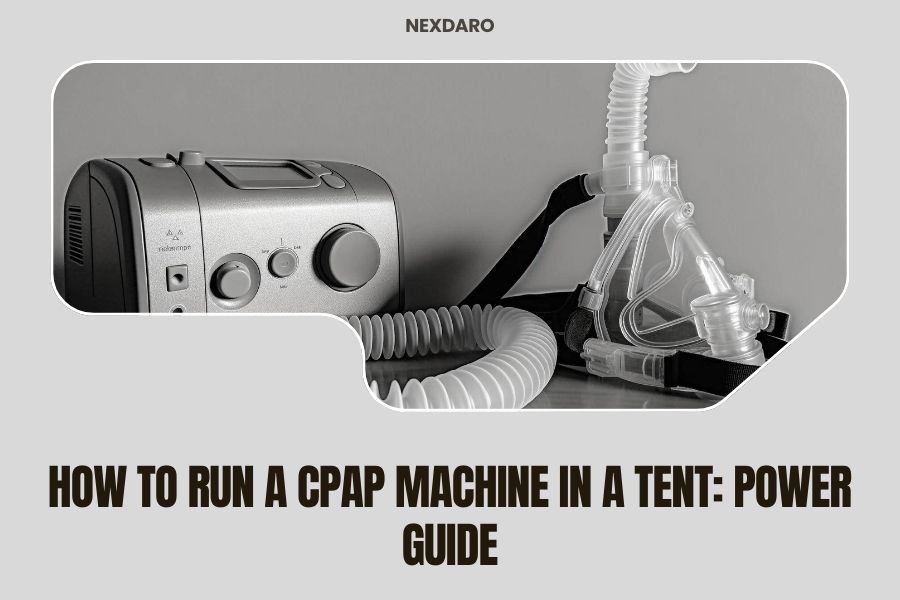
You can run a CPAP machine in a tent using a portable power station with at least 150-200 watt-hours of capacity for an 8-hour night.
The key is matching your CPAP’s power draw to your portable power station’s output and battery life to ensure uninterrupted sleep therapy while camping.
What Power Do You Need for CPAP Camping?
Your CPAP machine becomes your lifeline when camping. Without it, sleep apnea can ruin your outdoor adventure fast.
Most CPAP machines use 30-60 watts per hour. That means an 8-hour night needs 240-480 watt-hours of battery power. Add 20% extra for safety, and you’re looking at 300-600 watt-hours minimum.
I found that newer CPAP models tend to be more efficient. Older units can gulp power like a thirsty hiker on a hot day.
CPAP Power Consumption by Type
Not all CPAP machines eat the same amount of power. Here’s what I discovered through research:
- Basic CPAP: 30-40 watts per hour
- Auto-CPAP (APAP): 35-45 watts per hour
- BiPAP: 40-60 watts per hour
- With heated humidifier: Add 10-15 watts
- With heated tube: Add another 5-10 watts
Why Humidifiers Drain Power Fast
That heated humidifier feels amazing but doubles your power needs. The heating element is the biggest power hog on your CPAP.
You can turn it off for camping. Your throat might feel dry, but you’ll extend battery life by hours.
Best Portable Power Stations for CPAP
Not every portable power station works well with CPAP machines. You need pure sine wave output and enough capacity.
Key Features to Look For
I researched what makes a good CPAP power station. Here are the must-haves:
- Pure sine wave inverter (modified sine wave can damage CPAP)
- At least 300 watt-hours capacity
- Multiple charging options (AC, DC, solar)
- DC output port (12V cigarette lighter style)
- Quiet operation (under 40 decibels)
Capacity Planning Made Simple
Think of your power station like a water tank. Your CPAP is a slow leak. You need enough water to last all night.
A 500 watt-hour station can run a 40-watt CPAP for about 10-12 hours. That gives you buffer time for setup and morning routines.
Small Stations (Under 300Wh)
These work for one night with basic CPAP only. No humidifier, no heated tube. Think emergency backup, not weekend camping.
Medium Stations (300-600Wh)
The sweet spot for most campers. Two nights with basic CPAP, or one night with full features. Perfect for weekend trips.
Large Stations (Over 600Wh)
These handle multiple nights or power-hungry BiPAP machines. Great for week-long adventures or sharing power with other devices.
Setting Up CPAP Power in Your Tent
Getting your setup right prevents middle-of-the-night power failures. Trust me, waking up gasping at 3 AM ruins camping fast.
Power Station Placement
Keep your power station close but not too close. You want easy access without tripping hazards.
Place it on a flat surface outside your sleeping area. The small fan noise won’t bother you from 3-4 feet away.
Cable Management
Long power cables are your friend. They let you position equipment safely while keeping your sleeping space clear.
I found that 10-foot extension cords work well. Route cables along tent walls to avoid midnight stumbles.
DC vs AC Power Connection
Most CPAP machines can run on 12V DC power. This skips the inverter and saves 10-15% battery life.
You’ll need a DC adapter cable specific to your CPAP model. Check with your manufacturer or medical supplier.
Maximizing Battery Life
Every watt-hour counts when you’re miles from the nearest outlet. Small changes add up to hours of extra runtime.
Pressure Settings Matter
Higher pressure settings use more power. Work with your doctor to find the lowest effective pressure before your trip.
Auto-adjusting machines start low and increase as needed. They often use less power than fixed-pressure units.
Temperature Control Tricks
Cold air holds less moisture than warm air. Your CPAP works harder in cold tents.
Keep your power station and CPAP inside the tent where it’s warmer. This reduces condensation and power draw.
Smart Humidifier Use
Start with the humidifier on low. Increase only if you feel too dry. Many people find they need less humidity when camping.
Turn off heated tubes unless absolutely necessary. Regular tubing works fine for most people.
Charging Your Power Station
What goes out must come back in. Plan your charging strategy before you leave home.
Solar Charging Basics
Solar panels can top off your battery during the day. A 100-watt panel adds about 300-400 watt-hours on a sunny day.
Position panels in direct sunlight. Even partial shade cuts output by 50% or more.
Car Charging Options
Your vehicle’s 12V outlet can charge power stations. Most need 4-8 hours for a full charge while the engine runs.
This works great for multi-day trips where you drive between campsites.
Generator Backup
Small generators can recharge power stations in 2-4 hours. Check campground rules first – many ban generators during quiet hours.
Safety Considerations
Electricity and camping need extra caution. Water and power don’t mix well in outdoor settings.
Weather Protection
Keep all electrical equipment dry. Even “water-resistant” units can fail in heavy rain or high humidity.
Use a tarp or vestibule to create a dry equipment area. Condensation inside tents can damage electronics too.
Ventilation Requirements
Power stations need airflow to stay cool. Don’t bury them under blankets or in tight spaces.
Most units shut down automatically if they overheat. Better safe than sorry at 2 AM.
Emergency Backup Plans
Always have a backup plan. Pack extra batteries or a second power source for critical trips.
Know the signs of power failure. Unusual CPAP behavior often means low battery voltage.
Cost and Budget Planning
CPAP camping gear costs money upfront but pays off in better sleep and health outdoors.
Initial Investment Breakdown
| Item | Price Range | Necessity Level |
|---|---|---|
| Portable Power Station (300-600Wh) | $200-$500 | Essential |
| DC Adapter Cable | $20-$50 | Recommended |
| Solar Panel (100W) | $100-$200 | Nice to Have |
| Extension Cables | $15-$30 | Recommended |
Long-term Value
Good power stations last 5-10 years with proper care. That works out to $20-$100 per year for unlimited camping freedom.
Compare that to the cost of skipping camping trips or renting RVs for power access.
Troubleshooting Common Problems
Even the best setups have hiccups. Here’s how to fix the most common CPAP camping issues.
Power Station Won’t Start
Check battery level first. Many units won’t start with very low batteries. Try charging for 30 minutes.
Cold temperatures reduce battery capacity. Warm the unit inside your tent for 20-30 minutes.
CPAP Shuts Off During Night
This usually means power failure or low voltage. Check all connections and battery levels.
Some CPAP machines are picky about voltage. DC connections often work better than AC in low-power situations.
Excessive Condensation
Cold nights create more condensation in CPAP tubing. This can trigger shut-off sensors.
Keep tubes inside your sleeping bag or use insulated tube covers. Lower humidity settings help too.
Conclusion
Running a CPAP machine in a tent doesn’t have to be complicated or expensive. The right portable power station makes camping accessible for people with sleep apnea.
Start with a 300-500 watt-hour power station and pure sine wave output. Use DC connections when possible to maximize battery life. Plan for 50-100 watt-hours per night for basic CPAP use, double that with heated humidifiers.
Remember that camping with CPAP gets easier with experience. Your first trip teaches you what works and what doesn’t. Soon you’ll be sleeping soundly under the stars while staying healthy and safe.
Can I use a car battery to power my CPAP while camping?
Yes, but you need an inverter to convert 12V DC to AC power. Car batteries work well for short trips but lack built-in safety features and monitoring that dedicated power stations provide. Deep-cycle marine batteries work better than standard car batteries for this purpose.
How long will a portable power station last for CPAP use?
A 500Wh power station typically runs a basic CPAP (40 watts) for 10-12 hours. With heated humidifier, expect 6-8 hours. Battery life decreases in cold weather and as the unit ages. Most lithium batteries maintain 80% capacity after 500-1000 charge cycles.
What happens if my CPAP power runs out during sleep?
Your CPAP will shut off and you’ll likely wake up within 30-60 minutes due to breathing disruption. This isn’t immediately dangerous for most people, but can cause daytime fatigue and headaches. Always pack backup power or have a charging plan for multi-night trips.
Can I use solar panels to run CPAP directly without a battery?
No, solar panels only work during daylight and power output varies with cloud cover. You need a battery system to store solar energy for nighttime CPAP use. A 100W solar panel can generate enough power during the day to run CPAP all night in good conditions.
Do I need a prescription to buy CPAP power accessories?
No, portable power stations and DC adapter cables don’t require prescriptions. They’re considered accessories, not medical devices. However, consult your doctor before making CPAP setting changes to conserve power during camping trips.