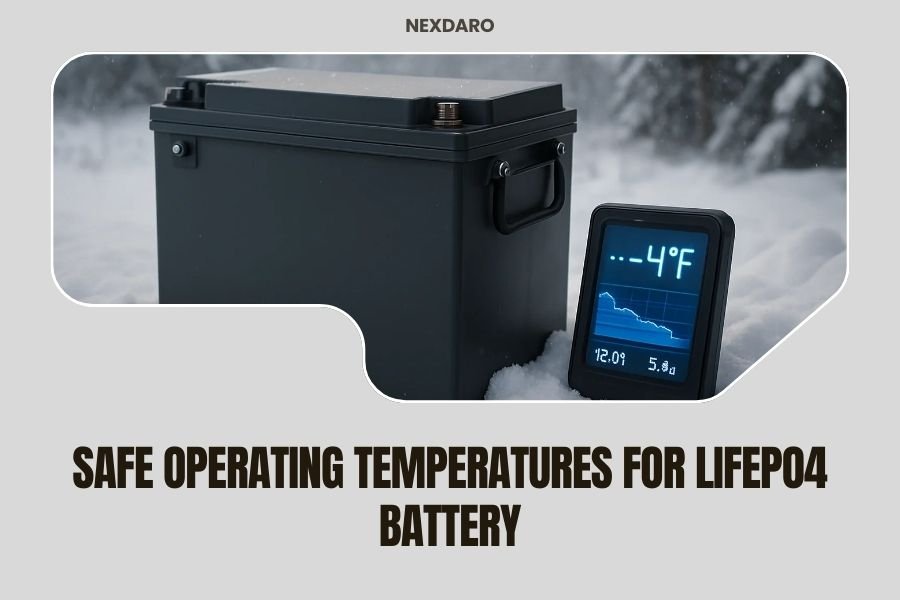
LiFePO4 batteries work best between 32°F to 113°F (0°C to 45°C) for charging and -4°F to 140°F (-20°C to 60°C) for discharging.
Operating your LiFePO4 battery outside these safe temperature ranges can reduce performance, damage cells, and create safety risks.
Why Temperature Matters for LiFePO4 Batteries
Think of your LiFePO4 battery like a person. Just as you feel sluggish in extreme heat or cold, batteries struggle when temperatures get uncomfortable.
I researched battery chemistry and found that temperature directly affects how lithium ions move between electrodes. When it’s too cold, ions move slowly. When it’s too hot, chemical reactions speed up dangerously.
Your portable power station depends on stable chemistry. Get the temperature wrong, and you’ll see shorter runtime, reduced lifespan, or complete failure.
Safe Charging Temperature Range
Charging requires the narrowest temperature window. Your LiFePO4 battery charges safely between 32°F and 113°F (0°C to 45°C).
Why such a tight range? Charging forces lithium ions back into the anode. This process generates heat and requires precise chemical balance.
What Happens Below 32°F
Cold charging creates lithium plating. Instead of ions storing properly in the anode, they form metallic deposits on the surface.
These deposits reduce capacity permanently. Worse, they can cause internal shorts and fire risks.
Many battery management systems (BMS) shut down charging below freezing. That’s your safety net working.
What Happens Above 113°F
Hot charging accelerates chemical breakdown. The electrolyte starts decomposing. Gas builds up inside cells.
I found that high-temperature charging can cut battery lifespan by 50% or more. Your 3,000-cycle battery might only last 1,500 cycles.
Signs Your Battery Is Too Hot
- Charging stops automatically
- Battery feels warm to touch
- Charging takes much longer than normal
- BMS shows temperature warnings
Safe Discharging Temperature Range
Discharging allows a wider temperature window: -4°F to 140°F (-20°C to 60°C).
Discharging puts less stress on battery chemistry. You’re just letting stored energy flow out, not forcing it back in.
Cold Weather Discharge Performance
Your battery works down to -4°F, but don’t expect full power. Cold slows chemical reactions.
At 14°F (-10°C), you might see 20-30% capacity reduction. The battery isn’t damaged – it just can’t deliver full energy until it warms up.
Hot Weather Discharge Limits
LiFePO4 handles heat better than other lithium batteries during discharge. You can safely use power up to 140°F (60°C).
That said, very hot discharge reduces efficiency. More energy gets wasted as heat instead of powering your devices.
Extreme Heat Warning Signs
- Battery case feels hot (over 120°F)
- Power output drops significantly
- BMS activates thermal protection
- Cooling fans run constantly
Storage Temperature Guidelines
Storage temperature affects long-term battery health. Aim for 50°F to 77°F (10°C to 25°C) for best results.
I came across research showing batteries age fastest in hot storage. Every 18°F temperature increase doubles the aging rate.
Short-Term Storage (Under 3 Months)
Your battery handles wider storage ranges for short periods. -4°F to 113°F (-20°C to 45°C) won’t cause damage.
Keep charge level between 50-60% for storage. This reduces stress on electrodes.
Long-Term Storage (3+ Months)
Stick to that ideal 50°F to 77°F range for extended storage. Your battery chemistry stays most stable here.
Check charge level every 3-6 months. Add charge if it drops below 40%.
How to Monitor Battery Temperature
Most quality portable power stations show battery temperature on the display or app.
No temperature reading? Touch the case. It should feel close to room temperature during normal use.
Built-In Temperature Sensors
Good LiFePO4 batteries have multiple temperature sensors. They monitor different parts of the battery pack.
The BMS uses these readings to protect your battery. It might reduce charging speed or shut down completely if things get too hot or cold.
External Temperature Monitoring
You can add external thermometers for more precise monitoring. Infrared thermometers work well for quick checks.
Stick-on temperature strips give continuous monitoring. They change color based on temperature range.
Managing Extreme Temperatures
Real life means dealing with weather extremes. Here’s how to protect your investment.
Cold Weather Solutions
Bring your portable power station indoors when possible. Even an unheated garage is warmer than outside.
Need to use it in the cold? Let it warm up gradually before charging. Rapid temperature changes stress the cells.
Pre-Warming Techniques
- Move battery to warm space 30 minutes before charging
- Use low-power discharge to generate internal heat
- Wrap in insulating materials (but don’t block vents)
- Start with reduced charging current if BMS allows
Hot Weather Solutions
Shade and airflow are your friends. Never leave your power station in direct sunlight or a hot car.
I found that internal temperatures can reach 160°F+ in enclosed spaces on hot days. That’s well above safe limits.
Cooling Strategies
- Use in shaded areas with good ventilation
- Point fans at the battery case during heavy use
- Take breaks during extended high-power draw
- Charge during cooler morning or evening hours
Temperature Effects on Battery Life
Operating temperature directly impacts how long your LiFePO4 battery lasts.
Research from battery manufacturers shows dramatic lifespan differences based on average operating temperature.
| Average Temperature | Expected Cycle Life | Capacity Retention |
|---|---|---|
| 77°F (25°C) | 3000+ cycles | 80% after 3000 cycles |
| 95°F (35°C) | 2500 cycles | 80% after 2500 cycles |
| 113°F (45°C) | 1500 cycles | 80% after 1500 cycles |
Calendar Aging vs Cycle Aging
Batteries age even when you don’t use them. High storage temperatures accelerate this calendar aging.
Keep your battery cool when not in use. The chemistry stays stable longer at moderate temperatures.
Seasonal Temperature Management
Different seasons bring different challenges for battery temperature management.
Winter Considerations
Cold weather reduces available capacity but doesn’t damage the battery. Plan for 20-30% less runtime in freezing conditions.
Never try to force-charge a frozen battery. Let it warm up naturally first.
Summer Precautions
Heat is your battery’s biggest enemy. Summer requires active temperature management.
Avoid charging during peak heat hours. Early morning or late evening charging keeps temperatures manageable.
Troubleshooting Temperature Issues
Sometimes your battery runs hot or cold despite your best efforts. Here’s how to diagnose problems.
Overheating During Normal Use
If your battery gets hot during light use, something’s wrong. Check for:
- Blocked cooling vents
- Failing cooling fans
- Damaged cells creating internal resistance
- BMS malfunction
When to Stop Using Your Battery
Stop immediately if the battery case exceeds 140°F (60°C) or shows these warning signs:
- Swelling or bulging case
- Strange odors
- Visible damage to case or connections
- Repeated thermal shutdowns
Professional Temperature Testing
Some situations require professional temperature analysis.
Battery service centers have thermal imaging cameras and precision instruments. They can spot hot spots and failing cells.
Consider professional testing if your battery repeatedly overheats or shows reduced capacity.
Future Temperature Management Technology
Battery temperature management keeps improving. Newer systems include:
- Active cooling with heat pumps
- Phase change materials for thermal buffering
- Smart charging that adjusts to ambient temperature
- Advanced BMS with predictive thermal management
Cost of Temperature Damage
Temperature abuse costs money. Replacing a damaged LiFePO4 battery pack can cost $200-2000+ depending on capacity.
Compare that to simple temperature management. A $20 thermometer and some basic precautions protect thousands of dollars in equipment.
Conclusion
Safe operating temperatures keep your LiFePO4 battery running strong for years. Remember the key ranges: 32°F to 113°F for charging, -4°F to 140°F for discharging, and 50°F to 77°F for storage.
Temperature management doesn’t require expensive equipment. Basic monitoring and common sense protection go a long way. Keep your battery out of extreme heat, let it warm up before cold-weather charging, and pay attention to temperature warnings.
Your portable power station investment deserves protection. Follow these temperature guidelines, and you’ll get thousands of reliable cycles from your LiFePO4 battery.
Can I charge my LiFePO4 battery in freezing weather?
No, charging below 32°F (0°C) can cause permanent damage through lithium plating. Most quality batteries have built-in protection that prevents charging when too cold. Bring the battery to a warmer location before charging.
How hot is too hot for LiFePO4 battery storage?
Storage temperatures above 113°F (45°C) accelerate aging and reduce battery lifespan. For long-term storage, keep temperatures between 50°F and 77°F (10°C to 25°C) for best results.
Will my battery work in 100°F summer heat?
Yes, LiFePO4 batteries can discharge safely up to 140°F (60°C). At 100°F, you’ll see normal performance but should avoid charging until temperatures drop below 113°F. Keep the battery shaded and well-ventilated.
What happens if my battery gets too cold while in use?
Cold temperatures reduce available capacity but don’t damage the battery. You might see 20-30% less runtime in freezing conditions. The full capacity returns when the battery warms back up to normal temperatures.
How can I tell if temperature has damaged my LiFePO4 battery?
Signs of temperature damage include reduced runtime, longer charging times, overheating during normal use, case swelling, or the BMS frequently activating thermal protection. If you notice these symptoms, have the battery professionally inspected.