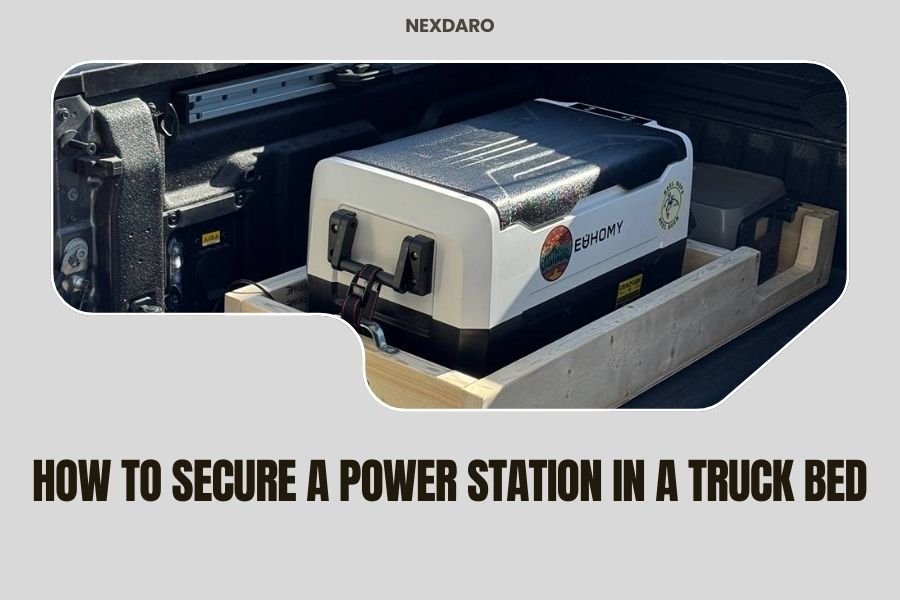
The best way to secure a power station in a truck bed is to use ratchet straps or tie-down points with padding underneath to prevent sliding and damage.
Most truck owners combine multiple methods like cargo nets, rubber mats, and securing straps to keep their power station safe during transport.
Why Power Station Security Matters in Your Truck
You spent good money on that portable power station. The last thing you want is to watch it slide around your truck bed like a pinball. I researched this topic after hearing too many stories about damaged units and ruined camping trips.
Your power station weighs between 20 to 100 pounds depending on the model. At highway speeds, even a sudden stop can turn it into a dangerous projectile. Plus, all that bouncing damages the internal battery and electronics.
Common Damage From Unsecured Power Stations
Research shows that most portable electronics fail from impact damage, not normal wear. Your power station faces these risks when loose:
- Cracked battery housing from sliding into tailgate
- Broken charging ports from side impacts
- Internal connection damage from constant vibration
- Scratched display screens
Essential Tools for Securing Your Power Station
You don’t need fancy equipment. Most securing methods use basic truck accessories you might already own.
Ratchet Straps and Tie-Downs
Ratchet straps work best for most truck beds. I found that 1-inch wide straps handle the weight without being overkill. Look for straps rated at least 500 pounds working load limit.
Your truck likely has built-in tie-down points. These metal loops or cleats anchor your straps properly. Don’t hook straps to plastic bed liner clips – they’ll break.
Strap Placement Tips
Run straps over your power station in an X pattern. This prevents forward, backward, and side movement. Avoid putting pressure directly on vents, ports, or the display screen.
Rubber Mats and Padding
A rubber truck bed mat stops sliding before it starts. The textured surface grips your power station’s bottom case. Rubber mats cost $30-80 but save you from constant re-adjusting.
Add foam padding around the unit for extra protection. Pool noodles work great and cost almost nothing. Cut them lengthwise and tape them to truck bed walls where your power station might hit.
Step-by-Step Securing Methods
Method 1: Basic Strap System
This works for most situations and takes 3 minutes to set up.
Step 1: Position Your Power Station
Place it against the front wall of your truck bed, behind the cab. This spot gets less bouncing than near the tailgate. Make sure vents aren’t blocked.
Step 2: Add Base Protection
Put a rubber mat or old towel underneath. This prevents scratches and adds grip.
Step 3: Run Your Straps
Hook one end to a tie-down point. Run the strap over your power station and hook the other end to the opposite tie-down point. Repeat with a second strap going the other direction.
Step 4: Tighten Carefully
Snug the straps down but don’t over-tighten. You want firm contact, not crushing pressure. The unit shouldn’t move when you push on it.
Method 2: Cargo Net System
Cargo nets spread the holding force across the whole unit. They work great for oddly shaped power stations.
Stretch the net over your power station and hook all four corners to tie-down points. The crisscross pattern holds everything in place without pressure points.
Method 3: Custom Cradle Build
Some truck owners build simple wooden cradles. Cut a piece of plywood to fit your power station’s base. Screw wooden strips around the edges to make walls.
Bolt this cradle to your truck bed. Your power station drops right in and can’t slide around. This works best if you haul the same unit regularly.
Protecting Your Power Station From Weather
Waterproof Covers
Most power stations aren’t fully waterproof. A sudden rainstorm can damage the electronics if water gets into vents or charging ports.
Truck bed covers work but limit access. A better option is a waterproof equipment bag. Marine supply stores sell them in various sizes. Look for ones with sealed zippers.
Ventilation Concerns
Don’t seal your power station completely in hot weather. The battery needs airflow to stay cool. Overheating shortens battery life and can be dangerous.
Use covers with vents or leave them partially open on hot days. Your power station’s manual lists safe operating temperatures.
Sun Protection
Direct sunlight heats up your power station quickly. Dark-colored units absorb more heat than light ones. I found that temperatures inside truck beds can hit 130°F on summer days.
Park in shade when possible. If you must park in sun, use a reflective cover or move the unit to the cab.
Special Considerations for Different Truck Types
Short Bed Trucks
Short beds mean less room and more bouncing. Your power station sits closer to the rear axle where bumps feel stronger.
Use extra padding in short beds. Consider mounting your power station sideways if it fits better. Just make sure vents stay clear.
Long Bed Trucks
Long beds give you more options but create new challenges. Your power station might slide the full length of the bed if not secured properly.
Use longer straps or multiple attachment points. Don’t assume the extra room means you can skip security measures.
Bed Liner Compatibility
Spray-in liners provide better grip than drop-in plastic liners. If you have a plastic liner, add a rubber mat for extra traction.
Some bed liners have built-in tie-down points. Others cover up your truck’s original points. Know what you’re working with before you load up.
Common Mistakes to Avoid
Over-Tightening Straps
Your power station’s case isn’t designed for extreme pressure. Over-tight straps can crack the housing or damage internal parts.
Tighten until the unit doesn’t move, then stop. If straps leave dents in the case, you’ve gone too far.
Blocking Cooling Vents
Power stations generate heat during charging and use. Blocked vents cause overheating and automatic shutdowns.
Check your owner’s manual for vent locations. Keep them clear even when securing the unit.
Ignoring Weight Distribution
A heavy power station affects your truck’s balance and braking. Load it as close to the center of your truck bed as possible.
Don’t put it right against the tailgate where it adds to rear weight bias. This makes your truck harder to control.
Maintenance and Safety Checks
Regular Strap Inspections
Check your straps before every trip. Look for fraying, cuts, or weak spots. UV light and weather break down strap material over time.
Replace straps showing any damage. A failed strap on the highway puts everyone at risk.
Power Station Health Checks
Inspect your power station after transport. Look for new scratches, loose parts, or damaged ports. Catch problems early before they get worse.
Test all functions after a long or rough trip. Make sure charging ports, outlets, and displays work normally.
Advanced Securing Techniques
Multi-Point Anchoring
For valuable or extra-heavy units, use four or more anchor points. This spreads the load and provides backup if one strap fails.
Some truck accessories add extra tie-down points to your bed. These bolt-on rails give you more anchoring options.
Shock Absorption
Foam padding helps but doesn’t stop all vibration. Air-filled cushions work better for long trips on rough roads.
Camping stores sell inflatable equipment pads. These provide cushioning without taking up storage space when deflated.
| Securing Method | Cost | Setup Time | Best For |
|---|---|---|---|
| Ratchet Straps | $15-30 | 3 minutes | Most situations |
| Cargo Net | $20-40 | 2 minutes | Odd-shaped units |
| Custom Cradle | $50-100 | 30 minutes build | Regular hauling |
| Rubber Mat | $30-80 | 1 minute | Base protection |
Conclusion
Securing your power station properly protects your investment and keeps everyone safe on the road. The basic strap method works for most people and costs less than $30. Add a rubber mat for extra security.
Remember to check vent clearance, avoid over-tightening, and inspect your equipment regularly. A few minutes of prep work saves you from expensive repairs and dangerous situations. Your power station will serve you better when it arrives at your destination in perfect condition.
How tight should I make the securing straps?
Tighten straps until your power station doesn’t move when you push on it, but avoid creating pressure dents in the case. The goal is firm contact without crushing force that could damage internal components.
Can I leave my power station in the truck bed overnight?
Yes, but use a waterproof cover and consider security. Power stations are theft targets, so park in well-lit areas or remove valuable units. Cold temperatures can reduce battery performance but won’t cause permanent damage.
What’s the maximum weight I can safely secure with standard ratchet straps?
Standard 1-inch ratchet straps handle up to 500 pounds working load, which covers all consumer power stations. Use two straps minimum in an X pattern for units over 50 pounds to distribute the holding force properly.
Do I need special equipment for short bed trucks?
Short beds need extra padding due to increased bouncing near the rear axle. Consider mounting your power station sideways for better fit, and use foam padding or pool noodles against the bed walls where impacts might occur.
Should I remove the power station for car washes?
Yes, remove your power station before automatic car washes or pressure washing your truck. High-pressure water can damage electronics through vents and charging ports, even with covers installed.