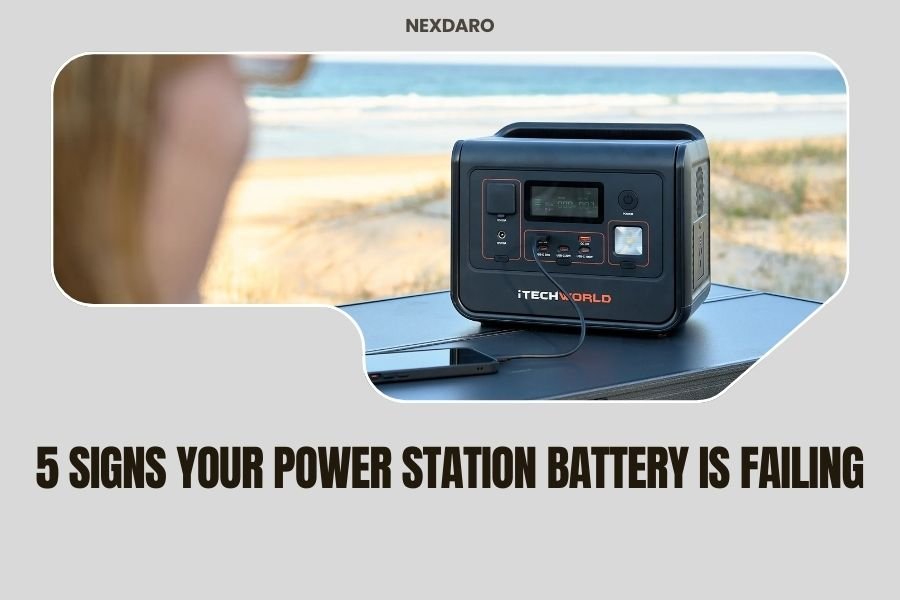
Your power station battery is failing if it holds charge for less than half its original runtime, takes much longer to recharge, or shuts down unexpectedly during use.
Physical signs like swelling, overheating, or visible damage to the battery casing also indicate your power station battery needs immediate replacement.
What Happens When Your Power Station Battery Dies
Picture this: you’re camping with friends, ready to charge your phone for that perfect sunset photo. You press the power button on your portable power station. Nothing happens.
A dead battery in your power station can ruin outdoor adventures and leave you stranded without backup power. The good news? Most batteries give you warning signs before they completely fail.
I researched power station failures and found that most batteries show clear symptoms months before dying completely. Catching these early signs saves you money and prevents those frustrating moments when you need power most.
Sign 1: Your Runtime Drops Dramatically
This is the biggest red flag. When your power station used to run your mini fridge for 8 hours but now dies after 3 hours, your battery is losing capacity.
How to Test Your Runtime
Run a simple test with a device you know well. Charge your laptop or phone and time how long it takes versus when the power station was new.
Write down these numbers. If your runtime drops below 50% of the original capacity, start shopping for a replacement battery.
Why This Happens
Lithium batteries naturally lose capacity over time. Each charge cycle wears down the battery cells slightly.
Most power station batteries last 500-2000 charge cycles before significant capacity loss. Heavy use speeds up this process.
What’s Normal vs Concerning
Normal: 10-20% capacity loss after 2-3 years of regular use.
Concerning: 50% or more capacity loss, regardless of age.
Sign 2: Charging Takes Forever
Your power station used to charge overnight. Now it takes 2-3 days to reach full capacity. This screams battery problems.
Quick Charging Test
Time how long your power station takes to charge from 0% to 100%. Compare this to the manufacturer’s specifications or your memory of when it was new.
If charging time doubles or triples, your battery cells are struggling to accept power efficiently.
Internal Resistance Issues
As batteries age, their internal resistance increases. Think of it like trying to fill a water bottle through a straw that keeps getting narrower.
Higher resistance means slower charging and more heat generation during the process.
Temperature During Charging
Feel your power station while it charges. Excessive heat during charging often accompanies slow charging speeds.
Your unit should stay warm, not hot. If it’s too hot to touch comfortably, stop using it immediately.
Sign 3: Unexpected Shutdowns
Nothing’s more frustrating than your power station dying mid-use, especially when the display showed 50% battery remaining.
Voltage Sag Problems
Weak batteries can’t maintain steady voltage under load. When you plug in a device, the battery voltage drops so low that the power station shuts down to protect itself.
This happens even when the battery shows charge remaining on the display.
Testing Under Load
Connect a high-power device like a hair dryer or power tool. A healthy battery should handle the rated load without shutting down.
If your power station shuts off immediately or within minutes, the battery likely can’t deliver its rated power anymore.
Display vs Reality
Battery displays estimate charge based on voltage readings. Damaged cells give false voltage readings, making the display show more charge than actually available.
Sign 4: Physical Battery Damage
Your eyes often spot battery problems before electronic tests do. Physical damage is a serious safety concern.
Swelling and Bulging
Lithium batteries swell when they fail. Check if your power station’s case looks pushed out or if panels don’t align properly anymore.
Battery swelling can crack the case and expose dangerous components. Stop using a swollen power station immediately.
Corrosion and Leakage
Look for white, green, or brown residue around battery connections. This indicates electrolyte leakage, which damages internal components.
Clean corrosion carefully with protective gloves, but understand that corroded batteries need replacement.
Case Cracks and Damage
Dropped your power station? Inspect the case carefully for cracks, especially around the battery compartment.
Even small cracks can let moisture reach the battery, causing rapid deterioration.
Sign 5: Overheating Issues
A properly working power station stays cool during normal use. Excessive heat indicates internal problems, usually with the battery.
Normal vs Dangerous Temperatures
Your power station should feel slightly warm during heavy use. If it’s too hot to hold or touch comfortably, something’s wrong.
I found that most power stations have built-in temperature sensors that shut down the unit when it overheats. If yours shuts down frequently due to heat, suspect battery issues.
Heat Generation Sources
Failing battery cells generate extra heat due to increased internal resistance. This heat damages other cells, creating a cascade effect.
Poor ventilation makes the problem worse, but the root cause is usually battery degradation.
Testing Temperature
Use your power station normally and feel different areas of the case. The battery compartment should be the coolest area.
If the battery area feels hotter than the inverter or charging circuits, your battery likely needs replacement.
What Kills Power Station Batteries
Understanding what damages batteries helps you prevent early failure in your next power station.
Extreme Temperatures
Heat and cold both damage lithium batteries. Storing your power station in a hot car trunk or freezing garage shortens battery life significantly.
Research shows that battery life doubles when stored at room temperature versus extreme conditions (Battery University).
Deep Discharge Cycles
Running your battery to 0% regularly damages the cells. Most manufacturers recommend keeping charge levels between 20% and 80% for daily use.
Overcharging Problems
Leaving your power station plugged in constantly can overcharge the battery, generating heat and reducing lifespan.
When to Replace vs Repair
Not every battery problem means you need a new power station. Sometimes replacement batteries are available and cost-effective.
Cost Comparison
Compare replacement battery cost to buying a new power station. If battery replacement costs more than 60% of a new unit’s price, buy new.
Factor in labor costs if you can’t replace the battery yourself.
Age and Warranty
Power stations under 2 years old with battery problems might have warranty coverage. Check your documentation before paying for repairs.
| Age | Recommendation | Reason |
|---|---|---|
| Under 1 year | Warranty claim | Likely manufacturing defect |
| 1-3 years | Replace battery | Cost-effective repair |
| Over 4 years | Buy new unit | Other components likely aging |
Safety Warnings
Failed batteries can be dangerous. Never ignore these warning signs, especially if you notice multiple symptoms.
Fire and Explosion Risk
Swollen or damaged lithium batteries can catch fire or explode. If your power station shows physical damage, stop using it immediately.
Store damaged units outdoors away from buildings until you can dispose of them properly.
Proper Disposal
Don’t throw power station batteries in regular trash. Most electronics stores and service centers accept lithium batteries for recycling.
Conclusion
Your power station battery gives you clear warning signs before complete failure. Watch for reduced runtime, slow charging, unexpected shutdowns, physical damage, and overheating issues.
Catching these signs early prevents dangerous situations and helps you plan for replacement or repair. Remember that battery problems often mean safety risks, so don’t ignore multiple warning signs.
Most power station batteries last 3-5 years with proper care. When yours starts showing these symptoms, start shopping for solutions before you’re left without power when you need it most.
How long should a power station battery last?
Most quality power station batteries last 3-5 years or 500-2000 charge cycles with proper care. Heavy daily use shortens this lifespan, while occasional use can extend it to 7-8 years.
Can I replace just the battery in my power station?
Many power stations allow battery replacement, but it varies by model. Check your manual or contact the manufacturer. DIY replacement voids warranties and requires electrical knowledge for safety.
Is it safe to use a power station with a failing battery?
No, especially if you see physical damage, swelling, or overheating. These symptoms indicate potential fire or explosion risks. Stop using damaged units immediately and store them safely outdoors.
Why does my power station battery drain when not in use?
All power stations have parasitic drain from displays, circuits, and battery management systems. Normal drain is 1-5% per month. Faster drain often indicates aging batteries or faulty internal components.
What temperature is too hot for a power station battery?
If your power station feels too hot to hold comfortably or exceeds 104°F (40°C) during normal use, it’s overheating. Most units shut down automatically around 140°F (60°C) to prevent damage.