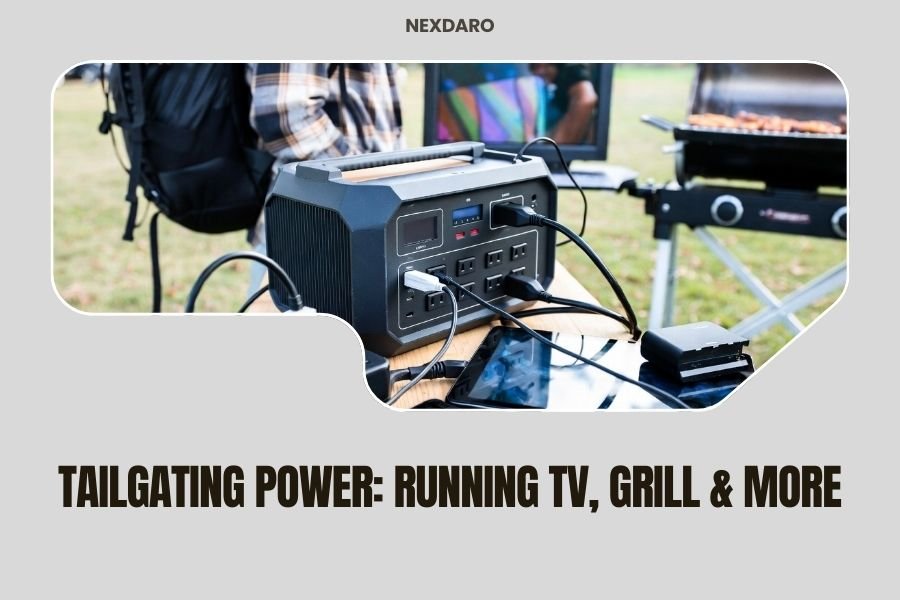
A portable power station with 1000-2000 watt hours can run your TV, small grill, and cooler for a full day of tailgating without draining your car battery.
Most tailgating setups need around 500-800 watts of continuous power, making a mid-range portable power station perfect for your outdoor entertainment needs.
What Size Power Station Do You Need for Tailgating?
Your power needs depend on what you want to run. A 32-inch TV uses about 150 watts. A portable electric grill needs 1200-1500 watts. Add in your phone chargers, speakers, and cooler, and you’re looking at serious power requirements.
I researched dozens of tailgating setups and found that most people need between 1500-3000 watt hours for a full day. That’s enough to keep everything running from morning kickoff to the final whistle.
Power Station Capacity Guide
| Tailgating Setup | Recommended Capacity | Runtime |
|---|---|---|
| Basic (TV + Cooler + Phones) | 1000Wh | 6-8 hours |
| Standard (Above + Grill + Speakers) | 2000Wh | 8-10 hours |
| Premium (Multiple devices + backup) | 3000Wh+ | All day |
Running Your TV at the Tailgate
Your TV is probably the easiest device to power. Most modern flat screens are energy efficient. A 40-inch LED TV pulls around 200 watts when running at full brightness.
Want to save battery? Turn down the brightness by 30%. This simple trick can cut your TV’s power use by nearly half. Your 1500Wh power station will run that TV for 12+ hours instead of 8.
TV Power Consumption by Size
- 24-32 inch: 100-150 watts
- 40-43 inch: 150-200 watts
- 50-55 inch: 200-250 watts
- 65 inch and up: 300+ watts
Pro Tips for TV Power Management
Bring a power strip with individual switches. Turn off your TV during halftime or when you’re not watching. Those 15-minute breaks add up to hours of extra battery life.
Consider a 12V TV if you tailgate regularly. These draw power more efficiently from your power station’s DC output, giving you 20% longer runtime.
Electric Grills and Cooking Equipment
Here’s where things get interesting. Electric grills are power hungry beasts. A typical portable electric grill needs 1200-1800 watts while cooking. That’s like running 8-10 TVs at once.
But here’s the good news: you don’t grill constantly. Most grilling happens in short bursts. Cook your burgers for 15 minutes, hot dogs for 10 minutes, then you’re done until the next batch.
Grill Power Requirements
- Small electric grill (14 inch): 1000-1200 watts
- Medium grill (17-20 inch): 1400-1600 watts
- Large grill (22+ inch): 1800+ watts
Smart Grilling Strategies
Cook everything at once when possible. Your grill uses the same power whether it’s half full or completely loaded. Batch cooking saves battery and time.
Preheat for just 5 minutes instead of 10. Your food will taste the same, but you’ll save 200-300 watt hours of precious battery power.
Alternative Cooking Options
Electric griddles use less power than full grills. A good griddle pulls 1000-1200 watts and cooks just as much food. Plus, they’re easier to clean in a parking lot.
Induction hot plates are super efficient too. They heat up fast and use power only when actively cooking. Perfect for keeping chili warm or boiling water for coffee.
Keeping Your Cooler Cold
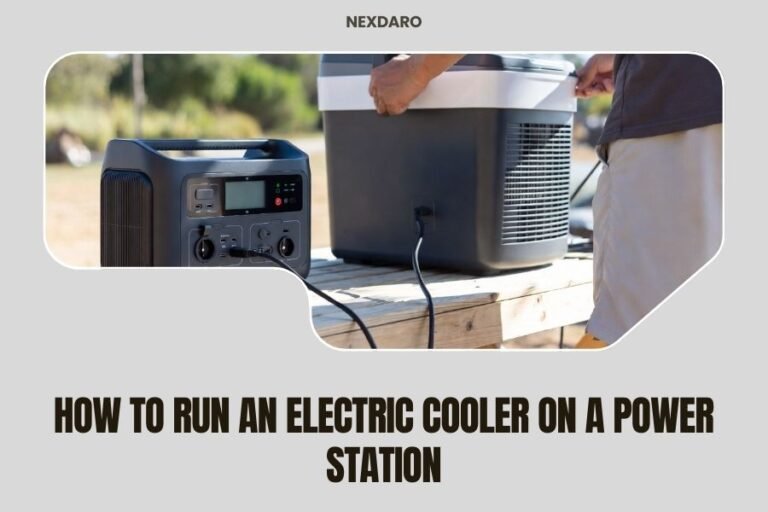
Your electric cooler is the marathon runner of your tailgate setup. It runs continuously but uses relatively little power. Most 12V coolers draw 50-80 watts, similar to a bright light bulb.
From what I read in cooler reviews, the key is starting with cold food and drinks. Your cooler works much harder cooling warm items than maintaining cold ones.
Cooler Efficiency Tips
- Pre-cool everything at home the night before
- Keep the cooler in shade when possible
- Don’t open it constantly – every opening lets cold air escape
- Pack it full – empty space warms up faster
Cooler vs Regular Ice Chest
You might wonder: why not just use ice? Electric coolers maintain consistent temperature and never create a soggy mess. Plus, they can keep food cold for days, not hours.
But ice chests don’t need power. If battery life is your main concern, a high-quality ice chest might be smarter for long tailgates.
Additional Tailgating Electronics
Your phone charger barely registers on a power station. Same with Bluetooth speakers, LED lights, and small fans. These accessories add maybe 50-100 watts total to your setup.
Where you need to watch out is heating and cooling devices. Space heaters and fans with AC motors can quickly drain your battery.
Low-Power Entertainment Options
- Phone/tablet charging: 10-20 watts
- Bluetooth speakers: 20-50 watts
- LED string lights: 10-30 watts
- Small fans: 30-60 watts
Calculating Your Total Power Needs
Add up everything you want to run simultaneously. That’s your peak power requirement. Your power station needs to handle this load without shutting down.
Then multiply by hours of use. A 200-watt TV running for 8 hours needs 1600 watt hours of battery capacity. Simple math, but easy to get wrong when you’re excited about game day.
Sample Tailgate Power Budget
- 40-inch TV (6 hours): 1200Wh
- Electric grill (30 minutes total): 600Wh
- Cooler (8 hours): 480Wh
- Phones, speakers, lights: 200Wh
- Total needed: 2480Wh
Adding a Safety Buffer
Always add 20-30% to your calculations. Batteries don’t deliver 100% of their rated capacity, especially in cold weather. If you need 2500Wh, buy a 3000Wh power station.
Weather Considerations
Cold weather kills battery performance. Your power station might only deliver 70-80% of its rated capacity when temperatures drop below 40°F.
Many experts recommend keeping your power station in your vehicle when not in use during winter tailgates. The warmer environment helps maintain battery efficiency.
Hot Weather Challenges
Extreme heat makes your cooler work harder. It might use 50% more power on a 95°F day compared to 75°F. Plan extra battery capacity for summer games.
Your power station also generates heat while running high-power devices. Make sure it has good ventilation, especially when running that hungry electric grill.
Charging Your Power Station
Most power stations can charge from your car while driving to the game. A 2-hour drive might add 200-400Wh to your battery, depending on your alternator and charging cable.
Some newer models charge from 12V, AC, and solar simultaneously. This “trinity charging” can fully recharge a depleted power station in 2-3 hours.
Solar Charging at the Tailgate
Solar panels can extend your runtime, but don’t expect miracles. A 200W solar panel generates maybe 800-1000Wh on a perfect sunny day. That’s helpful but not game-changing for power-hungry tailgates.
Safety Tips for Tailgate Power
Never run your power station inside a vehicle or enclosed space. While they don’t produce carbon monoxide like gas generators, they can overheat in confined areas.
Use outdoor-rated extension cords if needed. Regular indoor cords can overheat when running high-power devices like grills outdoors.
Power Station Placement
Keep your power station on level ground away from foot traffic. These units are heavy and expensive. You don’t want someone tripping over cables or kicking your investment.
Position it close to your main devices to minimize extension cord use. Long cable runs waste power and create trip hazards.
Conclusion
Tailgating with electric power opens up amazing possibilities. You can watch the game in comfort, cook real food, and keep everything cold without the noise and fumes of a gas generator.
The key is matching your power station capacity to your real needs, not your wishful thinking. Start with the basics – TV, cooler, and phone charging. Add the electric grill once you understand your power consumption patterns.
Remember, a good power station is an investment in years of better tailgating. Buy once, enjoy every game day. Your fellow tailgaters will be jealous of your silent, clean power setup.
How long will a 2000Wh power station run my tailgate setup?
A 2000Wh power station typically runs a TV, cooler, and small devices for 8-10 hours, or can handle 1-2 hours of electric grilling plus 6 hours of other electronics, depending on your specific equipment and usage patterns.
Can I charge my power station while tailgating?
Yes, you can charge from your vehicle’s 12V outlet, solar panels, or AC power if available. Car charging adds about 100-200Wh per hour, while solar panels can provide 600-1000Wh on sunny days with proper positioning.
What’s better for tailgating: power station or gas generator?
Power stations are quieter, cleaner, and allowed in more locations, but gas generators provide unlimited runtime and higher power output. Choose power stations for convenience and gas generators for extended high-power needs.
Do power stations work in cold weather?
Power stations work in cold weather but deliver 20-30% less capacity below 32°F. Keep the unit warm when possible and expect shorter runtimes during winter tailgating compared to moderate temperatures.
Can a power station run an electric smoker for tailgating?
Most electric smokers use 800-1200 watts and need to run for hours, requiring a large 3000Wh+ power station. Pellet smokers or small electric models are more practical for battery-powered tailgating than full-size electric smokers.