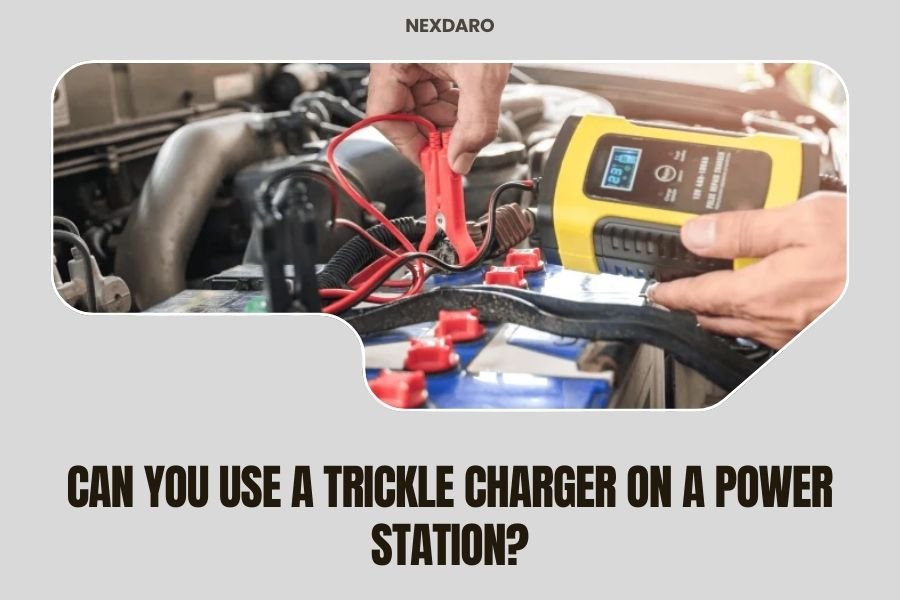
Yes, you can use a trickle charger on a power station, but only if your unit accepts DC input charging and the voltages match properly.
Most modern portable power stations work well with trickle chargers designed for their specific battery chemistry and voltage requirements.
What Is a Trickle Charger and How Does It Work?
A trickle charger sends a small, steady current to your battery. Think of it like sipping water through a straw instead of chugging from a bottle.
These chargers typically deliver 1-2 amps of power. That’s much slower than standard AC chargers that pump out 5-10 amps or more.
Why Would You Want Slow Charging?
Slow charging helps your battery last longer. Heat damages lithium batteries over time. Fast charging creates more heat than slow charging.
I found research showing that batteries charged at lower rates can handle more charge cycles before wearing out (Battery University).
Types of Trickle Chargers
You’ll find two main types on the market:
- Solar trickle chargers that connect to small panels
- AC-powered trickle chargers that plug into wall outlets
- DC trickle chargers for car charging ports
- Smart trickle chargers with automatic shutoff features
Compatibility Check: Will Your Power Station Accept Trickle Charging?
Not every power station plays nice with trickle chargers. You need to check a few things first.
Voltage Requirements
Your trickle charger voltage must match your power station’s input range. Most portable power stations accept 12V, 18V, or 19-24V input.
Check your user manual for the exact voltage range. Using the wrong voltage can damage your unit or simply not work at all.
Input Port Types
Power stations come with different charging ports:
- DC barrel plugs (most common)
- XT60 connectors
- MC4 solar connectors
- Anderson Powerpole connections
Your trickle charger needs the right connector or an adapter that fits securely.
Minimum Current Requirements
Some power stations won’t start charging unless they detect a minimum current flow. This safety feature prevents damage from faulty chargers.
If your trickle charger puts out less than this minimum, your power station might ignore it completely.
Benefits of Using Trickle Chargers on Power Stations
Why would you choose slow charging when fast options exist? Here are the real advantages.
Extended Battery Life
Gentle charging reduces stress on lithium cells. I came across studies showing that charging at 0.5C (half the battery capacity per hour) versus 1C can double battery lifespan.
Your 500Wh power station charged at 250W will typically last longer than one hammered with 500W+ charging speeds.
Cooler Operation
Heat kills batteries. Trickle charging generates less heat than fast charging.
Ever noticed your phone getting warm during rapid charging? Same thing happens inside power stations, just on a bigger scale.
Quieter Charging Process
Many power stations run cooling fans during fast charging. Trickle charging often stays cool enough to keep fans silent.
Perfect for overnight charging in your bedroom or RV without noise.
Solar Integration Benefits
Solar panels naturally provide trickle charging during cloudy conditions. Your power station can sip power all day instead of waiting for perfect sun.
This gives you more total energy collected, even when conditions aren’t ideal.
Potential Drawbacks and Limitations
Trickle charging isn’t always the best choice. Let’s be honest about the downsides.
Extremely Slow Charging Times
A 1000Wh power station might take 20-50 hours to fully charge with a 2A trickle charger. That’s painfully slow if you need power quickly.
Compare that to 6-8 hours with a standard AC charger, and you see the trade-off clearly.
Efficiency Concerns
Power stations have internal circuits that consume small amounts of power even while charging. During very slow charging, this self-consumption becomes a bigger percentage of total input.
You might lose 10-15% efficiency with ultra-slow charging versus 5-8% with normal speeds.
Weather and Temperature Sensitivity
Cold weather reduces charging efficiency. Your trickle charger’s already slow rate gets even slower when temperatures drop below 40°F.
Hot weather above 85°F can trigger thermal protection, stopping charging completely until things cool down.
Step-by-Step Setup Guide
Ready to connect your trickle charger? Follow these steps for safe setup.
Equipment Check
Gather these items before starting:
- Your power station and user manual
- Compatible trickle charger
- Proper connector cables or adapters
- Multimeter for voltage checking (recommended)
Safety First
Turn off your power station before connecting any charger. Most units have a main power button or switch.
Check that your trickle charger is also switched off or disconnected from power.
Connection Process
Connect the charging cable to your power station’s DC input port first. Make sure it clicks or screws in securely.
Then connect the other end to your trickle charger. Double-check that positive and negative connections match if you’re using bare wire connections.
Power Up Sequence
Turn on your trickle charger first. Many units have LED indicators showing output status.
Turn on your power station next. Look for charging indicators on the display screen.
Monitoring and Maintenance Tips
Trickle charging works best with some attention and care.
Regular Progress Checks
Check charging progress every few hours initially. This helps you spot problems early.
Most power stations show input wattage on their displays. You should see steady, low numbers during trickle charging.
Temperature Monitoring
Feel the power station case occasionally. It should stay cool or slightly warm during trickle charging.
If it gets hot, something’s wrong. Disconnect immediately and check your connections.
Automatic Shutoff Features
Smart trickle chargers stop charging when batteries reach 100%. Basic chargers keep pushing power even when full.
If your charger lacks auto-shutoff, manually disconnect it when charging completes to prevent overcharging.
Common Problems and Solutions
Even simple trickle charging can hit snags. Here’s how to fix the most common issues.
No Charging Activity
Your power station display shows no input power? Check these things first:
- Verify all connections are tight and secure
- Test your trickle charger with a multimeter
- Make sure your power station’s input voltage range matches
- Try a different charging cable if available
Extremely Slow Progress
Charging seems slower than expected? This usually means your charger output is lower than advertised or your power station has high self-consumption.
Calculate expected charge time: Battery capacity divided by charger output gives you rough hours needed.
Charging Stops Randomly
Intermittent charging often points to loose connections or voltage fluctuations. Solar trickle chargers do this when clouds pass over.
Secure all connections first. If using solar, this behavior is normal and harmless.
Best Practices for Long-Term Success
Want years of reliable trickle charging? Follow these expert recommendations.
Charge Level Management
Don’t let your power station sit at 100% charge for weeks. Lithium batteries prefer staying between 20-80% when stored long-term.
I found that many battery experts recommend charging to 80%, using down to 20%, then repeating the cycle (IEEE research).
Environmental Considerations
Keep your charging setup in a cool, dry place. Avoid direct sunlight on the power station even if your solar panel needs sun.
Garages, covered patios, and indoor spaces work better than hot car trunks or direct outdoor exposure.
Seasonal Adjustments
Winter charging takes longer and may require moving equipment indoors when temperatures drop below freezing.
Summer heat can trigger thermal protection. Provide shade and airflow around your power station during hot weather charging.
Conclusion
Trickle charging your power station can extend battery life and provide quiet, gentle charging when you’re not in a hurry. Just make sure your equipment matches voltage requirements and connection types.
The slow charging speeds won’t work for emergency situations, but they’re perfect for maintenance charging and solar integration. Monitor your setup initially to catch any problems early.
Remember that every power station is different. Check your manual for specific charging guidelines and limitations before connecting any trickle charger.
Can I leave a trickle charger connected to my power station all winter?
Only if your trickle charger has automatic shutoff features and your power station supports pass-through charging. Check both manuals for long-term connection guidelines. Most experts recommend disconnecting for extended storage periods.
Will trickle charging void my power station warranty?
Using approved charging methods won’t void warranties, but using incompatible chargers might. Stick to voltage ranges and connection types specified in your user manual to stay safe.
How do I know if my trickle charger output is too low for my power station?
If your power station display shows no input power after proper connection, the current might be below minimum detection levels. Try a slightly higher output charger or contact the manufacturer for minimum input specifications.
Can I use a car battery trickle charger on my portable power station?
Only if voltages match and you have proper connectors. Car battery chargers are usually 12V, which works for some power stations but not others. Always verify compatibility before connecting any automotive charging equipment.
Does trickle charging work better than fast charging for battery health?
Research shows slower charging generally causes less battery degradation over time, but the difference varies by battery chemistry and design. Lithium iron phosphate batteries handle both charging speeds well, while standard lithium-ion benefits more from gentler charging rates.