A portable power station is a rechargeable battery pack that stores electricity and powers your devices anywhere you go. Think of it as a giant power bank that can run laptops, phones, lights, and even small appliances when you’re camping, during outages, or working outdoors.
These compact power sources typically range from 100 to 3000 watt-hours and feature multiple outlets including AC plugs, USB ports, and 12V sockets for maximum versatility.
How Does a Portable Power Station Work?
Your portable power station works like a rechargeable battery on steroids. Inside, lithium-ion cells store electrical energy that gets converted through an inverter to power your devices.
You charge it at home using a wall outlet, in your car with a 12V adapter, or through solar panels. Once charged, it becomes your personal power grid wherever you need it.
The Basic Components Inside
Every power station contains four main parts. The battery cells store energy. The inverter converts DC power to AC power for regular household items.
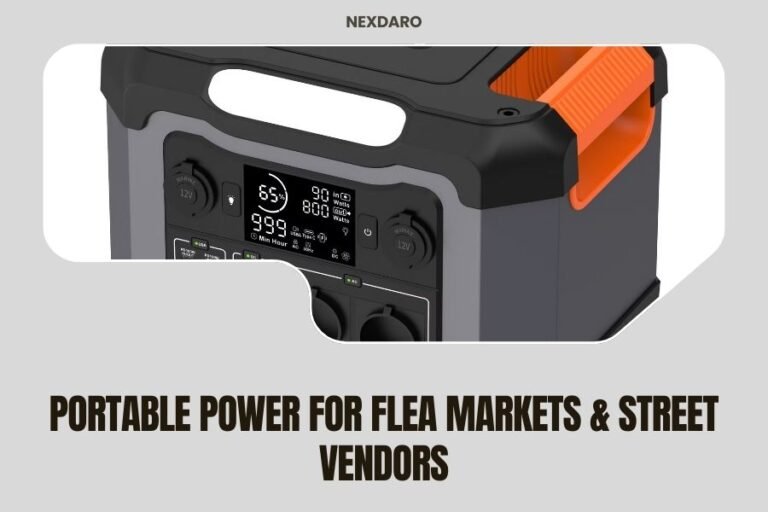
A charge controller manages power flow to prevent overcharging. The display screen shows you battery level, input/output watts, and remaining runtime.
What Can You Power With One?
Your power needs determine what you can run. Small units (100-300Wh) charge phones, tablets, and LED lights for hours. They’re perfect for short camping trips or emergency phone charging.
Medium units (300-1000Wh) power laptops, CPAP machines, mini fridges, and fans. These work great for weekend getaways or home backup power.
Heavy-Duty Applications
Large power stations (1000Wh+) can run power tools, electric grills, coffee makers, and multiple devices at once. Some even power small refrigerators for days.
I found that many RV travelers use 2000Wh+ units to run their entire setup off-grid. Just remember – higher wattage appliances drain your battery faster.
Types of Portable Power Stations
You’ll find three main categories when shopping. Each serves different needs and budgets.
Entry-Level Models (Under 500Wh)
These lightweight options weigh 5-15 pounds and cost $200-500. They’re great for phone charging, small electronics, and LED lighting.
Perfect for day trips, emergency kits, or anyone who just needs basic power backup. Battery life typically lasts 2-5 years with regular use.
Mid-Range Units (500-1500Wh)
The sweet spot for most people. These units handle laptops, small appliances, and medical devices. They weigh 15-35 pounds and cost $500-1200.
Great for camping, tailgating, or powering your home office during outages. Many include solar charging capabilities and fast-charging ports.
Heavy-Duty Stations (1500Wh+)
These powerhouses replace gas generators for many applications. They run power tools, large appliances, and whole campsites. Expect to pay $1200-3000+.
Weight ranges from 35-80 pounds, so portability becomes limited. Many include wheels for easier transport.
Key Features to Look For
Battery capacity matters most. Measured in watt-hours (Wh), this tells you how long your devices will run. Calculate your needs by multiplying device watts by hours of use.
Port variety gives you flexibility. Look for AC outlets, USB-A, USB-C, and 12V sockets. More ports mean you can charge multiple devices simultaneously.
Charging Speed and Options
Fast charging saves time. Some units recharge from 0-80% in under two hours using wall power. Solar charging takes longer but gives you renewable energy anywhere.
Car charging works great for road trips. Many units can charge while you drive, arriving at your destination with full power.
Safety Features You Need
Quality units include built-in protection systems. Overcharge protection prevents battery damage. Short circuit protection keeps you safe from electrical faults.
Temperature monitoring shuts down the unit if it gets too hot. From what I read, reputable brands like Goal Zero and Jackery include all these safety features.
Portable Power Station vs Generator
The choice depends on your specific needs. Here’s how they compare:
| Feature | Power Station | Gas Generator |
|---|---|---|
| Noise Level | Silent operation | Very loud |
| Indoor Use | Completely safe | Never – carbon monoxide risk |
| Maintenance | None required | Regular oil changes, fuel storage |
| Runtime | Limited by battery | Unlimited with fuel |
| Environmental Impact | Zero emissions | Produces emissions |
When to Choose a Power Station
Pick a power station for indoor use, quiet operation, and clean energy. They’re perfect for apartments, RVs, and any situation where noise matters.
You’ll also appreciate the instant power – no pull cords or warmup time. Just press a button and you’re ready to go.
When Generators Make More Sense
Generators win for extended runtime and high power needs. Construction sites, large RVs, and whole-home backup often require generator power.
If you need to run power-hungry appliances for days, a generator with fuel supply beats any battery system.
How to Choose the Right Size
Start by listing what you want to power. Note each device’s wattage and how many hours you’ll use it daily.
Add up your total watt-hours per day. Then choose a power station with 20-30% more capacity than your calculation. This buffer accounts for efficiency losses and unexpected needs.
Common Power Requirements
Smartphones use about 10-15 watts when charging. Laptops typically need 45-85 watts. LED lights draw 5-15 watts each.
Small fridges use 40-100 watts continuously. Coffee makers spike to 800-1200 watts but only run for minutes. CPAP machines need 30-60 watts all night.
Real-World Examples
For weekend camping with phone charging and LED lights, 200-400Wh works fine. A week-long RV trip with laptop work needs 800-1200Wh minimum.
Emergency home backup for essential devices requires 1000-2000Wh. Off-grid living or work sites often need 2000Wh or multiple units.
Battery Technology Differences
Most modern power stations use lithium-ion batteries. They’re lightweight, charge quickly, and last 2000-4000 charge cycles.
Lithium iron phosphate (LiFePO4) batteries cost more but last longer – often 6000+ cycles. They’re also safer and work better in extreme temperatures.
Why Lithium Beats Lead-Acid
Older power stations used lead-acid batteries. They’re heavy, charge slowly, and die after 300-500 cycles. You’ll find them in budget units, but lithium is worth the extra cost.
Lithium also maintains voltage better as it drains. Your devices get consistent power instead of gradually weakening output.
Solar Charging Capabilities
Many power stations accept solar panel input. This turns your unit into a renewable energy system that never runs out of power.
Solar charging works best in direct sunlight. Expect 4-8 hours to fully charge a medium-sized unit with 100-200 watts of solar panels.
Choosing Solar Panels
Match your solar wattage to your power station’s input capacity. More watts charge faster, but check maximum input limits to avoid damage.
Folding solar panels work great for camping. Fixed panels suit RVs or permanent installations. I found that experts recommend starting with 100-200 watts for most applications.
Maintenance and Lifespan
Power stations need minimal maintenance. Keep them clean and dry. Store at 50-80% charge if not using for months.
Avoid extreme temperatures when possible. Hot environments reduce battery life. Cold weather temporarily reduces capacity but won’t cause permanent damage.
Maximizing Battery Life
Don’t drain your battery to zero regularly. Lithium batteries prefer partial discharge cycles. Charge when you reach 20-30% remaining.
Use your power station regularly. Batteries that sit unused for months can develop issues. Monthly use keeps everything working properly.
Safety Considerations
Quality power stations are very safe when used properly. Never charge and discharge simultaneously at maximum rates – this creates excess heat.
Keep air vents clear during operation. Don’t cover your unit with blankets or store in sealed containers while charging.
What to Avoid
Never open the case or attempt repairs yourself. High voltage components inside can cause serious injury. Warranty repairs should only be done by manufacturers.
Don’t expose units to water or moisture. While many have weather-resistant cases, they’re not waterproof. Keep them dry for safety and longevity.
Cost vs Value Analysis
Entry-level units start around $200 but have limited capacity. Mid-range options ($500-1200) offer the best value for most people.
Calculate cost per watt-hour to compare units fairly. Divide the price by the battery capacity. Lower numbers indicate better value, but also consider features and warranty.
Long-Term Investment
Quality power stations last 5-10 years with regular use. Divide your purchase price by years of expected service to see your annual cost.
Compare this to generator fuel costs, camping fees for powered sites, or eating out during power outages. Many users find power stations pay for themselves within 2-3 years.
Popular Use Cases
Camping and RV travel top the list. Power stations let you camp anywhere while keeping phones charged, lights on, and small appliances running.
Emergency preparedness ranks second. When storms knock out power, your power station keeps medical devices, communications, and food preservation running.
Work and Professional Uses
Contractors use them for power tools at remote job sites. Photographers power lighting equipment and charge camera batteries in the field.
Food trucks and vendors rely on them for point-of-sale systems and equipment. Event planners use them for outdoor weddings and festivals.
Recreational Activities
Tailgating becomes more fun with blenders, grills, and sound systems. Beach trips stay connected with phone charging and portable fans.
Fishing enthusiasts power fish finders, lights, and coolers. Hunting camps use them for game processing equipment and communication devices.
Conclusion
A portable power station gives you electrical freedom wherever life takes you. Whether you’re camping, preparing for emergencies, or working remotely, these devices provide clean, quiet, reliable power when you need it most.
Start by calculating your power needs and budget. Choose a reputable brand with good warranty support. Remember that buying slightly more capacity than you think you need prevents disappointment and extends your options.
The technology keeps improving while prices drop. Today’s power stations offer more features, longer life, and better value than ever before. Your investment in portable power opens up new possibilities for adventure, security, and independence.
Can I use a portable power station indoors safely?
Yes, portable power stations are completely safe for indoor use. Unlike gas generators, they produce zero emissions and operate silently. You can use them in bedrooms, offices, or anywhere you need backup power without ventilation concerns.
How long does it take to charge a portable power station?
Charging time varies by capacity and input method. Wall charging typically takes 3-8 hours for most units. Solar charging requires 6-12 hours depending on panel size and sunlight conditions. Car charging while driving can fully charge medium units on long road trips.
Can portable power stations run air conditioners?
Small personal air conditioners yes, but full-size AC units require too much power for most portable stations. A 5000 BTU window unit needs about 500 watts continuously, which would drain even large power stations in 2-4 hours. Consider DC-powered cooling fans for better efficiency.
Do portable power stations work in cold weather?
Lithium batteries perform differently in cold temperatures. You’ll see reduced capacity and slower charging below 32°F, but no permanent damage occurs. Bring your unit inside overnight when winter camping, and it will work normally once warmed up.
How many times can I charge my phone with a portable power station?
A typical smartphone battery is about 15 watt-hours. A 500Wh power station could theoretically charge your phone 30+ times, accounting for efficiency losses. Real-world results depend on your phone model, charging speed, and power station age.