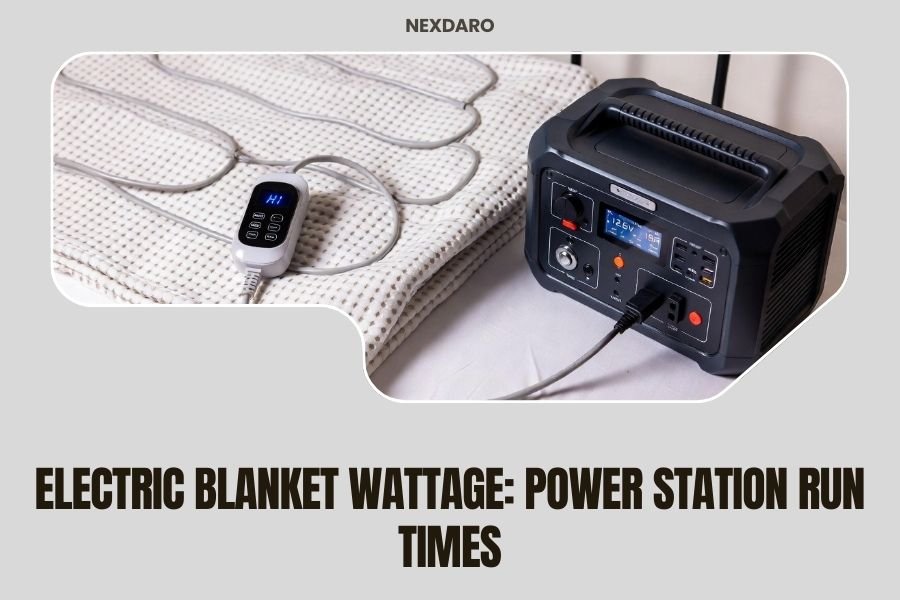
Electric blanket wattage typically ranges from 50-200 watts, and a 500Wh power station can run a 100-watt blanket for about 4-5 hours.
Your power station runtime depends on your blanket’s wattage and your battery capacity – larger batteries and lower-wattage blankets give you more cozy hours outdoors.
Understanding Electric Blanket Power Requirements
Most electric blankets draw between 50-200 watts of power. That’s actually pretty reasonable when you think about it – less than many household appliances.
Your blanket’s wattage depends on its size and heating technology. Twin-size blankets usually need 50-75 watts. Queen and king sizes can pull 150-200 watts.
Low-Wattage Blanket Benefits
Low-wattage blankets are your best friend for camping trips. They use less battery power and still keep you warm.
I found that many newer blankets use advanced heating elements. These can warm you up with just 60-80 watts.
High-Wattage vs Low-Wattage Trade-offs
High-wattage blankets heat up faster. But they’ll drain your power station quicker too.
Low-wattage models take longer to warm up. Yet they’ll keep running much longer on the same battery.
Power Station Capacity Basics
Power stations measure capacity in watt-hours (Wh). Think of this as your energy fuel tank.
A 500Wh power station can theoretically run a 100-watt blanket for 5 hours. But real life is messier than math.
Common Power Station Sizes
Small units: 200-500Wh work for short camping trips. Medium units: 500-1000Wh handle weekend adventures. Large units: 1000Wh+ power extended outdoor stays.
Battery Efficiency Reality Check
Your power station won’t give you 100% efficiency. Expect about 80-90% of the rated capacity in real use.
Temperature affects batteries too. Cold weather reduces capacity by 10-20%.
Calculating Your Runtime
Here’s the simple formula: Battery capacity ÷ blanket wattage × 0.85 = approximate hours.
That 0.85 factor accounts for efficiency losses. It gives you a realistic estimate.
Real-World Runtime Examples
Let’s crunch some numbers you’ll actually use:
| Power Station | 50W Blanket | 100W Blanket | 150W Blanket |
|---|---|---|---|
| 300Wh | 5.1 hours | 2.6 hours | 1.7 hours |
| 500Wh | 8.5 hours | 4.3 hours | 2.8 hours |
| 1000Wh | 17 hours | 8.5 hours | 5.7 hours |
Blanket Heat Settings Matter
Most blankets have multiple heat settings. Low settings use 30-50% less power than high settings.
You don’t always need maximum heat. Medium settings often provide plenty of warmth while saving battery.
Smart Power Management Tips
Want to stretch your power station further? Here are tricks that actually work.
Pre-Heat Strategy
Turn your blanket on high for 10-15 minutes before bed. Then switch to low for the night.
This gets you cozy fast without draining the battery all night long.
Layer Up First
Use your electric blanket as a supplement, not your only heat source. Add regular blankets and warm clothes.
This way, your electric blanket just tops off your warmth instead of doing all the work.
Smart Layering Combinations
Try this sandwich approach: sleeping bag or heavy blanket on bottom, you in the middle, electric blanket on top.
The electric blanket warms the air pocket around you. The other layers trap that heat.
Timer Functions Save Power
Many blankets have auto-shutoff timers. Use them to avoid running the blanket while you sleep.
Set it for 2-3 hours. You’ll stay warm long enough to fall asleep comfortably.
Choosing the Right Power Station Size
Match your power station to your camping style. Weekend warriors need different setups than week-long adventurers.
Single Night Camping
A 300-500Wh power station works fine for one night. You’ll get 4-8 hours of blanket time depending on wattage.
That’s enough to warm up before bed and maybe run it for a few hours while you sleep.
Extended Camping Trips
Multi-day trips need 1000Wh or more. You want enough power for several nights plus other devices.
Consider solar panels too. They can recharge your power station during sunny days.
Solar Charging Considerations
A 100-watt solar panel can add 300-400Wh on a good sunny day. That’s enough to run a low-wattage blanket for 6-8 hours.
Cloudy weather reduces solar charging to 20-50% of rated capacity.
Safety and Efficiency Best Practices
Electric blankets and power stations are generally safe. But smart habits make them even safer.
Ventilation Matters
Don’t wrap your power station in blankets or stuff it in tight spaces. It needs airflow to prevent overheating.
Keep it dry too. Moisture and electronics don’t mix well outdoors.
Regular Equipment Checks
Inspect your blanket’s cord before each trip. Look for frays, cuts, or damaged plugs.
Check your power station’s battery level and charge it fully before heading out.
Cold Weather Precautions
Extreme cold reduces battery performance. Keep your power station in your tent or RV when possible.
Some experts recommend bringing batteries to room temperature before heavy use in winter.
Alternative Heating Solutions
Electric blankets aren’t your only option. Other heating methods might work better for your situation.
Battery-Powered Heated Clothing
Heated jackets and vests often use less power than full blankets. They target your core temperature directly.
Many run on small rechargeable batteries separate from your main power station.
Combination Heating Strategies
Mix passive and active heating. Use hand warmers, heated insoles, and thermal layers alongside your electric blanket.
This spreads the power load across multiple sources instead of relying on one big blanket.
Troubleshooting Common Issues
Sometimes things don’t work as expected. Here’s how to fix common problems.
Shorter Than Expected Runtime
Your blanket might draw more power than advertised. Older blankets especially can become less efficient over time.
Cold temperatures also reduce battery capacity by 10-20%. Factor this into your planning.
Power Station Shutting Off
Most power stations have safety features. They’ll shut down if they detect problems.
Check for loose connections, overheating, or low battery warnings. Let the unit cool down if needed.
Conclusion
Electric blanket wattage and power station capacity work together to determine your cozy camping hours. Most blankets use 50-200 watts, and a typical 500Wh power station gives you 4-8 hours of warmth depending on your blanket’s power draw.
Smart power management stretches your runtime even further. Use pre-heating, layer properly, and choose efficient blankets to maximize your outdoor comfort. With the right setup and realistic expectations, you can stay warm all night without worrying about your battery dying.
How long will a 12V electric blanket run on a power station?
A 12V electric blanket typically uses 60-100 watts and will run 5-8 hours on a 500Wh power station. The exact time depends on your blanket’s wattage and heat setting – lower settings can double your runtime.
Can I run an electric blanket all night on a power station?
Yes, with a properly sized power station. You’ll need at least 500-700Wh capacity to run most blankets for 8 hours. Consider using a timer or low heat settings to extend battery life while you sleep.
What size power station do I need for camping with an electric blanket?
For weekend camping, choose 500-1000Wh capacity. Single night trips can work with 300-500Wh units. Extended camping needs 1000Wh or larger, especially if you’re powering other devices too.
Do electric blankets work well in tents during cold weather?
Electric blankets work great in tents when used properly. Layer them with regular blankets and sleeping bags for best results. Cold weather reduces power station capacity, so bring extra battery power or plan shorter run times.
Which uses less power – heated clothing or electric blankets?
Heated clothing typically uses 20-50 watts compared to 50-200 watts for full blankets. Heated jackets and vests target your core temperature more efficiently, making them better for extended trips with limited power.