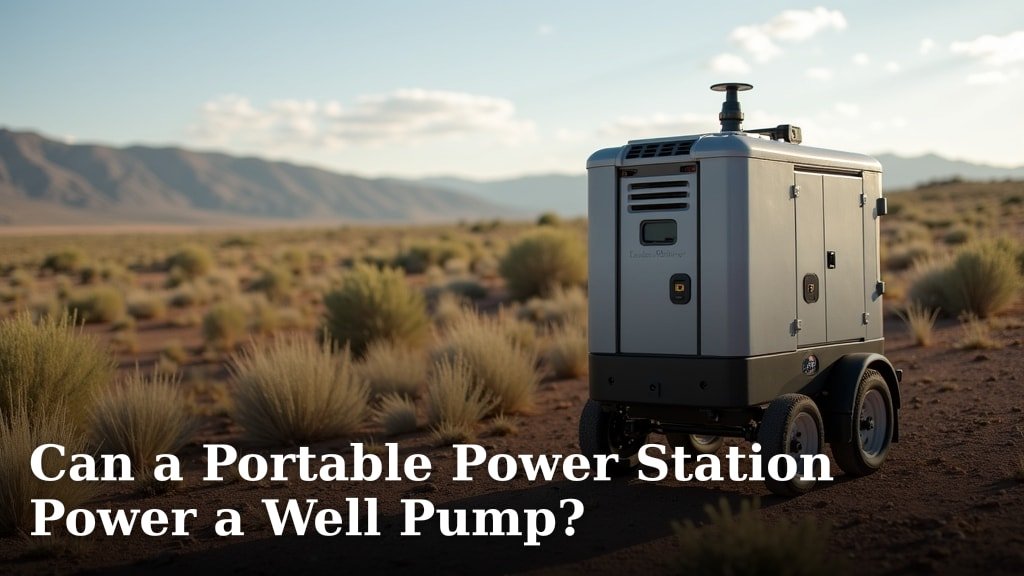
Yes, a portable power station can power a well pump, but it depends on the pump’s power needs. You need a power station with enough wattage and battery capacity. Matching these specs is critical for success.
Many homeowners consider this for backup power during outages. This setup ensures you still have running water in an emergency. We found that proper sizing is the biggest factor everyone overlooks.
- Match the power station’s output to your well pump’s wattage.
- Consider surge wattage for pump startup.
- Check the power station’s battery capacity for run time.
- Understand the difference between pure sine wave and modified sine wave inverters.
- Learn about essential safety precautions.
Ready to keep your water flowing even when the grid goes down? Let’s walk through exactly how to choose and use a portable power station for your well pump.
Powering Your Well Pump With a Portable Power Station
You can absolutely power your well pump with a portable power station. The main trick is selecting the right one. It’s like finding a custom fit for your well pump’s specific power needs. We found that most people underestimate their pump’s initial power draw.
Understanding Your Well Pump’s Power Demands
Before you even think about a power station, you need to know your well pump’s requirements. This often involves looking at both running wattage and surge wattage. Think of it as a car; you need to know how much gas it uses constantly and how much it guzzles when it first starts.
Running Wattage vs. Starting (Surge) Wattage
Every electrical appliance has a running wattage. This is the power it uses constantly once it’s up and going. Your well pump is no different. You’ll usually find this number on the pump itself or in its manual. It might be labeled as “rated watts” or “continuous watts.”
However, well pumps, especially submersible ones, need a huge burst of power to start. This is called
If your power station can’t provide that initial surge, your pump won’t start. It’s like trying to start a big engine with a small battery. Nothing happens!
Key Specifications for Portable Power Stations
When you’re shopping for a portable power station, several numbers matter. Don’t let them overwhelm you. We’ll break down what each one means for your well pump.
Wattage Output: Matching Power Directly
The first thing to check is the power station’s
Next, look for the
Battery Capacity: How Long Will It Last?
Battery capacity is measured in watt-hours (Wh) or kilowatt-hours (kWh). This tells you
However, that’s just theoretical. Factors like inverter efficiency and temperature affect actual run time. We found that it’s smart to
Consider your daily water needs. Do you need water for flushing toilets, washing hands, or even a quick shower?
Inverter Type: Clean Power for Your Pump
The inverter is what converts the battery’s DC power into the AC power your house appliances use. There are two main types you’ll encounter. Understanding the difference is super important for your well pump.
Pure Sine Wave Inverters
A
Modified Sine Wave Inverters
Modified sine wave inverters are less expensive. They produce a “choppier” electrical waveform. While some basic appliances can run on modified sine wave,
Why risk your expensive well pump for a cheaper inverter? Pure sine wave is the way to go here.
Calculating Your Well Pump’s Power Needs
Let’s get practical. How do you figure out exactly what your pump needs? Here’s how to gather the right info:
- Check the pump’s label: This is often a sticker directly on the pump motor. Look for “Volts (V),” “Amps (A),” and “Horsepower (HP).”
- Consult the manual: If you have the original manual, it will have detailed wattage specs.
- Use a clamp meter (if comfortable): An electrician can measure the actual running and surging amps for you. This gives the most accurate picture.
Once you have the amps and volts, you can estimate running wattage:
Choosing the Right Size Portable Power Station
Now that you know your pump’s power needs, you can pick the right power station. Don’t just grab the biggest one you can find. It’s about finding the
Consider All Your Water Needs
Think about how often you’ll need to run your pump during an outage. An hour of water in the morning and an hour in the evening? Or longer periods for laundry or dishes? Your battery capacity needs to match your daily usage pattern, not just one quick run.
You can always recharge a power station, but during an outage, charging sources might be limited. Solar panels are a great option, but they depend on sunlight. A larger battery means less stress about constant recharging.
Here’s a simple guide to matching your pump to a typical power station:
| Well Pump Type (Est. Running Watts) | Est. Surge Watts (3x Running) | Minimum Power Station Continuous Wattage | Minimum Power Station Surge Wattage | Suggested Battery Capacity (e.g., for 2 hours use) |
|---|---|---|---|---|
| Shallow Well Jet Pump (500W – 1000W) | 1500W – 3000W | 1000W | 3000W | 2000Wh |
| Deep Well Submersible Pump (1000W – 2000W) | 3000W – 6000W | 2000W | 6000W | 4000Wh |
| Larger Deep Well Pumps (2000W+) | 6000W+ | 3000W + | 9000W + | 6000Wh + |
Remember, these are estimates. Always check your pump’s specific label.
Safety First: Connecting Your Power Station
Connecting a portable power station to your well pump isn’t difficult, but
Direct Connection vs. Transfer Switch
For most portable power stations and well pumps, you’ll be plugging the pump directly into the power station’s AC outlets. This assumes your pump has a standard plug. If your pump is hardwired into your home’s electrical system, you have a few options.
- Relocate the pump outlet: An electrician can install a dedicated outdoor outlet near your pump, allowing you to plug it directly into the power station.
- Manual transfer switch: For whole-home backup, an electrician can install a manual transfer switch. This safely isolates your home from the grid and allows you to power specific circuits (like your well pump) from a generator or large power station. This is the
safest and most comprehensive option (National Electrical Code).
Never, ever “backfeed” power into your home’s electrical system by plugging a power station into a wall outlet. This is incredibly dangerous and can electrocute utility workers.
Practical Checklist for Powering Your Well Pump
To make sure you’ve covered all your bases, here’s a quick checklist:
- Confirm your well pump’s running wattage.
- Determine your well pump’s surge (starting) wattage.
- Choose a power station with continuous wattage higher than your pump’s running wattage.
- Select a power station with surge wattage higher than your pump’s starting wattage.
- Ensure the power station has a pure sine wave inverter.
- Calculate the necessary battery capacity for your expected usage.
- Plan for safe connection methods (direct plug or electrician-installed setup).
Conclusion
You now know that powering your well pump with a portable power station is absolutely achievable. The key is careful planning and understanding your pump’s specific wattage and surge needs. Don’t underestimate the importance of a pure sine wave inverter for your pump’s longevity. By matching your power station’s output and battery capacity to your well’s demands, you can maintain reliable water access during outages.
We’ve walked you through the necessary steps. Your next move is to gather your well pump’s specs. Then, you can confidently select the right portable power station, securing your home’s water supply.
Frequently Asked Questions
Can a small portable power station run a well pump?
Usually, no. Well pumps, especially during startup, require significant surge wattage that smaller power stations often can’t provide. You need to match the power station’s output to your pump’s specific power demands.
How can I find my well pump’s wattage?
Look for a label directly on your pump motor or consult its owner’s manual. It will list the running wattage, or you can calculate it using voltage and amperage (Volts x Amps = Watts).
Is pure sine wave really necessary for a well pump?
Yes, we strongly recommend a pure sine wave inverter for well pumps. It provides clean, stable power that mimics grid electricity, protecting your pump from potential damage and ensuring efficient operation.
What happens if my power station’s surge wattage is too low?
If the power station’s surge wattage is too low, your well pump simply won’t start. It needs that initial burst of power to get going, and without it, the power station may fault or remain idle.
How do I safely connect a portable power station to my well pump?
For pumps with a standard plug, you can plug them directly into the power station. If hardwired, consult a licensed electrician. They can install a dedicated outlet or a manual transfer switch for safe connectivity.