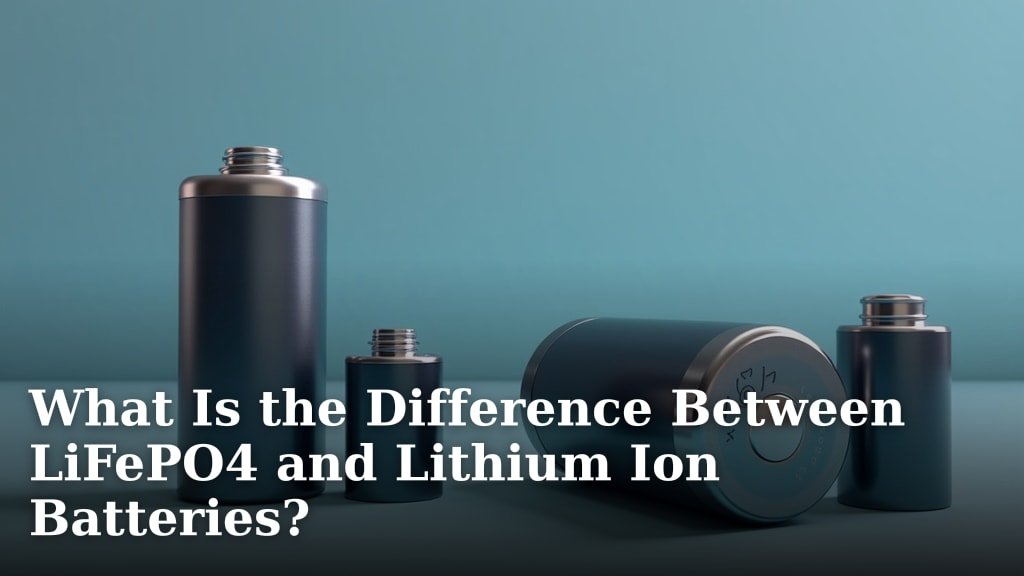
The main difference between LiFePO4 and Lithium Ion batteries is their chemistry and performance. LiFePO4 (Lithium Iron Phosphate) offers better safety and longevity. Standard Lithium-ion batteries (like NMC or NCA) usually provide higher energy density.
You’re likely wondering which one is right for your needs. We found that each type has specific strengths and weaknesses. Your choice depends on what matters most to you, such as power, lifespan, or cost.
TL;DR
- LiFePO4: Safer, longer lifespan, more stable.
- Lithium-ion (NMC/NCA): Higher energy density, lighter weight.
- Cost: LiFePO4 often has a higher upfront cost but better long-term value.
- Uses: LiFePO4 is great for RVs and solar storage; Lithium-ion for phones and EVs.
Let’s dive into the details so you can confidently pick the right battery for your next project.
Understanding LiFePO4 vs. Lithium-ion Batteries
You’re trying to figure out which battery technology is best for your needs. The main difference lies in their chemical composition and how that impacts their performance, safety, and lifespan.
We’ll break down the core characteristics of each to help you make an informed decision.
What is LiFePO4?
LiFePO4 stands for Lithium Iron Phosphate. These batteries use a phosphate-based cathode material. This specific chemistry provides some unique benefits that make them stand out in certain applications.
Many experts consider LiFePO4 batteries a safer option in the lithium-ion family (Energy Storage Association).
Key Advantages of LiFePO4
- Safety First: One of the biggest draws is their enhanced safety. They are very stable and less prone to thermal runaway, which can lead to fires or explosions. This stability comes from the strong chemical bonds within the phosphate material.
- Long Lifespan: LiFePO4 batteries typically offer a much longer cycle life than other lithium-ion types. You can expect 2,000 to 5,000 cycles or even more, depending on usage. Imagine not having to replace your battery for many years!
- Temperature Tolerance: They perform well in a wider range of temperatures, both hot and cold. This is great for outdoor use or in environments where temperatures fluctuate.
- Consistent Power: These batteries provide a very stable output voltage throughout their discharge cycle. This means your devices get consistent power until the battery is almost empty.
- Environmentally Friendlier: LiFePO4 chemistry contains less toxic material compared to some other lithium-ion types, making them a more eco-conscious choice.
Considerations for LiFePO4
- Lower Energy Density: Compared to other lithium-ion batteries, LiFePO4 has a slightly lower energy density. This means they are often larger and heavier for the same amount of stored energy. If space and weight are your primary concerns, this might be a factor.
- Higher Upfront Cost: You might find that LiFePO4 batteries have a higher initial purchase price. However, their long lifespan often translates to a better long-term value.
What is Lithium-ion (NMC/NCA)?
When people refer to “Lithium-ion” batteries without specifying, they often mean types like NMC (Nickel Manganese Cobalt) or NCA (Nickel Cobalt Aluminum). These are the common chemistries you find in many portable electronics and electric vehicles.
These batteries prioritize energy density and lightweight design.
Key Advantages of Standard Lithium-ion (NMC/NCA)
- High Energy Density: This is where NMC and NCA batteries shine. They can pack a lot of power into a small, lightweight package. This is why your smartphone or laptop uses them. More energy in less space means lighter devices and longer runtimes for their size.
- Lighter Weight: Because of their higher energy density, these batteries are generally lighter than LiFePO4 for the same capacity. This is critical for applications where every ounce counts, like drones or portable power tools.
- Lower Self-Discharge Rate: We found that these batteries tend to hold their charge for longer when not in use compared to some other battery types.
Considerations for Standard Lithium-ion (NMC/NCA)
- Lower Safety Profile: Compared to LiFePO4, NMC and NCA batteries are more prone to thermal runaway if damaged or improperly charged. This means they require more sophisticated battery management systems (BMS) to ensure safety. You might have heard stories about phone batteries swelling or catching fire; this relates to their chemistry.
- Shorter Lifespan: While still good, the cycle life of NMC and NCA batteries is generally shorter than LiFePO4. You might see 500 to 1,500 cycles before significant degradation.
- Performance in Extreme Temperatures: They can be more sensitive to extreme temperatures. Very hot conditions can degrade them faster, and very cold conditions can reduce their capacity and performance.
Side-by-Side Comparison: LiFePO4 vs. Lithium-ion
Let’s put them head-to-head. Sometimes seeing things side-by-side really helps clarify the distinctions. Think of it like comparing apples and oranges, but both are fruit. Each has its own best use case.
| Feature | LiFePO4 (Lithium Iron Phosphate) | Lithium-ion (NMC/NCA) |
|---|---|---|
| Safety | Excellent; highly stable, very low risk of thermal runaway. | Good; requires robust BMS to manage higher risk of thermal runaway. |
| Lifespan (Cycles) | Long; 2,000 – 5,000+ cycles. | Moderate; 500 – 1,500 cycles. |
| Energy Density | Lower; heavier and larger for same capacity. | Higher; lighter and smaller for same capacity. |
| Temperature Range | Wide operating range; performs well in extremes. | More sensitive; performance can degrade in extremes. |
| Cost (Upfront) | Generally higher initial cost. | Generally lower initial cost. |
| Environmental Impact | Less toxic materials, easier to recycle. | Contains cobalt and nickel, which can be more environmentally impactful. |
Choosing the Right Battery for Your Needs
So, how do you decide? It really comes down to what you value most in a battery. Are you building something that needs to be super light? Or do you need a battery that will last for a decade?
Let’s consider typical applications for each type. You might already have a good idea of which one fits your situation best.
When to Choose LiFePO4 Batteries
If safety, longevity, and stability are at the top of your list, LiFePO4 is often the superior choice. Think about situations where the battery is a long-term investment or where safety is paramount.
- RV and Camper Power Systems: You want reliability and safety when you’re on the road, far from home.
- Solar Energy Storage: For home solar systems, you need batteries that can handle daily cycling for many years.
- Marine Applications: Safety around water is crucial, and a stable power source is a must.
- Electric Golf Carts: You want a battery that can handle many rounds and last for seasons.
- Backup Power Systems: For critical systems, you need a dependable battery that won’t fail unexpectedly.
When to Choose Standard Lithium-ion (NMC/NCA) Batteries
If high energy density, compact size, and lighter weight are your priorities, then NMC or NCA lithium-ion batteries are likely what you need. These are perfect for applications where portability and power-to-weight ratio are key.
- Smartphones and Laptops: You need maximum power in the smallest package.
- Electric Vehicles (EVs): Range and weight are crucial for how far a car can travel.
- Drones: Lightweight batteries allow for longer flight times and better maneuverability.
- Cordless Power Tools: High power output and light weight make jobs easier.
- Portable Electronic Devices: Anything you carry around that needs a good charge and small footprint.
A Checklist for Your Battery Decision
To help you narrow down your choice, ask yourself these questions. Your answers will guide you towards the most suitable battery chemistry.
- How important is safety to you? (LiFePO4 excels here.)
- Do you need a battery that lasts for many, many years? (LiFePO4 often wins for cycle life.)
- Is minimal weight and a small size absolutely essential? (Standard Lithium-ion is usually better.)
- What’s your budget, both upfront and long-term? (LiFePO4 can be cheaper in the long run despite higher initial cost.)
- Will the battery be exposed to extreme temperatures? (LiFePO4 handles this better.)
- What kind of discharge rate does your application require? (Both can offer good rates, but LiFePO4 is very stable.)
We’ve found that balancing these factors will lead you to the right battery. It’s not about one being “better” overall, but rather “better for your specific application.”
Conclusion
You’ve now seen that choosing between LiFePO4 and standard Lithium-ion batteries isn’t about finding a universally “better” option. It’s about aligning the battery’s strengths with your specific needs. If safety, a long lifespan, and stable performance are your top priorities, especially for applications like RVs or solar storage, LiFePO4 is your strong contender. For projects demanding maximum power in a compact, lightweight design, like smartphones or EVs, standard Lithium-ion (NMC/NCA) excels. We encourage you to weigh these factors carefully to make the best decision for your next power solution.
Frequently Asked Questions
Are LiFePO4 batteries truly safer than other lithium-ion types?
Yes, we found that LiFePO4 batteries are significantly safer due to their stable chemistry. They are much less prone to overheating or thermal runaway compared to NMC or NCA batteries, which reduces the risk of fire or explosion. This makes them ideal for applications where safety is a primary concern.
Can I replace a standard lithium-ion battery with a LiFePO4 battery?
Sometimes, but not always directly. You need to consider the voltage, size, and particularly the charging requirements. LiFePO4 batteries often require a different type of battery management system (BMS) and charger. Always check compatibility or consult an expert before making a switch.
Why are LiFePO4 batteries often more expensive upfront?
The initial cost of LiFePO4 batteries can be higher due to the materials and manufacturing processes. However, their much longer cycle life means you’ll replace them less often. This often translates into a lower total cost of ownership over the battery’s lifetime.
Do both battery types perform well in cold weather?
LiFePO4 batteries generally offer better performance in a wider range of temperatures, including colder conditions, compared to standard lithium-ion batteries. Extreme cold can reduce the capacity and power output of both types, but LiFePO4 typically tolerates it better without significant degradation.
Which battery type is better for environmental sustainability?
LiFePO4 batteries are generally considered more environmentally friendly. They use less toxic materials like cobalt and nickel, which are present in NMC/NCA chemistries. Additionally, their longer lifespan means fewer batteries need to be manufactured and disposed of over time.