Can a Portable Power Station Power a House?
On this page (7 sections)
- Powering Your Home with a Portable Power Station: What’s Possible?
- What Appliances Can a Portable Power Station Run?
- Comparing Portable Power Stations to Gas Generators
- How to Choose the Right Portable Power Station for Your Home
- Setting Up Your Portable Power Station for Home Use
- Conclusion
- Frequently Asked Questions
Yes, a portable power station can power parts of your house during an outage, but it has limitations. It depends on the power station’s capacity and what appliances you want to run. Think of it as a large, rechargeable battery for your home. For a budget estimate, see the cost of powering a house with a power station. For a compact home, compare power stations for tiny houses.
You can use these devices for essential items like lights, phones, and even some refrigerators. They offer a quieter, cleaner alternative to gas generators. However, they aren’t designed to power your entire home’s HVAC or large appliances simultaneously. It’s really about picking your critical needs.
TL;DR: Can a Portable Power Station Power a House?
- Yes, for essential appliances and temporary power.
- Not ideal for whole-home solutions or long-term outages.
- They are quiet, portable, and emission-free.
- Great for refrigerators, lights, and charging devices.
- Match the power station’s capacity to your needs.
Let’s dive into the details of how portable power stations work for home use and what you should consider before buying one.
Powering Your Home with a Portable Power Station: What’s Possible?
You can definitely use a portable power station to run several appliances in your home, especially during a power outage. It’s not meant to replace your main power grid, but it’s a fantastic backup solution for essential needs. Think of it as a super-sized power bank for your house.
Many people find them incredibly useful for maintaining some normalcy when the lights go out. You can keep food fresh, stay connected, and even enjoy some entertainment. It’s all about understanding what these devices can realistically do for you.
Understanding Power Station Capacity: A Quick Guide
The core of what a portable power station can do lies in its capacity. This is usually measured in watt-hours (Wh) or kilowatt-hours (kWh). The higher this number, the longer it can supply power or the more powerful appliances it can handle.
You’ll also see a “wattage output” rating, often in watts (W) or kilowatts (kW). This tells you how much power it can deliver at any single moment. For example, a power station might have a 1000Wh capacity with a 1500W output.
Imagine your power station as a fuel tank. The watt-hours tell you the tank’s size (how much ‘fuel’ it holds), and the wattage output tells you how quickly it can deliver that ‘fuel’ to your devices.
Watt-Hours (Wh) vs. Wattage (W): What’s the Difference?
It’s easy to get these two terms mixed up, but they serve different purposes. Watt-hours (Wh) indicates energy storage. It’s how much energy the power station can hold and, by extension, how long it can run a device.
On the other hand, wattage (W) signifies power delivery. This is the maximum amount of power it can provide at an instant. If your appliance needs 500W to run, your power station must have a wattage output of at least 500W.
Let’s say you have a power station with 1000Wh and 1500W output. You can run a 100W light bulb for 10 hours (1000Wh / 100W = 10 hours). But you couldn’t run an appliance that requires 2000W, even if you only needed to run it for a short time, because the 1500W output isn’t high enough.
What Appliances Can a Portable Power Station Run?
This is where portable power stations shine – keeping your essential home items running. You’ll be surprised at the range of things they can power, depending on their size. We often find that people primarily use them for keeping food cold and communication lines open.
Before connecting anything, always check the wattage requirement of your appliance. This is usually listed on a label on the appliance itself or in its user manual. It’s a simple step that helps you avoid overloading your power station.
Everyday Essentials and Their Power Needs
Many smaller devices are very efficient and won’t drain your power station quickly. These are your bread and butter during an outage.
- Phone and Tablet Chargers: Typically 5-20 watts. You can charge these many, many times.
- LED Lights: 5-15 watts per bulb. Keep your rooms illuminated without a large power draw.
- Laptops: 30-100 watts. Stay connected and productive for several hours.
- Fans: 20-70 watts. Crucial for staying comfortable in warmer weather.
- Wi-Fi Router/Modem: 10-30 watts. Keep your internet running for news and communication.
Larger Appliances: What to Expect
When it comes to bigger items, you need a more robust portable power station. These draw more power and will deplete your battery faster.
- Refrigerator (Standard): 100-200 watts (running), but can spike to 600-1000 watts when the compressor kicks on. A good power station can keep food cold for many hours, sometimes even a full day (Consumer Reports).
- Small Microwave: 600-1000 watts. You can heat food, but only for a few minutes at a time to conserve power.
- Coffee Maker: 800-1500 watts. Great for a morning brew, but use sparingly as it’s a high-drain item.
- CPAP Machine: 30-60 watts (without humidifier). Essential for many, and most power stations can run these for multiple nights.
- Television (LED/Smart TV): 50-200 watts. Enjoy some downtime or entertainment, but watch your power levels.
You can see that even a basic portable power station can handle a lot of your emergency needs. The challenge is balancing what you need with how long you need to run it.
Comparing Portable Power Stations to Gas Generators
When you’re thinking about backup power, you’ll inevitably compare portable power stations to traditional gas generators. Both have their place, but they offer very different experiences.
| Feature | Portable Power Station | Gas Generator |
|---|---|---|
| Fuel Source | Electricity (rechargeable battery) | Gasoline, Propane, sometimes Natural Gas |
| Noise Level | Virtually silent | Loud (often 60-80 dB) |
| Emissions | Zero emissions | Harmful fumes (carbon monoxide) |
| Maintenance | Very low (charge occasionally) | Requires oil changes, fuel stabilization, spark plug checks |
| Indoor Use | Safe for indoor use | Never safe for indoor use (carbon monoxide poisoning risk) |
| Portability | High (designed to be moved) | Varies; can be heavy and bulky |
| Starting | Instant with a button press | Pull-cord or electric start, can be temperamental |
| Price Range | Generally lower to moderate | Medium to very high |
As you can see, portable power stations offer a cleaner, quieter, and more convenient experience. They are especially appealing if you prioritize ease of use and indoor safety. We’ve found that many families appreciate not having to deal with fuel or loud noise during an already stressful situation.
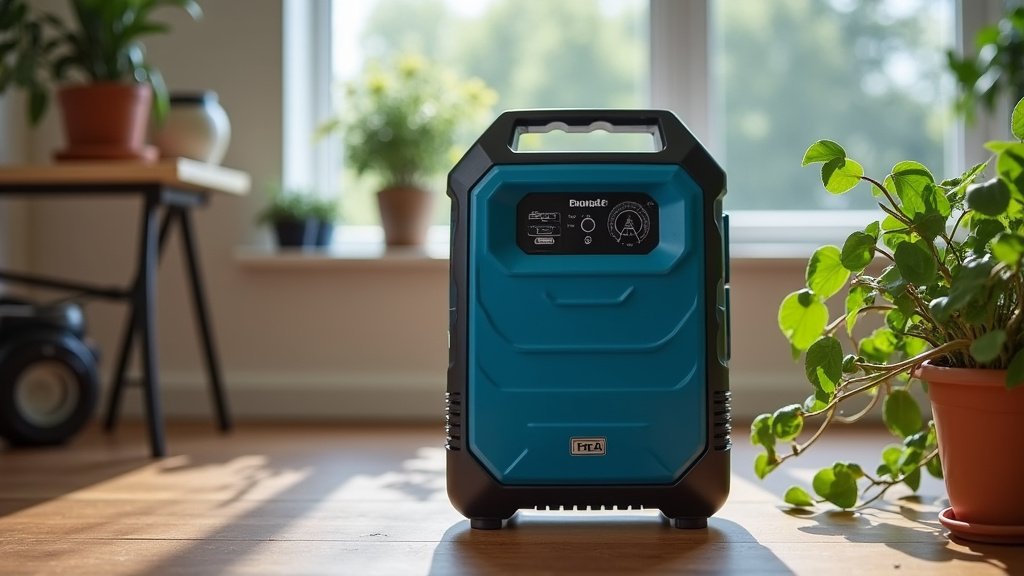
How to Choose the Right Portable Power Station for Your Home
Picking the perfect portable power station is like choosing the right tool for a job. You need to match its capabilities with your specific needs. Don’t just go for the biggest one; consider what you actually want to power.
Consider Your Essential Home Needs
Start by making a list. What absolutely MUST run during a power outage? Is it just your phone and a few lights? Or do you need to keep your refrigerator running and potentially a medical device like a CPAP machine?
Many experts recommend focusing on critical health and safety items first (CDC guidelines highlight the importance of emergency power for those with medical needs). Then, think about comfort and communication.
Calculating Your Power Requirements
This is a crucial step. Grab your list of essential appliances and their wattages. Add them up to get a total running wattage. Also, note any “surge” wattages (like a refrigerator compressor starting up). Your power station’s output rating must be higher than your highest surge wattage.
Next, estimate how long you need to run each item. Multiply the wattage by the hours to get watt-hours. Sum these up, and that gives you a target for your power station’s capacity. Always add a buffer, maybe 20-30%, for good measure.
For example: A refrigerator (150W running) for 12 hours + a phone charger (10W) for 5 hours + 2 LED lights (10W each) for 6 hours = (150W * 12h) + (10W * 5h) + (20W * 6h) = 1800Wh + 50Wh + 120Wh = 1970Wh. So, you’d aim for a power station with at least 2000Wh capacity.
Key Features to Look For
Beyond capacity, there are several features that make a portable power station more user-friendly and versatile.
- Multiple Output Ports: Look for AC (wall outlets), DC (car-style), and USB-A/USB-C ports. The more options, the better for diverse devices.
- Fast Charging Input: How quickly can you recharge the power station itself? Solar charging capability is a huge bonus for extended outages.
- Safety Features: Overload protection, short-circuit protection, and temperature control are non-negotiable.
- Durability: If you plan to use it outdoors or in various conditions, a robust build is important.
- Pure Sine Wave Inverter: This ensures your delicate electronics (laptops, medical devices) receive clean, stable power, just like from your wall outlets. Many experts, including those at NIST, emphasize the importance of stable power for sensitive electronics.
Setting Up Your Portable Power Station for Home Use
Once you have your power station, getting it ready for action is straightforward. It’s not like installing a whole-home generator, which often requires professional help; learn about connecting a power station to house wiring.
Simple Steps to Get Started
- Charge It Up: Your first step should always be to fully charge your portable power station upon arrival. Keep it charged, especially if you foresee a potential outage.
- Identify Key Appliances: Based on your calculations, know exactly which devices you’ll connect.
- Plug and Play: Simply plug your chosen appliances directly into the power station’s AC outlets or USB ports.
- Monitor Usage: Most power stations have a display showing remaining battery life and current power draw. Keep an eye on it to manage your power efficiently.
A Checklist for Emergency Preparedness
Being prepared means having a plan. Here’s a quick checklist to make sure your portable power station is part of a larger strategy:
- Keep Your Power Station Charged: Aim for 80-100% charge always.
- Test It Regularly: Plug in a few essential items every few months to ensure it’s working.
- Gather Essential Cables: Make sure you have all the necessary charging cables for your devices.
- Know Your Appliance Wattage: Keep a small list near the power station for quick reference.
- Have a Charging Plan: Consider a solar panel for recharging during prolonged outages.
By following these steps, you’ll be well-prepared to use your portable power station effectively when you need it most. It’s all about readiness and knowing your equipment.
Conclusion
You now know that a portable power station can be a genuine lifesaver for specific needs during an outage. It’s not a whole-home replacement, but it’s a smart, quiet, and clean way to keep your essential appliances running. By understanding its capacity and matching it to your critical needs, you gain peace of mind.
From keeping your fridge cold to charging your phone, these devices offer practical benefits without the hassle or noise of gas generators. Take the time to assess your unique household needs and invest in the power station that truly fits your life.
Start planning your emergency power strategy today. Your future self will thank you for being prepared.
Frequently Asked Questions
Can a portable power station really replace a gas generator for home backup?
No, not entirely. While a portable power station is excellent for essential appliances and temporary outages, a gas generator typically offers much higher wattage output and longer runtimes for an entire home or sustained power needs. They serve different purposes, with power stations focusing on convenience and cleanliness for select items.
How can I extend the run time of my portable power station during a long outage?
To extend its run time, focus on powering only your most critical, low-wattage devices. You can also recharge the power station using solar panels if you have them, or from a vehicle’s 12V outlet if you’re driving. Managing your power consumption carefully is key.
Are portable power stations safe to use indoors?
Yes, absolutely. Portable power stations
are emission-free and produce no harmful fumes, unlike gas generators. This makes them perfectly safe for indoor use, which is a major advantage for comfort and safety during an emergency.
How often should I charge my portable power station when not in use?
It’s best to keep your portable power station charged to between 80-100% when storing it. Check its charge level every 3-6 months and top it off if needed. This helps maintain battery health and ensures it’s ready for immediate use during an unexpected power outage.
What’s the main difference between a portable power station and a large power bank?
A portable power station is essentially a much larger, more powerful version of a power bank, designed for heavier-duty applications. It has significantly greater capacity (watt-hours), higher output wattage, and often includes AC outlets, enabling it to power household appliances that a standard USB power bank cannot.