To pick the right portable power station for camping, you need to match its watt-hours (Wh) capacity to your devices’ total power needs. We found that a 200-500Wh unit often works well for light weekend trips, while longer excursions or more devices might require 1000Wh or more.
Finding the perfect power station ensures your gear stays charged, whether it’s your phone, portable fridge, or even a CPAP machine. It’s about having enough juice to keep your campsite comfortable and connected. No one wants a dead phone in the wilderness, right?
- Match capacity (Wh) to your total device needs.
- Small stations (200-500Wh) are great for light use.
- Larger stations (1000Wh+) suit longer trips or more power-hungry gear.
- Consider what devices you’ll charge (phones, fridges, CPAPs).
- Think about trip duration and how often you’ll recharge the station.
Below, we’ll guide you through calculating your power needs and choosing the best portable power station for your next camping adventure.
Choosing the Right Portable Power Station for Your Camping Adventures
Picking the correct power station size ensures your devices stay charged. It’s about matching power output to your specific needs.
Think of it like packing for a trip: you wouldn’t bring a winter coat to a beach vacation. The same goes for power stations.
You want enough power without carrying unnecessary weight or bulk. Let’s break down how to figure out what you truly need.
Understanding Power Station Metrics: Watts, Watt-Hours, and Amps
Before you choose, it helps to understand the lingo. These terms describe how much power a station can hold and deliver.
Don’t worry; it’s simpler than it sounds. We’ll clarify these concepts for you.
What is Watt-Hours (Wh)?
Watt-hours (Wh) measure the total energy capacity of a power station. It’s like the size of its fuel tank.
A higher Wh rating means the station can store more energy. This translates to longer run times for your devices.
For camping, this is your most important number. It tells you how long your gadgets will stay powered.
What are Watts (W) and Amps (A)?
Watts (W) measure the instantaneous power output. This is how much power a device uses at any given moment.
Think of it as the speed at which your device “drinks” power. Some devices need a quick burst; others sip slowly.
Amps (A) relate to the flow of electrical current. You’ll often see this with USB charging ports.
Your power station needs to supply enough watts for your devices to function. Exceeding its watt limit can trigger safety shutdowns.
Calculating Your Camping Power Needs
This is where the rubber meets the road. Knowing your total power consumption is key to choosing wisely.
It’s not guesswork; you can actually calculate this with a few simple steps. This step saves you from overspending or under-powering.
Gather your devices and let’s do some quick math. It’s easier than you think!
List Your Devices and Their Wattage
First, make a list of every electrical item you plan to bring camping. Don’t forget anything!
Look for the wattage (W) listed on the device itself or its charging brick. Sometimes it’s in amps (A).
If you only find amps (A) and volts (V), multiply them: A x V = W. For example, 2A x 5V = 10W.
- Smartphone (charging): 5-18W
- Tablet (charging): 10-30W
- Laptop (charging): 45-100W
- Portable fan: 5-20W
- Camping lights: 5-15W
- Portable fridge/cooler: 30-60W (while running)
- CPAP machine: 30-60W (without humidifier/heated hose)
- Electric air pump: 50-150W (intermittent use)
Estimate Daily Usage in Hours
Next, think about how many hours you’ll use or charge each device per day. Be realistic.
A phone might charge for 2 hours, a light might be on for 4 hours, and a fridge runs continuously.
For items like a fridge or CPAP, remember they might not draw full power constantly. They cycle on and off.
Calculate Total Daily Watt-Hours (Wh) Needed
Multiply each device’s wattage by its daily usage hours. This gives you its individual Wh consumption.
Add up all these individual Wh numbers. This sum is your total daily Wh requirement.
For example, if your phone uses 10W and charges for 2 hours, that’s 20Wh per day.
A portable fridge at 40W running for 12 hours (cycling on and off) would consume around 480Wh (40W x 12h).
Many experts suggest multiplying your total daily Wh by 1.5 to 2.0 to give yourself a buffer (Consumer Reports).
| Device | Wattage (W) | Daily Use (Hours) | Daily Wh |
|---|---|---|---|
| Smartphone | 10W | 2h | 20 Wh |
| Camping Light | 8W | 4h | 32 Wh |
| Portable Fridge | 40W | 12h (intermittent) | 480 Wh |
| CPAP Machine | 40W | 8h | 320 Wh |
| Estimated Total Daily Wh | 852 Wh | ||
So, in this example, you’d need a power station that can supply at least 852 Wh per day. If you’re camping for 3 days without recharging the power station, you’d multiply that by 3.
This means for a 3-day trip, you’d need roughly 2556 Wh (852 Wh x 3). A 2000 Wh power station might be cutting it close.
Matching Your Needs to Power Station Sizes
Now that you have your estimated daily Wh, you can choose the right size. Portable power stations come in various capacities.
We’ll look at general categories and what they’re best for. Remember, your personal needs will guide your final decision.
Small Power Stations (Under 500 Wh)
These units are lightweight and perfect for shorter trips or minimal power needs. They’re great for charging small personal electronics.
Think of them as your personal electronic safety net. They’re easy to pack and carry.
Ideal for: Charging phones, tablets, cameras, small drones, and powering LED lights for a night or two.
Many campers find a 300 Wh unit is plenty for a weekend of basic charging.
Medium Power Stations (500 Wh – 1000 Wh)
This size offers a good balance of capacity and portability. They can handle more devices and last longer.
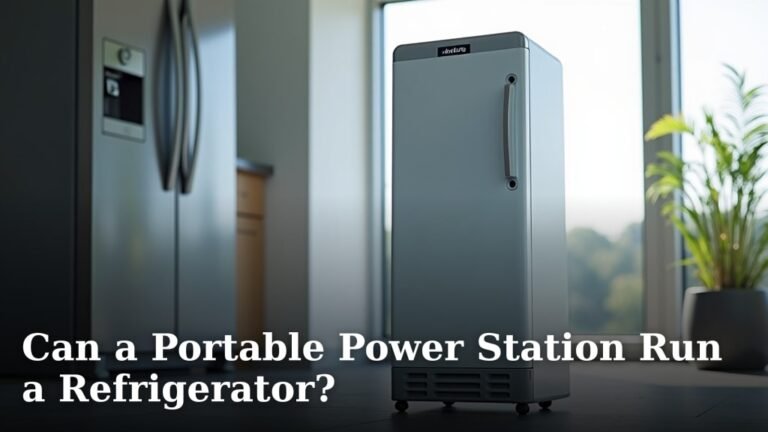
You can comfortably run a portable fridge for a day or two with these. They often have more output ports, too.
Ideal for: Extended weekend trips, powering a portable fridge, multiple device charging, and small appliances like a fan or a modest laptop.
A 700 Wh station is a popular choice for families on a 2-3 day camping trip.
Large Power Stations (1000 Wh – 2000 Wh+)
These are serious powerhouses. If you have significant power demands or are planning longer trips, this is your category.
They can run larger appliances and sustain multiple devices for several days. However, they are heavier and pricier.
Ideal for: Longer trips (3+ days), running CPAP machines, portable fridges for several days, powering most laptops, and even small power tools.
A 1500 Wh unit can be a game-changer for those who need home comforts in the wild.
Consider Recharging Options and Cycle Life
The size of your power station isn’t the only factor. How you recharge it and how long it lasts are also important.
You want a station that can keep up with your adventures, not slow them down. Don’t forget about how often you’ll be able to “fill up the tank.”
Recharging While Camping
Can you recharge your power station while you’re out there? Many units support solar panel charging.
If you have a car, some can also charge from a 12V car outlet. This can extend your power supply significantly.
A good rule of thumb is to have enough solar input to recharge your daily Wh consumption in a few hours of sunlight.
Battery Chemistry and Cycle Life
Most portable power stations use Lithium-ion (Li-ion) batteries. More premium ones use Lithium Iron Phosphate (LiFePO4).
LiFePO4 batteries generally offer a much longer “cycle life.” This means they can be fully charged and discharged thousands of times before their capacity significantly degrades.
If you plan to use your power station very frequently for many years, a LiFePO4 model might be a better investment.
Many manufacturers rate cycle life to 80% original capacity (National Renewable Energy Laboratory).
Final Checklist for Choosing Your Power Station
Before you commit, run through this quick checklist. It will help confirm you’ve considered all the angles.
Making an informed decision means you’ll be happy with your purchase for many camping trips to come.
- Have you calculated your total daily Wh needed?
- Does the power station’s Wh capacity meet or exceed your multi-day needs?
- Does its watt output (W) support your highest-wattage device?
- Are there enough output ports (AC, USB-A, USB-C) for all your devices?
- Is its weight and size acceptable for how you plan to transport it?
- Do you have a plan for recharging the power station while camping (e.g., solar, car)?
Conclusion
Choosing the right portable power station doesn’t have to be overwhelming. By understanding your devices’ power needs and how long you’ll be off-grid, you can confidently select a unit that fits your camping style.
From a small unit for charging your phone to a large one for running a portable fridge and CPAP, there’s a perfect power station out there for you. Use our tips to do the math, consider your recharging options, and pack power smartly.
Armed with this knowledge, you’re ready to pick the ideal power companion for your next outdoor adventure!
Frequently Asked Questions
Is it better to get a bigger power station than I think I need?
Generally, yes, a little extra capacity is a good idea. It provides a buffer for unexpected usage or colder temperatures, which can reduce battery efficiency. Aim for at least 1.5 times your calculated daily watt-hour need.
Can I use a portable power station to run a coffee maker?
Most standard coffee makers draw a lot of watts (often 800-1200W), which can quickly drain smaller power stations or exceed their wattage limits. You’d likely need a large power station (1000Wh+ with high wattage output) or a low-wattage camping-specific coffee maker.
How can I make my portable power station last longer on a trip?
Conserve power by choosing energy-efficient devices, turning off lights when not needed, and using lower settings on fans or fridges. Recharging the station with solar panels or from your car battery whenever possible also extends its utility.
Are all portable power stations safe to use indoors, like in a tent?
Yes, portable power stations are generally safe for indoor use because they don’t produce emissions like gasoline generators. They operate quietly and are a great alternative for powering devices inside tents or RVs without ventilation concerns.
What’s the difference between a “power bank” and a “portable power station”?
A power bank is typically a small, handheld device designed for charging phones or small electronics via USB. A portable power station is much larger, offers higher capacity (watt-hours), and includes AC outlets to power bigger appliances.