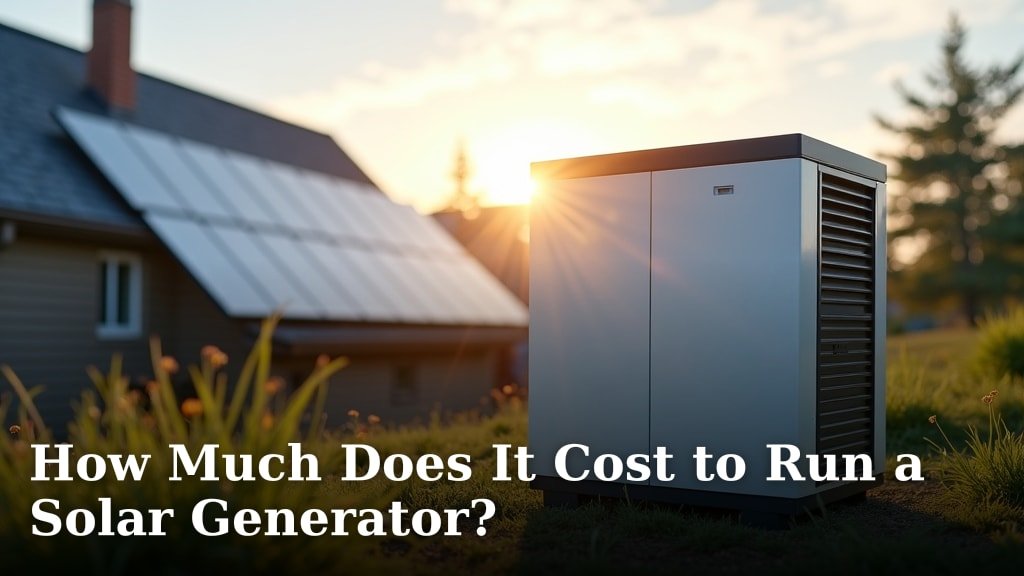
The cost to run a solar generator is remarkably low once you buy the equipment. You are essentially paying for the sun’s energy, which is free. Most costs are upfront for the generator itself, not for its operation.
Think of it like buying a car versus paying for gas. With solar, you buy the “car” (the generator) and then get “free fuel” from the sun. We found that most people focus on the initial purchase price, not ongoing running costs.
- Solar generators have very low running costs.
- The main expense is the generator’s purchase price.
- Sunlight provides free energy for operation.
- Consider your upfront investment more than daily expenses.
Let’s dive into what goes into buying and owning one of these handy power units. We’ll help you understand the full picture.
Understanding the Costs of Solar Generator Ownership
The upfront cost for a solar generator is the biggest part of your investment. Once you buy it, you are mostly just waiting for the sun. There aren’t many ongoing expenses. We found this was a common surprise for many new users. You pay for the equipment, then nature provides the energy.
Initial Purchase Price of Solar Generators
Buying the generator itself is where your money goes first. These systems come in many sizes and power levels. A small, portable unit might cost you a few hundred dollars. Larger, whole-home backup systems can run into thousands.
Think about what you need it for. Do you want to charge your phone on a camping trip? Or do you need to power your refrigerator during an outage? Your needs will really define your To ensure you get the best value, learn how to choose the right portable power station for your specific needs.initial investment. Don’t overbuy, but don’t underbuy either.
Factors Affecting Generator Price
Several things change the price tag you see. The battery capacity is a big one. More stored energy means a higher price. The inverter’s power output also matters. A stronger inverter handles more appliances at once.
Brand reputation plays a role too. Established brands sometimes cost more but often offer better warranties. The type of solar panels included (if any) can also shift the price. We’ve seen prices range widely based on these features.
| Feature | Impact on Cost | Explanation |
|---|---|---|
| Battery Capacity (Wh) | Higher | More energy storage for longer power. |
| Inverter Output (W) | Higher | Powers more powerful appliances. |
| Solar Panel Wattage | Higher | Faster charging, but higher panel cost. |
| Brand Reputation | Variable | Premium brands often cost more for reliability. |
| Portability | Variable | Smaller units typically cost less, larger systems more. |
Solar Panel Costs (If Not Included)
Some solar generators come with panels. Others require you to buy them separately. If you need to buy panels, that’s an additional cost. The size and type of panel will affect this price. To ensure efficient charging, consider what size solar panel you need for your power station.
Monocrystalline panels are efficient but pricier. Polycrystalline panels are a bit less efficient and more affordable. Flexible panels offer convenience for camping, but often at a higher cost per watt. Consider your setup before you buy.
The Near-Zero Running Costs of Solar Power
Here’s the exciting part: once you have your system, the energy source is free. Sunlight doesn’t send you a bill. This is a huge advantage over gasoline generators. No more trips to the gas station. No more fumes.
Fuel: Free Sunlight
Your primary fuel source is the sun. It rises every day (weather permitting, of course). You don’t pay for the sun’s rays. This makes the operational cost almost non-existent. It’s truly a renewable resource you can tap into.
You simply set up your panels, connect them, and let them charge your generator. It’s a hands-off process. We found that users really appreciate this simplicity. There’s a certain peace of mind knowing your power source is reliable and free.
Minimal Maintenance Expenses
Solar generators are known for their low maintenance. They don’t have many moving parts like gasoline engines. This means fewer breakdowns and less money spent on repairs. You might occasionally need to clean your solar panels. That’s about it.
Keeping your panels free of dirt, dust, and leaves helps them work best. A simple rinse with water often does the trick. You might also check connections now and then. But major servicing is very rare. This keeps your running costs low.
Potential Additional Costs to Consider
While running costs are low, there are a few other things to keep in mind. These are not daily costs, but they can come up over time. It’s wise to budget for them, just in case. We want you to have a full picture.
Battery Replacement Over Time
The battery is the heart of your solar generator. Like all batteries, it has a lifespan. Most solar generator batteries are lithium-ion. They can last for many hundreds, even thousands, of charge cycles. This often translates to several years of use.
Eventually, the battery will lose some capacity. You might notice it doesn’t hold a charge as long. Replacing the battery can be a significant cost. But this usually happens many years down the line. Many manufacturers offer good warranties for their batteries.
Accessory and Upgrade Costs
You might decide to add extra accessories. Maybe you want more solar panels to charge faster. Or perhaps a longer extension cable. These aren’t necessary but can enhance your system. Think of them as optional extras.
For example, some people buy a car charger for their generator. This lets them charge it while driving. Others invest in protective carrying cases. These are small costs, but they do add up if you buy many. Plan ahead for any desired add-ons.
Warranty and Support Considerations
A good warranty protects your investment. Most reputable brands offer warranties for their generators and batteries. Check the warranty length before you buy. It can save you money if something goes wrong.
Good customer support is also valuable. If you have questions or issues, you want help. We’ve found that companies with strong support often have slightly higher prices. But the peace of mind can be worth it. It’s an indirect cost that pays off.

Is a Solar Generator Right for Your Budget?
Deciding if a solar generator fits your budget involves looking at the long term. The upfront cost can seem high. But compare it to years of free power. What are your alternatives? Gasoline generators need fuel, oil, and more maintenance.
Many people find that the initial investment pays off over time. Especially if you use it often for camping, RVing, or as backup power. You’re making an investment in energy independence. That’s a powerful thing.
Checklist for Budgeting Your Solar Generator
- Determine your power needs: What appliances do you want to run? This guides your system size.
- Research initial generator costs: Get quotes for different brands and capacities.
- Factor in solar panel expenses: Will you buy them separately or are they included?
- Consider potential battery replacement: Budget for this long-term, maybe 5-10 years out.
- Account for optional accessories: Any extra cables, cases, or chargers you might want?
- Look into warranties: Does the product offer good coverage for peace of mind?
Conclusion
You’ve seen that the cost to run a solar generator is incredibly low. Your main investment is upfront, getting the equipment in your hands. Then, you get to enjoy free, clean energy from the sun for years to come. We found that this long-term savings and energy independence is a major benefit for users. Focus on your power needs and choose a system that balances capacity with your budget. Start planning your solar generator investment today for reliable, cost-effective power.
Frequently Asked Questions
Are solar generators cheaper to operate than gas generators?
Absolutely. Once purchased, solar generators operate on free sunlight, meaning zero fuel costs. Gasoline generators require continuous fuel purchases, oil changes, and more frequent maintenance, making them much more expensive to run over time.
How long do solar generator batteries typically last before needing replacement?
Most modern solar generators use lithium-ion batteries designed for longevity. You can generally expect them to last for 5 to 10 years or more, depending on usage and charge cycles. The manufacturer’s warranty often provides a good estimate of expected lifespan.
Can I upgrade my solar generator system over time to increase power or storage?
Often, yes! Many solar generator brands offer modular systems. This allows you to add more solar panels for faster charging or even expand battery capacity with additional battery packs. Check with the manufacturer for specific upgrade options.
What is the most common hidden cost when owning a solar generator?
The most significant potential “hidden” cost is eventual battery replacement. While batteries last many years, they do degrade over time. Budgeting for this long-term expense can prevent surprises down the line.
Is a solar generator a good investment if I only use it a few times a year?
It can still be a wise investment. Even with infrequent use, a solar generator provides reliable backup power during outages or for occasional outdoor activities. The peace of mind and convenience can quickly justify the initial cost, especially as electricity rates rise.
