
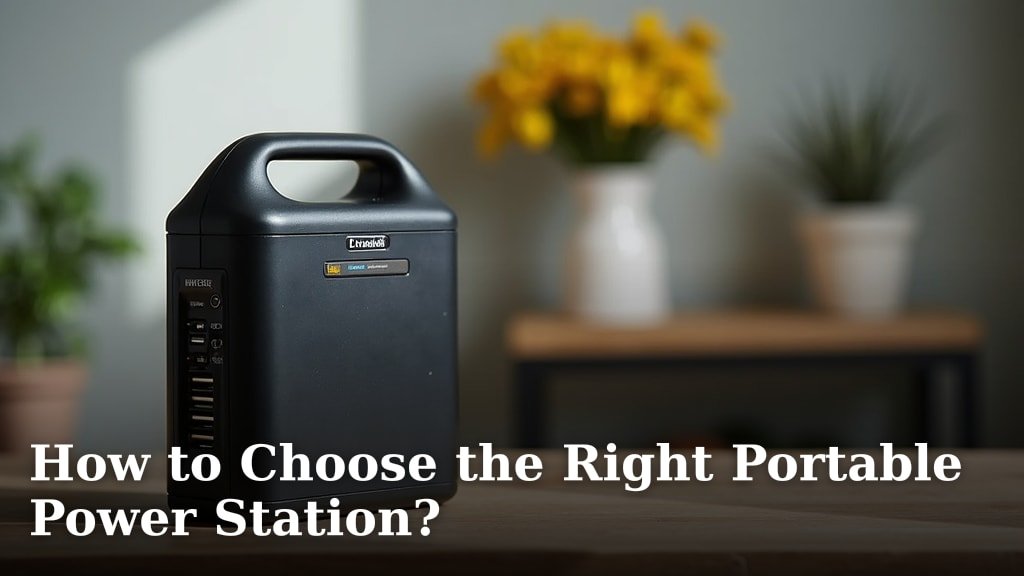
To choose the right portable power station, you need to first assess your power needs and then match them with a station’s capacity, power output, and port options. Consider what devices you want to run and for how long. The best one for you offers reliable power when you need it most, whether for camping or emergencies.
There are many options out there, from small units for charging phones to larger ones for powering appliances. Understanding the key features helps you avoid disappointment. We found that choosing wisely ensures your devices stay powered up no matter where you are.
TL;DR:
- Match power station capacity to your device needs.
- Check power output (watts) for your appliances.
- Look for the right charging ports.
- Consider portability and battery type.
- Think about recharge time and methods.
Let’s walk through how to pick the perfect portable power station, ensuring you make an informed choice for your specific adventures or emergencies.
Selecting the Best Portable Power Station for Your Needs
Choosing the right portable power station means finding a unit that perfectly matches your power demands. It’s like picking the right size cooler for your picnic – too small, and your food gets warm; too big, and it’s a hassle to carry. We found that the right fit makes all the difference.
You want to avoid the common pitfall of buying a unit that’s either underpowered or overkill for your plans. Let’s break down the key factors to consider, making sure you invest wisely.
Understanding Your Power Requirements
Before you even look at models, think about what you actually need to power. Are you charging phones, running a mini-fridge, or powering medical equipment? We’ve seen many people go wrong here, so take a moment to assess.
Conclusion
Choosing the right portable power station doesn’t have to be overwhelming. You’ve learned to assess your individual power needs and match them to the station’s capacity, output, and ports. By considering battery type, portability, and recharge options, you ensure you get reliable power.
We found that a little planning goes a long way. The perfect power station keeps your essential devices running, whether you’re off-grid or facing an outage. Now, take what you’ve learned and confidently pick the best model for your peace of mind.
Frequently Asked Questions
How long do portable power station batteries typically last?
Most modern portable power stations use lithium-ion batteries. These are generally rated for 500 to 2000 charge cycles before their capacity significantly diminishes. Proper care, like avoiding extreme temperatures, can extend their lifespan.
Can I use a portable power station to run my refrigerator?
It depends on the size and wattage of your refrigerator and the power station’s output. Small mini-fridges or energy-efficient models might work, but larger household refrigerators usually require a very high-capacity station with strong AC output.
Are portable power stations safe to use indoors?
Yes, most portable power stations are safe for indoor use because they don’t produce emissions like gasoline generators. Ensure proper ventilation, especially when charging, and avoid obstructing vents.
What’s the difference between Watt-hours (Wh) and Watts (W)?
Watt-hours (Wh) measure a battery’s capacity, telling you how much energy it can store. Watts (W) measure the rate at which power is delivered or consumed. Think of Wh as the “size of the gas tank” and W as the “speed” it can deliver that energy.
Can I charge a portable power station while using it?
Many portable power stations offer “pass-through charging.” This means you can charge the unit while it simultaneously powers other devices. Check the specifications for the model you are considering to confirm this feature.
