
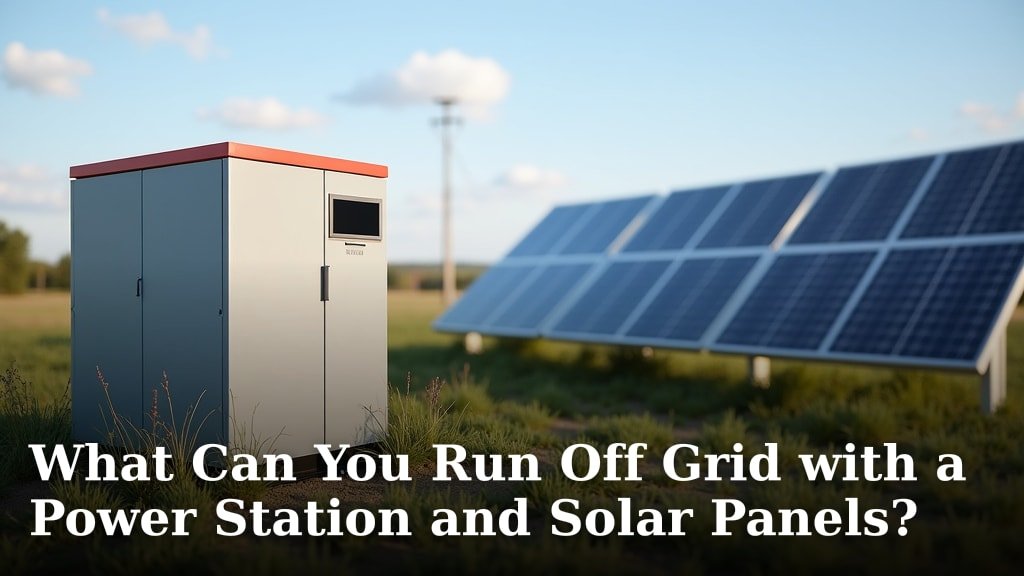
Yes, you can run many essential appliances and electronics off grid using a power station and solar panels. This setup gives you reliable power for a range of needs, from camping trips to emergency backups at home. It’s a fantastic way to gain energy independence.
You can power everything from your laptop and phone chargers to small refrigerators and even power tools. The key is choosing the right size power station and enough solar panels to match your energy use. We found that this combination offers incredible flexibility for your power needs.
- Power stations turn solar energy into usable electricity.
- You can run many common devices off grid.
- Sizing your system correctly is super important.
- It’s great for emergencies, outdoor fun, and van life.
Below, we break down exactly what you can run off grid with a power station and solar panels. Let’s help you understand your power possibilities.
What Your Power Station and Solar Panels Can Power Off Grid
You can power a surprising number of devices off grid. Think about your daily essentials and even some comfort items. We found that the main limitation is the size of your power station.
From charging phones to running small kitchen appliances, your setup can handle a lot. It really depends on how much energy each device uses and for how long.
Everyday Electronics: Keeping Connected
These are the items most people want to power first. Keeping your communication and information devices charged is usually a top priority.
Phones, Tablets, and Laptops
Your power station is perfect for charging these devices. They draw relatively little power. You can keep them topped up for days, even weeks, with a good solar setup.
Imagine being able to work remotely from anywhere. Or keeping in touch with loved ones during a power outage. It offers true peace of mind.
Lights and Fans
LED lights are very efficient. Your power station can run many of them for long periods. Small fans also use minimal power, keeping you comfortable.
This is especially handy for camping or for a bedroom during a warm evening without grid power. We found these items are excellent choices for off-grid power.
Kitchen Comforts: Eating Well Off Grid
Cooking and food storage are vital. You don’t have to give up healthy meals just because you’re off the grid. Many smaller appliances are now very energy-efficient.
Mini-Fridges and Coolers
A small, energy-efficient mini-fridge or a 12V cooler is definitely doable. These are popular choices for RVs, vans, and cabins. They keep your food fresh.
However, refrigerators are one of the higher power-draw items. You’ll need a larger power station and more solar panels to run one consistently.
Coffee Makers, Toasters, and Blenders
Morning coffee? No problem! A power station can handle these. Just be aware that items with heating elements, like coffee makers and toasters, use a lot of power quickly.
You might run them for a few minutes, then let your solar panels recharge your station. Blenders also work well for those fresh smoothies.
Tools and Hobbies: Powering Your Projects
Your off-grid setup isn’t just for emergencies. It can also support your passions and practical tasks around your property.
Power Tools for Light Duty
Cordless power tool batteries can be recharged by your power station. This is great for DIY projects away from outlets. Think drills, jigsaws, and sanders.
For heavy-duty tools, you’ll need a very powerful station. Always check the tool’s wattage against your power station’s output limits.
Entertainment Systems
Want to watch a movie or listen to music? Small TVs, projectors, and sound systems can run off your power station. This turns a remote campsite into an outdoor cinema.
We found that many people prioritize this for a better camping experience. It’s about bringing a touch of home with you.
Medical Devices: Essential Off-Grid Support
For some, reliable power for medical equipment is non-negotiable. Your power station can be a lifeline in these situations.
CPAP Machines and Oxygen Concentrators
Many CPAP users rely on power stations for uninterrupted sleep, especially while camping or during outages. We found specialized batteries can extend run times.
Oxygen concentrators also require consistent power. It’s crucial to calculate the power needs carefully for such vital equipment. Always have a backup plan (CDC).
Sizing Your System: What You Need to Know
Understanding your power needs is the most important step. It’s like packing for a trip; you need to know what you’ll use.
You don’t want to buy a system that’s too small. You also don’t want to overspend on something bigger than you need. A little planning goes a long way.
Calculating Your Power Needs (The “Watt” If?)
Before buying anything, make a list of every device you want to power. Look at the wattage (W) or amperage (A) and voltage (V) for each.
Multiply amps by volts to get watts (A x V = W). Then, estimate how many hours per day you’ll run each device. This gives you Watt-hours (Wh).
For example, a 100W laptop used for 5 hours a day needs 500 Wh. Do this for all your items, then add them up. This is your daily energy consumption.
Choosing the Right Power Station Capacity
Your power station’s capacity is measured in Watt-hours (Wh). It should be at least 1.5 to 2 times your calculated daily Wh needs. This gives you a buffer.
We recommend looking for a power station with a good inverter. This is the part that converts battery power to AC power for your appliances. A pure sine wave inverter is best for sensitive electronics.
| Device Type | Typical Wattage (W) | Estimated Daily Use (Hours) | Daily Watt-Hours (Wh) |
|---|---|---|---|
| Smartphone Charger | 5-10 W | 2-4 hrs | 10-40 Wh |
| Laptop Charger | 45-90 W | 4-8 hrs | 180-720 Wh |
| LED Light Bulb | 5-15 W | 4-6 hrs | 20-90 Wh |
| Mini-Fridge (Efficient) | 50-100 W (runs intermittently) | 8-12 hrs (compressor on-time) | 400-1200 Wh |
| CPAP Machine | 30-60 W | 8 hrs | 240-480 Wh |
| Small Fan | 15-30 W | 4-8 hrs | 60-240 Wh |
Selecting Solar Panels: Your Charging Engine
Solar panel output is measured in watts (W). You’ll need enough panel wattage to recharge your power station each day. This is where the sun comes in! Our guide on what size solar panel you need for your power station can help you determine the ideal wattage to keep your system charged.
Divide your power station’s capacity (Wh) by the peak sun hours in your area. Then add 20-30% for efficiency losses. This gives you an idea of the panel wattage you need.
For example, if your power station is 1000 Wh and you get 5 good sun hours, you need at least a 200W panel (1000 Wh / 5 hours = 200W). Aim for more if possible.
The Solar Panel and Power Station Checklist
Here’s a quick list to help you get started on your off-grid power journey:
- Figure out all the devices you want to power.
- Calculate the total daily Watt-hours (Wh) for those devices.
- Choose a power station with a Wh capacity at least 1.5-2x your daily needs.
- Ensure the power station’s inverter can handle the surge wattage of your devices.
- Select solar panels that can fully recharge your power station in a single day.
- Don’t forget extra cables and connectors!
Real-World Scenarios for Off-Grid Power
Where does this setup shine the brightest? We found it’s incredibly versatile. It adapts to many different lifestyles and situations.
Whether you’re seeking adventure or preparing for the unexpected, this combination delivers.
Camping and Outdoor Adventures
This is where power stations and solar panels truly excel. You can bring all your comforts of home to the wilderness. No noisy generators needed.
Imagine having lights, charged phones, and even a small portable fridge in your tent. It makes outdoor living so much more enjoyable and convenient.
Emergency Preparedness and Home Backup
Power outages happen. Having an off-grid system means you’re never left in the dark. It can power essential lights, communication, and even critical medical devices.
We found that many people invest in these systems for peace of mind. Knowing you can keep your family safe and connected is a huge benefit (Ready.gov).
Van Life and Remote Work
For those living the nomadic lifestyle, this setup is a game-changer. It allows you to run your entire mobile office or home. You can work from anywhere with an internet connection. If you’re considering this lifestyle, our comprehensive guide to sizing a power station for van life can help you plan your mobile power needs.
Many digital nomads rely on this combination to stay productive. It offers freedom and flexibility, enabling a truly off-grid existence.
Conclusion
You now know that powering your life off grid with a power station and solar panels is entirely achievable. From keeping your essential devices charged to running small kitchen appliances and even vital medical equipment, the possibilities are vast. We’ve shown you how proper planning and sizing are the keys to success.
Embrace the freedom and peace of mind that comes with energy independence. Take the next step: list your essential devices and calculate your daily power needs. You’re ready to build your ideal off-grid power system today!
Frequently Asked Questions
Can a power station and solar panels replace my home’s electricity completely?
For most homes, a power station and portable solar panels aren’t designed to completely replace grid power. They are excellent for essential devices, backup power, or powering smaller structures like sheds. A full home solar system is usually much larger.
How long do power stations typically last on a single charge with solar panels?
This depends entirely on the power station’s capacity and what you’re powering. With adequate solar panels, you can keep the power station topped up indefinitely during sunny conditions. Without solar, the run time could be hours to days, based on your usage.
Is it difficult to set up a power station with solar panels?
No, it’s surprisingly simple! Most portable power stations are “plug-and-play” with compatible solar panels. You just connect the solar panel cable to the power station’s input port. We found that most setups require no special electrical knowledge.
Can I use my existing rooftop solar panels to charge a portable power station?
Potentially, yes, but it often requires specific adapters or charge controllers. Your rooftop system is likely tied into your home’s main electrical panel. Portable power stations are designed for direct connection with portable solar panels, so check compatibility carefully.
What’s the difference between a pure sine wave and modified sine wave inverter in a power station?
A pure sine wave inverter produces cleaner, more reliable power, identical to what comes from your wall outlets. This is best for sensitive electronics like laptops and medical devices. A modified sine wave is less efficient and can sometimes harm delicate devices or cause them to run less efficiently.
