
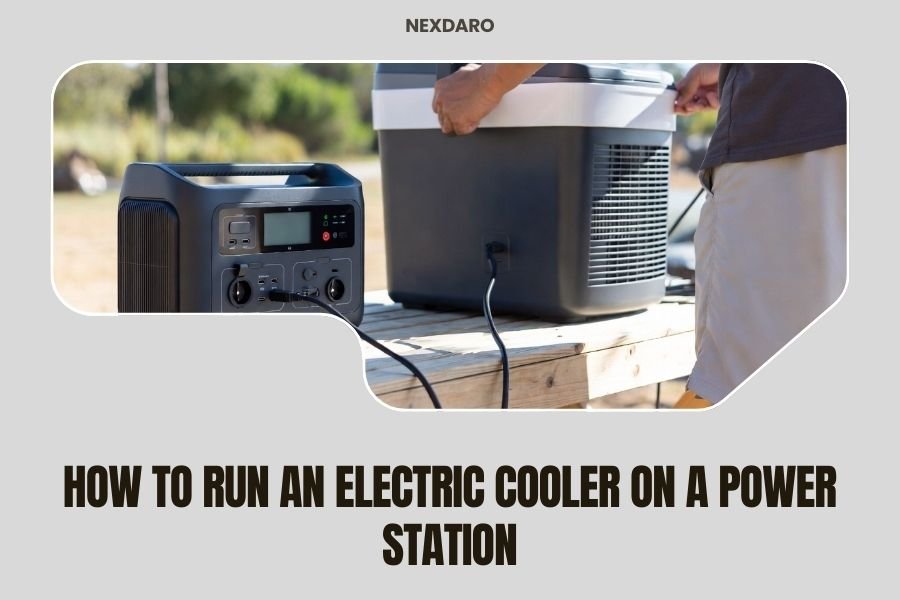
You can run an electric cooler on a power station by matching the cooler’s wattage requirements with your power station’s capacity and ensuring proper connections.
Most portable electric coolers need 45-60 watts of power and can run for 8-20 hours depending on your power station’s battery size and efficiency settings.
Quick Power Requirements Check
Before you plug anything in, you need to know two numbers. Your electric cooler’s power draw and your power station’s capacity.
Electric coolers typically use between 45-75 watts when actively cooling. That’s about the same as a laptop computer. Pretty manageable, right?
Your power station needs enough watt-hours (Wh) to match your planned usage time. Think of it like a gas tank – bigger tanks let you drive further.
Finding Your Cooler’s Power Draw
Check the label on your cooler or look in the manual. You’ll see numbers like “12V 5A” or “60W.” If you only see voltage and amperage, multiply them together. 12V × 5A = 60 watts.
Some coolers list different power draws for different modes. Eco mode uses less power but cools slower. Max mode cools faster but drains your battery quicker.
Calculating Runtime
Here’s the simple math. Divide your power station’s watt-hours by your cooler’s watts. A 500Wh power station running a 50-watt cooler gives you about 10 hours of runtime.
But that’s perfect conditions. Real life is messier. Plan for 20-30% less runtime due to conversion losses and temperature effects.
Choosing the Right Power Station Size
Size matters when you’re keeping food cold. Too small and your ice cream melts overnight. Too big and you’re lugging around extra weight for no reason.
Small Coolers (Under 20 Liters)
These personal-sized coolers work great with 200-400Wh power stations. Perfect for day trips or overnight camping. You’ll get 6-12 hours of cooling time.
I found that most car-sized coolers fall into this category. They’re designed for weekend warriors who want cold drinks without the mess of melting ice.
Medium Coolers (20-40 Liters)
Family-sized coolers need 500-800Wh power stations for decent runtime. These handle weekend camping trips or tailgate parties with ease.
You can expect 10-16 hours of operation with proper settings. That covers most camping scenarios without needing to recharge.
Large Coolers (40+ Liters)
Big coolers for big adventures need 1000Wh or larger power stations. These setups work for extended off-grid living or large group camping.
Runtime can stretch to 20+ hours with efficient models. But you’re also carrying serious weight and spending serious money.
Connection Types and Compatibility
Getting the plug to fit is step one. Getting it to work safely is step two.
12V DC Connections
Most electric coolers use 12V DC power, just like your car’s cigarette lighter. Many power stations include these outlets specifically for camping gear.
Look for the round 12V socket on your power station. It might be labeled “DC OUT” or have a car icon next to it.
AC Power Through Inverter
Some coolers only work with household AC power. Your power station’s AC outlets can handle these, but you’ll lose some efficiency in the conversion process.
AC power draws about 10-15% more from your battery due to the inverter. Factor this into your runtime calculations.
USB-C Power Delivery
Newer small coolers sometimes use USB-C power delivery. This works great with modern power stations that support high-wattage USB-C output.
Check that your power station can deliver enough watts through USB-C. Some only provide 18W, while coolers might need 45W or more.
Maximizing Runtime and Efficiency
Want your cooler to run longer? Smart settings and good habits make a huge difference.
Temperature Settings Matter
Every degree cooler you set increases power consumption. Do you really need that soda at 32°F, or would 40°F work just fine?
Most food stays safe at 40°F or below. You can save 20-30% of your power by setting a reasonable temperature instead of maximum cold.
Insulation Tricks
Better insulation means less work for your cooler. Throw a blanket over it during the day. Park it in shade. Keep the lid closed between uses.
I came across camping forums where people wrap their coolers in sleeping bags for extra insulation. Weird looking but surprisingly effective.
Pre-Cooling Strategy
Start with cold food and drinks. Your cooler works harder bringing warm items down to temperature than maintaining cold ones.
Pre-cool your cooler at home before loading it up. Let it run on wall power for an hour before switching to battery power.
Troubleshooting Common Issues
Things don’t always go smoothly. Here’s what to check when your setup isn’t working right.
Cooler Won’t Turn On
Check your connections first. 12V plugs can work loose, especially on bumpy roads. Make sure everything’s seated firmly.
Verify your power station is actually on and has charge remaining. Some models automatically shut off DC outlets to preserve battery for essential functions.
Shorter Runtime Than Expected
Hot weather makes coolers work harder. Ambient temperature above 85°F can cut runtime by 30% or more as your cooler fights the heat.
Old batteries in your power station also hold less charge. Lithium batteries lose capacity over time and charge cycles.
Cooler Cycles On and Off
This might be normal. Many coolers cycle their compressors to maintain temperature. But if it’s happening too often, check your temperature setting and insulation.
Voltage drop under load can also cause cycling. Weak connections or undersized power stations sometimes can’t maintain steady voltage.
Safety Considerations
Electricity and food storage both come with safety rules. Follow them to keep your camping trip fun instead of dangerous.
Ventilation Requirements
Compressor coolers need airflow around their cooling fins. Don’t stuff them in tight spaces or block their vents with gear.
Power stations also need ventilation when running inverters or charging. Hot electronics can shut down or even catch fire in extreme cases.
Food Safety Guidelines
The USDA says perishable foods shouldn’t stay above 40°F for more than 2 hours. Use a separate thermometer to monitor your cooler’s internal temperature.
Have a backup plan if your power runs out. Ice packs, dry ice, or a traditional ice chest can save your food investment.
Power Station Alternatives and Backups
What happens when your main power source runs dry? Smart campers always have a Plan B.
Solar Charging Options
Solar panels can extend your runtime indefinitely on sunny days. A 100W panel generates enough power to run most coolers during peak sun hours.
You won’t get full power all day, but even partial solar charging can double your effective runtime over a weekend trip.
Car Charging While Driving
Charge your power station from your car’s 12V outlet while driving between campsites. This works great for road trip camping where you move every day or two.
Most cars can provide 10-15 amps through their 12V system. That’s enough to slowly recharge smaller power stations while you drive.
Dual Battery Systems
Serious overlanders sometimes install dual battery systems in their vehicles. This gives you dedicated power for camping gear without risking your starting battery.
These systems automatically charge your auxiliary battery while driving and isolate it when parked. More complex but very reliable for extended trips.
Cost Analysis and Value
Running a cooler on battery power costs more upfront than buying ice. But the convenience and long-term savings can make sense for regular campers.
| Setup Type | Initial Cost | Weekend Cost | Best For |
|---|---|---|---|
| Ice chest + ice | $50-150 | $10-20 | Occasional camping |
| Small electric cooler + power station | $400-700 | $0 | Regular weekend trips |
| Large electric cooler + big power station | $800-1500 | $0 | Extended off-grid living |
The break-even point usually comes after 15-30 camping trips, depending on your setup cost and local ice prices. But you also get convenience, cleanliness, and precise temperature control.
Conclusion
Running an electric cooler on a power station opens up new possibilities for comfortable camping and outdoor adventures. The key is matching your cooler’s power needs with your power station’s capacity, then optimizing your setup for maximum efficiency.
Start with the basics: know your power requirements, choose appropriately sized equipment, and plan for real-world conditions that reduce theoretical runtime. Smart temperature settings, good insulation practices, and backup charging options will keep your food cold and your adventures comfortable.
Whether you’re planning weekend camping trips or extended off-grid living, this combination of electric cooling and portable power gives you reliable refrigeration anywhere you can carry your gear. The upfront investment pays off in convenience, food safety, and the freedom to camp longer without worrying about melting ice or spoiled food.
How long will a 500Wh power station run my electric cooler?
A 500Wh power station typically runs a standard 50-watt electric cooler for 8-10 hours in real-world conditions. Runtime varies based on ambient temperature, cooler efficiency, and temperature settings you choose.
Can I charge my power station while running the cooler?
Yes, most power stations support pass-through charging, letting you charge via solar panels or car outlet while powering your cooler. This can extend your cooling time indefinitely during sunny days or while driving.
What size power station do I need for weekend camping?
For weekend camping with a medium-sized cooler, aim for 800-1000Wh capacity. This provides 16-20 hours of cooling time, easily covering a two-day trip with some power left over for phones and lights.
Is it better to use 12V or AC power for my cooler?
Use 12V DC power when possible since it’s more efficient and draws less from your battery. AC power works but wastes 10-15% of your stored energy through inverter conversion losses.
How do I keep my cooler running longer on limited power?
Set your cooler to 40°F instead of maximum cold, add extra insulation like blankets, keep it in shade, pre-cool your food and the cooler itself, and minimize opening the lid during the day.
