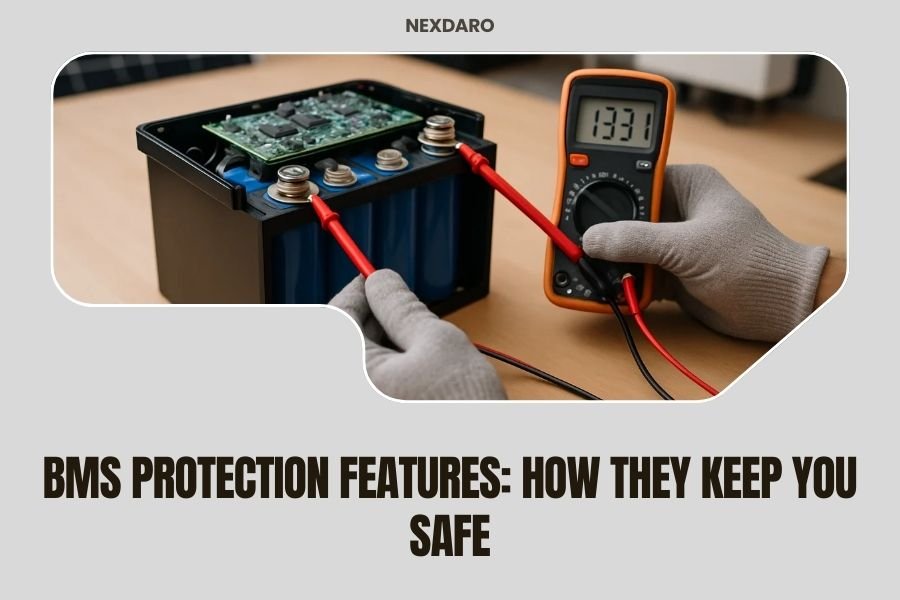
BMS protection features in portable power stations prevent overcharging, overheating, and electrical damage through smart monitoring systems. These safety mechanisms automatically shut down your device when dangerous conditions are detected, protecting both you and your equipment.
Your portable power station’s Battery Management System acts like a digital bodyguard, constantly watching voltage levels, temperature readings, and current flow to keep everything running safely.
What Is a Battery Management System (BMS)?
Think of your BMS as the brain of your portable power station. It’s a smart circuit board that monitors every aspect of your battery’s health and performance.
The BMS sits between your battery cells and the outside world. It watches, measures, and controls what happens inside your power station every second it’s running.
You can’t see it working, but it’s always there. Like a silent security guard protecting your investment and your safety.
How BMS Technology Works
Your BMS uses tiny sensors throughout the battery pack. These sensors feed real-time data back to the main control unit.
When something looks wrong, the BMS reacts instantly. It can slow down charging, reduce power output, or completely shut down the system.
Most modern systems update their readings hundreds of times per second. That’s faster than you can blink.
Core BMS Protection Features
Your portable power station comes loaded with safety features. Each one protects against specific dangers that could damage your equipment or harm you.
Overvoltage Protection
This feature stops your battery from getting too much voltage during charging. Too much voltage can cause fires, explosions, or permanent battery damage.
Your BMS sets a maximum voltage limit for each cell. When any cell hits that limit, charging stops immediately.
Most lithium batteries have voltage limits around 4.2 volts per cell. Go above that, and you’re asking for trouble.
Real-World Voltage Scenarios
Say you’re using a cheap solar panel without proper voltage regulation. Your BMS will catch dangerous voltage spikes before they hurt your battery.
Bad weather can also cause voltage fluctuations. Your protection system handles these automatically.
Undervoltage Protection
Draining your battery too low can kill it permanently. Undervoltage protection prevents this by shutting down before damage occurs.
Your BMS monitors each cell’s minimum voltage. When cells drop too low, the system cuts power to your devices.
This might seem annoying when your power station shuts down unexpectedly. But it’s saving your battery from permanent damage.
Why Low Voltage Kills Batteries
Lithium cells develop internal damage when discharged below safe levels. This damage is permanent and reduces battery life.
Some batteries become completely unusable after deep discharge. Your BMS prevents this expensive mistake.
Overcurrent Protection
Drawing too much power too quickly creates dangerous heat and stress. Overcurrent protection limits how much electricity flows out of your battery.
Your BMS calculates safe current limits based on battery temperature and condition. It adjusts these limits in real-time.
When you plug in a device that draws too much power, the system either reduces output or shuts down completely.
Current Protection in Action
Let’s say you try to run a 2000-watt heater from a 1500-watt power station. Your BMS will either limit the heater’s power or shut down to protect the battery.
Short circuits also trigger overcurrent protection instantly. This prevents fires and equipment damage.
Temperature Management Systems
Heat is your battery’s biggest enemy. Your BMS watches temperature constantly and takes action when things get too hot or cold.
Overheating Protection
Hot batteries can catch fire, explode, or suffer permanent damage. Your temperature monitoring system prevents all of these dangers.
Multiple temperature sensors throughout the battery pack feed data to your BMS. When any sensor detects dangerous heat, protection kicks in.
The system might reduce charging speed, limit power output, or shut down completely until temperatures drop.
Heat Sources to Watch
Fast charging generates heat inside your battery cells. Your BMS slows charging when temperatures climb too high.
External heat sources matter too. Leaving your power station in a hot car can trigger temperature protection.
Cold Temperature Protection
Extreme cold also damages lithium batteries. Your BMS prevents charging when temperatures drop too low.
Cold batteries can develop internal damage if charged aggressively. Your protection system waits for safe temperatures before allowing full charging.
You can usually still discharge power in cold weather, but at reduced rates.
Cell Balancing and Monitoring
Your portable power station contains multiple battery cells. These cells must stay balanced for safe operation.
Why Cell Balancing Matters
Individual cells naturally drift apart over time. Some charge faster, others discharge quicker.
Unbalanced cells create safety risks. One cell might overcharge while others remain undercharged.
Your BMS actively balances cells during charging. It ensures each cell reaches the same voltage level.
Active vs Passive Balancing
Passive balancing slowly drains overcharged cells through small resistors. This method is simple but wastes energy as heat.
Active balancing moves energy between cells without waste. It’s more complex but more efficient.
Individual Cell Monitoring
Your BMS tracks every single cell in your battery pack. It knows the voltage, temperature, and condition of each one.
When any cell shows problems, the system can shut down before that cell damages others.
This individual monitoring prevents one bad cell from destroying your entire battery pack.
Short Circuit Protection
Short circuits can destroy equipment and start fires. Your BMS includes multiple layers of short circuit protection.
Internal Short Detection
Internal shorts happen when battery components touch incorrectly inside cells. These create immediate fire and explosion risks.
Your BMS monitors for sudden voltage drops that indicate internal shorts. Detection happens in milliseconds.
The system immediately isolates shorted cells and shuts down power output.
External Short Protection
External shorts occur when you accidentally connect positive and negative terminals. This creates massive current flow and dangerous heat.
Your protection system includes fuses and electronic switches that open instantly during shorts.
These protective devices reset automatically once the short is removed.
Advanced Safety Features
Modern portable power stations include additional protection features beyond basic BMS functions.
Ground Fault Protection
Ground faults happen when electricity finds unexpected paths to ground. These can cause fires and electrocution.
Your power station monitors for ground faults on AC outlets. Detection triggers immediate shutdown.
This protection is especially important when using power tools or appliances in wet conditions.
Arc Fault Detection
Electric arcs create extreme heat and can ignite fires. Arc fault protection detects these dangerous conditions.
The system analyzes current patterns for signs of arcing. Suspicious patterns trigger protective shutdown.
This feature is becoming more common in high-end portable power stations.
How to Maximize BMS Protection
Your BMS works automatically, but you can help it protect you better.
Regular Maintenance Checks
Check your power station’s display for error codes or warnings. These messages tell you when protection systems activate.
Keep air vents clean and unblocked. Good airflow helps temperature protection work effectively.
Store your power station in moderate temperatures when possible. Extreme heat or cold stresses the protection systems.
Proper Charging Practices
Use only recommended chargers and charging methods. Third-party chargers might not communicate properly with your BMS.
Don’t leave your power station charging unattended for long periods. While safe, it’s good practice to check on it occasionally.
Charge in well-ventilated areas away from flammable materials.
When BMS Protection Activates
Sometimes your power station will shut down or refuse to work. This usually means protection systems are doing their job.
Common Protection Scenarios
Hot weather charging often triggers temperature protection. Wait for cooler conditions before trying again.
Connecting too many devices might activate overcurrent protection. Reduce your power load and try again.
Very low battery levels trigger undervoltage protection. This is normal and protects your battery from damage.
What to Do When Protection Activates
Don’t try to bypass or override protection systems. They’re keeping you safe.
Identify and fix the underlying problem. Remove excess load, improve ventilation, or wait for better conditions.
Contact the manufacturer if protection systems activate frequently without obvious cause.
Conclusion
Your portable power station’s BMS protection features work around the clock to keep you safe. These smart systems prevent fires, explosions, equipment damage, and personal injury through constant monitoring and automatic responses.
From overvoltage protection to temperature management, each safety feature serves a specific purpose. Together, they create multiple layers of protection that make modern portable power stations remarkably safe.
Trust your BMS when it shuts down your system. It’s protecting you from dangers you might not see. Regular maintenance and proper usage help these safety systems work at their best.
Can I bypass BMS protection if I need emergency power?
No, you should never bypass BMS protection features. These systems prevent fires, explosions, and equipment damage. If your power station shuts down, address the underlying safety issue rather than trying to override the protection.
How often should I test my portable power station’s safety features?
You don’t need to actively test safety features, as they monitor automatically. Instead, check your display regularly for error messages, keep vents clean, and follow proper charging practices to ensure protection systems work effectively.
What does it mean when my power station shows a BMS error code?
BMS error codes indicate that protection systems detected unsafe conditions and activated. Common causes include overheating, overloading, or cell imbalance. Check your manual for specific error code meanings and contact support if errors persist.
Do all portable power stations have the same BMS protection features?
No, BMS features vary between brands and models. Higher-end units typically include more sophisticated protection like arc fault detection and advanced cell balancing. Budget models may have basic overcurrent and temperature protection only.
Can BMS protection features wear out over time?
BMS components can degrade over years of use, but they’re designed to last the life of your power station. Electronic components like sensors and control circuits are generally very reliable. Regular software updates can improve BMS performance on some models.