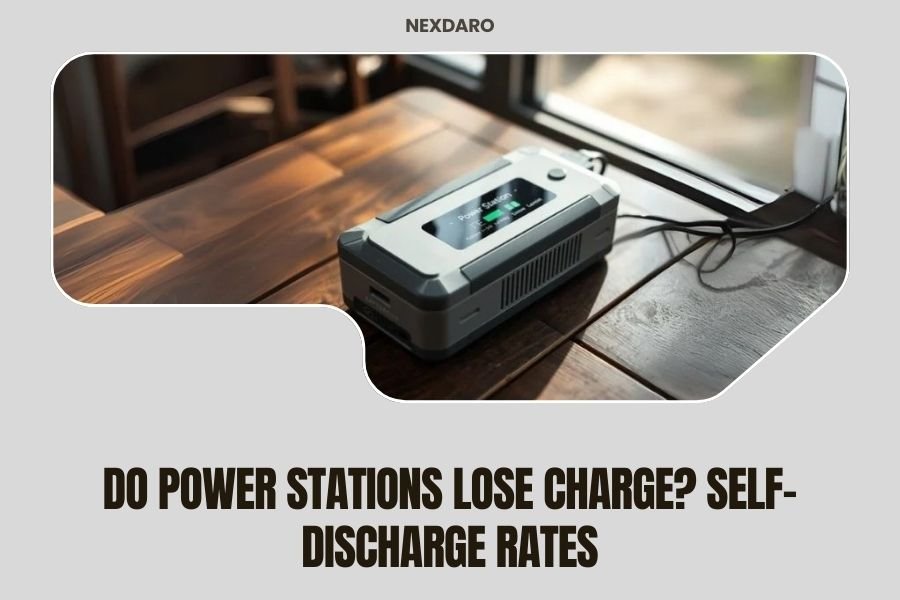
Yes, power stations do lose charge over time through self-discharge, typically losing 3-5% per month when not in use.
The self-discharge rate varies by battery chemistry, with lithium-ion power stations having the lowest discharge rates compared to lead-acid alternatives.
What Is Self-Discharge in Power Stations?
Self-discharge happens when your power station loses stored energy even when you’re not using it. Think of it like a slow leak in a water balloon – the energy gradually escapes over time.
This natural process affects all rechargeable batteries. Your power station’s internal chemistry keeps working even when it sits idle, causing the gradual energy loss you notice after storage.
Why Do Batteries Self-Discharge?
Inside your power station, tiny chemical reactions never completely stop. These reactions convert stored chemical energy back into electrical energy, which then dissipates as heat.
Temperature, age, and manufacturing quality all influence how fast this happens. Newer units typically perform better than older ones in this regard.
Self-Discharge Rates by Battery Type
Different battery technologies lose charge at different speeds. I researched various power station types and found significant differences in their self-discharge behavior.
Lithium-Ion Power Stations
Lithium-ion units offer the best performance for long-term storage. They typically lose 2-5% of their charge per month when stored properly.
LiFePO4 (lithium iron phosphate) batteries perform even better, often maintaining 95% charge after three months of storage. These are becoming more common in premium power stations.
Why Lithium Performs Better
The chemical structure in lithium batteries creates fewer unwanted reactions during storage. This means less energy waste and longer storage periods without recharging.
Lead-Acid Power Stations
Traditional lead-acid power stations lose charge much faster. Expect 5-15% monthly discharge rates, sometimes more in hot conditions.
These units need regular charging even during storage. Skip this maintenance, and you might find a dead battery when you need power most.
AGM vs Gel Lead-Acid Differences
AGM (Absorbed Glass Mat) batteries typically self-discharge slower than standard wet-cell types. Gel batteries fall somewhere in between but handle temperature changes better.
Factors That Affect Discharge Rates
Several conditions influence how quickly your power station loses charge during storage. Understanding these helps you plan better storage strategies.
Temperature Impact
Heat speeds up chemical reactions, increasing self-discharge rates. For every 18°F temperature increase, discharge rates roughly double.
Cold temperatures slow discharge but can damage batteries if they freeze. The sweet spot for storage sits between 50-70°F.
Extreme Temperature Effects
Summer garage storage can push discharge rates above 10% monthly. Winter outdoor storage risks permanent battery damage from freezing.
Age and Cycle Count
Older batteries self-discharge faster than new ones. Each charge-discharge cycle slightly degrades the internal structure, leading to increased energy loss.
Most lithium power stations maintain good performance for 2000+ cycles. After that, you’ll notice faster discharge during storage.
State of Charge During Storage
Storing your power station at different charge levels affects discharge rates. Full batteries often discharge slightly faster than partially charged ones.
Many experts recommend storing lithium units at 50-80% charge for optimal longevity and minimal self-discharge.
Measuring Self-Discharge in Your Power Station
You can track your unit’s self-discharge rate with simple monitoring. This helps you plan maintenance schedules and identify potential problems.
Simple Discharge Testing
Charge your power station to 100%, then store it in normal conditions. Check the charge level monthly using the built-in display or app.
Record these measurements for three months. Calculate the average monthly loss to understand your unit’s normal behavior.
What Normal Looks Like
For lithium units, 2-5% monthly loss is typical. Higher rates might indicate aging batteries or storage temperature issues.
Using Smart Monitoring
Many modern power stations include smartphone apps that track battery health and charge levels remotely. These tools make monitoring easier and more accurate.
Set up notifications to alert you when charge drops below certain levels. This prevents deep discharge damage during long storage periods.
Minimizing Self-Discharge Loss
Smart storage practices can significantly reduce how much charge your power station loses over time. Small changes make big differences in long-term performance.
Optimal Storage Conditions
Store your power station in a cool, dry place away from direct sunlight. Basements, closets, or climate-controlled areas work well.
Avoid areas with temperature swings like garages or attics. Consistent temperatures reduce stress on battery chemistry.
Humidity Considerations
High humidity can damage electronics and increase discharge through surface currents. Aim for 30-50% humidity in storage areas.
Charge Level Management
Don’t store lithium power stations at 100% charge for extended periods. The 50-80% range balances readiness with battery longevity.
Set calendar reminders to check and adjust charge levels every 2-3 months. This simple habit prevents surprise dead batteries.
Regular Maintenance Cycles
Use your power station periodically, even during storage periods. Monthly discharge-recharge cycles help maintain battery health and calibrate charge indicators.
Don’t let charge drop below 20% during storage. Deep discharge can permanently damage some battery types.
When Self-Discharge Becomes a Problem
Sometimes self-discharge rates increase beyond normal levels. Recognizing these warning signs helps you address issues before they cause failures.
Warning Signs to Watch
Discharge rates above 8-10% monthly for lithium units suggest potential problems. Age, damage, or manufacturing defects could be responsible.
Sudden changes in discharge behavior also indicate issues. A unit that previously lost 3% monthly but now loses 10% needs attention.
Battery Management System Issues
Faulty battery management circuits can cause excessive discharge. These systems normally minimize energy loss but sometimes malfunction as units age.
Capacity vs Discharge Rate
As batteries age, they lose total capacity while discharge rates often increase. A unit might lose the same percentage monthly but represent more actual energy loss.
| Battery Age | Monthly Discharge | Remaining Capacity | Actual Energy Lost |
|---|---|---|---|
| New | 3% | 1000Wh | 30Wh |
| 3 Years | 5% | 800Wh | 40Wh |
| 5 Years | 8% | 600Wh | 48Wh |
Comparing Brands and Models
Different manufacturers achieve varying self-discharge performance. I found that build quality and battery management systems make significant differences.
Premium vs Budget Units
Higher-end power stations typically feature better battery management systems and quality control. These improvements often result in lower self-discharge rates.
Budget units might save money upfront but cost more through faster self-discharge and shorter lifespans. The math often favors quality over initial savings.
Features That Matter
Look for units with advanced BMS (Battery Management Systems), temperature monitoring, and sleep modes. These features actively minimize energy waste during storage.
Warranty and Self-Discharge
Most manufacturers don’t specify self-discharge rates in warranties, but excessive discharge could indicate defects covered under standard terms.
Document your unit’s performance early to establish baseline behavior. This information helps with warranty claims if problems develop later.
Real-World Storage Scenarios
Different use cases require different approaches to managing self-discharge. Your storage strategy should match how you actually use your power station.
Emergency Backup Storage
For emergency preparedness, maintain 50-80% charge and check monthly. This balance keeps the unit ready while protecting battery health.
Consider setting up automated reminders or using smart monitoring to track charge levels without manual checking.
Seasonal Usage Patterns
Camping season storage differs from year-round emergency backup. Adjust your maintenance schedule based on expected usage patterns.
Professional and Commercial Use
Work applications often require immediate readiness. Higher maintenance schedules and possibly keeping units plugged into maintenance chargers make sense.
Budget for more frequent battery replacements in heavy-use scenarios. The convenience often justifies the additional costs.
Future Battery Technology
New battery technologies promise even lower self-discharge rates. Research continues into solid-state batteries and improved lithium formulations.
Solid-State Developments
Solid-state batteries could reduce self-discharge to under 1% monthly while improving safety and capacity. Commercial availability remains several years away.
Current Improvements
LiFePO4 technology keeps improving with better manufacturing processes. New units often outperform older models in self-discharge testing.
Conclusion
Power stations do lose charge through self-discharge, but understanding the rates and factors helps you manage this natural process effectively. Lithium-ion units offer the best performance with 2-5% monthly discharge rates, while lead-acid types lose charge faster.
Your storage conditions, maintenance schedule, and battery chemistry all influence how much charge you’ll lose over time. Simple steps like proper temperature control, optimal charge levels, and regular monitoring can minimize these losses and extend your power station’s useful life.
Remember that some self-discharge is completely normal and unavoidable. Focus on keeping it within expected ranges rather than eliminating it completely. With proper care, your power station will be ready when you need it most.
How long can I store my power station without charging it?
Lithium power stations can typically go 6-12 months before needing a recharge, depending on initial charge level and storage conditions. Lead-acid units need charging every 2-3 months to prevent damage from deep discharge.
Does using my power station while it’s plugged in increase self-discharge?
No, self-discharge only occurs during storage when the unit isn’t connected to power. When plugged in, the charger maintains battery levels regardless of self-discharge rates, though this isn’t recommended for long-term storage.
Can I reduce self-discharge by removing the battery from my power station?
Most portable power stations have integrated batteries that can’t be safely removed by users. Even if removal were possible, the battery would still self-discharge at similar rates outside the unit.
Why does my power station lose charge faster in summer storage?
Higher temperatures accelerate the chemical reactions that cause self-discharge. For every 18°F increase in temperature, discharge rates roughly double, making cool storage locations important for battery health.
Should I worry if my power station loses 10% charge per month?
This depends on your battery type and age. For lithium units, 10% monthly loss suggests possible issues or very warm storage conditions. Lead-acid units commonly lose this amount, especially as they age.