9 Best Small Power Station for Camping (October 2026)
The best small power stations for camping include the Jackery Explorer 300 Portable Power Station for balanced campsite power, the HOWEASY Portable Power Station for very light packing, and the Jackery Explorer 1000 v2 Portable Power Station for longer trips and larger loads.
On this page (3 sections)
The Jackery Explorer 300 Portable Power Station is the best small power station for camping when you want 292Wh of capacity, 300W rated output and a stated 7.5 lb carry weight. The HOWEASY is lighter for modest charging, while the Explorer 1000 v2 suits car campers who need much more stored energy and can carry 23.8 lb.
Small is a tradeoff between capacity, output and the space or weight you can spare. Think through what you need to power, how often you'll recharge, and whether you'll carry the unit any distance from your vehicle.
For a broader look across camping setups, see our Best Portable Power Station For Camping. If you're choosing capacity first, our camping power station size guide can help match watt-hours to your devices.
Our picks at a glance
-
1
 Best for balanced campsite power
Jackery Explorer 300 Portable Power Station
9.7/10 our score
See it on Amazon -
2

-
3
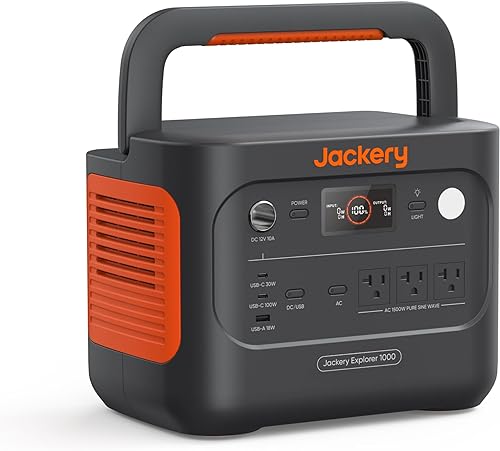 Best for longer trips and larger loads
Jackery Explorer 1000 v2 Portable Power Station
9.6/10 our score
See it on Amazon
- 4
 Check it
Anker SOLIX C300 DC Portable Power Station
Best for USB-C gear - 5
 Check it
BLUETTI Elite 30 V2 Portable Power Station
Best for higher output in a compact unit - 6
 Check it
Anker SOLIX C300 Portable Power Station
Best for compact AC and USB charging - 7
 Check it
BLUETTI Portable Power Station AC180
Best for a campsite hub - 8
 Check it
HOWEASY Portable Power Station 120W
Best for simple campsite lighting - 9
 Check it
ALLWEI Portable Power Station 300W
Best for a compact AC-and-DC mix
Which small power stations for camping fit different loads?
The Jackery Explorer 300 is the most balanced pick here, while the lighter HOWEASY focuses on low-wattage devices and the larger Jackery 1000 v2 handles higher loads. These nine options span 88Wh to 1,152Wh, so compare the power you need with the weight you're willing to carry.
We compared the stated capacity, output, weight, ports and charging options for each model against common campsite needs. Our score weighs specs and features against what you're shopping for.
| Product | Best for | Capacity | Rated output | Weight | Our score |
|---|---|---|---|---|---|
| Jackery Explorer 300 Portable Power Station | balanced campsite power | 292Wh | 300W | 7.5 lb | 9.7 |
| HOWEASY Portable Power Station | very light packing | 88Wh | 2.3 lb | 9.6 | |
| Jackery Explorer 1000 v2 Portable Power Station | longer trips and larger loads | 1,070Wh | 23.8 lb | 9.6 | |
| Anker SOLIX C300 DC Portable Power Station | USB-C gear | 288Wh | 2.8 kg | 9.5 | |
| BLUETTI Elite 30 V2 Portable Power Station | higher output in a compact unit | 288Wh | 9.5 lb | 9.4 | |
| Anker SOLIX C300 Portable Power Station | compact AC and USB charging | 288Wh | 9.3 | ||
| BLUETTI Portable Power Station AC180 | a campsite hub | 1,152Wh | 37.4 lb | 9.2 | |
| HOWEASY Portable Power Station 120W | simple campsite lighting | 88Wh | 2.3 lb | 9.0 | |
| ALLWEI Portable Power Station 300W | a compact AC-and-DC mix | 256Wh | 6.4 lb | 8.8 |
Jackery Explorer 300 Portable Power Station: Best for balanced campsite power
- 292Wh capacity
- 300W rated output
- 7.5 lb carry weight
- 2 AC outlets and 100W USB-C
A useful balance of stored energy and carry weight for campsite essentials. It has AC, USB-C, USB-A and car-port outputs.
Pros
- 292Wh capacity in a 7.5 lb unit
- 100W USB-C PD port
- Can recharge by AC, car or compatible solar panel
Cons
- Solar panel sold separately
- 300W total output limits appliance choices
The Explorer 300 combines 292Wh capacity with 300W rated output in a unit Jackery describes as 7.5 lb. That makes it a useful middle ground for a phone, camera, laptop and campsite lights, provided their combined demand stays within the station's limits.
Its two AC outlets cover devices with wall plugs, while the 100W USB-C PD port, two USB-A ports and 120W car port give you other charging paths. Check each device's draw and avoid treating the 300W rating as a promise that every appliance will run.
The station can recharge from an AC adapter, a car outlet or a compatible Jackery solar panel. The panel is sold separately, and Jackery gives different estimated charge times for 100W and 40W panels.
This is the strongest fit if you want meaningful capacity without moving up to a much heavier campsite hub. If you camp alone and want a narrower comparison, see our Best Portable Power Station For Solo Camping.
HOWEASY Portable Power Station: Best for very light packing
- 88Wh capacity
- 2.3 lb weight
- 120W AC output
- 8 output ports
A compact choice for low-wattage devices such as lights and mini fans. Its 88Wh capacity is better suited to modest charging needs than overnight high-draw use.
Pros
- Small 6.6 x 4 x 3 in body
- Built-in LED light with steady, flash and SOS modes
- AC, car and solar recharging options
Cons
- 120W maximum device output
- 88Wh may not sustain CPAP use all night
At 2.3 lb and 88Wh, the HOWEASY is built for light loads and short carries. Its 120W AC output suits small devices like lights and mini fans, and the maker advises keeping the combined device load within its stated limit.
The eight ports include two AC sockets, USB-C, USB-A, QC USB and DC outputs. A built-in LED light offers steady, flash and SOS modes, which can be handy around a tent or picnic table.
For a phone, camera and low-draw light, its compact body can take less space than a larger power station. Its small battery is not suited to every overnight need: HOWEASY says 88.8Wh may not sustain CPAP use for a full night.
Choose this for modest electronics when pack weight matters more than long runtime. For a phone and laptop charging setup, compare it with a dedicated camping power bank for a laptop and phone.
Jackery Explorer 1000 v2 Portable Power Station: Best for longer trips and larger loads
- 1,070Wh capacity
- 1,500W AC output
- 23.8 lb weight
- 3 pure sine wave AC ports
This is the high-capacity option for campers who need to run more than small electronics. Its 23.8 lb weight and larger body suit car camping better than backpacking.
Pros
- 1,070Wh capacity
- 1,500W AC output with 3,000W surge peak
- Three AC ports and two USB-C ports
Cons
- Heavier than the other compact picks
- Solar charging is compatible only with Jackery panels
The Explorer 1000 v2 is the high-capacity pick, with 1,070Wh and 1,500W AC output. At 23.8 lb, it belongs in a vehicle-based camp setup where the extra energy can support multiple devices or higher-power gear.
Its three pure sine wave AC ports, two USB-C ports, USB-A port and car port make it a flexible hub. Jackery says emergency charging through its app can reach a full charge in one hour; the default charge mode takes 1.7 hours.
The larger capacity can support longer use, but runtime still depends on what you connect and how much power it draws. Solar charging is limited to Jackery panels, so factor panel compatibility into a trip where wall power isn't available.
Pick it when 292Wh isn't enough and you don't need a unit for long hikes. It is larger and heavier than the compact models, so match it to a trunk or campsite hub role.
Anker SOLIX C300 DC Portable Power Station: Best for USB-C gear
- 288Wh capacity
- 300W output
- Two 140W two-way USB-C ports
- 7 device ports
The DC model suits a camp kit built around USB-C and other DC-powered devices. It has seven ports, but no AC outlets.
Pros
- Two 140W two-way USB-C ports
- 288Wh capacity
- Can recharge by USB-C, car or compatible solar
Cons
- No AC outlets
- Shoulder strap sold separately
The Anker SOLIX C300 DC puts 288Wh in a DC-focused setup with 300W output. Its seven ports include two 140W two-way USB-C ports, additional USB-C and USB-A connections, plus a 120W car socket.
Because this version has no AC outlets, it works best when your camp devices charge directly over USB or DC. That can reduce the need for bulky wall adapters, but check your gear's connector and input requirements first.
Anker says the unit can recharge by USB-C, solar or car, and recommends its 60W or 100W solar panels. It also specifies that some USB-C solar panels and several Anker panel models are incompatible.
Choose the DC model for a campsite kit built around phones, tablets, cameras and USB-C laptops. If you need wall outlets too, compare it with the AC version below.
BLUETTI Elite 30 V2 Portable Power Station: Best for higher output in a compact unit
- 288Wh capacity
- 600W continuous output
- 9.5 lb weight
- 1500W Power Lifting Mode
This compact unit pairs 288Wh with 600W continuous output. The higher output can support more device types, though battery capacity still limits runtime.
Pros
- 600W continuous output
- AC, car and solar charging options
- 10ms UPS function
Cons
- 9.5 lb carry weight
- Solar charging cable needs checking for panel compatibility
The BLUETTI Elite 30 V2 pairs 288Wh with 600W continuous output, giving it more output headroom than the 300W options above. Its stated weight is 9.5 lb, so it's still a carryable car-camping unit but not the lightest choice.
BLUETTI describes a 1500W Power Lifting Mode for certain loads, but that mode doesn't change the station's stored energy. For a device with a motor or heating element, check its startup draw and the maker's instructions before relying on the higher mode.
The Elite 30 V2 supports AC, car, solar and other charging methods, with panel compatibility and cable needs depending on the setup. BLUETTI also specifies a 10ms UPS function, a feature that may matter when the station is used for backup at home.
Pick this when the connected device's output demand rules out a 300W unit, while a 1,000Wh-plus battery would be excessive. It offers higher output, not longer runtime by default.
Anker SOLIX C300 Portable Power Station: Best for compact AC and USB charging
- 288Wh capacity
- 300W output
- 3 AC outlets
- 140W two-way USB-C ports
Three AC outlets and fast USB-C ports give this 288Wh unit flexibility for a car campsite. Check the device's running and startup power against its output limits.
Pros
- Three AC outlets
- 288Wh capacity
- Can recharge from wall, car, solar or USB-C
Cons
- 300W total AC output
- Shoulder strap sold separately
The AC version of Anker's C300 offers 288Wh and 300W output, with three AC outlets alongside USB-C, USB-A and a car socket. This mix suits car campers with a few small AC devices and everyday USB gear.
Two USB-C ports support up to 140W each, while the unit can recharge from a wall outlet, car, solar or USB-C. Anker recommends 60W or 100W solar panels and sets compatibility limits, so verify the exact panel connection before you leave.
The station's 300W AC output is the key limit for appliances. Add up the devices you plan to run at once, and check startup demand for anything with a motor.
Choose this over the DC C300 when wall outlets are useful at camp. Choose the DC version when you mainly charge through USB-C and don't need AC power.
BLUETTI Portable Power Station AC180: Best for a campsite hub
- 1,152Wh capacity
- 1,800W output
- 37.4 lb weight
- 8 outlets
The AC180 brings much more capacity and output for car camping with several devices. At 37.4 lb, it's a poor fit when you need to carry power far from the vehicle.
Pros
- 1,152Wh capacity
- 1,800W output
- Solar input up to 500W
Cons
- 37.4 lb weight
- Much larger than a small-device charging unit
The BLUETTI AC180 has 1,152Wh of capacity and 1,800W output, but it weighs 37.4 lb. Its eight outlets and 500W solar input make it a campsite hub for a vehicle-based setup rather than a small station to carry by hand over a distance.
BLUETTI says AC charging can bring it to a full charge in an hour at 1,440W input. Its solar input supports up to 500W, and the maker gives a 2.8 to 3.3 hour estimate with 500W solar under its stated conditions.
That capacity and output suit larger loads, but they're more than many weekend campers need for phones, lights and camera batteries. Measure the space in your vehicle and think about where the station will sit before choosing this size.
For an RV setup with different space and power needs, read What Is the Best Portable Power Station for RV Camping?.
HOWEASY Portable Power Station 120W: Best for simple campsite lighting
- 88Wh capacity
- 120W AC output
- 2.3 lb weight
- Built-in LED flashlight
A lightweight option for phones, lights and other small devices under its 120W output limit. The built-in light adds a useful campsite feature.
Pros
- 2.3 lb weight
- 8 output ports
- AC, car and solar recharging
Cons
- 88Wh capacity
- Solar panel sold separately
The HOWEASY 120W model weighs 2.3 lb and holds 88Wh, making it one of the easiest units here to pack. It has eight outputs, including two AC outlets, USB-C, USB-A, DC ports and a built-in flashlight.
Its capacity and output work best for small electronics and low-wattage campsite gear. The maker says not to exceed 120W for a device and gives a runtime estimate based on an 85% conversion rate, but actual use varies with the load.
You can recharge from an AC outlet, a car socket or a compatible 15V to 24V solar panel. The panel is sold separately, and HOWEASY recommends a panel in the 20W to 60W range for its H120 guidance.
Choose it for a light kit that includes phones, small lights or a mini fan. Skip it for a high-draw appliance or a device you need to run through a long night.
ALLWEI Portable Power Station 300W: Best for a compact AC-and-DC mix
- 256Wh capacity
- 300W continuous output
- 6.4 lb weight
- 60W USB-C PD port
This 256Wh unit combines an AC outlet with USB-C, USB-A, DC and car outputs. Its 6.4 lb weight is manageable for car camping and short carries.
Pros
- 6.4 lb weight
- 60W USB-C PD port
- AC, car, solar and dual charging options
Cons
- 256Wh capacity
- Solar panel sold separately
The ALLWEI 300W gives you 256Wh, 300W continuous output and a 6.4 lb carry weight. Its port mix includes one AC outlet, two DC5521 ports, a car socket, USB-A and a 60W USB-C PD port.
That mix can cover a laptop, camera and smaller campsite devices, subject to their power needs and the station's total output. The single AC outlet makes it less flexible than models with multiple AC sockets if you need to plug in several wall-powered devices.
ALLWEI supports AC, car, solar and dual charging, and says a 100W solar panel can recharge the unit in 4 to 5 hours under its stated conditions. The solar panel is sold separately.
Pick this if you want a mid-weight unit with both AC and DC connections. Its 256Wh capacity is less than the 288Wh and 292Wh alternatives near the top of this list.
How do you choose a small power station for camping?
Choose a camping power station by adding up the devices you'll use, their wattage and the hours you need them to run. Then check the station's output limit and compare its capacity and weight with your space and carrying plan.
How much capacity is enough for small camping gear?
A station around 250–300Wh can suit lights, phones, cameras and some laptop charging, depending on how often you use them. A smaller 88Wh unit saves weight but leaves less energy for repeat charging or overnight loads.
Estimate energy with this simple calculation: device watts multiplied by hours of use gives watt-hours needed. Leave room for conversion losses and for devices whose power draw changes while running.
Which output limit should you check?
The output limit tells you how much power the station can supply at once. A 300W unit can handle a different set of devices than a 600W or 1,500W model, regardless of how many watt-hours it holds.
Check both the running wattage and startup demand for appliances with motors or heating elements. Add together the wattage of devices you plan to run at the same time and stay within the station's limits.
Does weight matter more than capacity?
Weight matters most when you carry the station beyond your vehicle or move camp on foot. The HOWEASY models weigh 2.3 lb, the ALLWEI weighs 6.4 lb, and the Explorer 1000 v2 weighs 23.8 lb.
For a vehicle campsite, a heavier model can be practical if you want its larger battery and output. For a longer walk, a smaller unit or a standard power bank may be easier to carry.
Can a solar panel keep a small station charged?
Solar can help replenish a power station at camp, but input limits and connector compatibility differ by model. Check the recommended voltage and panel type before buying or packing a panel, and remember that available sun affects charging.
If you plan to carry the panel while hiking, compare the power station with a portable solar panel for backpacking. A panel adds space and weight, so plan for the full charging kit rather than the battery alone.
Which small camping power station should you choose?
Choose the Explorer 300 if you want a middle ground of capacity, output and stated carry weight for campsite essentials. Choose the HOWEASY if your priority is a very light unit for low-wattage devices, the Elite 30 V2 for higher output in a compact battery class, or the Explorer 1000 v2 when you need a larger campsite hub.
For backpacking, prioritize the weight of the full kit and check whether a power bank can cover your devices. For car camping, capacity and output may matter more than a few extra pounds.
FAQ and runtime estimates are starting points, not guarantees. Confirm device power requirements and solar compatibility before relying on a station for a specific trip.
Our top 3 picks at a glance
-
1
Best for balanced campsite power
Jackery Explorer 300 Portable Power Station
9.7/10 our score
See it on Amazon -
2
-
3
Best for longer trips and larger loads
Jackery Explorer 1000 v2 Portable Power Station
9.6/10 our score
See it on Amazon
Frequently asked questions
What size power station is small enough for camping?
For car camping, a unit around 250–300Wh can balance useful capacity with manageable carrying weight. For a lighter pack, an 88Wh unit weighs less but suits phones, lights and other low-draw devices.
Compare both capacity and weight with your gear list before choosing.
How long will a small camping power station run my device?
Runtime depends on the device's actual power draw and the station's usable energy. As a rough estimate, divide watt-hours by watts, then allow for conversion losses; a 60W device can use a 288Wh battery much faster than a phone or LED light.
Check device labels and maker guidance before planning overnight use.
Can a small power station run a camping fridge?
It depends on the fridge's running and startup power, plus how long it cycles. Check both against the station's output limits, then estimate energy use across the trip rather than assuming capacity alone guarantees a full night.
The 600W BLUETTI Elite 30 V2 has more continuous output than 300W models, but its capacity is 288Wh.
Can I recharge a small power station from a solar panel at camp?
Many can recharge by solar, but panel voltage, connector and wattage must match the station. The Jackery Explorer 300 and Anker SOLIX models have specific panel guidance, so confirm compatibility before packing a panel.
Cloud cover and changing sunlight can also affect how much energy you collect.
Is a small power station enough for CPAP camping?
It may be enough for some setups, but estimate runtime from the CPAP's power draw and the station's usable capacity. Heated humidifiers and other settings can raise demand.
HOWEASY cautions that its 88Wh model may not last all night for CPAP use.
Confirm your own device requirements before relying on battery power.


