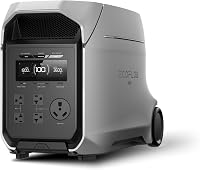
Best 240V Split-Phase Power Stations: Top 9 Picks (October 2026)
The best solar generators with 240V split-phase output include the BLUETTI Apex 300 Portable Power Station 2764.8Wh for direct 120V and 240V output, the Anker SOLIX F3000 Portable Power Station for pairing two stations, and the BLUETTI Apex 300 Solar Generator & 350W for a solar-panel bundle.
On this page (4 sections)
The best solar generator with a 240V outlet for direct dual-voltage use is the BLUETTI Apex 300, which is described as supporting simultaneous 120V and 240V output. The Anker SOLIX F3000 offers a 240V path when paired with a second unit; the remaining picks are 120V options for lighter loads.
A 240V appliance needs more than a big battery or high wattage number. Check its voltage, running and startup power, plug type and whether it needs split-phase power before choosing a station.
For broader backup planning, see our best solar generator for whole house backup guide. If you are comparing brand-specific dual-voltage options, our best BLUETTI power stations for 240V appliances page focuses on that system.
Our picks at a glance
-
1
 Best for direct 120V and 240V output
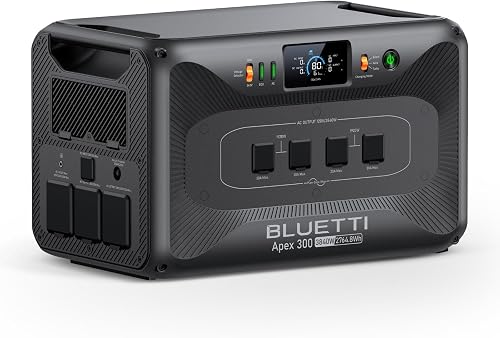
BLUETTI Apex 300 Portable Power Station 2764.8Wh
8.9/10 our score
See it on Amazon -
2
 Best for pairing two stations
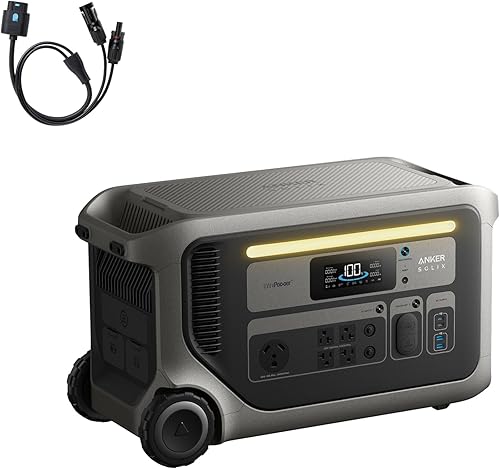
Anker SOLIX F3000 Portable Power Station
8.6/10 our score
See it on Amazon -
3
 Best for a solar-panel bundle
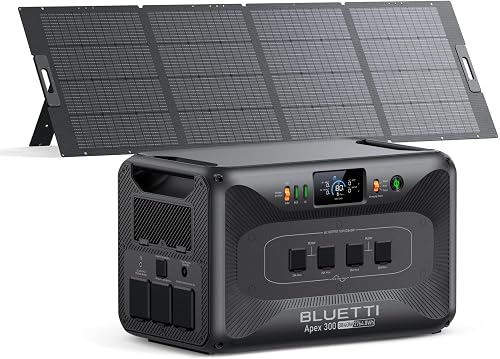
BLUETTI Apex 300 Solar Generator & 350W
8.4/10 our score
See it on Amazon
- 4
 Check it
PECRON Portable Power Station F3000LFP
Best for high-capacity 120V backup - 5
 Check it
EF ECOFLOW Solar Generator Delta 3 Classic
Best for mid-size 120V backup - 6
 Check it
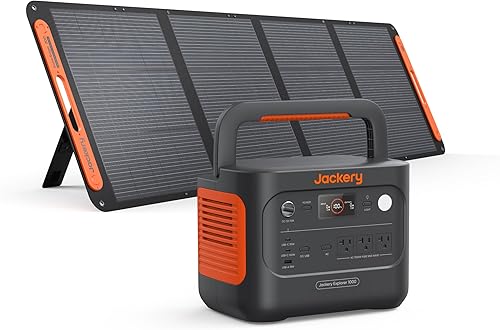
Jackery Solar Generator 1000 v2 and 200W
Best for portable 120V essentials - 7
 Check it
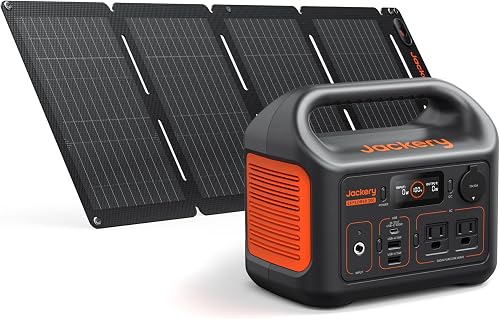
Jackery Solar Generator 300 and 40W
Best for small 120V devices - 8
 Check it
DYNESS Portable Power Station 300W
Best for basic 120V device charging - 9
 Check it
Westinghouse iGen400s 400 Watt
Best for light 120V backup
Which 240V power stations fit different backup needs?
The BLUETTI Apex 300 is the strongest direct match here, while the Anker SOLIX F3000 is a two-station option for 240V. The smaller and 120V-only units belong in this roundup as alternatives for buyers who also need ordinary device backup, not as 240V sources.
We compared the stated voltage, output, capacity, charging choices and expansion path against the needs of a split-phase appliance. Our score weighs specs, features and buyer feedback against what you're shopping for.
| Product | Best for | Output | Capacity | Expansion | Our score |
|---|---|---|---|---|---|
| BLUETTI Apex 300 Portable Power Station 2764.8Wh | direct 120V and 240V output | 120V and 240V | 2,764.8Wh | B300K or B500K batteries | 8.9 |
| Anker SOLIX F3000 Portable Power Station | pairing two stations | 120V alone; 240V with two stations | 3,072Wh | 8.6 | |
| BLUETTI Apex 300 Solar Generator & 350W | a solar-panel bundle | 120V and 240V | 2,764.8Wh | 8.4 | |
| PECRON Portable Power Station F3000LFP | high-capacity 120V backup | 120V AC | 3,072Wh | 8.1 | |
| EF ECOFLOW Solar Generator Delta 3 Classic | mid-size 120V backup | 1,800W AC | 1,024Wh | 7.8 | |
| Jackery Solar Generator 1000 v2 and 200W | portable 120V essentials | 1,500W AC | 1,070Wh | 7.5 | |
| Jackery Solar Generator 300 and 40W | small 120V devices | 300W AC | 292Wh | 7.1 | |
| DYNESS Portable Power Station 300W | basic 120V device charging | 110V AC | 256Wh | 6.8 | |
| Westinghouse iGen400s 400 Watt | light 120V backup | 200W running, 400W peak | 183Wh | 6.5 |
What should you confirm before buying a solar generator with a 240V outlet?
Confirm that the system provides 240V split-phase output, not just a high wattage rating. Then match its continuous and surge output to the appliance label, including startup draw.
A well pump, dryer, range or workshop tool may have different wiring and connection needs. Check the appliance manual for voltage, amperage, plug type and whether it requires a neutral connection.
The station's usable energy matters too. A 240V-compatible system can still fall short if the appliance draws more energy over time than the battery can supply.
BLUETTI Apex 300 Portable Power Station 2764.8Wh: Best for direct 120V and 240V output
- Simultaneous 120V/240V output
- 2,764.8Wh capacity
- Expandable with B300K or B500K batteries
- 0ms UPS claim
This is the most direct match for appliances that need split-phase output. BLUETTI says it can switch to 240V through the app or onboard controls.
Pros
- Simultaneous 120V/240V output
- Expandable capacity
- AC, solar, car and generator charging
Cons
- Confirm the compatible setup and appliance requirements before connecting
The Apex 300 is the clearest fit in this group if you need both 120V household outlets and 240V output from one system. BLUETTI describes switching to 240V through the app or onboard controls, with simultaneous 120V/240V output.
Its 2,764.8Wh capacity gives you a starting point for estimating runtime. Divide the usable energy by the appliance's average watt draw for a rough estimate, then allow for conversion losses and changing load.
The system can expand with B300K or B500K batteries as needs grow. BLUETTI also describes charging from AC, solar, a vehicle or generator, which gives you several ways to refill it between outages.
Before buying, match the exact connection and power requirements of your appliance to the system. For more brand-specific options, read our BLUETTI power station guide for 240V appliances.
Anker SOLIX F3000 Portable Power Station: Best for pairing two stations
- 3,072Wh capacity
- 240V by pairing two stations
- Up to 2,400W solar recharging
- Expandable to 24kWh
Anker describes 120V output from one F3000 and 240V output when two stations are paired. Plan for the second unit and confirm the required connection hardware.
Pros
- Clear two-unit path to 240V
- Expandable battery capacity
- High stated solar input
Cons
- A single station does not provide the described 240V pairing
The Anker SOLIX F3000 makes sense if you want a high-capacity station and are prepared to pair two units for 240V. To compare another large Anker and EcoFlow setup, see F3800 Plus vs DELTA Pro 3.
Anker describes one F3000 as providing 120V output, with 240V available when two stations are paired.
That distinction changes the total setup cost, space and wiring plan, so count both units when comparing systems. Its 3,072Wh capacity is the starting capacity for one station, and Anker says batteries can expand the system to 24kWh.
The station supports up to 2,400W solar recharging through its 165V or 60V ports. Check panel voltage and the required pairing setup before planning a solar array or connecting a 240V appliance.
Choose this route if a two-unit system fits your backup plan. For another charging option, see our guide to charging an EcoFlow DELTA Pro 3 with a generator.
BLUETTI Apex 300 Solar Generator & 350W: Best for a solar-panel bundle
- Simultaneous 120V/240V output
- 2,764.8Wh capacity
- Includes a 350W solar panel
- Expandable with B300K batteries
This bundle pairs the Apex 300 dual-voltage system with a 350W solar panel. The panel ships separately, so account for separate delivery when planning setup.
Pros
- 240V output in the Apex 300 system
- 350W panel included in the bundle
- Supports solar, AC, car and generator charging
Cons
- Panel ships separately
- Confirm full system requirements for your load
The Apex 300 bundle adds a 350W solar panel to the same basic dual-voltage system. It is a fit for buyers who want a panel in the package and can plan around the panel and station arriving separately.
BLUETTI describes simultaneous 120V/240V output and a 2,764.8Wh capacity for the Apex 300. The bundle's panel can help recharge from sunlight, but real charging time depends on sun, panel placement and system conditions.
The station supports expansion with B300K batteries and accepts AC, solar, car and generator charging. Confirm the compatible cable and operating steps for the particular 240V appliance you plan to run.
Pick this bundle if the panel is useful for your backup plan. The station itself is the central feature, so compare the bundle with the standalone Apex 300 power station if you already have compatible solar panels.
PECRON Portable Power Station F3000LFP: Best for high-capacity 120V backup
- 3,072Wh capacity
- 3,600W output
- Six AC outlets
- 120V AC output
The F3000LFP offers substantial capacity and six AC outlets for 120V essentials. PECRON specifies that its AC output is 120V, so it is not a direct fit for a 240V appliance.
Pros
- Large stated capacity
- Six AC outlets
- Solar, AC and car charging options
Cons
- 120V output only
The PECRON F3000LFP is a high-capacity option for 120V backup, not for 240V loads. PECRON specifies 120V AC input and output, despite the station's 3,600W output and 3,072Wh battery.
That makes it useful for a different part of an outage plan: powering compatible 120V appliances, electronics or several devices across its six AC outlets. It also has USB-C, USB-A and DC outputs for smaller gear.
The station supports AC, solar and car charging, with a stated maximum solar input of 1,600W. Its 25–120V solar input range means panel voltage needs to fall within that range.
Do not select this model for an appliance that requires 240V split-phase power. Check the appliance label and choose a system that explicitly supports its voltage.
EF ECOFLOW Solar Generator Delta 3 Classic: Best for mid-size 120V backup
- 1,024Wh capacity
- 1,800W output with 3,600W surge
- 220W solar panel included
- Under-10ms UPS claim
The DELTA 3 Classic bundle is a 120V-class option for smaller appliances and electronics. Its stated output does not identify split-phase 240V, so choose it for compatible 120V loads.
Pros
- 220W solar panel included
- Fast AC charging claim
- UPS feature for sensitive electronics
Cons
- No 240V output specified
The EcoFlow DELTA 3 Classic bundle is a mid-size 120V option for smaller appliances and sensitive electronics. It provides 1,800W output with a stated 3,600W surge and includes a 220W solar panel.
EcoFlow describes X-Boost output up to 2,600W, but that feature does not make this a 240V split-phase station. Match the appliance's voltage and draw to the station's stated output rather than relying on the wattage figure alone.
A stated under-10ms UPS feature may matter for electronics that need a quick switchover during an outage. The bundle's station and panel may arrive separately, so allow for that when planning your setup.
Choose it for compatible 120V loads. For whole-home coverage, first consider what circuits matter most and whether your home needs a transfer switch or other electrician-installed equipment.
For an EcoFlow home backup option, see the DELTA Pro 3 transfer switch guide.
Jackery Solar Generator 1000 v2 and 200W: Best for portable 120V essentials
- 1,070Wh capacity
- 1,500W AC output
- Three AC ports
- 200W solar panel included
This compact bundle can support selected 120V appliances within its output limit. It is not described as a 240V split-phase system.
Pros
- Three AC ports
- 200W solar panel included
- Compact 23.8 lb station
Cons
- No 240V output specified
The Jackery Solar Generator 1000 v2 bundle is a portable choice for selected 120V essentials. For larger home backup options from the brand, see our Jackery home power station guide.
It has a 1,070Wh capacity, 1,500W AC output, three AC ports and a 200W solar panel.
Jackery describes a 3,000W surge peak and says the station weighs 23.8 lb. Those figures can help with portability and appliance screening, but they do not indicate split-phase output.
The station includes two USB-C ports, one USB-A port and a car port in addition to AC outlets. Its panel and station may ship separately, so plan for separate deliveries.
This is not a 240V appliance source. Consider it for devices whose voltage and power needs fit its 120V output, and use a dual-voltage system for split-phase loads.
Jackery Solar Generator 300 and 40W: Best for small 120V devices
- 292Wh capacity
- 300W AC output
- 40W solar panel included
- 7.5 lb stated station weight
The Explorer 300 bundle is for modest device charging and other loads under its 300W total output. It cannot serve as a 240V appliance source.
Pros
- Lightweight station
- 40W panel included
- USB-C PD port
Cons
- Low output and capacity
- No 240V output specified
The Jackery Solar Generator 300 is for small devices and low-draw 120V use, not major backup loads. It offers 292Wh capacity and 300W AC output, with a 40W solar panel in the bundle.
Its size and output suit devices such as cameras, laptops or other gear that stays within the 300W limit. The station also has USB-C, USB-A and a car port for charging different device types.
The 40W panel is a modest recharge source, so it is best viewed as a small off-grid kit rather than a way to sustain a large appliance. Jackery gives an estimated 80% recharge time of about 7.5 hours with that panel.
Choose a larger system for a refrigerator or other appliance with higher startup demand. For a 240V appliance, this model is not a substitute for a split-phase station.
DYNESS Portable Power Station 300W: Best for basic 120V device charging
- 256Wh capacity
- 300W continuous output
- One AC outlet
- Solar, AC and car charging
This small unit is suited to modest loads such as a laptop or router within its 300W output. Its stated 110V outlet is not suitable for 240V appliances.
Pros
- Compact capacity for small loads
- Multiple charging methods
- LiFePO4 battery
Cons
- One AC outlet
- No 240V output
The DYNESS 300W is a compact 110V option for small loads such as a laptop, router or camera. It has 256Wh capacity, 300W continuous output and one AC outlet.
The unit can recharge from an AC outlet, compatible solar panel, car charger or dual input. DYNESS says it works with most 18V, 60–100W solar panels.
Its output is below the needs of many household appliances, and it does not offer 240V. Check the power draw of every connected device and keep their combined load below 300W.
Pick it for modest device backup where portability matters. A split-phase appliance needs a system designed to supply 240V.
Westinghouse iGen400s 400 Watt: Best for light 120V backup
- 183Wh capacity
- 200W running output
- Two 120V AC outlets
- USB-C and USB-A ports
The iGen400s is a small power source for phones, laptops and other modest devices. Its two AC outlets are 120V, so it does not meet a 240V appliance requirement.
Pros
- Two AC outlets for 120V devices
- Several USB ports
- Lightweight at 5 lb
Cons
- Low capacity and running output
- No 240V output
The Westinghouse iGen400s is a small 120V backup station for electronics, with 183Wh capacity and 200W running output. Its two AC outlets are specified as 120V, with a 400W peak rating.
Three USB-C ports, two USB-A ports and a 12V DC outlet add options for phones, computers and other small devices. The unit weighs 5 lb and includes a flashlight with emergency flasher modes.
Westinghouse says the station can charge to 80% in 2 hours when used with a 100W AC adapter, which is not included. It is a useful small backup choice, but its capacity and output are far below what many large appliances need.
This model does not supply 240V split-phase power. Choose it for lighter electronics and use a dual-voltage system for a 240V appliance.
How do you choose the right 240V power station?
Start with the appliance's voltage and connection type, then compare its running watts and startup surge with the station's output. If the appliance requires split-phase 240V, the station must explicitly support that arrangement.
Next, estimate how long you need the appliance to run. Battery capacity is measured in watt-hours, so a 1,000Wh battery will not necessarily run a 1,000W load for a full hour after losses and changing power draw.
Finally, plan how the system will connect to the appliance or home circuit. A power station's outlets do not automatically make it safe to connect to household wiring; consult a qualified electrician about transfer equipment and installation.
Can a portable power station replace a whole-house generator?
A portable power station can cover selected loads, but replacing a whole-house generator depends on capacity, output, wiring and how many appliances you need at once. A 240V outlet alone does not guarantee whole-home coverage.
Choose a small backup list first: refrigeration, communications, lighting or a specific 240V appliance. Then compare total running draw, startup demand and the hours of runtime you need.
Our guide explains whether a power station can replace a whole-house generator. If you are still deciding between a battery system and a conventional portable station, see portable power station vs solar generator.
Which solar generator with 240V outlet should you choose?
Choose the BLUETTI Apex 300 if you want a system described for simultaneous 120V and 240V output. Choose the Anker SOLIX F3000 if a two-station pairing fits your space and budget, and choose one of the smaller 120V models only for compatible lighter loads.
Before you connect anything, check the appliance's manual and the station's exact setup requirements. Our guide to what you can power with a solar generator can help you plan around load and runtime.
Our top 3 picks at a glance
-
1
Best for direct 120V and 240V output
BLUETTI Apex 300 Portable Power Station 2764.8Wh
8.9/10 our score
See it on Amazon -
2
Best for pairing two stations
Anker SOLIX F3000 Portable Power Station
8.6/10 our score
See it on Amazon -
3
Best for a solar-panel bundle
BLUETTI Apex 300 Solar Generator & 350W
8.4/10 our score
See it on Amazon
Frequently asked questions
What is a 240V split-phase power station?
A 240V split-phase power station supplies two 120V legs that combine for compatible 240V appliances. Check the appliance manual and the station’s exact output arrangement before connecting anything, since a 120V outlet or two separate outlets do not by themselves establish split-phase output.
The BLUETTI Apex 300 is described as supporting simultaneous 120V and 240V output.
Can a 120V power station run a 240V appliance?
Usually, no. A 120V-only station does not provide the voltage an appliance designed for 240V needs, even if its wattage seems high enough.
Choose a system that explicitly supports the appliance’s voltage and connection, and have a qualified electrician handle any home wiring or transfer equipment.
Do I need two power stations for 240V output?
It depends on the model. Anker says two SOLIX F3000 stations can be paired for 240V, while the BLUETTI Apex 300 is described as providing simultaneous 120V/240V output as a system.
Confirm compatible accessories, connection steps and load limits before buying.
Can a solar generator power a whole house?
A solar generator can run selected household circuits or appliances when its output, capacity and connection method match the load. Whole-home use also depends on transfer equipment, wiring and how much energy the household uses.
Compare the setup with our whole-house solar generator guide and consult an electrician for installation.