Jackery Explorer 2000 Plus vs V2: Which Is Better? (November 2026)
Choose the Explorer 2000 v2 for easier carrying, or the Explorer 2000 Plus if you need higher output and expandable capacity. Both have 2042Wh batteries, but their weight and growth options differ.
On this page (8 sections)
- Jackery Explorer 2000 Plus vs V2: what changes?
- Which one is easier to carry?
- How much output do your devices need?
- Which fits home backup better?
- Which model makes more sense for camping or RV use?
- What should you check before buying?
- How should you set up and care for a power station?
- Which Jackery Explorer 2000 should you choose?
Choose the Explorer 2000 v2 for easier carrying, or the Explorer 2000 Plus for higher output and expandable capacity. For another brand comparison, see Paxcess vs Jackery power stations.
In this Jackery Explorer 2000 Plus vs V2 comparison, both models offer about 2042Wh, but their weight, AC output and expansion options set them apart.
The Plus weighs 82 lb and provides 3000W AC output. The v2 weighs 39.5 lb and provides 2200W AC output, making it much easier to move.
 Best for expandable backup
Jackery Explorer 2000 Plus Portable Power Station
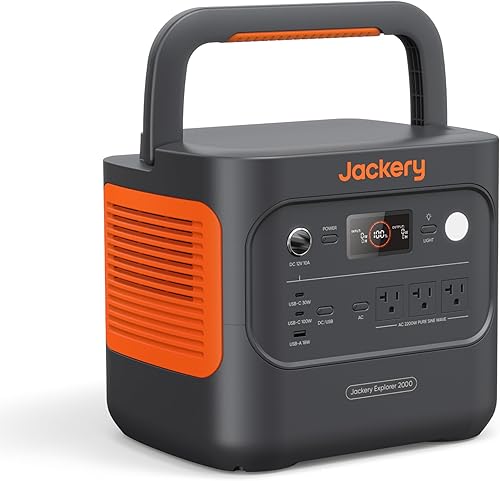 Best for easier carrying
Jackery Explorer 2000 v2 Portable Power Station
Jackery Explorer 2000 Plus vs V2: what changes?
The Plus prioritizes output and expansion; the v2 prioritizes lower weight. Both store about 2042Wh, so your devices' power draw and how you'll transport the unit should guide the choice.
The Plus has a 2042Wh LiFePO4 battery and 3000W AC output. The v2 also has a 2042Wh battery, with 2200W AC output.
The difference between watt-hours and watts is useful here. Watt-hours describe stored energy, while watts describe how much power the station can deliver at once.
The Plus supports up to 5 expansion battery packs, with a stated capacity range up to 12kWh per station. Two Plus stations can connect in parallel for up to 24kWh and 6000W output.
The v2's listed details don't provide an expansion option. If you expect your backup needs to grow, that makes the Plus the clearer fit.
Which one is easier to carry?
The Explorer 2000 v2 is the better choice when moving the station is a regular part of your plan. At 39.5 lb, it weighs less than half as much as the 82 lb Plus.
That gap matters when loading a vehicle, moving between rooms or taking power to a campsite. A heavy unit can still be practical if it mostly stays in one place, but plan the route before bringing it home.
The Plus measures 19 x 14.1 x 14.7 inches. The v2 measures 13.2 x 10.4 x 11.5 inches, so it also takes up less space by those dimensions.
A smaller cabinet can be easier to fit in a vehicle or storage area, but leave room to handle it safely. Check the doorway, storage space and the spot where you'll use the station before deciding.
For a wider look at the brand's choices, compare our Best Jackery Portable Power Station guide. If you're weighing other brands, see Is Jackery Better Than Ecoflow?.
How much output do your devices need?
Pick the Plus if your planned load needs more than 2200W but stays within 3000W. Check device labels and manuals, and account for startup demand where the device requires it.
The v2's 2200W AC output suits loads within that limit. Its three AC ports share a total output of 2200W, so multiple devices don't each get the full rating at the same time.
The Plus has 3000W output and four power outlets. That higher ceiling can make it a better match for heavier loads, but it doesn't mean every appliance is compatible or that it can run indefinitely.
List the devices you want to use together, then add their wattage. Compare the combined load with the station's output limit, and check any device's startup needs separately.
A larger output rating does not increase battery capacity. Runtime depends on the energy your devices use and the station's usable energy under actual conditions.
Which fits home backup better?
Choose the Plus when higher output and room to expand are central to your backup plan; choose the v2 when lighter handling matters more. Neither capacity figure alone can tell you how long your household devices will run.
Start by naming the essentials you want to power, such as communication equipment or selected small appliances. Check each item's power draw, decide what can run at the same time and estimate how many hours you need.
The v2 includes a 100W USB-C PD port for compatible electronics. Its product details also describe 20ms switching for UPS use, but you should confirm that your specific equipment can use this setup before relying on it.
The Plus's expansion path can add stored energy for longer backup needs. That flexibility comes with a heavier base unit, so consider where it will stay and how expansion packs will be handled.
If a larger backup system is on your shortlist, our guide to Jackery Explorer 5000 Plus specs explains what to compare at the next capacity level. For models around this size, browse Best Jackery 2000 Series Power Stations.
Which model makes more sense for camping or RV use?
The v2 suits trips where carrying and packing the power station matter; the Plus suits a fixed RV or camp setup that benefits from higher output. Match the station to the devices you plan to run and the way you travel.
At 39.5 lb, the v2 is the more manageable option to load and unload. Its 2042Wh capacity gives you a similar stored-energy figure to the Plus, while the lower 2200W output sets a lower ceiling for simultaneous loads.
The Plus can supply up to 3000W AC output and offers expansion options. Its 82 lb weight makes it less convenient to move often, so it may work better when you can leave it in a planned location.
A power station's stated wattage doesn't tell you how long it will power an appliance. Estimate energy use from the appliance label or manual, then leave a margin rather than planning around the full stated capacity.
What should you check before buying?
Confirm your load, the station's location and the transport path before choosing either model. Those checks help prevent a mismatch between a station's ratings and how you intend to use it.
First, write down every device you expect to power and whether they need to run together. Compare the combined running watts with the model's AC output, and look up startup requirements for appliances with motors or compressors.
Next, estimate how long you'll need power. A 2042Wh battery doesn't guarantee a fixed runtime because devices draw different amounts and actual usable energy varies.
Then measure where the station will sit and the path to get it there. The Plus weighs 82 lb; the v2 weighs 39.5 lb, a meaningful difference if you need to move it without help.
For solar charging, verify panel and cable compatibility for the exact model before buying accessories. The v2's product details describe a DC8020 solar charging connection, while the Plus title includes two 100W mini solar panels.
How should you set up and care for a power station?
Use the station on a stable, suitable surface and follow its manual for charging, ventilation and storage. Keep cables orderly and avoid overloading the output with devices beyond the unit's limits.
Before connecting anything, check the appliance's wattage and the station's output rating. Use the correct charging cable and follow the model's instructions rather than guessing from another Jackery unit.
Keep the power station accessible so you can read its controls and disconnect devices if needed. Store it in a location that follows the manual's temperature and moisture guidance.
When planning emergency power, test your household's setup in advance under safe conditions and keep a written list of the loads you intend to run. Don't depend on an unverified setup during an outage.
Which Jackery Explorer 2000 should you choose?
Choose the Explorer 2000 v2 if low weight is your priority; choose the Explorer 2000 Plus if you need 3000W output and a defined path to expand capacity. The shared 2042Wh capacity makes portability, load requirements and future backup plans the deciding factors.
The v2 is the practical pick for frequent transport and lighter handling. The Plus fits a more stationary setup where higher output and expansion matter more than moving weight.
Compare the Best Portable Power Station Under 2000 dollars guide if you're still considering alternatives across brands. Your final choice should match your devices' actual power needs and the place you'll use the station.
Frequently asked questions
What is the main difference between the Jackery Explorer 2000 Plus and V2?
The Explorer 2000 Plus provides 3000W AC output and can expand to 24kWh, while the Explorer 2000 v2 provides 2200W AC output and weighs 39.5 lb. Both have about 2042Wh of battery capacity, so the choice centers on carrying weight, output and future expansion.
Which Jackery 2000 model is easier to move?
The Explorer 2000 v2 is easier to carry by weight: it weighs 39.5 lb, compared with 82 lb for the Explorer 2000 Plus. Measure the route and consider how often you'll move the station, since weight matters most when loading it into a vehicle or changing its location.
Can both Jackery models power the same devices?
Not necessarily. The Explorer 2000 Plus has 3000W AC output and the Explorer 2000 v2 has 2200W, so check each device's running and startup needs against the model's limits.
Their shared 2042Wh capacity describes stored energy, not how much power they can deliver at once.
Can the Explorer 2000 v2 expand with extra batteries?
The Explorer 2000 v2's listed product details don't give an expansion option. The Explorer 2000 Plus supports up to 5 expansion battery packs, with capacity up to 12kWh per station, and two Plus stations can connect in parallel for up to 24kWh.
Is either Jackery 2000 model suitable for an electric car?
The Explorer 2000 v2 is not designed to charge electric vehicles. For either model, choose based on its stated output and intended use, and don't treat a portable power station as an EV charger.


