Portable Fridges and Coolers: The Complete Buying Guide
The best 12v portable fridge is a compressor cooler sized for your food load and powered by a suitable 12V or 24V source. Compare capacity, temperature range, battery protection, power cables, and vehicle space before choosing.
On this page (10 sections)
- What is a 12v portable fridge?
- Which portable fridge cooling technology should you choose?
- How much capacity do you need?
- Do you need a single zone or dual zone?
- Which power options should a portable fridge have?
- How should you fit a portable fridge in a car or RV?
- What features matter during daily use?
- How do you keep a portable fridge working well?
- Which product fits each buying situation?
- What should you check before buying?
The best 12v portable fridge is a compressor cooler that matches your food load, available power, and vehicle space. A good choice can keep food cold or frozen without ice, but the right capacity and power setup matter more than a large feature list.
Capacity matters first because it decides what you can actually carry at one time. A small cabinet suits drinks and snacks for one or two people, while a larger cabinet gives room for frozen food, fresh food, and daily supplies on longer trips.
Power matters next because a fridge is only useful if it can run safely where you travel. Some trips rely on a vehicle socket, others use a power station or a household outlet, and the cable and adapter choice can affect whether the fridge reaches the socket at all.
This guide explains how portable refrigerators work, which cooling technologies exist, how much space you may need, and how to run one from a vehicle, RV, or power station. We also compare four products that solve different parts of the setup.
The comparison covers compact dual zone storage, larger single cabinet storage for freezer use, organized family size storage, and a longer replacement cable. Each option fits a different buying situation, so the best pick depends on your vehicle, your food load, and your usual power source.
Read this guide with a practical plan in mind rather than a wish list. Measure the space first, decide the temperature you need, and check the power system before you settle on a model.
That order helps you avoid common mismatches. A fridge that is too large for the space, too thirsty for the battery, or unable to reach its lowest needed temperature will not serve you well, no matter how many extra features it lists.
What is a 12v portable fridge?
A 12v portable fridge is a freestanding electric refrigerator designed to run from a 12V DC vehicle socket or another suitable power source. Many models also accept 24V DC, and some include an AC adapter for a household outlet or power station.
To compare units with onboard storage, see portable refrigerators with batteries.
This type of fridge is built for movement rather than fixed installation. It can sit in a car, truck, van, RV, SUV, or boat, then move to a campsite or home when the trip changes.
Unlike an ice cooler, a compressor fridge actively removes heat from its insulated compartment. That means you can store food and drinks without adding ice, and some models can lower the temperature below freezing for use as a freezer.
The difference shows on a warm day. Ice melts and leaves water to drain, while a compressor fridge keeps working toward a set temperature as long as it has suitable power.
The phrase "12V" describes the common DC power input, not the total size or cooling ability. A 12v fridge freezer combo may have a small internal freezer, a removable divider, or a cabinet that switches between refrigeration and freezing.
Two fridges can both accept 12V DC power yet differ a lot in capacity, lowest temperature, outside dimensions, weight, and power use during cooling. Compare those details rather than relying on the voltage label alone.
A 24V option is worth noting for larger vehicles. Some trucks and RV systems use 24V DC, and a fridge that accepts both 12V and 24V DC gives you more flexibility when you change vehicles.
AC support adds flexibility for home use. With an included adapter, you can plug the fridge into a household outlet to pre cool it before a trip, or move it indoors to store overflow food.
Not every portable fridge includes the same cables or adapters in the box. Check what is included for each model, confirm the connector shape, and keep the original cable and adapter together.
A compressor fridge also needs ventilation and stable placement. The cabinet should sit on a level surface with air vents clear, and the lid needs enough room to open without strain or damage.
For buyers who camp near a bed or ride in a quiet vehicle, noise and vibration can affect comfort. Compressor models often run in cycles, so the sound may come and go rather than staying constant.
In short, a 12v portable fridge is best understood as a small electric refrigerator that travels with you. Its value comes from controlled temperature, ice free storage, and the ability to move between vehicle, campsite, and home power.
Which portable fridge cooling technology should you choose?
Compressor cooling is the best choice when you need reliable cold storage or freezing. Thermoelectric and absorption coolers can suit narrower uses, but each technology has different limits.
See our electric cooler wattage guide to understand their power draw.
Compressor portable fridges
A compressor portable fridge works in a similar basic way to a household refrigerator. It can target a set temperature, cool below ambient conditions, and often freeze food when the model's range supports it.
Compressor units are usually the strongest fit for long road trips, camping, RV use, fishing, and emergency food storage. They can use more power during active cooling, but the compressor cycles rather than running continuously.
The ICECO GO20 uses a SECOP compressor and offers a 0°F to 50°F temperature range. Its 21 quart capacity and removable divider let you use the cabinet as one space or as separate refrigeration and freezing zones.
Compare more portable refrigerator freezers if you want both functions in one unit.
The BougeRV 12v refrigerator 30 Quart uses compressor refrigeration and has a stated temperature range from -8°F to 50°F. Its 30 quart capacity gives more room than the ICECO GO20, while its ECO mode is aimed at lower operating power.
The EUHOMY 37QT 12 Volt Refrigerator offers a larger 35 liter capacity, which is about 37 quarts. Its -4°F to 68°F range, two removable baskets, and detachable divider suit buyers who need more organized storage.
Thermoelectric electric coolers
A thermoelectric cooler uses an electronic heat-transfer system rather than a compressor. These coolers are often simple to connect, but their performance depends more on the surrounding air temperature and the design's stated cooling range.
They can work for keeping drinks and snacks cooler during a short drive. They are less suitable when you need controlled freezing, a specific food-safe temperature, or dependable cooling during hot weather.
If you are comparing an electric cooler with a compressor refrigerator, focus on the lowest stated temperature, temperature control, food storage needs, and whether the unit can freeze. You can also compare specialized options in our guide to the best electric cooler for power station.
Absorption refrigerators
Absorption refrigerators are common in some RV systems and can use different energy sources. They may run on propane and electricity, depending on the design, but they are not the same as a compact 12V compressor fridge.
An absorption refrigerator can make sense when an RV already has the required installation and fuel system. For a portable setup that moves between a vehicle, campsite, and home, a compressor model is usually easier to match with a 12V battery or power station.
Read our guide on how to choose a propane and electric RV refrigerator if you are comparing a built-in RV appliance with a portable unit.
How much capacity do you need?
Choose capacity from the food and drinks you carry at one time, then confirm the outside dimensions. A larger cabinet gives more storage, but it also takes more vehicle space and may need more energy over a long trip.
Use these rough planning bands:
| Capacity | Typical fit |
|---|---|
| 10 to 20 quarts | Drinks, snacks, and food for one or two people |
| 21 to 30 quarts | Short family trips, weekend camping, or mixed food storage |
| 31 to 40 quarts | Longer trips, family travel, or larger food loads |
| More than 40 quarts | Extended travel, group use, or separate food categories |
Capacity labels do not show the exact shape of the usable space. A cabinet with a divider or compressor compartment may hold packages differently from another fridge with the same advertised volume.
The ICECO GO20 is a compact 21 quart model with a 12.6 x 22.4 x 12.4 in footprint. It can suit a smaller vehicle or a buyer who wants dual-zone flexibility without moving to a large cabinet.
The BougeRV model has a 30 quart capacity and measures 22.68 x 12.60 x 15.53 in. Its internal freezer and removable partition support mixed storage, but you should still measure the space where the lid opens.
The EUHOMY model has a 35 liter capacity and measures 25.98 x 17.5 x 16.9 in. Its larger cabinet can hold more food, but its width, depth, and weight deserve attention in a compact car.
For a smaller setup, compare our guide to the best 12v mini fridge. For larger coolers, see the best large electric coolers guide.
Do you need a single zone or dual zone?
Choose a dual-zone fridge when you need chilled food and frozen food at the same time. Choose a single compartment when simplicity, lower space use, or one target temperature matters more.
A removable divider can make a portable fridge more flexible. With the divider installed, separate areas may support different storage tasks.
With it removed, the cabinet can act as one larger compartment, depending on the model.
The ICECO GO20 has a dual-zone design with automatic switching between single-zone and dual-zone use when the detachable partition is removed. It has two independent digital controllers and a separate freezer configuration.
A single-zone unit can still freeze food if its temperature range allows it. The BougeRV model reaches as low as -8°F, while the EUHOMY model reaches as low as -4°F.
Dual-zone space is not automatically better. It can reduce the usable size of each compartment, and both zones may increase the complexity of packing and temperature management.
For side-by-side storage, see the best dual zone 12v fridge freezer guide. If freezing is your main goal, compare the best portable 12v freezers.
Which power options should a portable fridge have?
A portable refrigerator should match the power source you will use most often. Check the DC voltage, connector, cable length, AC input, and battery protection before you plan a trip.
Vehicle DC power
A 12V or 24V vehicle socket can power a compatible portable fridge while driving or while the vehicle is parked. The vehicle battery may drain if the engine is off, so use battery protection and understand how your vehicle's socket is wired.
The ICECO GO20 supports 12V and 24V DC and includes a 2.5 m cigarette lighter cable. The BougeRV model supports 12V and 24V DC and includes a DC power cord.
The EUHOMY model also supports 12V and 24V DC and includes a DC power cord.
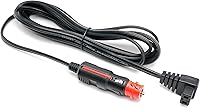
A longer cable can help when the socket is far from the fridge. The Geckoes DC Power Cord Power Cable is 11.5 ft long, uses a 16 AWG copper core, and is designed for 12V and 24V car refrigerator systems with a 15A continuous current capacity.
Confirm the connector and socket fit before ordering a replacement cable. The Geckoes cable is described as a male-to-male DC power cable for compatible brands, including ICECO, BougeRV, EUHOMY, Alpicool, Bodega, ARB, Dometic, and SetPower.
AC power at home or at camp
An AC adapter lets you use some portable fridges from a household outlet. It can also let you connect the fridge to the AC output of a power station.
The ICECO GO20 supports 100 to 240V AC and includes an adapter. The BougeRV model includes a 6.56 ft AC power cord for a wall socket or power station.
The EUHOMY model includes an AC adapter for 110/240V use.
Check the power station's AC output rating, outlet shape, inverter behavior, and usable energy. Our DC to AC inverter guide explains how that conversion works.
A fridge may cycle on and off, so runtime depends on temperature, insulation, the set point, and how often the lid opens.
For a focused comparison, read the best 12v fridge for use with a power station. If you want a cooler instead of a refrigerator, see how to choose an electric cooler with an ice maker.
Battery protection
Battery protection helps reduce the chance of taking a vehicle battery below a usable level. It does not replace a correctly sized battery, a suitable power source, or safe wiring.
The BougeRV model has 3-level voltage battery protection, allowing the user to choose when the fridge shuts off. The ICECO GO20 automatically powers off when its battery protection works.
Set the protection level with the battery and vehicle system in mind. If the fridge shuts off too early, the battery may still have energy available, but if it shuts off too late, the vehicle may not restart.
For smaller appliances and battery planning, read what battery does a mini fridge use.
How should you fit a portable fridge in a car or RV?
Measure the fridge, the opening path, and the space needed to open the lid. Include room for ventilation, cables, handles, baskets, and access to the controls.
A portable fridge should sit on a stable surface where it will not slide during normal driving. Keep the air vents clear, avoid placing it in direct sunlight, and follow the model's instructions for tilt and movement.
For a car, check whether the lid can open without hitting the roof, seats, hatch, or cargo cover. For an RV, measure the cabinet opening and confirm that the fridge can be removed for cleaning or service.
The EUHOMY model includes wheels and a pull handle, which may help when moving its 32.9 lb body over a suitable surface. The ICECO GO20 weighs 25.5 lb, while the BougeRV model weighs 24.26 lb.
A fridge slide can make a heavy unit easier to reach in a truck, van, or RV. Compare options in our guide to the best fridge slide rails.
For car-specific sizing and power advice, read the best 12v fridges and electric coolers for cars. For camping layouts, see the best portable fridges for camping.
What features matter during daily use?
The most useful features depend on how you pack and power the fridge. Prioritize temperature control, battery protection, organization, and access before cosmetic details.
A removable divider helps separate fresh food and frozen food. Removable baskets can make it easier to lift smaller items from a deep compartment.
The EUHOMY model has two removable baskets and a detachable divider. The ICECO GO20 has a detachable partition and two independent digital controllers.
The BougeRV model includes a removable partition board.
Noise can matter when the fridge runs near a bed or inside a quiet vehicle. The BougeRV and EUHOMY models state 45 dB operation, while the ICECO product data identifies a compressor and anti-bump design without giving a noise figure.
Controls also affect convenience. The ICECO GO20 supports app control and touch control.
The EUHOMY model has an LCD control panel, and the BougeRV model includes ECO and MAX modes.
For brand-specific comparisons, explore the best Alpicool 12v fridge, best VEVOR portable refrigerator, best SetPower 12v fridge, and best ICECO 12v fridge guides.
How do you keep a portable fridge working well?
Place the fridge on a stable surface with its vents clear. Avoid direct sunlight, especially with the BougeRV model, because the brand warns that sunlight may deform its door.
Direct sunlight makes a compressor work harder and can raise the cabinet temperature faster. Shade and ventilation help the fridge hold its set point with less strain on power.
Keep the lid closed as much as possible. Organize food before the trip so you are not searching through the cabinet with the lid open.
A simple packing plan saves time and energy on the road. Group drinks, fresh food, and frozen items before you load the fridge, and place items you need most often near the top or front.
Use the correct DC cable and inspect the plug, socket, and cable for heat or damage. Do not assume that every cigarette lighter cable has the same connector or current capacity.
Check the cable before each trip and after rough travel. A bent plug, loose socket, frayed outer layer, or warm cable should be treated as a warning sign.
Clean spills promptly and dry the interior before storage. Follow the model instructions for defrosting, and do not scrape ice with a sharp tool.
Wipe spills with a soft cloth and let the cabinet dry fully before you close it for storage. Moisture left inside can create odors, and a sharp tool can damage the interior surface or seals.
Allow the fridge to reach its target temperature before loading warm food. A full cabinet can hold temperature more steadily, but do not pack it so tightly that cold air cannot circulate where the design requires it.
Pre cooling at home or at a campsite outlet can make the first hours of travel easier. Load food that is already cold, and keep the fridge in shade while you organize the rest of the vehicle.
Set battery protection with care for the vehicle and battery you use. A level that saves the vehicle battery may shut the fridge off earlier than you want, while a lower level may leave too little charge to start the vehicle.
Test the settings during a short trip before you rely on them for a long one. Note how the fridge behaves with the engine on, with the engine off, and in warm weather.
Keep the outside clean as well as the inside. Dust around vents and handles can build up during travel, and a quick wipe helps you spot damage or moisture early.
Store the fridge dry when it is not in use. Leave the lid ajar only if the model instructions allow it, and keep cables and adapters with the unit.
If an RV refrigerator stops cooling, check why your RV refrigerator is not working. For useful add-ons, see the best RV refrigerator accessories.
Which product fits each buying situation?
The ICECO GO20 is the most flexible choice here for buyers who want a compact dual-zone fridge with 12V/24V DC and 100 to 240V AC support. Its 21 quart size favors smaller loads, and its removable partition lets you change the layout.
The BougeRV 30 quart model suits buyers who want more capacity, a low temperature down to -8°F, ECO and MAX modes, and 3-level battery protection. It is a strong fit for vehicles, RVs, vans, boats, and off-road travel where a 30 quart cabinet fits.
The EUHOMY 37QT model suits larger food loads and buyers who value organization and movement. Its 35 liter capacity, two baskets, detachable divider, wheels, and pull handle make it useful for family travel and longer outdoor trips.
The Geckoes cable solves a different problem. It is not a refrigerator, but an 11.5 ft replacement power cable for compatible car fridges when the included cable cannot reach the vehicle socket.
For brand and model comparisons, see the Bodega car refrigerator review, best BougeRV fridges and freezers, best electric cooler Anker, does YETI make an electric cooler, best Igloo electric cooler, and best EUHOMY electric cooler guides.
What should you check before buying?
Start with the temperature you need. If food only needs to stay chilled, a simpler cooler may work, but freezing requires a compressor model with a suitable low-temperature range.
Write down the coldest temperature your food needs before you compare models. That single choice narrows the field fast, because some fridges chill well while others can also freeze for longer trips.
Next, measure the space in your vehicle or RV. Compare the fridge's outside dimensions with the opening path, lid clearance, ventilation area, and cable route.
Measure in the real position where the fridge will sit, not in an empty store aisle. Check the height with the lid open, the width against seats or cabinet walls, and the path you will use to carry the fridge in and out.
Then match the power system. Confirm whether you will use 12V DC, 24V DC, household AC, or a power station, and check the connector before relying on a replacement cable.
Think about the full route of the cable from socket to fridge. A short cable may work in one vehicle and fall short in another, especially when the fridge sits behind seats or at the rear of a van.
Finally, choose capacity and organization together. A 30 or 37 quart cabinet may hold more food, but a 21 quart dual-zone model may be more useful if you need separate frozen and chilled storage in a smaller vehicle.
Organization can matter as much as raw size on a busy trip. Baskets, a divider, and a removable partition help you separate food types, but they also take space and can change how you pack drinks and containers.
Consider who travels with you and how long you stay away. One person on a weekend trip needs less room than a family with frozen meals, fresh food, and drinks for several days.
Check weight before you commit to a larger model. A heavier fridge is harder to lift into a truck bed or RV bay, and wheels or a pull handle only help when the surface allows them to work.
The best 12v portable fridge is the one that meets your lowest required temperature, fits the available space, and can run from your power system without creating battery problems. Choose ICECO for compact dual-zone flexibility, BougeRV for a 30 quart freezer-focused setup, EUHOMY for larger organized storage, or Geckoes when the main issue is cable reach.
Frequently asked questions
What is the best 12v portable fridge for camping?
The best 12v portable fridge for camping is a compressor model with enough capacity for your food, a 12V or 24V power option, and battery protection. Smaller models suit short trips, while larger units help families or longer stays.
Check dimensions, cable reach, and your power station's output before buying.
How does a 12v portable fridge work?
A compressor 12v portable fridge removes heat from an insulated cabinet and can cool below freezing without ice. It uses 12V or 24V DC power in a vehicle, and many models also accept household AC power through an adapter.
Temperature range, capacity, and battery protection vary by model.
Can a 12v fridge run from a power station?
Yes, a 12v fridge can run from a power station if the station provides a suitable DC output or AC outlet and enough usable energy. Match the fridge voltage and connector, allow for startup and cycling power, and use the fridge's battery protection settings where available.
What size portable fridge do I need?
Choose size by the food and drinks you need at the same time. A compact fridge suits one or two people and short trips, while 30 to 37 quart models give more room for family travel.
Measure the vehicle space and leave room for the lid, handles, ventilation, and cable.
Is a 12v fridge better than an electric cooler?
A compressor 12v fridge usually offers colder, more controlled storage than a thermoelectric electric cooler, including freezing on some models. An electric cooler may be simpler for short trips, but it often depends more on ambient temperature.
Choose by required temperature, trip length, and available power.