Best 3000W Inverter Chargers: Top 7 Picks (November 2026)
The best 3000w inverter chargers include the SRGFTS SUMRY Hybrid Solar Inverter Charger 3600W for solar plus AC charging, the VEVOR Pure Sine Wave Inverter Charger for 12V RV and home backup, and the SGPWOSAY 3000W DC 24V Pure Sine Wave for 24V solar inverter charging.
On this page (15 sections)
- 3000W Inverter Chargers Compared
- How We Compared These 3000W Inverter Chargers
- SRGFTS SUMRY Hybrid Solar Inverter Charger 3600W: Best for Solar Plus AC Charging
- VEVOR Pure Sine Wave Inverter Charger: Best for 12V RV and Home Backup
- SGPWOSAY 3000W DC 24V Pure Sine Wave: Best for 24V Solar Inverter Charging
- AIMS 3000W 12V Pure Sine Inverter Charger: Best for Heavy Motor Loads
- ExpertPower 3000W Pure Sine Wave Inverter Charger: Best for Fast Transfer Switching
- Xantrex 818-3010 Freedom XC Pro 3000 Inverter/Charger: Best for RV and Specialty Vehicles
- ECO-WORTHY 3000W 12V Pure Sine Wave Inverter: Best for Adjustable Charging Current
- 12V or 24V: Which 3000W Inverter Charger Should You Buy?
- How Much Charging Current Do You Need?
- What Transfer Switch Speed Matters for Your Loads?
- What Surge Power Do Motor Loads Need?
- How Should You Install and Care for an Inverter Charger?
- Our Verdict on the Best 3000W Inverter Chargers
The best 3000w inverter charger for most buyers is the SRGFTS SUMRY Hybrid Solar Inverter Charger 3600W, because it combines 3600 watt rated output with solar and AC charging in one unit. If your battery bank is 12V, a 12V inverter charger 3000w model will usually fit better.
Our score weighs specs, features and buyer feedback against what you are shopping for. We have not tested these units by hand.
We compared specs, charging options and transfer switch features to build this shortlist.
A 3000w inverter charger does two jobs. It inverts battery DC power to AC power for your loads, and it charges the battery from an external AC supply.
That second job is the key difference from a standard inverter.
Read our power inverter dc to ac guide if you want the basics first. Then return here to compare charging and transfer features.
Our picks at a glance
-
1
 Best for solar plus AC charging
SRGFTS SUMRY Hybrid Solar Inverter Charger 3600W
9.7/10 our score
See it on Amazon -
2
 Best for 12V RV and home backup
VEVOR Pure Sine Wave Inverter Charger
9.5/10 our score
See it on Amazon -
3
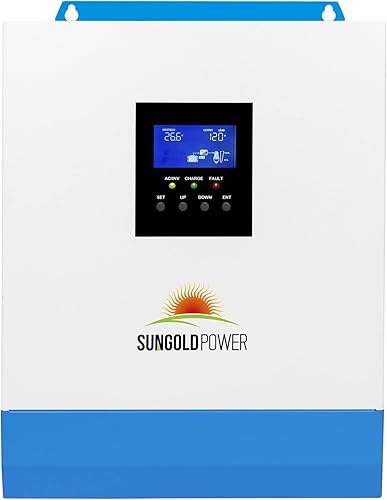 Best for 24V solar inverter charging
SGPWOSAY 3000W DC 24V Pure Sine Wave
9.3/10 our score
See it on Amazon
- 4
 Check it
AIMS 3000W 12V Pure Sine Inverter Charger
Best for heavy motor loads - 5
 Check it
ExpertPower 3000W Pure Sine Wave Inverter Charger
Best for fast transfer switching - 6
 Check it
Xantrex 818-3010 Freedom XC Pro 3000 Inverter/Charger
Best for RV and specialty vehicles - 7
 Check it
ECO-WORTHY 3000W 12V Pure Sine Wave Inverter
Best for adjustable charging current
3000W Inverter Chargers Compared
All seven units here deliver about 3000W of AC output, but they differ in battery voltage, charging current and transfer speed. Start with your battery voltage, then compare the charger.
| Product | Best for | Rated output | Peak output | Battery input | Our score |
|---|---|---|---|---|---|
| SRGFTS SUMRY Hybrid Solar Inverter Charger 3600W | solar plus AC charging | 3600W | 7200W | 24V DC | 9.7 |
| VEVOR Pure Sine Wave Inverter Charger | 12V RV and home backup | 9000W | 12V DC | 9.5 | |
| SGPWOSAY 3000W DC 24V Pure Sine Wave | 24V solar inverter charging | 9000W | 24V DC | 9.3 | |
| AIMS 3000W 12V Pure Sine Inverter Charger | heavy motor loads | 9000W | 12V DC | 9.1 | |
| ExpertPower 3000W Pure Sine Wave Inverter Charger | fast transfer switching | 9000W | 12V DC | 9.0 | |
| Xantrex 818-3010 Freedom XC Pro 3000 Inverter/Charger | RV and specialty vehicles | 12V DC | 8.2 | ||
| ECO-WORTHY 3000W 12V Pure Sine Wave Inverter | adjustable charging current | 6000W | 12V DC | 8.0 |
How We Compared These 3000W Inverter Chargers
We checked rated output, peak output, battery input voltage, charger amps and transfer switch details for each model. We also noted battery chemistries each maker supports.
We looked at size and weight because installation space matters in RVs, boats and small utility rooms. A heavy unit may need a stronger mounting location and thicker cables.
We gave more weight to models that combine substantial AC output with charging from an external AC supply, as the best 3000w inverter charger should. Solar charging was a bonus where it was built in.
How transfer and charger specs were weighted
Transfer speed matters most when a load must stay on during a grid loss. For a runtime comparison, read UPS versus inverter runtime.
We treated stated millisecond figures as comparable ratings, not as identical test results.
Charger amps were weighed against battery voltage. A 100A charger on a 12V bank delivers different charging power than the same current on a 24V bank, so we noted voltage alongside amps.
SRGFTS SUMRY Hybrid Solar Inverter Charger 3600W: Best for Solar Plus AC Charging
SRGFTS SUMRY Hybrid Solar Inverter Charger 3600W: Best for solar plus AC charging
- 3600 watt rated and 7200 watt peak output
- 120A MPPT solar charge controller
- 100A AC battery charger
- 24V DC to 110V/120V AC pure sine wave
An all-in-one hybrid unit for 24V systems that need solar charging, AC charging and substantial AC output in one box.
Pros
- Built-in 120A MPPT controller
- 100A AC battery charger
- Works with or without a battery in stated conditions
Cons
- 24V system only
- Remote monitoring module sold separately
This unit suits a 24V home, workshop or backup system where solar and utility charging both matter. It offers 3600 watt rated and 7200 watt peak output, which is more continuous power than the 3000W models here.
The built-in 120A MPPT solar charge controller and 100A AC battery charger mean you may not need separate charging boxes. That can simplify wiring, though you still need correct breakers and PV sizing.
It works with AGM, Gel, Lead-acid, Lithium-ion and LiFePO4 batteries. It can also work without a battery when PV input exceeds 120V and grid is not connected, but SRGFTS recommends connecting a battery to reduce grid use.
Its LCD display shows operating status and input and output information. A remote monitoring module is optional and sold separately.
The unit also lists a dual output, with a main 3600W output and a second 1200W output for lower priority loads.
The trade-off is voltage. This is a 24V system unit, so it will not fit a 12V battery bank.
For a broader view of AC charging models, see our best power inverter charger roundup.
VEVOR Pure Sine Wave Inverter Charger: Best for 12V RV and Home Backup
VEVOR Pure Sine Wave Inverter Charger: Best for 12V RV and home backup
- 3000W output with 9000W peak
- 12V DC to 120V AC
- LCD display and remote control
- Five working modes
A 12V low frequency inverter charger with remote control and multiple priority modes for RV, camper and home backup use.
Pros
- Remote cable and detachable controller included
- Wide 12V battery compatibility
- Recommended load per outlet under 1200W
Cons
- 12V batteries only
- Heavier at 46.3 pounds
This model suits 12V RV, camper and home backup setups where remote control helps. For smaller car loads, compare 300W car inverters.
It delivers 3000W with a 9000W peak, and VEVOR recommends keeping the load per outlet under 1200W.
It has five working modes: Unattended, AC Priority, Battery Priority, ECO and Generator. Those modes let you choose whether shore power, battery power or a generator takes priority.
Battery compatibility covers LiFePO4, Lithium-ion, Gel, AGM, SLA and FLD batteries at 12V. VEVOR says noise stays under 60dB, which matters if the unit sits near a sleeping area.
The 32.8 ft remote cable and detachable controller let you monitor the system from a more convenient spot. The LCD display helps you check status without opening a compartment.
Four adjustable charging current levels also let you match charging to battery size.
The trade-off is weight and voltage. At 46.3 pounds, it needs a solid mount, and it only works with 12V batteries.
Our best 12v inverter charger guide covers more 12V options.
SGPWOSAY 3000W DC 24V Pure Sine Wave: Best for 24V Solar Inverter Charging
SGPWOSAY 3000W DC 24V Pure Sine Wave: Best for 24V solar inverter charging
- 3000W output with 9000W peak
- 80A MPPT solar charger
- 40A AC battery charger
- 24V DC pure sine wave
A 24V all-in-one solar inverter charger with MPPT and AC charging plus 10ms transfer to battery power.
Pros
- 80A MPPT solar charging
- 40A AC battery charging
- Four charging modes
Cons
- MPPT range starts at 120V
- 24V system only
This unit suits a 24V system that needs both solar and AC charging. It combines 80A MPPT solar charging with 40A AC battery charging and 3000W of AC output.
The MPPT voltage range is 120V to 400Vdc. That high range can affect how you string solar panels, so plan your array around it before you buy.
Four charging modes include AC Priority, Solar Priority, Only Solar and Mains and Solar hybrid charging. Three output modes include mains priority, PV priority and inverter output.
If mains or generator power drops or solar power is insufficient, the maker says the unit takes over battery supply within 10ms. That matters for electronics you do not want to reboot.
Optional WiFi or GPRS remote monitoring is listed at extra cost.
It supports 24V AGM/Sealed, Gel, Flooded and Lithium batteries, plus a User Mode for custom inputs. The trade-off is the high MPPT starting range, which suits larger arrays more than small ones.
AIMS 3000W 12V Pure Sine Inverter Charger: Best for Heavy Motor Loads
AIMS 3000W 12V Pure Sine Inverter Charger: Best for heavy motor loads
- 3000W output with 9000W surge for 20 seconds
- 100A battery charger in all-in-one unit
- Automatic transfer switch
- 12V DC to 120V AC
A 12V low frequency inverter charger built around a long surge for refrigerators, pumps and motors, with a built-in charger and transfer switch.
Pros
- 9000 watts surge for 20 seconds
- Seven selectable charging profiles
- Lithium battery wake up feature
Cons
- 49 pounds
- Single outlet
This model suits buyers running refrigerators, pumps, power tools and motor loads. Its standout spec is up to 9000 watts for 20 seconds, which gives motors more startup time than shorter surges.
It combines an inverter, 100A battery charger and automatic transfer switch in one unit. You can recharge the bank from a generator, shore power or a home outlet.
The smart multi-stage charger supports gel, AGM, lead acid and lithium batteries with seven selectable charging profiles. It also has a lithium battery wake up feature for over discharged batteries.
That long surge is the main reason to pick this over lighter models. It helps with compressors and pumps that draw heavily at startup.
Auto frequency detection for 50 or 60 Hertz operation also helps in mixed installations.
The trade-off is weight at 49 pounds and a single outlet. For an RV hookup, see how to choose an inverter with an RV outlet.
Some bullet details mention 6000W and 24V wording, so confirm the 12V, 120V model details before ordering.
ExpertPower 3000W Pure Sine Wave Inverter Charger: Best for Fast Transfer Switching
ExpertPower 3000W Pure Sine Wave Inverter Charger: Best for fast transfer switching
- 3000W output with 9000W peak
- 80A adjustable charger
- 30A transfer switch with 5ms switching
- 12V DC to 110V AC
A 12V inverter charger with fast shore to battery switching, smart controller and eight battery profiles for RV and home use.
Pros
- 5ms transfer switching stated
- 26ft Smart Controller included
- Can be used without battery hookup for shore-power-only days
Cons
- 55 pounds
- 110V AC output rather than 120V
This unit suits RV and home backup use where fast switching matters. It has a built-in 30A transfer switch with UPS functionality that the maker says switches in 5ms.
The 80A adjustable charger supports AGM, Wet, Gel and LiFePO4 batteries with eight profiles. That gives you more charging choices than many fixed-profile models.
An LED display shows priority mode, frequency, error codes, voltage and load. Power-Save mode consumes a maximum of 10W with no load, according to ExpertPower.
The package includes a 26ft Smart Controller, manual and 1/0 AWG copper cables. You can also use the unit without battery hookup for shore-power-only maintenance days.
A double ball-bearing fan and steel case support cooling under high loads.
The trade-off is size and weight at 55 pounds. Output is 110V AC, so check your loads if you expect 120V.
Xantrex 818-3010 Freedom XC Pro 3000 Inverter/Charger: Best for RV and Specialty Vehicles
Xantrex 818-3010 Freedom XC Pro 3000 Inverter/Charger: Best for RV and specialty vehicles
- 3000W output with 150A charger
- 50A transfer relay
- True sine wave output
- 12V DC input, 120V AC output
A compact and light 12V inverter charger for RVs, boats and work trucks, with Bluetooth app control and RV-C and J1939 integration.
Pros
- 150A battery charger
- Only 18.6 pounds
- 50A transfer relay
Cons
- Surge is 2x for 5 seconds, shorter than some rivals
- Peak listed as 3000W
This model suits RVs, boats, Class 8 trucks and work trucks where space and weight matter. At 18.6 pounds, it is the lightest unit in this group.
It has a 150A battery charger for the 3000W model, which can charge a bank faster than 40A or 80A chargers here. The maker says it can charge batteries drained to extremely low voltage, including 0 VDC.
The 50A transfer relay senses outside AC power and transfers the load from inverter to that source. It also supports RV-C and J1939 protocols for third-party monitoring systems.
You can configure and monitor via the Bluetooth FXC Control app on Android and iOS. Xantrex says the unit surges to 2x continuous output for 5 seconds for motor loads.
Ignition control can also switch the unit off when the vehicle key is turned off.
The trade-off is surge duration. Five seconds is shorter than the AIMS 20-second surge, so motor-heavy buyers should compare that spec closely.
For similar Victron-focused picks, see our best victron 3000w inverter charger guide.
ECO-WORTHY 3000W 12V Pure Sine Wave Inverter: Best for Adjustable Charging Current
ECO-WORTHY 3000W 12V Pure Sine Wave Inverter: Best for adjustable charging current
- 3000W rated with 6000W peak
- 25A to 100A adjustable battery charger
- UPS mode with 30ms switching
- 12V DC to 120V AC
A 12V inverter charger with a wide adjustable charging range and UPS switching for home, RV, trailer and boat use.
Pros
- 25A to 100A selectable charging current
- Three outlets
- 16.3 pounds
Cons
- 6000W peak is lower than several rivals
- Charger range starts at 25A
This model suits home, RV, trailer and boat setups where you want control over charging current. Its charger ranges from 25A to 100A, so you can match charging to battery capacity.
It delivers 3000W rated output with 6000W peak power. That peak is lower than the 9000W peaks on several rivals, which matters for large motor startup loads.
UPS mode switches in 30ms when grid power fails, according to the maker. Priority settings switch between grid mode and inverter mode for charging and load power.
It supports 12V LiFePO4, AGM and GEL batteries. Features include lithium battery activation, trickle maintenance and automatic disconnect at full charge.
Real time monitoring via Bluetooth is also listed for the system.
At 16.3 pounds with three outlets, it is easy to place. The trade-off is the lower peak and the 25A minimum charging current, which may be high for very small banks.
12V or 24V: Which 3000W Inverter Charger Should You Buy?
Match the inverter charger to your battery bank voltage first. A 12v inverter charger 3000w will not work with a 24V bank, and a 24V hybrid unit will not work with a 12V bank.
12V systems are common in RVs and boats because accessories and batteries are widely available. The downside is higher current for the same power, which means thicker cables and tighter connections.
24V systems move the same power with less current. That can reduce cable size and heat, but you need 24V batteries and 24V-compatible accessories.
Our Inverter Efficiency: 12V vs. 24V Systems guide covers efficiency and current trade-offs in more detail.
12V options in this roundup
The VEVOR, AIMS, ExpertPower, Xantrex and ECO-WORTHY models are 12V units. They fit existing 12V banks in RVs, trucks and cabins.
24V options in this roundup
The SRGFTS and SGPWOSAY models take 24V DC input. They fit larger home and workshop systems where solar charging is part of the plan.
Cable and fuse implications
Higher current at 12V means voltage drop matters more over long runs. A 24V bank can keep the same power with thinner cables, which can save space in tight compartments.
How Much Charging Current Do You Need?
Size the battery charger to your battery capacity and charge time goal. More amps refill the bank faster, but only if your batteries and wiring can handle it.
A 40A AC charger, like the SGPWOSAY model, suits smaller banks or slower overnight charging. A 100A or 150A charger, like the SRGFTS or Xantrex models, suits larger banks.
Adjustable charging current, like the ECO-WORTHY 25A to 100A range, gives you flexibility across battery sizes. Fixed chargers require you to match the charger to the bank more carefully.
Do not assume a high charger rating means you must use high current. Check your battery maker's recommended charge rate.
Battery chemistry settings also affect charging current. Lithium banks often accept higher rates than flooded lead acid banks of the same capacity, so the profile you select should match the chemistry you installed.
What Transfer Switch Speed Matters for Your Loads?
Faster transfer matters most for computers, CPAP machines and other sensitive loads. Slower switching can cause a reboot even when total power is enough.
The ExpertPower model states 5ms switching. The SGPWOSAY model states 10ms.
The ECO-WORTHY model states 30ms UPS switching.
Those numbers are maker claims, so treat them as ratings to compare, not guarantees for every load. Test your most sensitive device under backup power.
For whole-home backup, a Best Solar Generator 3000W may be simpler if you want batteries and charging in one portable box.
When a slower transfer is acceptable
Refrigerators, lights and simple tools often tolerate a brief gap without ill effect. If those are your main backup loads, charger amps and surge capacity may matter more than millisecond ratings.
What Surge Power Do Motor Loads Need?
Check peak watts and surge duration, not just continuous watts. A 3000W inverter charger may run a motor load yet fail to start it.
The AIMS model offers 9000 watts for 20 seconds. Several others list 9000W peak without the same stated duration.
The Xantrex model offers 2x for 5 seconds.
Refrigerators, pumps, air compressors and air conditioners all draw extra power at startup. If you run those loads, surge duration can decide which model works.
For 48V home systems, our best 48v inverter charger guide covers higher-voltage options.
How to map surge to your loads
List each motor load with its running watts and startup needs. Add the running loads that will stay on while the motor starts, then compare that total to the peak rating.
How Should You Install and Care for an Inverter Charger?
Plan ventilation, cable size and battery settings before you connect power. Most failures come from undersized wiring or wrong charging profiles.
Mount the unit where air can flow around it and where you can reach the display and controls. Keep it away from battery gas and moisture where possible.
Use cables sized for the current and distance in your system. Tighten terminals to the maker's torque guidance and check them periodically.
Set the battery type or custom profile to match your bank. A lithium bank set to a flooded profile, or the reverse, can shorten battery life.
Inspect connections seasonally, keep vents clear and check that cooling fans run without obstruction during high loads.
Our Verdict on the Best 3000W Inverter Chargers
Pick the SRGFTS SUMRY if you have a 24V system and want solar plus AC charging in one unit. Its 3600W rated output and 120A MPPT controller are the strongest combination here.
Pick the VEVOR if you have a 12V bank and want remote control and multiple modes. It is a well-rounded 12V choice for RV and home backup.
Pick the AIMS if motor startup loads are your priority. Its 20-second surge is hard to beat in this group.
Pick the Xantrex if weight and vehicle integration matter most. It is compact, light and built for RV and specialty vehicle systems.
Pick the ECO-WORTHY if you want adjustable charging current. Its 25A to 100A range suits different battery sizes.
The best 3000w inverter charger is the one that matches your battery voltage, charger needs and motor loads. Start with voltage, then compare surge and transfer speed.
Our top 3 picks at a glance
-
1
Best for solar plus AC charging
SRGFTS SUMRY Hybrid Solar Inverter Charger 3600W
9.7/10 our score
See it on Amazon -
2
Best for 12V RV and home backup
VEVOR Pure Sine Wave Inverter Charger
9.5/10 our score
See it on Amazon -
3
Best for 24V solar inverter charging
SGPWOSAY 3000W DC 24V Pure Sine Wave
9.3/10 our score
See it on Amazon
Frequently asked questions
What does 3000W mean on an inverter charger?
3000W is the continuous AC output the unit can supply in invert mode. It does not mean the battery charger adds 3000W of charging power.
Check the continuous load you plan to run and keep a margin for motor startup loads.
Should I buy a 12V or 24V 3000W inverter charger?
Match the inverter to the battery bank you already own or plan to build. Our Inverter Efficiency: 12V vs.
24V Systems guide explains current and efficiency trade-offs.
A 24V bank generally moves the same power with less current than a 12V bank.
Can an inverter charger charge from shore power or a generator?
Yes, most models here charge the battery from an external AC supply. That AC source can be shore power, a generator or a home outlet, depending on the model and your wiring.
Set the charging profile to match your battery chemistry.
Why does surge power matter for a 3000W inverter charger?
Surge power covers brief startup draw from motors, compressors and pumps. A refrigerator or pump may need far more than its running watts for a short moment.
Compare the peak rating and how long it lasts before you buy for motor loads.


