5 Best Anker Home Power Stations (October 2026)
The best Anker home power stations for backup include the Anker SOLIX C2000 Gen 2 Portable Power for balanced home backup, the Anker SOLIX C1000 Portable Power Station for compact essential backup, and the Anker Prime Charging Station for organizing backup devices.
On this page (5 sections)
The best Anker home power station for most backup plans is the SOLIX C2000 Gen 2, with 2,048Wh capacity, 2,400W rated output and expansion to 4kWh. If your home loads need 240V, compare solar generators with 240V outlets.
Choose the C1000 for a smaller essential-load plan, or the F3000 if you need more capacity and can accommodate its 91.5 lb weight.
The right Anker power station for home depends on which appliances you need, how long they must run and whether you can recharge during an outage. For a whole-home system comparison, see Anker SOLIX E10 vs EcoFlow DELTA Pro Ultra.
A fridge, modem and a few lights create a different plan from a well pump or central air system.
If an onboard light would help during an outage, compare Anker power stations with built-in lights.
Use this roundup to compare capacity and output first. The two Anker Prime Charging Stations are included for home device charging, but they are not battery backups.
Our picks at a glance
-
1
 Best for balanced home backup
Anker SOLIX C2000 Gen 2 Portable Power
9.7/10 our score
See it on Amazon -
2
 Best for compact essential backup
Anker SOLIX C1000 Portable Power Station
9.6/10 our score
See it on Amazon -
3
- 4
 Check it
Anker SOLIX F3000 Portable Power Station
Best for expandable backup capacity - 5
 Best for a multi-device deskCheck it
Which Anker home power stations fit different backup plans?
The C2000 Gen 2 is the best balanced battery pick here, while the C1000 suits a shorter list of essential loads and the F3000 offers the most room to expand. For a large-system comparison, read Anker F3800 Plus vs EcoFlow DELTA Pro 3.
For a competing home backup system, see the Jackery HomePower 3600 Plus review.
The Prime Charging Stations are for charging devices when wall power is available.
We compared the stated battery capacities, output ratings, expansion options and home-use details for these models.
Our score weighs specs and features against the needs of someone shopping for Anker home backup. Runtime figures below are manufacturer estimates for specific loads, not guarantees for every household.
| Product | Best for | Capacity | Rated output | Weight | Our score |
|---|---|---|---|---|---|
| Anker SOLIX C2000 Gen 2 Portable Power | balanced home backup | 2,048Wh, expandable to 4kWh | 2,400W, 4,000W peak | 41.7 lb | 9.7 |
| Anker SOLIX C1000 Portable Power Station | compact essential backup | 1,056Wh | 1,800W, 2,400W peak | 27.6 lb | 9.6 |
| Anker Prime Charging Station | organizing backup devices | 9.4 | |||
| Anker SOLIX F3000 Portable Power Station | expandable backup capacity | 3,072Wh, expandable to 24kWh | 91.5 lb | 9.3 | |
| Anker Prime Charging Station | a multi-device desk | 9.2 |
Best Anker home power station for balanced capacity: C2000 Gen 2
Anker SOLIX C2000 Gen 2 Portable Power: Best for balanced home backup
- 2,048Wh capacity
- 2,400W rated and 4,000W peak output
- Expandable to 4kWh
- Anker says it can run a dual-door fridge for up to 32 hours
A middle ground for outage plans that need more stored energy than a 1kWh unit. Its rated output and optional capacity expansion make it useful for a fridge and other selected loads.
Pros
- 2,048Wh starting capacity
- 4,000W peak output
- Expansion battery can bring capacity to 4kWh
Cons
- Expansion battery is needed to reach 4kWh
- A 2,400W rating does not cover every household appliance
The SOLIX C2000 Gen 2 is a practical center point for a home outage plan that needs more than a small battery but does not require the F3000's size. It starts with 2,048Wh and supplies 2,400W rated output, with a 4,000W peak rating.
Anker says the unit uses 9W on standby and can power a dual-door fridge for up to 32 hours. That estimate is specific to the fridge scenario, so your own result will vary with fridge cycling, room conditions and other connected devices.
The C2000 Gen 2 can expand to 4kWh with an added battery. Anker says that configuration can run a dual-door fridge for up to 64 hours, giving you a way to extend storage without choosing the larger F3000 immediately.
For a dedicated refrigerator backup comparison, read the BLUETTI FridgePower review.
It weighs 41.7 lb and measures 18.1 x 9.8 x 10.1 in. That is still a substantial unit to move, but it is lighter and smaller than the F3000 for a backup setup that may need to be relocated or stored.
Anker says AC and solar can recharge it to full in 58 minutes. It also supports alternator charging, with Anker giving a 3-hour full-charge estimate using its 800W alternator charging feature.
Choose it for a fridge-centered plan with room to add capacity later. Before connecting several appliances, total their running watts and account for startup demand against the 2,400W rated and 4,000W peak output.
Best Anker home power station for compact essentials: C1000
Anker SOLIX C1000 Portable Power Station: Best for compact essential backup
- 1,056Wh capacity
- 1,800W rated and 2,400W peak output
- Up to 600W solar recharging
- Anker estimates runtime with a 0.9 AC conversion factor
The C1000 is a more compact option for a shorter list of essential devices. Its 1,056Wh capacity calls for careful load planning if you need backup through a long outage.
Pros
- Smaller and lighter than the C2000 Gen 2
- Up to 600W solar input
- Anker says it supports 3,000 battery cycles
Cons
- Less than half the C2000 Gen 2's starting capacity
- Its 1,800W rated output limits simultaneous loads
The SOLIX C1000 fits a smaller backup list, such as a modem, lights, phones and selected short-duration loads. For smaller USB-focused models, compare Anker DC power stations.
Its 1,056Wh battery is roughly half the C2000 Gen 2's starting capacity, and its rated output is 1,800W with a 2,400W peak.
That capacity can be enough for essentials, but it leaves less energy for extended refrigerator use or multiple high-draw appliances. Anker's runtime guidance estimates AC runtime by multiplying 1,056Wh by 0.9, then dividing by the device's wattage.
The C1000 weighs 27.6 lb, making it easier to carry than the C2000 Gen 2. It supports up to 600W of solar recharging, and Anker says a full recharge can take 1.8 hours with compatible solar input in suitable conditions.
For AC charging, Anker describes a full recharge in under an hour when UltraFast mode is enabled in the app and the temperature is within the stated operating range. The app is required to turn on that charging mode.
This is the better fit when you value a lighter unit and have prioritized the devices that matter most. It is less suited to a plan that expects one battery to cover many household loads through a long outage.
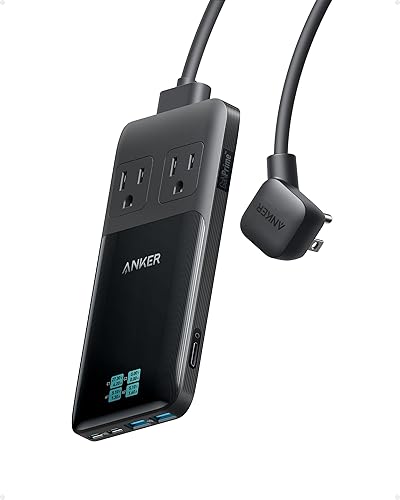
Anker Prime Charging Station for home device charging
Anker Prime Charging Station: Best for organizing backup devices
- Two AC outlets, two USB-C ports and two USB-A ports
- USB-C output up to 140W on one port
- Requires a wall outlet
- Not a portable battery
This charging station can keep several devices connected when household power is available. It does not store energy, so it cannot provide outage backup on its own.
Pros
- Six ports for connected devices
- Single USB-C port supports up to 140W
- Compact desktop form
Cons
- Needs a powered wall outlet
- No built-in battery for outages
The 140W Anker Prime Charging Station organizes device charging at a powered desk or counter. It has two AC outlets, two USB-C ports and two USB-A ports, with up to 140W from one USB-C port.
This model does not contain a battery. It needs a wall outlet to operate, so it cannot keep devices powered during an outage unless plugged into a separate backup source.
Its six ports can reduce the need for separate chargers during everyday use. The USB ports support 100–240V input.
Think of it as a charging hub that can complement a battery power station, not a replacement for one. It is useful for keeping phones, tablets and a laptop organized when power is available.
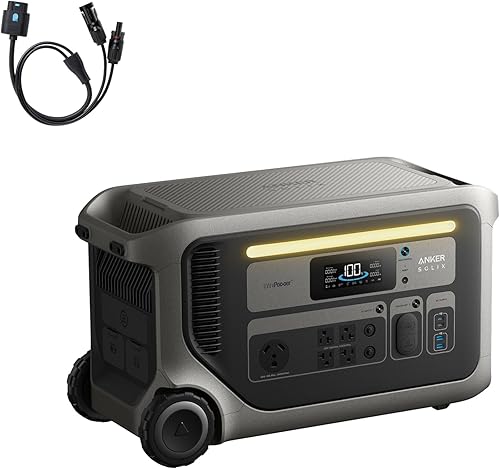
Anker SOLIX F3000 for higher-capacity backup
Anker SOLIX F3000 Portable Power Station: Best for expandable backup capacity
- 3,072Wh starting capacity
- Expandable to 24kWh
- 3,600W output
- Anker says it can run a 190W fridge for 42 hours
The F3000 offers more starting capacity than the C2000 Gen 2 and can expand substantially with added batteries. Its 91.5 lb weight and larger footprint suit a planned home setup more than frequent carrying.
Pros
- 3,072Wh starting capacity
- Expansion up to 24kWh
- 120/240V output options
Cons
- Weighs 91.5 lb
- 240V requires pairing two power stations
The SOLIX F3000 is the most expandable battery option in this group. It starts at 3,072Wh, provides 3,600W output and can expand to 24kWh with additional batteries.
Anker says the F3000 can run a 190W refrigerator for 42 hours. That figure describes a specific load, and actual backup time will depend on the appliance, conditions and other connected devices.
The F3000 supports 120V output, while pairing two power stations enables 240V output for demanding appliances. For a BLUETTI option, see power stations with 240V output.
Have a qualified electrician review circuit connection plans.
At 91.5 lb and 25.6 x 11.8 x 14.8 in, it calls for a stable storage spot and a plan for moving it. Added capacity can extend backup, but you still need to match output and wiring to the loads.
Anker says the F3000 supports 2,400W solar recharging and 6,000W combined generator-and-solar recharging. These options may help with replenishment planning, depending on source availability and setup.
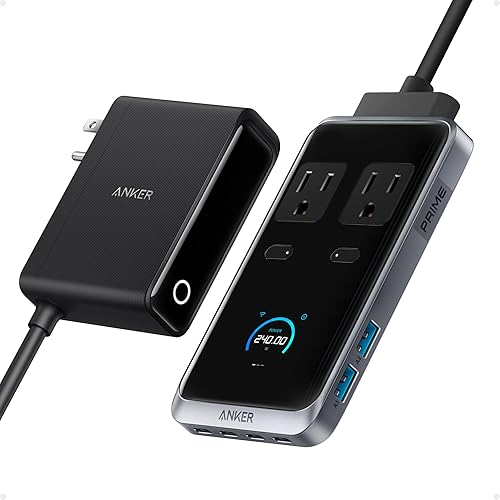
Anker Prime Charging Station for a multi-device desk
Anker Prime Charging Station: Best for a multi-device desk
- Two AC outlets, four USB-C ports and two USB-A ports
- Up to 140W per USB-C port
- Must be plugged into a wall outlet
- No built-in battery
This eight-port station helps organize charging for a home office or device area. It is an AC-powered charging hub, not a backup battery or power station.
Pros
- Eight total ports
- Up to 140W from each USB-C port
- Compact station for a desk
Cons
- Must be connected to wall power
- Cannot run devices during an outage by itself
The 240W Anker Prime Charging Station is a desk charging hub with eight ports: two AC outlets, four USB-C ports and two USB-A ports. Anker says each USB-C port can provide up to 140W.
Like the other Prime Charging Station here, this model has no built-in battery. It must connect to wall power and cannot serve as backup during an outage on its own.
This version offers more USB-C connections for a desk where several laptops, tablets or phones need charging. The station measures 5.43 x 3.07 in and weighs 0.51 lb.
Choose it to organize a powered work area, not to supply emergency energy. If the goal is backup, put the budget toward a battery station with enough capacity and output for your planned loads.
How should you compare household load, runtime and capacity?
Match a power station to the appliances you plan to run, then estimate runtime from battery capacity and load. For another brand, compare Jackery home backup stations.
Output helps determine what can run at once, while watt-hours help estimate how long the battery can sustain those loads.
Start with a short list of must-have devices. Write down each device's running wattage and check the startup demand for equipment with a motor or compressor.
For a simple estimate, divide usable battery energy in watt-hours by the device's average watt draw. AC conversion and cycling behavior reduce the time in practice, so treat the result as a planning estimate.
The C1000's runtime guidance uses a 0.9 conversion factor for AC loads. The C2000 Gen 2 and F3000 have runtime examples for specific refrigerator loads, but those do not predict every refrigerator's result.
If you want to size around a full house, read What’s the Best Portable Power Station for Whole House Backup?. A broader Best Solar Generator For Whole House Backup comparison can help if solar recharging is part of your plan.
Can an Anker power station run a whole house?
An Anker station can power selected devices or planned circuits, but the models here should not be treated as automatic whole-house replacements. Whole-home coverage depends on load, battery capacity, circuit wiring and transfer equipment.
The F3000 supports 120V output and can reach 240V when paired with a second station. That does not mean every 240V appliance or home circuit is covered by a single unit.
A whole-home plan should identify essential circuits and include suitable transfer equipment. Have a qualified electrician review the setup before connecting a power station to household wiring.
For the F3000 specifically, see Can the Anker SOLIX F3000 Back Up a Whole Home?. For a broader check on portable backup limits, read Is a Portable Power Station Enough to Power a Whole House?.
What should you check before choosing a home backup station?
Check the appliances, runtime target, recharge options and installation plan before choosing an Anker power station. Those details matter more than the headline output.
- List essential loads: Include the refrigerator, communications, lights, medical equipment if applicable, and any pumps or heating controls that matter to your household.
- Check starting demand: Compressors and motors may draw more power when they start than while running.
- Set a runtime target: Decide whether you need a few hours or longer, then plan around the station's capacity and recharge options.
- Plan recharging: Consider access to AC, solar or other supported input during an outage.
- Confirm circuit use: A power station's outlet rating does not mean it can safely connect to a home panel.
Our Best Portable Power Station For Home Backup guide compares options across brands, and How to Use a Portable Power Station for Home Backup? covers setup and load planning.
Which Anker home power station should you choose?
Choose the C2000 Gen 2 for balanced home backup capacity, the C1000 for a compact essential-load plan, and the F3000 when you need higher starting capacity and the option to expand. Pick either Prime Charging Station to organize device charging while connected to wall power.
If your plan includes whole-home circuits or 240V appliances, get the load and electrical setup reviewed before buying. The best Anker home power station is the one that matches your loads, runtime goal and connection plan.
Our top 3 picks at a glance
-
1
Best for balanced home backup
Anker SOLIX C2000 Gen 2 Portable Power
9.7/10 our score
See it on Amazon -
2
Best for compact essential backup
Anker SOLIX C1000 Portable Power Station
9.6/10 our score
See it on Amazon -
3
Frequently asked questions
Which Anker power station is best for home backup?
The Anker SOLIX C2000 Gen 2 is a strong fit for many home backup plans, with 2,048Wh capacity and 2,400W rated output. It can expand to 4kWh with an added battery.
Choose the C1000 for a smaller essential-load setup, or consider the F3000 when you need more capacity and can plan for its 91.5 lb weight.
Can an Anker power station run a refrigerator?
Yes, if the refrigerator's running and startup demands fit the station's output and the battery has enough stored energy. Anker says the C2000 Gen 2 can run a dual-door fridge for up to 32 hours, while it gives a 42-hour estimate for the F3000 with a 190W fridge.
Actual runtime depends on the appliance and usage.
Can an Anker power station run a whole house?
A portable station can support selected household circuits or appliances, but that does not mean it can run every part of a home. Total load, startup surges, battery capacity, wiring and transfer equipment all matter.
Make a load list and consult a qualified electrician before connecting a station to home circuits.
How long will a 1,000Wh power station last?
Runtime depends on the devices connected and conversion losses. For AC loads, Anker suggests estimating C1000 runtime by multiplying 1,056Wh by 0.9, then dividing by the device's power draw in watts.
A 100W load would work out to about 9.5 hours as a rough estimate, before real-world variation.
Is an Anker Prime Charging Station a power station?
No. The Anker Prime Charging Stations in this roundup are AC-powered desktop charging hubs, not battery power stations.
They need a wall outlet and cannot supply power during an outage by themselves.
For emergency backup, choose a battery model such as the C1000, C2000 Gen 2 or F3000.