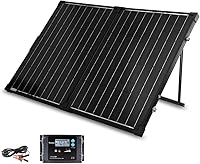
9 Best Anker Portable Solar Panels (November 2026)
The best Anker portable solar panels include the Anker SOLIX C1000 Gen 2 Portable Power for fast home backup charging, the Renogy 200W Portable Solar Panel for Power for compact USB-C charging, and the Renogy 400W Portable Solar Panel for durable 400W charging.
On this page (3 sections)
The best Anker portable solar panel setup for most high-capacity users is the Anker SOLIX C1000 Gen 2 with its 200W solar panel. Choose the S2000 bundle for more stored energy, or pick a C200 DC or C300 DC bundle when your main goal is charging personal electronics.
An Anker portable solar panel setup can mean a complete Anker power station and panel bundle, or a separate panel matched to an Anker station. The right choice depends on your station's solar input, the devices you need to run, and how much folded weight you can carry.
For home backup, output and port count matter as much as panel wattage. A station with more ports and higher continuous output can run everyday appliances and sensitive electronics, while a smaller DC station is usually better matched to phones, laptops and cameras.
For travel, folded size and carry weight may be the deciding factors. A panel that charges quickly in bright sun still needs space in your vehicle and a clear spot at camp, so measure both before you commit.
Keep the panel surface clean, avoid shading part of it with grass or gear, and keep connectors away from standing water even if the panel carries a waterproof rating.
If you are comparing panel types first, our guide to which solar panel is best explains output, efficiency, connectors and setup choices. For smaller charging jobs, see our picks for the best solar panel charger.
Voltage, current and connector compatibility should come before wattage, because a powerful panel cannot help a station that cannot accept its input.
Our picks at a glance
-
1
 Best for fast home backup charging
Anker SOLIX C1000 Gen 2 Portable Power
9.7/10 our score
See it on Amazon -
2
 Best for compact USB-C charging
Renogy 200W Portable Solar Panel for Power
9.6/10 our score
See it on Amazon -
3

- 4
 Check it
ZOUPW 450W Portable Solar Panel N-Type 16BB
Best for large high-voltage stations - 5
 Check it
Anker SOLIX S2000 Portable Power Station
Best for 2kWh home essentials - 6
 Check it
Anker SOLIX C300 DC Portable Power Station
Best for USB-C travel power - 7
 Check it
EBL 200W Portable Solar Panel for Power
Best for broad connector coverage - 8
 Check it
Anker SOLIX C200 DC Portable Power Station
Best for lightweight personal devices - 9
 Check it
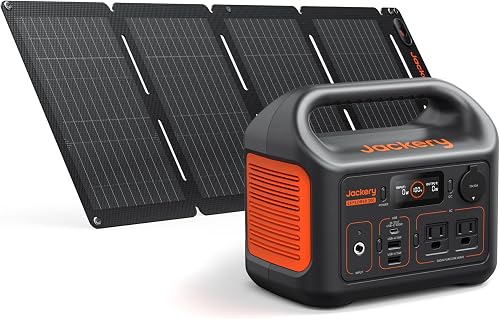
Jackery Solar Generator 300 and 40W
Best for light camping loads
The best Anker portable solar panels for different setups
The C1000 Gen 2 is the best overall match for high-output backup, while the Renogy and ZOUPW panels give Anker owners more standalone panel choices. Smaller Anker bundles make more sense for USB-C devices and short trips.
Our score weighs specs, features and buyer feedback against what you're shopping for. Product scores stay consistent across Nexdaro, and the products below are ordered from highest score to lowest.
That order is meant to help in different situations rather than imply one product fits everyone. A high output station scores well for backup and larger loads, while a lighter panel or smaller station may suit a hiker or camper better.
When you compare scores, look at the stated capacity, output, weight and included cables alongside the number. Those details tell you how the setup will work in a vehicle, at a campsite or at home during an outage.
It also helps to separate bundles from standalone panels. A bundle gives you a matched station and panel, while a separate panel can upgrade charging speed or direct USB charging if the connections match.
Use the ranking as a starting point, then check the compatibility notes for each pick. The best match is the one whose input limits, connector type and folded size fit your station and your daily routine.
Anker SOLIX C1000 Gen 2 Portable Power: Best for fast home backup charging
- 1,024Wh capacity
- 2,000W output and 3,000W peak
- 200W solar panel included
- 9 ports and UPS switchover under 10 ms
The C1000 Gen 2 pairs a 1,024Wh power station with a 200W solar panel. Its 2,000W output, 9 ports and UPS function suit home backup and larger camping loads.
Pros
- High output
- 200W panel included
- UPS switchover under 10 ms
Cons
- Two packages ship separately
- Expansion feature removed
The Anker SOLIX C1000 Gen 2 is the strongest all-around choice for a portable solar panel Anker setup. It combines a 1,024Wh battery, 2,000W output and a 200W solar panel, giving you more flexibility than a small USB-only system.
The power station has 9 ports and can provide up to 3,000W peak output. Its UPS switchover is under 10 ms, which suits a laptop or CPAP machine that needs a fast transfer during an outage.
Anker includes the power station, AC charging cable and guides in one package. The second package includes the PS200 bifacial 200W panel, two 8.2 ft solar charging cables and a 1.6 ft XT60i cable.
The C1000 Gen 2 can accept up to 600W of solar input with a 60V maximum. It also supports Anker's app-based Standard and Time-of-Use modes, while UltraFast charging can recharge it at 1,600W when enabled in the app.
Choose it when you want a high-output system that still has a portable form. Remember that the two packages ship separately, and the expansion feature has been removed to reduce size and weight.
Renogy 200W Portable Solar Panel for Power: Best for compact USB-C charging
- 200W output
- 25% efficiency
- USB-C PD 45W and dual USB-A ports
- Folds to 23.72 x 22.99 x 1.97 in
This 200W foldable panel adds direct USB charging for phones, tablets, laptops, GPS units and cameras. Its 13.9 lb weight and magnetic closure suit mobile setups.
Pros
- Direct USB-C and USB-A charging
- Lightest 200W panel here
- Four kickstands
Cons
- MC4 output only for power stations
- 4-in-1 adapter sold separately
The Renogy 200W panel is a strong choice when you want a foldable panel that can also charge devices directly. It has USB-C PD up to 45W and two USB-A ports for phones, tablets, laptops, GPS units and cameras.
At 13.9 lb, it is the lightest 200W panel in this group. The folded size is 23.72 x 22.99 x 1.97 in, and the magnetic closure helps keep the folded panel together during storage.
Four kickstands support 40, 50 and 60 degree positions. The panel uses 16BB N-Type cells with up to 25% efficiency, and its MC4 output works with power stations that meet the required connection limits.
The 4-in-1 adapter is sold separately, so check your station before ordering. This panel is a practical fit for buyers who want a portable solar panel Anker setup with direct USB charging.
Direct USB charging is useful when you do not want to run everything through a power station. You can top up a phone or camera while the panel also feeds a station through MC4, as long as the station accepts the connection.
Setup is straightforward when you plan ahead. Unfold the panel, set the kickstands for the sun angle, and keep the cable run short enough to avoid a trip hazard at camp.
Care involves keeping the face clean and free from partial shade. Wipe away dust and debris, avoid stepping on the panel, and fold it closed before moving it between sites.
The main trade-off is the separate adapter for some stations. If your station already uses MC4, that may not matter, but buyers with a different plug should add the adapter to their list.
Renogy 400W Portable Solar Panel: Best for durable 400W charging
- 400W output
- 23% efficiency
- IP67 waterproofing
- Fiberglass, ETFE coating and carry case
Renogy's 400W suitcase uses fiberglass reinforcement, ETFE coating and IP67 protection. It suits RV, marine, cabin and blackout use when 30.2 lb is manageable.
Pros
- 400W output
- IP67 protection
- 3-year materials and workmanship coverage
Cons
- Heavier than the 200W options
- 4-in-1 adapter sold separately
The Renogy 400W panel suits buyers who want more solar input for a compatible Anker station and need a panel built for outdoor travel. It folds to 27.9 x 33.7 x 3.2 in and weighs 30.2 lb.
Its fiberglass construction, ETFE coating and IP67 waterproofing are aimed at RV trips, overlanding, camping, marine use, cabins and blackout backup. The carry case helps move the folded panel between storage and setup areas.
Renogy rates the panel at 400W and 23% efficiency. It has MC4 solar connectors, while the 4-in-1 adapter cable is sold separately.
The panel can work with Anker SOLIX S2000, C1000 Gen 2 and C2000 Gen 2 when voltage, current and connector requirements match. It can also work with 12V or 24V battery systems when paired with a compatible solar charge controller, which is not included.
Read our guide to the Best 400W Solar Panel For Power Station if your setup needs higher wattage. Choose the Renogy when durability and 400W charging matter more than minimum carry weight.
ZOUPW 450W Portable Solar Panel N-Type 16BB: Best for large high-voltage stations
- 450W output
- 25% efficiency
- 45.9V open-circuit voltage
- 4-in-1 connector cable included
The ZOUPW 450W panel targets large stations that accept 40–60V input. Its N-Type 16BB cells, IP68 rating and included connector cable fit high-capacity outdoor systems.
Pros
- Highest wattage here
- 25% efficiency
- Multiple connector types included
Cons
- Not for low-voltage units below 30V input
- Not recommended for fixed installation
The ZOUPW 450W panel is the high-output choice for a large station that accepts 40–60V input. Its 45.9V open-circuit voltage and 450W rating put it above the 200W and 400W options here.
The panel weighs 29.5 lb and folds to 30.43 x 34.56 x 3.54 in. Its N-Type 16BB cells are rated for 25% efficiency, and the panel has an IP68 rating with ETFE coating.
A 4-in-1 cable supports XT60, Anderson, DC7909 and DC8020 connections. Ground stakes, a storage bag, a 13.12 ft extension cable and a user manual are included.
This panel is designed for large stations such as compatible Anker SOLIX C1000, C1000 Gen 2 and C2000 models. It is not for low-voltage units below 30V input, and the instructions do not recommend long-term fixed, series or parallel connections.
That voltage limit is the first check for any buyer. A high wattage panel only helps when the station can accept its voltage and current, so confirm the input range before connecting cables.
For daily use, the included extension cable and ground stakes make placement more flexible. You can move the panel away from a shaded campsite spot and keep it aimed at the sun while the station stays in a safer location.
The panel suits RV boondocking, overlanding and emergency use where a large station needs faster solar charging. Its weight is still manageable for many buyers, but it is not a backpacking panel.
Care includes keeping the surface clean and avoiding heavy pressure or objects on the face. The instructions also warn against long-term operation in shade, so treat it as a portable panel rather than a permanent mount.
Anker SOLIX S2000 Portable Power Station: Best for 2kWh home essentials
- 2,010Wh capacity
- 1,500W output and 3,000W peak
- 400W solar panel included
- 8 outlets
The S2000 combines a 2,010Wh power station with a 400W solar panel. It gives more stored energy than the C1000 Gen 2 for home backup and longer appliance use.
Pros
- 2,010Wh capacity
- 400W panel included
- Under 10 ms UPS switchover
Cons
- No 12V DC port
- Power station and panel ship separately
The Anker SOLIX S2000 bundle is the best choice when stored energy matters more than minimum size. It includes a 2,010Wh power station and a 400W solar panel, giving it nearly twice the stated capacity of the C1000 Gen 2.
The S2000 provides 1,500W continuous output and 3,000W peak output through 8 outlets. It has no 12V DC port, so check your device connections before choosing it for vehicle use.
Anker gives the power station a 35.7 lb weight and dimensions of 8.19 x 11.1 x 12.7 in. The bundle includes two 9.8 ft MC4 cables, an MC4 to XT-60 cable, an AC charging cable and the 400W PS400 bifacial solar panel.
The 400W input suits longer charging sessions for a 2kWh-class battery. Anker states that the fridge runtime example is based on specific laboratory conditions, so your result depends on the refrigerator's energy use and operating conditions.
Anker SOLIX C300 DC Portable Power Station: Best for USB-C travel power
- 288Wh capacity
- 300W output
- 60W solar panel included
- Seven device-charging ports
The C300 DC is a small DC power station with 288Wh, 300W output and a 60W solar panel. Its USB-C and USB-A ports suit phones, cameras, laptops and headphones.
Pros
- Compact 2.8 kg weight
- Two 140W USB-C ports
- 60W panel included
Cons
- Not compatible with PS30, PS200 or PS400 panels
- Shoulder strap sold separately
The Anker SOLIX C300 DC is a compact choice for USB-C devices and small DC loads. It provides 288Wh, 300W output and 7 device-charging ports, including two 140W two-way USB-C ports.
The bundle includes a 60W solar panel, solar-to-XT-60 cable, extension cable and a 60 cm 140W USB-C-to-C cable. The power station weighs 2.8 kg and measures 4.88 x 4.72 x 7.87 in.
The C300 DC supports solar input from 11-28V. It is not compatible with Anker SOLIX PS30, PS200 or PS400 panels, so use the included 60W panel or another panel that meets the required range.
This setup suits a camera, laptop, smartphone or headphones more than high-draw household appliances. The shoulder strap is sold separately.
The port layout is the main reason to choose this bundle. Two fast USB-C ports plus additional USB-C and USB-A options let you charge several personal devices without hunting for a separate hub.
Size makes it easy to store in a car or work bag. That compact footprint suits short trips, field work and backup charging for electronics, even though the capacity is modest compared with larger stations.
Solar charging is a supporting feature rather than the main event. With a 60W panel, you can maintain or top up the station during a day outdoors, but you should not expect the same refill speed as a 200W or 400W panel.
Setup is simple if you stick with the included panel and cables. Connect the solar cable, place the panel in clear sun, and use the USB-C to C cable for wall or device charging where needed.
The trade-off is compatibility and capacity. Check the 11-28V solar limit before using another panel, and plan device use around the 300W output rather than household appliances.
EBL 200W Portable Solar Panel for Power: Best for broad connector coverage
- 200W output
- Up to 23.5% efficiency
- IP65 waterproof design
- MC4 to 4-in-1 cable included
The EBL 200W panel includes an MC4 to 4-in-1 cable with XT60, Anderson, DC7909 and aviation connectors. Its foldable PET-laminated design fits camping and blackout use.
Pros
- 4-in-1 cable included
- IP65 waterproof design
- Four kickstands
Cons
- Heavier than Renogy's 200W panel
- 1-year warranty
The EBL 200W panel is useful when you want a cable with several common connector options included. Its MC4-to-4-in-1 cable supports XT60, Anderson, DC7909 and aviation connections.
The panel folds to 25.31 x 20.87 x 2.17 in and weighs 18 lb. It uses monocrystalline silicon with up to 23.5% efficiency, PET lamination and an 840D Oxford cloth outer.
Four kickstands help position it at a campsite or during blackout backup. EBL rates the folded panel IP65 waterproof and includes a user manual with the panel and cable.
This panel is heavier than the Renogy 200W option, but it may reduce the need to buy a separate adapter cable. Confirm the input range and connector before connecting it to an Anker station.
That included cable is a practical advantage for mixed setups. If you own or borrow different stations, one panel may work with more of them without an extra purchase.
For travel, the folded size fits many vehicles and storage bins. At 18 lb, it is heavier than the lightest 200W panel here, so think about how often you will carry it over rough ground.
Setup starts with unfolding the panel and setting the kickstands toward the sun. Keep the cable connectors dry and off the ground, and avoid shading the panel with a tent wall or vehicle body.
Care is mainly about surface cleanliness and gentle handling. Keep dust, grass and debris off the cells, fold it closed for transport, and inspect the cable and connectors after heavy use.
The trade-off is weight and the need to verify compatibility. The included cable helps, but it does not remove the need to check your station's solar input before you plug in.
Anker SOLIX C200 DC Portable Power Station: Best for lightweight personal devices
- 192Wh capacity
- 200W output
- 60W solar panel included
- Five device-charging ports
The C200 DC combines 192Wh storage, 200W output and a 60W panel in a 1.9 kg package. It is suited to phones, tablets, drones, cameras and small personal electronics.
Pros
- Lightweight
- 140W two-way USB-C port
- 60W panel included
Cons
- No charger included
- Only 11–28V solar panels with XT60 are supported
The Anker SOLIX C200 DC is the lightest Anker bundle in this roundup. It combines 192Wh, 200W output and a 60W solar panel in a 1.9 kg power station.
Its ports include one 140W USB-C port, one 100W USB-C port, one 15W USB-C port and two USB-A ports. That layout suits phones, tablets, drones, cameras, speakers and other personal devices.
The included bundle contains the C200 DC, 60W solar panel, solar-to-XT-60 cable, extension cable and 60 cm 140W USB-C-to-C cable. Anker says the station needs an 18W or higher USB-C PD charger when charging from a wall outlet, and a charger is not included.
For solar charging, use an 11-28V panel with an XT60 connector. Anker warns that panels over 100W can cause a malfunction, so this is not a match for a 200W or 400W panel.
That limit shapes who this bundle suits best. It is a personal electronics setup for travel and light backup, not a system for running household appliances or fast charging a large station.
Setup is simple when you use the bundle as supplied. Place the panel in direct sun, connect through the XT60 cable, and charge devices through the USB-C and USB-A ports.
You will need a separate wall charger for outlet charging. An 18W or higher USB-C PD charger is required, and a 140W port is needed for full speed charging.
Care means keeping the panel clean and staying within the 11-28V range.
Jackery Solar Generator 300 and 40W: Best for light camping loads
- 292Wh capacity
- 300W output and 600W peak
- 40W Air Solar Panel included
- 7.5 lb power station
The Jackery bundle pairs a 292Wh Explorer 300 with a 40W Air Solar Panel. Its 7.5 lb power station suits light camping loads, laptops, drones and cameras.
Pros
- Lightest power station here
- 40W panel included
- 300W rated output
Cons
- Smallest solar panel here
- Power station and panel may ship separately
The Jackery bundle is best for light camping loads and buyers who want the lightest power station here. Its Explorer 300 provides 292Wh, 300W rated output and 600W peak output, while the included Air Solar Panel is rated at 40W.
The power station weighs 7.5 lb and has two AC outlets, a 100W USB-C PD port, two USB-A ports and a 120W car port. It suits laptops, drones and cameras within the stated output limits.
Jackery includes the Explorer 300, 40W Air Solar Panel, AC adapter, car charger cable and user guide. The panel can maintain devices during a trip, but its 40W rating is much lower than the larger panels in this guide.
Choose it when low carry weight matters more than fast solar charging. The generator and panel may ship separately, so account for that when planning a trip.
This bundle works best when you know your power needs are small. A laptop, camera batteries and a phone can fit within the output, but larger appliances will exceed what a 300W station can handle.
The 40W panel is a maintenance panel rather than a fast refill option. It can help keep devices charged during a sunny trip, but it will not restore a depleted station quickly after heavy use.
Setup is straightforward for camping use. Unfold the Air Solar Panel in clear sun, connect it to the Explorer 300, and use the included cables for other charging options.
Care involves keeping the panel surface clean and checking both packages before a trip. You get a light and simple setup for everyday devices, but you give up the faster solar charging and higher output of the larger bundles.
How to choose an Anker portable solar panel
The best Anker portable solar panel depends first on input compatibility, then on wattage, folded size and how you plan to use the stored power. A higher wattage rating does not help if the station cannot accept the panel's voltage or connector.
Match solar voltage and connectors first
Check the power station's accepted solar voltage, current and connector before buying a panel. The C200 DC needs an 11–28V panel with XT60, while ZOUPW's 450W panel targets large stations with 40–60V input.
MC4, XT60, Anderson, DC7909 and DC8020 are not interchangeable without the right cable or adapter. The Renogy 200W and 400W panels use MC4 output, while EBL and ZOUPW include multi-connector cables.
Choose wattage around your charging target
A 60W panel suits compact C200 DC and C300 DC bundles. A 200W panel is a middle choice for portable stations, while 400W and 450W panels make more sense for compatible high-capacity stations.
The station may limit the solar input below the panel's maximum rating. For example, the C1000 Gen 2 can accept up to 600W, while the C200 DC has a much narrower solar requirement.
For more 200W comparisons, see the Best 200W Solar Panel For Power Station guide. It can help you compare a separate panel with a complete Anker bundle.
Compare folded size and carry weight
Panel wattage often increases the size and weight you must move. The Renogy 200W panel weighs 13.9 lb, EBL's 200W panel weighs 18 lb, and the 400W and 450W panels weigh about 30 lb.
Measure your vehicle, storage shelf or tent area before choosing. A panel that fits your power station may still be awkward if you cannot place its kickstands in direct sunlight.
If your setup needs a smaller panel, compare these picks with the best small portable solar panel guide. For USB-C equipment, the best foldable solar panel USB-C guide covers direct device charging features.
Set up and care for portable panels
Place the panel where its surface has the clearest available sunlight, then adjust the kickstands to keep it aimed toward the sun. Keep cables and connectors away from standing water, even when a panel has a waterproof rating.
Keep the surface free of dust, grass and debris that can shade individual sections. Do not step on a panel or place heavy objects on it, and inspect it after transport or severe weather.
Portable panels are not automatically suitable for permanent installation. ZOUPW specifically advises against long-term fixed, series or parallel connections, while the other panels should also be used within their stated connection and weather limits.
Which Anker portable solar panel should you buy?
Pick the C1000 Gen 2 if you want the best balance of output, stored energy, ports and included 200W solar charging. Pick the S2000 if 2,010Wh storage and a 400W panel better match home backup needs.
Choose Renogy's 200W panel for lighter travel and direct USB charging, the Renogy 400W panel for durable RV or blackout use, and ZOUPW's 450W panel for a compatible high-voltage station. For personal devices, the C200 DC and C300 DC bundles keep the setup smaller.
For home backup, prioritize a station that can run your essential devices within its output limit. The C1000 Gen 2 and S2000 both offer higher output and more ports than the compact DC bundles, which makes them better for larger loads.
For travel and recreation, prioritize carry weight and setup speed. A lighter panel or a smaller bundle is easier to move between a vehicle, tent and campsite, even if solar refill takes longer.
For direct device charging, check the USB ports as well as the panel rating. A panel with USB-C PD and USB-A outputs can charge phones, tablets, cameras and laptops without waiting for a power station.
Before you connect anything, check the station's solar input range and connector type. MC4, XT60 and other plugs are not interchangeable, and some panels need an adapter that is sold separately.
Set up the panel in clear sun, keep the surface clean and avoid shading part of it. Those habits matter more in daily use than a small difference in rated wattage.
Our top 3 picks at a glance
-
1
Best for fast home backup charging
Anker SOLIX C1000 Gen 2 Portable Power
9.7/10 our score
See it on Amazon -
2
Best for compact USB-C charging
Renogy 200W Portable Solar Panel for Power
9.6/10 our score
See it on Amazon -
3
Frequently asked questions
What is the best Anker portable solar panel setup?
The Anker SOLIX C1000 Gen 2 bundle is the strongest general choice because it includes a 200W solar panel, 1,024Wh capacity, 2,000W output and 9 ports.
Choose the S2000 bundle when you need 2,010Wh storage and a 400W panel, or choose the C200 DC and C300 DC bundles for smaller USB-C-focused setups.
Is an Anker 200W solar panel good for a power station?
A 200W panel can suit a power station that accepts its voltage, current and connector requirements. The C1000 Gen 2 bundle includes a 200W panel, while the Renogy 200W panel uses MC4 output and supports direct USB-C and USB-A charging.
Check the station's solar input range before connecting a panel.
What should I check before buying a portable solar panel Anker setup?
Match the panel's rated voltage, current and connector with the power station's solar input. Also compare folded size, weight, output wattage and whether the cable or adapter you need is included.
A panel's rated output is measured under standard test conditions, so sun angle, shade, temperature and input limits affect real-world charging.
Can a 400W or 450W panel charge an Anker power station?
Yes, when the power station accepts the panel's voltage, current and connector range. The Renogy 400W panel names Anker SOLIX S2000 and C1000 Gen 2 among compatible models, while ZOUPW targets large stations with 40–60V input.
Do not connect a high-voltage panel to a low-voltage unit.