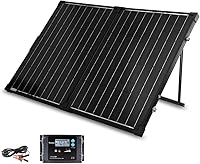
9 Best Portable Solar Panels for EcoFlow (November 2026)
The best EcoFlow portable solar panels include the Ecosonique 200W Portable Foldable Solar Panel MC4 for light carry and adapters, the Renogy 400W Portable Solar Panel for high capacity charging, and the EF ECOFLOW DELTA 3 MAX Portable Power (best as a complete power bundle).
On this page (8 sections)
- The EcoFlow portable solar panels compared here
- Side by side: wattage, weight and input fit
- How we compared these EcoFlow portable solar panels
- What solar input does your EcoFlow station accept?
- How many watts do you need for an EcoFlow station?
- Foldable panels, N-Type cells and bifacial designs: what matters?
- How do you set up and care for a portable solar panel?
- Best EcoFlow portable solar panel: the verdict
The best EcoFlow portable solar panel for most buyers is the Ecosonique 200W Portable Foldable Solar Panel MC4, because it weighs only 11 lb and includes adapters for EcoFlow stations. A 400W panel charges a large station faster, but you must check voltage and current limits first.
Our score weighs specs, features and buyer feedback against what you are shopping for. We compared papers specs, included cables, folded size, weight and input limits for each model.
Start with your power station, not with panel wattage. Your station label lists the highest solar voltage and current it accepts.
A panel above that limit is not a safe match, even if the connector fits.
If you are still deciding which solar panel is best, our solar panel buying guide explains wattage, cell type and connector basics. That guide helps you read the numbers before you compare these picks.
Our picks at a glance
-
1
 Best for light carry and adapters
Ecosonique 200W Portable Foldable Solar Panel MC4
9.7/10 our score
See it on Amazon -
2

-
3
 Best as a complete power bundle
EF ECOFLOW DELTA 3 MAX Portable Power
9.6/10 our score
See it on Amazon
- 4
 Check it
ZOUPW 450W Portable Solar Panel N-Type 16BB
Best for large high voltage inputs - 5
 Check it
EF ECOFLOW 220W Portable Solar Panel
Best for bifacial EcoFlow charging - 6
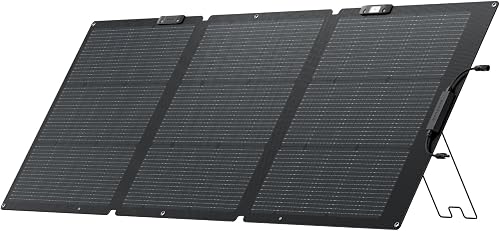 Check it
EF ECOFLOW 160 Watt Portable Solar Panel
Best for quick camping setup - 7
 Check it
EF ECOFLOW 110W Portable Solar Panel
Best for small stations and backup - 8
 Check it
EF ECOFLOW 400W Portable Solar Panel
Best for EcoFlow 400W charging - 9
 Check it
EF ECOFLOW Solar Generator Delta 3 Classic
Best for a smaller solar generator set
The EcoFlow portable solar panels compared here
The Ecosonique 200W leads for light carry and adapter choice. The Renogy 400W leads for high power charging of large stations.
EcoFlow panels lead for a single brand setup with matched cables and bags.
Ecosonique 200W Portable Foldable Solar Panel MC4: Best for light carry and adapters
- 200W output at 20V
- 11 lb, folds to 18 x 16.3 in
- 23.5% conversion
- MC4 to XT60, Anderson, DC7909 and DC5525 cable
A 200W six-fold panel with a broad adapter set for EcoFlow and other stations. It suits campers who need light weight more than maximum watts.
Pros
- Only 11 lb
- Includes several adapter ends
- USB-C and USB-A outputs
Cons
- 200W will charge large stations slowly
- Kickstand setup takes more care than a fixed panel
The Ecosonique 200W suits campers, hikers and RV users who carry a panel by hand. It weighs 11 lb and folds to 18 x 16.3 in, so it fits in a car boot or a deep storage bin.
Its 20V MC4 output and included XT60, Anderson, DC7909 and DC5525 cable give you clear paths to EcoFlow and other stations.
Its 23.5% conversion rate and four kickstands help you aim it at the sun. USB-C PD3.0 at 45W and USB-A QC3.0 let you charge a phone or laptop directly, which is handy for a short break from the power station.
The 20V output also suits many mid size stations that accept lower voltage inputs.
Choose it if you want one light panel for several stations. Skip it if you own a 2kWh station and need the fastest solar recharge, because 200W will take many hours in real sun.
The Renogy and ZOUPW panels will feed a large station faster when their voltage fits.
Renogy 400W Portable Solar Panel: Best for high capacity charging
- 400W output
- 30.2 lb, folds to 33.7 x 27.95 in
- 23% efficiency
- MC4 output only
A 400W foldable suitcase for large EcoFlow stations with matching voltage and current limits. It is heavy to carry but cuts solar recharge time.
Pros
- 400W for large stations
- IP67 waterproofing
- Carry case included
Cons
- 30.2 lb is hard to carry far
- Adapter cable is sold separately
- 67.5V does not fit low voltage stations
The Renogy 400W suits RV owners, overlanding drivers and home backup users with a large station. It folds to 33.7 x 27.95 in and weighs 30.2 lb, so it is a two hand carry from a car to a camping spot.
Its 400W output can fill a large EcoFlow station much faster than a 110W or 160W panel.
Renogy lists 23% efficiency, IP67 waterproofing, fiberglass reinforcement and ETFE coating. Parallel wiring helps limit the loss from a small shadow on one part of the panel.
The carry case helps with transport and storage. The fiberglass build is aimed at repeated travel and rough ground, rather than a single trip.
Check voltage before you buy. This panel has MC4 output only, and the 4-in-1 adapter is sold separately.
Its 67.5V maximum voltage fits some large stations, but it will not fit low voltage solar inputs. That voltage gap is the main trade off against the 20V EcoFlow panels here.
EF ECOFLOW DELTA 3 MAX Portable Power: Best as a complete power bundle
- 2048Wh station with 220W panel
- 2400W output, 3400W X-Boost
- LiFePO4 battery
- X-Stream charging
This is a power station bundle, not a panel alone. It suits buyers who want a large EcoFlow station and a matched 220W bifacial panel together.
Pros
- Station and panel in one set
- Fast AC charging
- 10ms transfer for backup use
Cons
- Panel alone is not the product
- Full bundle is a large carry
This bundle suits buyers who want a large EcoFlow power station and a solar panel in one purchase. The DELTA 3 MAX has a 2048Wh LiFePO4 battery, 2400W output and 3400W X-Boost mode.
EcoFlow lists 0 to 80% AC charging in 1.13 hours with X-Stream.
The set includes a 220W bifacial solar panel. That panel collects light on both sides, which can help on bright ground near water, sand or light coloured rock.
The station has a transfer time under 10ms, which helps protect computers and other sensitive gear during an outage. App control lets you monitor use and set charging schedules.
Choose this bundle if you need home backup and camping power together. Skip it if you already own a station, because this score is for the full set and not for the panel on its own.
Carry weight is also higher than any panel alone in this group.
ZOUPW 450W Portable Solar Panel N-Type 16BB: Best for large high voltage inputs
- 450W N-Type 16BB
- 29.5 lb, 25% efficiency
- 45.9V open circuit voltage
- 4-in-1 adapter cable included
A 450W panel built for large stations with 40 to 60V solar input. It is a strong fit for some EcoFlow Delta models and a poor fit for low voltage units.
Pros
- Highest watts in this group
- 25% efficiency
- Adapters and extension cable included
Cons
- Not for stations under 30V input
- Not for permanent mounting
- Large folded footprint
The ZOUPW 450W suits owners of large stations with a 40 to 60V solar input. It uses N-Type 16BB cells at 25% efficiency and weighs 29.5 lb.
Its 45.9V open circuit voltage and 38.3V output voltage place it in a different class from the 20V EcoFlow panels in this group.
The set includes a 4-in-1 adapter cable, a 13.12 ft extension cable, ground stakes and a storage bag. Four kickstands adjust to 45 degrees for sun aiming.
IP68 waterproofing covers the panel, but you should keep connectors dry. The extension cable helps when the sunny spot is well away from your vehicle.
Do not use it with low voltage stations under 30V input. ZOUPW also says it is not for long term fixed mounting or long term shaded use.
Check your EcoFlow model input in the manual before you connect it, because connector fit alone does not prove voltage fit.
EF ECOFLOW 220W Portable Solar Panel: Best for bifacial EcoFlow charging
- 220W bifacial panel
- 25% N-Type efficiency
- 15.4 lb
- IP68 waterproofing
A 220W EcoFlow bifacial panel for campers and road trips. It collects light from both sides and folds for transport.
Pros
- Bifacial design
- 25% efficiency
- Adjustable 30 to 60 degree bracket
Cons
- 220W is mid range for large stations
- Bag is the main included item
The EcoFlow 220W suits campers and road trip users who want more power than a 110W panel without a 400W carry. For a bundled campsite setup, compare solar panel kits for camping.
It weighs 15.4 lb and uses N-Type cells at 25% efficiency.
Its bifacial design can collect up to 28% more energy, according to EcoFlow, when light hits both sides.
The 30 to 60 degree adjustable bracket and solar angle guide help you set the panel angle. IP68 waterproofing and ETFE coating help with rain and dust at a campsite.
The MC4 connector matches many EcoFlow solar inputs. Its 21.5V maximum voltage keeps it in the lower voltage range that suits many portable stations.
Choose it for a balanced mix of carry weight and charging speed. Skip it if you need the fastest possible charge for a 2kWh station, because a 400W or 450W panel will feed a large station at a higher rate in strong sun.
It sits between the 160W and 400W EcoFlow options here.
EF ECOFLOW 160 Watt Portable Solar Panel: Best for quick camping setup
- 160W output
- 12.3 lb
- 25% efficiency
- 40 second setup
A 160W EcoFlow foldable panel for smaller stations and short trips. It is easy to carry and set up in about 40 seconds.
Pros
- Light at 12.3 lb
- Fast setup
- XT60i charging cable included
Cons
- Slower charging than 220W and 400W picks
- Less suited to 2kWh stations
The EcoFlow 160W suits campers with a small or mid size station. It weighs 12.3 lb and folds for transport.
EcoFlow lists 25% efficiency from N-Type cells, a 30 to 60 degree adjustable bracket and a solar angle guide.
Setup takes about 40 seconds, which helps when you move camp often. The set includes a solar to XT60i charging cable and a bag.
IP68 waterproofing helps with rain and dust, and ETFE coating helps with outdoor wear. Its 21.4V maximum voltage suits lower voltage station inputs in the same way as the 220W panel.
Choose it if ease of carry matters more than peak watts. It will charge a small station at a useful rate on a clear day.
It will feel slow with a large 2kWh station, so check your station size before you choose this over a 220W or 400W panel. The trade off is speed for portability.
EF ECOFLOW 110W Portable Solar Panel: Best for small stations and backup
- 110W output
- 23% conversion
- IP68 waterproofing
- Carry case kickstand
A 110W EcoFlow foldable panel for small stations, camping and emergency top ups. It trades speed for a small carry size.
Pros
- Compact carry case
- IP68 waterproofing
- Case doubles as kickstand
Cons
- Low watts for large stations
- Slowest charging in this group
The EcoFlow 110W suits small stations, phone charging and emergency top ups. It has a 23% conversion rate and an IP68 waterproof rating.
The carry case doubles as a kickstand, so you can set the angle without extra legs.
This panel is easy to store in a car or a closet. That small size is useful for a balcony, a tent awning or a quick backup during a short outage.
It plugs into most power stations with a solar connector. The compact folded footprint makes it the easiest EcoFlow panel here to pack for a short trip.
Choose it for light carry and simple use. Skip it if you want to recharge a large station in one sunny day.
A 110W panel gives steady power, but the hours needed for a 1kWh or 2kWh battery will be long in all but the strongest sun. It trades charging speed for the smallest carry in this group.
EF ECOFLOW 400W Portable Solar Panel: Best for EcoFlow 400W charging
- 400W output
- 35.3 lb
- 22.4% conversion
- IP68 main body
A 400W EcoFlow foldable panel for large stations. It gives high input power but is the heaviest EcoFlow panel here.
Pros
- 400W EcoFlow pairing
- Adjustable kickstand case
- IP68 main body
Cons
- 35.3 lb is heavy
- Junction box should stay dry
- Large open area in wind
The EcoFlow 400W suits owners of large EcoFlow stations who want a single brand 400W option. It weighs 35.3 lb and folds with an adjustable carry case.
EcoFlow lists 22.4% conversion, monocrystalline cells and IP68 waterproofing for the main body.
The large open area gives high input power in strong sun. That helps when you need to refill a large battery between uses.
The kickstand case helps you aim the panel and pack it away after use. Its 23V DC output voltage keeps it in a lower voltage class than the Renogy 400W and ZOUPW 450W, which matters for station fit.
The trade off is carry weight and wind. A large foldable panel acts like a sail in gusts, so use ground stakes or a sheltered spot.
Keep the junction box and connection points dry, because only the main body is waterproof. That care need is unlike smaller panels where the whole unit is sealed.
EF ECOFLOW Solar Generator Delta 3 Classic: Best for a smaller solar generator set
- 1024Wh station with 220W panel
- 1800W output, 3600W surge
- LiFePO4 battery
- Under 10ms UPS
This is a 1024Wh solar generator bundle with a 220W panel. It suits buyers who want a smaller EcoFlow set than the Delta 3 Max bundle.
Pros
- Station and panel together
- Fast AC charging
- 10ms UPS function
Cons
- Panel alone is not the product
- Items may arrive separately
- Less capacity than the larger bundle
This bundle suits buyers who want a smaller EcoFlow solar generator set. The DELTA 3 Classic has a 1024Wh LiFePO4 battery, 1800W output and 3600W surge with X-Boost.
EcoFlow lists 0 to 80% AC charging in 45 minutes with X-Stream.
The set includes a 220W bifacial solar panel with N-Type cells at up to 25% efficiency. EcoFlow lists about 5.8 hours for a solar recharge with that panel under stated conditions.
The station has a UPS transfer time under 10ms for sensitive gear. LiFePO4 cells are listed for 10 plus years of daily use.
Choose this set if you want home backup, camping power and solar charging in one box. The station and panel may arrive separately, so plan for two deliveries.
Skip it if you already own a station and only need a panel. It offers less capacity than the Delta 3 Max bundle, but it is easier to move.
Side by side: wattage, weight and input fit
The table below helps you compare the main trade offs at a glance. Wattage controls charging speed, weight controls how far you will carry it, and voltage controls whether it fits your station.
| Product | Best for | Maximum power | Maximum voltage | Folded size | Our score |
|---|---|---|---|---|---|
| Ecosonique 200W Portable Foldable Solar Panel MC4 | light carry and adapters | 200 watts | 20 volts | 18.04 x 16.35 x 2.95 in | 9.7 |
| Renogy 400W Portable Solar Panel | high capacity charging | 400 watts | 67.5V DC | 27.9 x 33.7 x 3.2 in | 9.6 |
| EF ECOFLOW DELTA 3 MAX Portable Power | as a complete power bundle | 220 watts panel | 9.6 | ||
| ZOUPW 450W Portable Solar Panel N-Type 16BB | large high voltage inputs | 450 watts | 45.9 volts | 30.43 x 34.56 x 3.54 in | 9.5 |
| EF ECOFLOW 220W Portable Solar Panel | bifacial EcoFlow charging | 220 watts | 21.5 volts | 9.3 | |
| EF ECOFLOW 160 Watt Portable Solar Panel | quick camping setup | 160 watts | 21.4 volts | 8.5 | |
| EF ECOFLOW 110W Portable Solar Panel | small stations and backup | 110 watts | 8.2 | ||
| EF ECOFLOW 400W Portable Solar Panel | EcoFlow 400W charging | 400 watts | 8.0 | ||
| EF ECOFLOW Solar Generator Delta 3 Classic | a smaller solar generator set | 220 watts panel | 7.8 |
For a wider choice of kits, our best portable solar panel kit guide compares panel, cable and stand sets. Some kits suit a station well, while others suit a 12V battery bank better.
How to read the comparison without guesswork
Use the voltage column first, then the weight column, then the wattage column. That order prevents a cheap wattage match that your station cannot accept.
Check included cables next, because a missing adapter adds cost and delay. The Ecosonique and ZOUPW list adapter cables in the box, while the Renogy needs a separate adapter.
How we compared these EcoFlow portable solar panels
We compared maximum watts, voltage, efficiency, folded size, weight, waterproof rating and included cables. We also checked station input limits for EcoFlow Delta models and other large stations.
Panel watts are a lab rating under standard test conditions. Real output drops with shade, heat, a poor angle and long cables.
A 400W panel will not give 400W all day on a cloudy trip.
We scored each pick for fit with EcoFlow stations, ease of transport and clarity of included parts. A high score does not mean a panel fits every EcoFlow model.
Efficiency figures also need context, because they are measured under lab conditions. A 25% panel and a 23% panel will both lose output in heat and shade.
The gap matters most when you compare two panels of similar size in the same sun.
Folded size matters as much as weight for car storage. A panel that folds to 18 inches fits where a panel that folds to 34 inches may not.
That difference can decide which panel you actually take on a trip.
What solar input does your EcoFlow station accept?
Your station manual lists solar voltage and current limits. Match the panel voltage to that range before you check wattage.
A connector that fits does not mean the panel is safe for that input.
Low voltage stations often accept panels near 20V. Large Delta models may accept higher voltage panels.
The ZOUPW 450W and Renogy 400W need careful checks for this reason.
If you want a panel for a battery bank, a portable solar panel with charge controller may be a better starting point. Power stations usually have a built in controller, but battery banks often need a separate one.
Which voltage range fits your station?
Check the solar input label on the station or in the manual. Compare the panel maximum voltage and open circuit voltage with that limit.
Stay below the top limit with some margin for cold bright mornings.
Cold mornings can raise voltage above the stated panel figure. That is why the open circuit voltage matters for high voltage panels like the 450W ZOUPW.
A panel that looks close on paper may not be close in cold sun.
What happens if watts are too high?
A station limits current to its solar input rating. Extra panel watts above that limit do not add speed.
You may pay for power your station cannot use.
Current limits work the same way as voltage limits, and both need a check. A 400W panel with a fitting voltage can still exceed a station current limit.
The station will cap input and waste the rest.
How many watts do you need for an EcoFlow station?
A 110W panel suits small stations and emergency top ups. A 160W to 220W panel suits mid size stations for camping and RV use.
A 400W to 450W panel suits large stations when inputs allow it.
Think in hours of sun, not just panel size. A 200W panel in five hours of strong sun gives less energy than the same panel in eight hours.
Shade and panel angle change the result.
Our guide to the best foldable solar panel 400w helps if you want high watts for a large station. It explains folded size, kickstands and adapter needs for 400W class panels.
How long will solar charging take?
Use usable battery size and real sun hours for a rough estimate. A large station will need more than one clear day with a small panel.
A 400W panel cuts that time when the station input allows it.
A simple plan helps, because you can divide usable capacity by expected daily solar input. That rough math shows why a 110W panel struggles with a 2kWh battery.
It also shows why a 400W panel can refill a large battery in a long summer day.
Should you buy two smaller panels?
Two small panels can be easier to carry and place. They can also cost more and need more cables.
One large panel is often simpler for a single station input.
Two panels also need a way to combine them safely, which adds connectors and cable runs. That extra gear can cancel the carry benefit for many campers.
One matching panel keeps setup simple on a single input.
Foldable panels, N-Type cells and bifacial designs: what matters?
Foldable panels save space in a car and store in a closet. They need kickstands and a flat spot to work well.
A rigid panel may suit a roof mount, but it is harder to move between sites.
N-Type cells are an efficiency claim you should compare with the stated conversion rate. The EcoFlow 220W and 160W list 25% efficiency.
The ZOUPW 450W also lists 25% efficiency.
Bifacial panels collect light on both sides. They work best over bright ground that reflects sun back to the rear side.
Our portable solar panel N type guide explains cell terms without the sales talk.
What does IP68 mean for a portable panel?
IP68 means strong protection against dust and water for the panel body. Connectors and junction boxes still need care.
Keep plugs out of puddles and dry them before you pack the panel away.
IP67 panels, like the Renogy 400W, also handle rain and dust for the panel body. The difference is in test depth and time, not in daily camping use.
Either rating still leaves cables and plugs to protect by hand.
Are kickstands worth it?
Yes, kickstands help you aim the panel at the sun. A fixed flat panel loses power when the sun angle changes.
Adjustable stands help in spring, autumn and at high latitudes.
Kickstand quality varies, because some stands lock at set angles and others flex in wind. A 30 to 60 degree range gives more choice than a single fixed angle.
Four stands spread the load better than two on uneven ground.
How do you set up and care for a portable solar panel?
Unfold the panel on flat ground with no shade on any cell. Connect the cable to the station before you adjust the angle.
Then set the kickstands and check the station display for rising input watts.
Move the panel as the sun moves. A morning angle will not be right at noon.
Small turns through the day can add useful energy, especially with a small panel.
Wipe dust and pollen with a soft cloth and water. Do not step on the panel or stack heavy gear on it.
Inspect cables for cracks before each trip.
If you mostly camp, our best foldable solar panel for camping guide compares carry size and setup speed. A lighter panel may beat a higher watt panel if you hike to the site.
What should you pack with the panel?
Pack the adapter cable, a storage bag and ground stakes if you have them. A long extension cable helps when the sunny spot is far from your tent or vehicle.
Keep the manual note with your station input limits.
A cable tie or pouch for the adapter ends also helps, because small connectors are easy to lose. Keep plugs clean and dry, and check pins for bends before you connect.
That habit protects both the panel and the station input.
How do you store it in winter?
Store the panel dry and folded, with the cable coiled loosely. Avoid tight bends in the cable.
Check the panel and connectors before spring use.
Store it away from heat sources and heavy loads that could press on the folded cells. A flat shelf or a closet floor works for most foldable panels.
Check for damp before you pack it for the next season.
Best EcoFlow portable solar panel: the verdict
Pick the Ecosonique 200W if you want light carry and adapter choice for EcoFlow stations. Pick the Renogy 400W or ZOUPW 450W if you own a large station and have checked its input limits.
Pick an EcoFlow 220W, 160W or 110W panel if you want a single brand setup.
If you still need a station, our best portable power station with solar panel guide compares bundles like the two EcoFlow sets in this post. That guide helps you choose station size before you choose panel watts.
Check your station solar input, then choose watts for your carry limit. That order will give you the best EcoFlow portable solar panel for your next trip.
Our top 3 picks at a glance
-
1
Best for light carry and adapters
Ecosonique 200W Portable Foldable Solar Panel MC4
9.7/10 our score
See it on Amazon -
2
-
3
Best as a complete power bundle
EF ECOFLOW DELTA 3 MAX Portable Power
9.6/10 our score
See it on Amazon
Frequently asked questions
What is the best EcoFlow portable solar panel?
The best EcoFlow portable solar panel depends on your station input. For most portable use, the Ecosonique 200W is light and has adapters for EcoFlow stations.
For large stations, a 400W or 450W panel cuts recharge time if voltage and current limits match.
Can any portable solar panel charge an EcoFlow station?
No. Your station has solar voltage and current limits, and the panel must stay within them.
Check the station manual before you connect a panel, especially 400W and 450W models with higher voltage.
Do I need a charge controller with a portable panel?
Most portable power stations have a built-in solar charge controller. A separate controller matters more when you charge a 12V or 24V battery bank directly.
Our guide to a portable solar panel with charge controller explains when a separate unit helps.
Are foldable panels good for camping?
Yes, foldable panels carry and store well for camping. They need a flat spot for the kickstands and shade free sun for best output.
A camping focused foldable panel guide can help you compare carry size and panel area.