9 Best Power Stations for Electric Coolers (October 2026)
The best power stations for electric coolers include the Jackery Explorer 300 Portable Power Station for light cooler loads, the Jackery HomePower 3600 Plus Power Station for long backup needs, and the Anker SOLIX S2000 Portable Power Station for high-capacity AC use.
On this page (6 sections)
- Which power station is best for an electric cooler?
- Best power stations for electric coolers by use
- How much capacity does an electric cooler need?
- Should you connect an electric cooler to AC or DC?
- What should you check before buying a cooler power station?
- Which power station should you choose for an electric cooler?
The best power station to power a cooler depends on its average draw, connector, and run time goal. For a compact option with a car port, consider the Jackery Explorer 300; for a larger AC setup, the Jackery HomePower 3600 Plus has 3,584Wh of capacity.
Thermoelectric coolers often run continuously, so battery capacity and a suitable DC connection matter as much as the station’s watt rating. Check the cooler’s label for input voltage, watts or amps, and connector type before choosing.
If you’re also powering campsite gear, compare our Best Portable Power Station For Camping Fridge And Lights guide. For help choosing the cooler itself, see Best Electric Cooler For Power Station.
Our picks at a glance
-
1
 Best for light cooler loads
Jackery Explorer 300 Portable Power Station
9.7/10 our score
See it on Amazon -
2
 Best for long backup needs
Jackery HomePower 3600 Plus Power Station
9.6/10 our score
See it on Amazon -
3
 Best for high-capacity AC use
Anker SOLIX S2000 Portable Power Station
9.5/10 our score
See it on Amazon
- 4
 Check it
BLUETTI Elite 30 V2 Portable Power Station
Best for compact AC and DC options - 5
 Check it
Anker SOLIX C1000 Gen 2 Portable Power
Best for mixed campsite devices - 6
 Check it
BLUETTI Portable Power Station AC180
Best for larger AC cooler loads - 7
 Check it
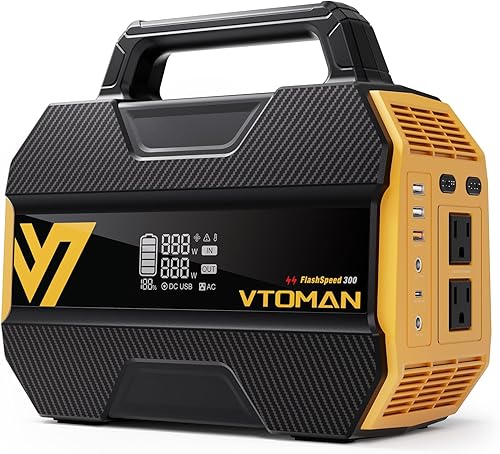
VTOMAN FlashSpeed 300 Portable Power Station
Best for small DC cooler setups - 8
 Check it
HOWEASY Portable Power Station 120W
Best for very low draw coolers - 9
 Check it
EnginStar 296Wh Portable Solar Generator
Best for coolers with a car plug
Which power station is best for an electric cooler?
The Jackery Explorer 300 is the top pick for a portable cooler setup with modest power needs, while larger stations fit longer runs or multiple devices. We compared stated capacity, output, DC options, weight, and charging flexibility for cooler use.
Our score weighs specs, features, and buyer feedback against what you’re shopping for. Cooler compatibility still depends on its own input rating, plug, and average draw.
| Product | Best for | Capacity | Rated output | DC port | Our score |
|---|---|---|---|---|---|
| Jackery Explorer 300 Portable Power Station | light cooler loads | 292Wh | 300W | 120W car port | 9.7 |
| Jackery HomePower 3600 Plus Power Station | long backup needs | 3,584Wh | 9.6 | ||
| Anker SOLIX S2000 Portable Power Station | high-capacity AC use | 2,010Wh | No 12V DC port | 9.5 | |
| BLUETTI Elite 30 V2 Portable Power Station | compact AC and DC options | 288Wh | 9.4 | ||
| Anker SOLIX C1000 Gen 2 Portable Power | mixed campsite devices | 1,024Wh | 9.3 | ||
| BLUETTI Portable Power Station AC180 | larger AC cooler loads | 1,152Wh | 9.2 | ||
| VTOMAN FlashSpeed 300 Portable Power Station | small DC cooler setups | 230Wh | 9.1 | ||
| HOWEASY Portable Power Station 120W | very low draw coolers | 88Wh | 9.0 | ||
| EnginStar 296Wh Portable Solar Generator | coolers with a car plug | 296Wh | 12V car port | 8.1 |
Best power stations for electric coolers by use
The right choice comes down to whether your cooler connects by DC or AC, and how long it needs to stay powered. Confirm the station’s port limit and the cooler’s input before setting up.
Jackery Explorer 300 Portable Power Station: Best for light cooler loads
- 292Wh capacity
- 300W rated output
- 120W car port
- 7.1 lb weight
Its compact size and 120W car port make it a practical match for a compatible cooler with modest draw. Check the cooler’s rated input and expected runtime before choosing this capacity.
Pros
- 120W car port
- 7.1 lb weight
- 300W rated output
Cons
- 292Wh capacity limits longer runs
- Confirm the cooler’s plug and input needs
The Jackery Explorer 300 combines 292Wh capacity with a 120W car port, which can suit a compatible electric cooler on a day trip. Its 7.1 lb weight makes it easier to carry than the larger backup stations here.
Check the cooler’s rated draw first. The station’s 300W rated output covers the total load, but an AC cooler connected through an inverter may use more battery than one connected directly to a compatible DC port.
Jackery says the battery is designed for more than 4,000 charge cycles before reaching 70% capacity. The station supports AC, car, and solar charging, and the solar panel is sold separately.
Choose it when you want a compact station for one modest load and occasional device charging. If you need to run a cooler and campsite lights together, compare the larger options below or the camping power station guide.
Jackery HomePower 3600 Plus Power Station: Best for long backup needs
- 3,584Wh capacity
- 3,600W output
- Wheels and telescopic handle
- AC and solar charging
The large 3,584Wh capacity suits extended backup plans where carrying weight is less important. Its product information does not specify a 12V car port, so check whether your cooler can use an AC outlet.
Pros
- Largest stated capacity here
- Wheeled design with telescopic handle
- Supports AC, solar, and generator charging
Cons
- 77.2 lb weight
- No 12V DC port specified
The Jackery HomePower 3600 Plus is the highest-capacity option here, with 3,584Wh and 3,600W output. Its 77.2 lb weight and lack of a specified 12V car port make it better suited to stationary use with an AC cooler.
Jackery says it supports AC, solar, gas generator, and hybrid AC plus DC charging. Its wheeled design and telescopic handle help move it across a home or garage.
Match the cooler’s AC draw to the station’s output, then estimate hours using usable watt-hours divided by average watts. The result is only a guide because conversion losses and actual cooler use affect runtime.
Consider this model when moving the battery less often matters more than keeping the setup light. For a vehicle plug, choose a station with a compatible DC port instead.
Anker SOLIX S2000 Portable Power Station: Best for high-capacity AC use
- 2,010Wh capacity
- 1,500W continuous output
- 3,000W peak output
- 8 outlets
This 2,010Wh unit can support a cooler that runs from AC, with substantial capacity for longer use. It has no 12V DC port, so a cooler with only a vehicle plug needs a compatible alternative connection.
Pros
- 2,010Wh capacity
- 1,500W continuous output
- Eight outlets
Cons
- No 12V DC port
- 35.7 lb weight
The Anker SOLIX S2000 has 2,010Wh capacity and 1,500W continuous output, making it a strong fit for an AC cooler and other gear. It has eight outlets, but no 12V DC port, so a cooler that only uses a vehicle plug needs a different compatible connection.
Anker’s 35-hour refrigerator runtime figure comes from lab testing with a 700 L refrigerator at 77°F ambient temperature and specified fridge and freezer settings. That figure does not predict runtime for a thermoelectric cooler, whose draw and operating pattern can differ.
The S2000 weighs 35.7 lb. Its larger capacity may reduce the need to recharge during an outing, while the absence of a DC port is a key compatibility check.
Pick it for an AC-powered cooler and a longer run plan. For a Koolatron cooler setup, see our guide to running a Koolatron cooler from a power station.
BLUETTI Elite 30 V2 Portable Power Station: Best for compact AC and DC options
- 288Wh capacity
- 600W continuous output
- 9.5 lb weight
- DC and AC charging options
At 288Wh and 9.5 lb, the Elite 30 V2 is a compact option for shorter cooler runs. Check the cooler’s connector and power draw against the station’s available outputs.
Pros
- 600W continuous output
- Compact capacity and weight
- Supports car charging
Cons
- 288Wh capacity
- Confirm port compatibility before buying
The BLUETTI Elite 30 V2 is a compact 288Wh choice with 600W continuous output and a 9.5 lb weight. It can suit short cooler runs when its available ports match the cooler’s plug and voltage.
BLUETTI lists car charging among its supported charging methods and gives a 4.5W idle draw for AC-only use. That standby use is worth considering for a small battery, especially if the station remains on between cooler cycles.
The station’s capacity is close to the Explorer 300’s, but its stated output is higher. Higher output does not add runtime; capacity and the cooler’s average power draw determine that.
Choose it when a small carryable station and multiple charging methods matter. Check whether your cooler uses AC or DC before deciding which port to use.
Anker SOLIX C1000 Gen 2 Portable Power: Best for mixed campsite devices
- 1,024Wh capacity
- 2,000W output
- 10 ports
- 600W maximum solar input
Its 1,024Wh capacity and multiple ports suit a cooler paired with other campsite electronics. No 12V DC port is specified, so confirm your cooler can connect to an available output.
Pros
- 1,024Wh capacity
- 2,000W output
- Supports up to 600W solar input
Cons
- No 12V DC port specified
- 11.3 kg weight
The Anker SOLIX C1000 Gen 2 offers 1,024Wh capacity and 2,000W output for a cooler plus other campsite electronics. For satellite internet at camp, compare power stations for Starlink Mini.
Its 10 ports provide flexibility, and solar input supports up to 600W for recharging away from a wall outlet.
No 12V DC port is specified, so check the cooler’s plug and plan for an AC connection if compatible. The station weighs 11.3 kg, which is more manageable than the largest home backup unit but still substantial for frequent carrying.
Anker says the unit can fully recharge in 49 minutes with UltraFast enabled in the app. It supports up to 600W solar input, with a stated full solar recharge time of 1.8 hours.
This is a practical middle ground when you want more capacity than the compact picks and need to power several devices. For a kettle as well as a cooler, see Can You Run an Electric Kettle on a Portable Power Station?.
For another high-draw appliance, compare power stations for hair dryers.
BLUETTI Portable Power Station AC180: Best for larger AC cooler loads
- 1,152Wh capacity
- 1,800W output
- 500W solar input
- 8 outlets
The AC180 pairs a 1,152Wh battery with 1,800W output for coolers that use AC and draw within its limits. Check the cooler’s plug and input before planning to run it.
Pros
- 1,152Wh capacity
- 1,800W output
- Solar input up to 500W
Cons
- 37.4 lb weight
- No 12V DC port specified
The BLUETTI AC180 pairs 1,152Wh capacity with 1,800W output, giving an AC cooler room to run alongside smaller devices within the station’s limits. It weighs 37.4 lb, so plan where it will sit before a trip.
BLUETTI states up to 500W solar input and says AC charging can fully recharge it in about an hour. Solar input depends on the panel and sunlight.
The AC180’s specifications describe AC outlets, so confirm compatibility if your cooler expects a 12V vehicle socket. The output rating also needs to exceed the cooler’s running draw and any startup demand.
Choose it when the cooler uses AC and you want over 1kWh of capacity. For a different mobile load, our guide answers Can You Use a Power Station to Charge an Electric Bike?.
VTOMAN FlashSpeed 300 Portable Power Station: Best for small DC cooler setups
- 230Wh capacity
- 300W output
- DC port
- 7 outlets
The 230Wh capacity and DC port fit a small, compatible cooler when you prioritize a light setup. Its 300W output is a ceiling, so check both the cooler’s running draw and startup needs.
Pros
- DC port included
- 4.44 kg weight
- Supports car and USB-C charging
Cons
- 230Wh capacity
- 300W output limit
The VTOMAN FlashSpeed 300 has a 230Wh battery, 300W output, and a DC port in a 4.44 kg package. That combination suits a small cooler with a matching DC input and modest runtime needs.
Its seven outlets include AC, USB-C, USB-A, and DC connections. VTOMAN says the unit supports pass-through charging, though the cooler’s draw can still exceed incoming charge and reduce battery level.
At 300W maximum output, this is not the pick for a cooler with a high startup demand. Check the cooler’s rating and the port limits before connecting it.
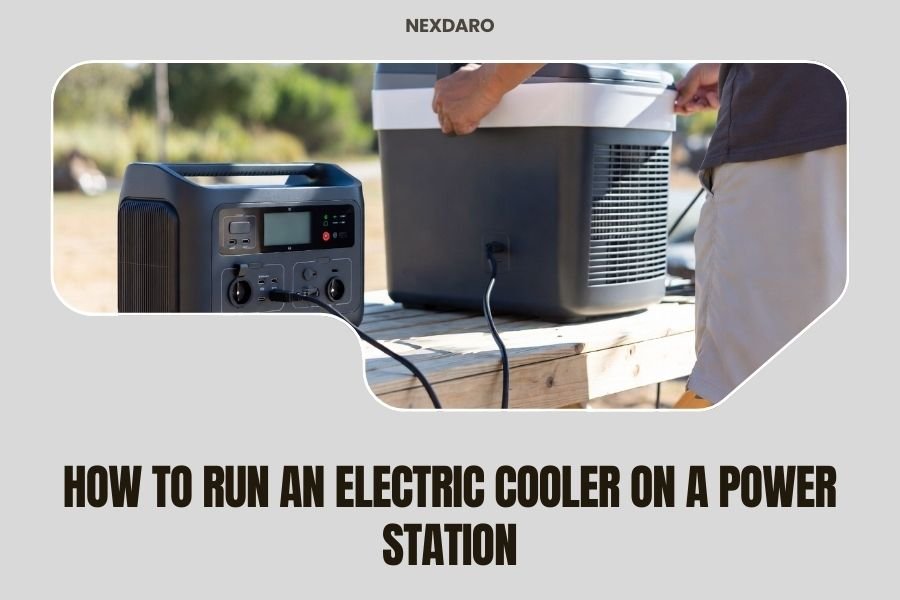
Choose it for a light DC setup and short outing. If you need help with the connection and power steps, read How to Run an Electric Cooler on a Power Station.
HOWEASY Portable Power Station 120W: Best for very low draw coolers
- 88Wh capacity
- 120W AC output
- 12V/10A DC ports
- 2.3 lb weight
Its 12V/10A DC ports and 2.3 lb weight suit a compatible low-draw cooler for brief use. The 88Wh capacity is small, so estimate runtime before relying on it.
Pros
- 12V/10A DC ports
- 2.3 lb weight
- Small to carry
Cons
- 88Wh capacity
- 120W AC output
The HOWEASY 120W is the lightest pick here at 2.3 lb, with two 12V/10A DC ports and 88Wh capacity. It can fit a very low-draw cooler for a brief outing if the cooler’s plug and input match.
The small capacity sets a clear limit on expected runtime. Estimate the cooler’s average draw and leave room for conversion losses rather than relying on the 120W output figure as a runtime measure.
This station also has two 110V AC outlets rated at 120W. That AC output may work for a small cooler within the limit, but a compatible DC connection can avoid using the inverter.
Choose this only when portability and low draw are the priorities. For longer operation, step up to a station with several hundred watt-hours or more.
EnginStar 296Wh Portable Solar Generator: Best for coolers with a car plug
- 296Wh capacity
- 300W output
- 12V car port
- 6.5 lb weight
The 12V car port gives compatible coolers a direct connection option, and 296Wh is a moderate capacity for short outings. The station weighs 6.5 lb and supports wall, solar, and car charging.
Pros
- 12V car port
- 296Wh capacity
- 6.5 lb weight
Cons
- Confirm cooler input and connector fit
- Longer runs may need more capacity
The EnginStar 296Wh station has a 12V car port for a cooler with a compatible vehicle plug. It weighs 6.5 lb and provides 300W output, making it a portable alternative for short outings.
EnginStar describes a pure sine wave AC output, a 12V DC car port, and two additional DC outputs rated at 12V/8A and 24V/3A. Check the cooler’s voltage, connector, and current needs against the port you plan to use.
EnginStar supports wall, car, and solar charging, with the solar panel sold separately. Its stated full wall charge time is about 7 hours, so recharge planning matters between uses.
Consider it when a direct 12V port is useful and the cooler’s average draw fits a 296Wh battery. Compare the unit’s capacity with your estimated hours before depending on it overnight.
How much capacity does an electric cooler need?
A cooler needs enough usable watt-hours to cover its average draw for the number of hours you want it running. As a rough estimate, divide battery watt-hours by cooler watts, then allow for conversion losses and other devices.
For example, a cooler averaging 25W for 8 hours uses about 200Wh before losses. A station with 230Wh may be tight, while a 1,000Wh unit gives more room for temperature changes, phone charging, and cloudy recharging conditions.
Thermoelectric models can draw power continuously. If you don’t know the average draw, use the cooler’s rated watts as a conservative estimate and consider measuring actual consumption with a suitable meter.
Should you connect an electric cooler to AC or DC?
Use a compatible DC connection when your cooler and station share the correct voltage, connector, and port limit. DC avoids running the power station’s AC inverter, which can reduce wasted energy.
An AC connection may be the only option for some coolers, and it can be convenient when the station has enough output. Keep inverter overhead in mind, especially with compact batteries, and make sure the cooler’s starting demand stays within the station’s surge limit.
Verify polarity, voltage, and current limits in the manuals before connecting a cooler to a vehicle-style socket.
What should you check before buying a cooler power station?
Check the cooler’s power input, average draw, plug type, and startup needs before comparing station capacity. Then decide whether the station will power anything else and how often you can recharge it.
- Capacity: Estimate watt-hours from average draw multiplied by hours needed.
- Output: Keep the cooler’s running draw and startup demand within the station’s limits.
- Port match: Confirm AC or DC type, voltage, connector, and current rating.
- Weight: Small stations are easier to carry, while larger batteries add runtime but weigh more.
- Recharge plan: Consider wall, car, or solar charging based on where you’ll use it.
If you’re running the cooler in a vehicle, keep airflow around it and follow its manual. A power station supplies electricity, but it doesn’t make a cooler more effective in direct sun or a hot enclosed cabin.
Which power station should you choose for an electric cooler?
Choose the Jackery Explorer 300 for a compact setup with a compatible 120W car port and modest runtime needs. Pick the Jackery HomePower 3600 Plus for a high-capacity AC setup, or the Anker SOLIX S2000 or BLUETTI AC180 for other AC cooler needs.
For a cooler that uses DC, prioritize a matching port and voltage before capacity alone. Use our electric cooler power station setup guide to check the connection and plan a suitable run.
Our top 3 picks at a glance
-
1
Best for light cooler loads
Jackery Explorer 300 Portable Power Station
9.7/10 our score
See it on Amazon -
2
Best for long backup needs
Jackery HomePower 3600 Plus Power Station
9.6/10 our score
See it on Amazon -
3
Best for high-capacity AC use
Anker SOLIX S2000 Portable Power Station
9.5/10 our score
See it on Amazon
Frequently asked questions
How do I estimate how long a power station will run a cooler?
Divide usable battery energy in watt-hours by the cooler’s average draw in watts for a rough runtime. For example, 200Wh of usable energy and a 20W average load suggest about 10 hours before losses.
Actual runtime varies with cycling, temperature, and power conversion.
Use the cooler’s measured average draw when possible.
Is a 12V DC port better for an electric cooler?
A 12V DC port can avoid converting battery power to AC and back if your cooler accepts that voltage and connector. Check the station’s port limit and your cooler’s input requirements first.
Some cooler models use AC only, while others support both AC and DC.
Can a small power station run a thermoelectric cooler overnight?
It may, if the cooler’s average draw is low enough and the battery has sufficient usable capacity. Thermoelectric coolers can draw power continuously, so estimate hours from average watts rather than assuming they cycle like a compressor fridge.
Leave a capacity margin for conversion losses and other connected devices.
Can I recharge a power station while the cooler is connected?
Some power stations support pass-through charging, but confirm that feature for the exact model and follow its manual. Recharging input may also be lower than the cooler’s draw, so the battery could still lose charge while connected.
For solar recharging, shade, clouds, panel angle, and daylight affect input.