BLUETTI AC180 vs EcoFlow DELTA 2: Which Should You Choose? (November 2026)
Choose the BLUETTI AC180 when its 1152Wh capacity, 1800W output and 500W solar input match your needs. For the EcoFlow DELTA 2, compare the exact capacity, output and charging details before deciding.
On this page (8 sections)
- BLUETTI AC180 vs EcoFlow DELTA 2: which should you choose?
- Which station fits home backup?
- Which one is better for camping and off-grid use?
- How do capacity and output affect daily use?
- Which charging setup makes more sense?
- How large is the BLUETTI AC180?
- What should you check before buying either station?
- BLUETTI AC180 vs EcoFlow DELTA 2: final choice
Choose the BLUETTI AC180 when you want 1152Wh of storage, 1800W output and up to 500W of solar input. That starting point makes it easier to test against the devices you actually plan to run.
The BLUETTI AC180 vs EcoFlow DELTA 2 decision should start with the exact capacity, output and charging needs of your devices. A product name alone cannot tell you whether a station will run your highest load or last for the hours you need.
The AC180 is a portable power station with a LiFePO4 battery. Its stated output is 1800W, with 2700W peak output, and its battery capacity is 1152Wh.
Capacity and output do different jobs in daily use. Capacity helps you judge how long stored energy may last, while output sets the ceiling for the devices you can connect at the same time.
The 2700W peak figure deserves separate attention because some devices need extra power when they start. Check the starting demand for your equipment instead of relying only on its normal running wattage.
The EcoFlow DELTA 2 belongs in the same buying conversation, but the product details supplied for this comparison do not include its capacity, output, dimensions or charging limits. Verify those figures for the exact DELTA 2 model before treating either station as the better match.
Do not assume that two stations in a similar category will behave the same. Small differences in capacity, output or solar input can change which devices each one can run comfortably.
Start by listing the loads you want to use most often, separating everyday essentials from optional items. Add the expected hours of use beside each item, then compare those needs with the AC180 figures.
Charging also matters from the beginning. The AC180 accepts up to 500W of solar input, so solar charging should be part of the decision if you plan to recharge away from a wall outlet.
Think about where the station will live between uses. A 37.4 lb unit suits planned vehicle trips and a fixed backup spot more than frequent carrying over long distances.
That weight does not rule the AC180 out, but transport and placement need to be part of your buying plan.
Home backup, camping and off grid use each place different demands on the same station. Decide which setting matters most before you weigh capacity against portability, and use the verified figures as your yardstick.
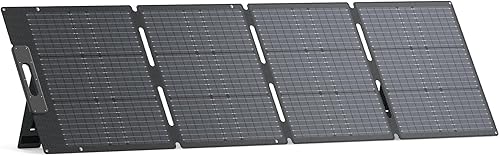 Best for portable solar charging
BLUETTI 200W Solar Panel for Solar Generator

BLUETTI AC180 vs EcoFlow DELTA 2: which should you choose?
Pick the BLUETTI AC180 if its known power and solar figures match your appliances. Choose the EcoFlow DELTA 2 only after checking its exact specifications against the same devices and charging plan.
The AC180 gives you a clear baseline: 1152Wh of battery capacity, 1800W of output and 2700W peak output. It also accepts up to 500W of solar input.
Those figures matter because capacity describes stored energy, while output describes the load the station can run. A station can have enough stored energy for a device but still fail to run it if the device needs more output than the station allows.
This is why the model name alone is not enough. Write down each device's running wattage, starting demand and expected hours of use, then compare those needs with the exact figures for both stations.
Which station fits home backup?
The AC180 is a practical home-backup choice when your essential devices stay within its 1800W output. It includes a UPS function that provides emergency power to essentials in 20 ms, according to BLUETTI's product information.
A 1152Wh battery can support short backup sessions, but runtime depends on the load. BLUETTI gives this estimate: working time equals 1152Wh multiplied by 0.85, divided by the device's operating power.
That formula is a planning guide, not a promise of a fixed runtime. A low-wattage light or small device uses less stored energy per hour than a heater, cooking appliance or other high-load device.
The AC180 has 2 1800W AC outlets in its title and 8 outlets in its product details. Confirm the outlet arrangement you need before setting up several devices at once.
For a broader look at the brand before choosing a backup station, read Is Bluetti a Good Brand?. It can help you place the AC180 in the wider BLUETTI range.
The EcoFlow DELTA 2 should be judged by the same questions. Check whether its output handles your highest-load appliance, whether its battery covers the planned outage period and whether its UPS behavior suits the equipment you want to keep running.
Which one is better for camping and off-grid use?
The AC180 suits planned camping and off-grid use when you can carry 37.4 lb and have room for its 13.39 x 9.72 x 12.48 in body. Its 1152Wh battery gives you more planning room than a small power bank, while its size makes it a serious piece of camp equipment.
The AC180 is electric and uses a LiFePO4 battery. It includes an AC charging cable, car charging cable, solar charging cable and user manual.
That included cable set supports several charging situations, but you still need to plan where the station will sit. Keep the unit stable, protect cables from trip hazards and follow the product instructions for charging and storage.
For solar charging, the AC180 accepts up to 500W. BLUETTI states that solar charging can take about 2.8 to 3.3 hours with 500W of solar input, but actual solar performance changes with weather, shade, angle and temperature.
If you want a compatible panel for this setup, the Best Bluetti Portable Power Station guide can help you compare BLUETTI options around the AC180.
The EcoFlow DELTA 2 may also suit camping, but check its exact weight, dimensions and solar input before planning transport. A station that looks similar in a product category can still be a poor fit if it is too heavy for your vehicle or cannot accept the solar input you expect to use.
How do capacity and output affect daily use?
Capacity controls how long the battery can supply energy, while output controls which devices it can run at the same time. For the AC180, those limits are 1152Wh, 1800W output and 2700W peak output.
Suppose you are choosing between a station for lights, chargers and a small appliance. The AC180's output gives you a useful ceiling, but the total load still matters when several devices run together.
Starting demand can also change the decision. A device may draw more power when it starts than it uses after reaching normal operation, so check the device instructions instead of using only its usual running wattage.
The AC180's product information gives a 0.85 conversion-rate figure for estimating working time. You can use that as a rough planning method, then leave extra capacity so the station is not pushed to its limit.
For higher-load shopping, see the guide to the best BLUETTI 2000 watt power station. A station aimed at 2000W loads may be a better fit when your appliances sit close to the AC180's output limit.
For the EcoFlow DELTA 2, use the same method with its exact published capacity and output. Do not assume that a similar shape or product category means similar runtime.
Which charging setup makes more sense?
The AC180 gives you 3 charging paths in the supplied product details: AC, car and solar. Its solar input can accept up to 500W, and the included cables cover AC, car and solar charging.
The fastest stated AC option is 0 to 80% in 45 minutes, while the product information also describes full charging in 1 hour at 1440W AC input. Treat those figures as charging conditions, not a guarantee for every outlet or setup.
Solar charging needs more planning. A panel's rated wattage assumes favorable conditions, and the panel may produce less when it is shaded, poorly angled, hot or under weak sunlight.
The BLUETTI 200W panel uses monocrystalline silicon cells, has up to 23.4% efficiency and folds to 22.5 x 23.6 x 2.9 in. It weighs 17.2 lb and includes adjustable kickstands.
Before connecting a third-party panel, check the station's voltage range, total solar input and connector. BLUETTI gives the AC180 a 12 to 60V solar input range and a 500W maximum solar input.
If you already use an EcoFlow setup, compare the DELTA 2's solar input, connector and voltage requirements with the panel you plan to carry. You can also review the best expansion battery for EcoFlow DELTA if adding storage is part of your plan.
How large is the BLUETTI AC180?
The AC180 measures 13.39 x 9.72 x 12.48 in and weighs 37.4 lb. Those dimensions make it portable for vehicle-based trips and planned backup, but not something most people will treat like a pocket battery.
That size gives the AC180 a clear place in a boot, storage area or backup shelf. It is built for planned movement between set locations rather than casual carrying from room to room.
Measure the space where you will use it, including room for cables and access to the controls. A station that fits in storage may still be awkward if the charging cables cannot reach the outlet or panel.
Leave breathing room around the unit during setup. Cables need space to bend without pulling on ports, and controls need to stay reachable when several devices are connected.
Weight matters during setup too. Plan where the AC180 will sit before you connect it, especially if you expect to move it between a home backup location and a vehicle.
A fixed position is usually easier to manage, with cables routed safely and the area kept clear.
If you do move it often, plan the route in advance. Short carries between a vehicle and a campsite are different from repeated moves up stairs or across uneven ground.
The 200W panel adds another 17.2 lb when carried with the station. It folds to 22.5 x 23.6 x 2.9 inches, which helps with packing, but the panel and station should be treated as two separate items when you plan space and lifting.
Do not judge portability by the station alone. Add the panel, cables and any other gear you will carry, then check whether the total load still suits your vehicle and your strength.
For home backup, size is less of a barrier. A station that stays in one place can be positioned for easy access and left ready for an outage, while for camping the same weight needs more thought.
What should you check before buying either station?
Check your devices first, then compare capacity, output, solar input, size and charging accessories. This order keeps the choice tied to your real use instead of a product name.
Make a short list of the devices you want to run. Separate essential loads from optional ones, and note which devices may have a higher starting demand.
Next, compare the battery capacities and output ratings for the exact BLUETTI AC180 and EcoFlow DELTA 2 versions. Confirm the solar input range, connector type and included cables if solar charging matters.
Think about portability as a separate requirement. The AC180's 37.4 lb weight may be reasonable for a vehicle or home backup shelf, but less suitable if you need to carry the station over long distances.
Finally, plan for care. Keep the station and solar panel protected from conditions outside their instructions, keep cables organized and avoid assuming that a panel will produce its rated maximum in every weather condition.
BLUETTI AC180 vs EcoFlow DELTA 2: final choice
Choose the BLUETTI AC180 for its clearly stated 1152Wh battery, 1800W output, 2700W peak output and 500W solar input. It is the more direct fit when those figures cover your devices and its 37.4 lb weight works for your setup.
That choice rests on known numbers rather than general expectations. You can plan around 1152Wh of storage, an 1800W ceiling for connected loads and up to 500W of solar input for recharging.
The 2700W peak output also matters for devices with higher starting demand. Still, peak output is not a replacement for checking the running wattage of everything you want to use together.
Choose the EcoFlow DELTA 2 if its verified capacity, output, charging system and physical size better match your needs. Those exact figures should be checked for the version you are considering before any final decision.
Compare the stations against your highest load first. If one station cannot handle that device comfortably, extra capacity or a lower price will not fix the problem.
Then compare expected runtime for your normal setup. Use the capacity figures and your device wattages to leave some headroom instead of planning to run the battery to its limit.
Charging method should be the next check. Decide whether AC, car or solar charging matters most, then confirm that each station supports the path you will rely on.
Size and weight complete the comparison. A station that fits your home shelf, vehicle or campsite without strain is more useful than one that is hard to move.
The deciding rule is simple: compare exact numbers for your highest-load device, expected runtime and preferred charging method before you buy. When the AC180 figures match that list, it is the clearer choice.
Frequently asked questions
Is the BLUETTI AC180 better than the EcoFlow DELTA 2?
The BLUETTI AC180 is the better choice when its 1152Wh battery, 1800W output and 500W solar input fit your devices and charging plan. The EcoFlow DELTA 2 may suit you if its exact capacity, output, charging options and ecosystem better match your setup, so compare those figures before buying.
How much power does the BLUETTI AC180 provide?
The BLUETTI AC180 has a 1152Wh LiFePO4 battery and 1800W output, with 2700W peak output. Actual runtime depends on the device load and conversion losses, so a higher-wattage device uses the stored energy faster than a low-wattage device.
Can the BLUETTI AC180 charge from solar?
Yes. The BLUETTI AC180 accepts up to 500W of solar input.
The BLUETTI 200W solar panel is a compatible option, but solar output changes with sunlight, angle, temperature and shade, so 200W is a rated maximum rather than a constant result.
Is the BLUETTI AC180 portable?
Yes. The AC180 weighs 37.4 lb and measures 13.39 x 9.72 x 12.48 in.
That size works for planned camping, backup and off-grid use, but it is heavier than a small power bank and deserves a clear carrying plan.