Can a Portable Power Station Run a Television?
On this page (3 sections)
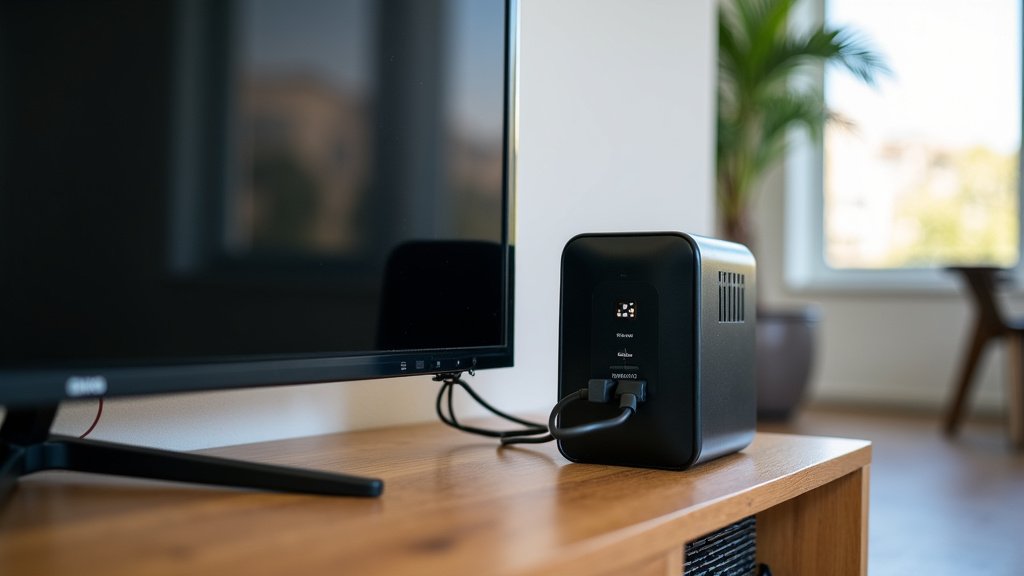
Yes, a portable power station can absolutely run a television. You just need to match the power station’s output to your TV’s power needs. We found that most modern TVs are quite energy-efficient.
Portable power stations offer a convenient way to power your entertainment in many situations. This is great for camping, tailgates, or during a power outage. You can enjoy your favorite shows almost anywhere life takes you.
- Power stations can run TVs.
- Match power station output to your TV’s wattage.
- Modern TVs are energy-efficient.
- Great for outdoor fun or outages.
Let’s walk through exactly what you need to know to pick the right portable power station for your TV, ensuring uninterrupted viewing pleasure.
Powering Your TV with a Portable Station: What You Need to Know
You can definitely power your television using a portable power station. The main thing is matching your TV’s power needs with the power station’s output. It’s simpler than you might think.
Understanding Your TV’s Power Consumption
Before you pick a power station, you need to know how much power your TV uses. This is usually measured in watts. Think of it like knowing how much gas your car needs for a trip.
Finding Your TV’s Wattage
How do you find this number? Check the back of your TV. There’s often a sticker with specifications. You might also find it in the owner’s manual or on the manufacturer’s website. Look for “power consumption” or “rated wattage.”
Most modern LED or LCD TVs are quite efficient. We found that a 32-inch LED TV might use around 30-50 watts, while a larger 55-inch model could use 70-150 watts. Older plasma TVs used a lot more power, so keep that in mind if you have one.
Peak vs. Continuous Power
TVs have two types of power usage. There’s “continuous power,” which is what it uses when it’s on. Then there’s “peak power” or “surge power.” This is a quick burst of extra power needed when you first turn it on. Your power station needs to handle both.
How Portable Power Stations Work
Imagine a giant, rechargeable battery with outlets. That’s essentially what a portable power station is. It stores energy and then converts it into the kind of power your devices need. They are designed for portability and ease of use.
Understanding Capacity: Watt-Hours (Wh)
The “size” of a power station is measured in watt-hours (Wh). This tells you how long it can run a device. A 500Wh power station, for example, could theoretically run a 100-watt TV for 5 hours (500Wh / 100W = 5 hours). Think of Wh as the size of your fuel tank.
Output Power: Watts and Pure Sine Wave Inverters
Power stations also have an output rating in watts. For another high-draw computer setup, see our guide to powering a gaming PC. This is the maximum power they can deliver at one time. Most electronics, including TVs, prefer a “pure sine wave” inverter. This provides clean, stable power, similar to what you get from your wall outlet at home. This protects your electronics from damage.
| TV Size (LED/LCD) | Average Continuous Wattage | Minimum Power Station Capacity (for 3-4 hrs) |
|---|---|---|
| 32-inch | 30-50 W | 150 Wh |
| 40-inch | 50-80 W | 250 Wh |
| 55-inch | 70-120 W | 400 Wh |
| 65-inch | 100-180 W | 600 Wh |
Remember, these are just estimates. Always check your specific TV’s wattage.
Choosing the Right Power Station for Your TV
This is where the rubber meets the road. You need to balance battery capacity with output power. Don’t worry, it’s not super complex. We’ll walk you through it.
Match Wattage to Your Power Station’s Output
First, make sure your TV’s wattage (and any brief surge wattage) is less than the power station’s continuous output rating. If your TV uses 100 watts, you need a power station that can deliver at least 100 watts, plus a little extra for starting. Many experts suggest choosing a power station with 1.5 to 2 times your device’s continuous wattage for surge protection (Consumer Reports).
Consider the Run Time You Need (Watt-Hours)
Next, think about how long you want to watch TV. If you plan a backyard movie night for 3 hours with a 75-watt TV, you’ll need at least 225 Wh (3 hours x 75 watts). But you want some wiggle room, right? So, a 300Wh to 500Wh station would be a safer bet. Always over-estimate a little.
Pure Sine Wave Inverter is Key
Look for power stations that explicitly state they have a “pure sine wave inverter.” This is important because it prevents potential damage to sensitive electronics like your TV. It also helps avoid that annoying hum you sometimes get from lower-quality power sources.
Beyond Just the TV: What Else Will You Power?
Are you only planning to run your TV? Or do you want to power a soundbar, a streaming stick, or even charge your phone? These extra devices will add to your total power consumption. They’re like passengers in your car, each adding a little weight.
- Streaming Stick (e.g., Roku, Fire Stick): ~3-5 W
- Small Soundbar: ~10-30 W
- Laptop Charger: ~45-60 W
- Phone Charger: ~5-10 W
Add these to your TV’s wattage for a more accurate total. This will help you select a power station with enough capacity.
Practical Scenarios for TV with Portable Power
Why would you even want to do this? There are several great reasons. It’s not just for extreme situations, but for everyday convenience too.
Outdoor Entertainment and Tailgating
Imagine watching the big game during a tailgate party. Or a movie night under the stars while camping. A portable power station makes this possible. No generators, no noisy fumes. Just quiet power for your entertainment.
Power Outages and Emergencies
When the power goes out, life can get boring fast. A portable power station can keep your TV running. This provides a sense of normalcy and keeps you entertained. It’s a small comfort during a stressful time.
Plus, you can stay informed by watching local news if your internet is still working. Many of us rely on news channels during storms or outages.
Remote Work or Study Setups
Sometimes you need to get away from distractions. Maybe you want to work on your patio or in a cabin. A portable power station can power your monitor or laptop, turning any location into a temporary office or study space. It offers incredible flexibility.
Maintaining Your Portable Power Station
Just like any other tool, a little care goes a long way. Proper maintenance ensures your power station is ready when you need it most. It also helps extend its lifespan.
Charging Practices
Always follow the manufacturer’s charging guidelines. Most recommend keeping the battery between 20% and 80% charge for long-term health. Don’t leave it fully drained or fully charged for extended periods, as this can degrade battery performance over time (Battery University).
Storage Tips
Store your power station in a cool, dry place. Extreme temperatures can harm the battery. If you’re not using it often, charge it every 3-6 months to maintain its charge level. Think of it like keeping your car battery topped off.
Your Portable TV Power Checklist
Ready to make your decision? Here’s a quick checklist to guide you:
- Determine your TV’s continuous wattage.
- Calculate total wattage for all devices you’ll plug in.
- Decide how many hours of run time you need.
- Choose a power station with enough output watts (continuous and surge).
- Select a power station with sufficient Wh capacity for your desired run time.
- Confirm it has a pure sine wave inverter.
With these steps, you’ll be well on your way to enjoying TV wherever and whenever you want.
Conclusion
You now have all the tools to pick the perfect portable power station for your television. We’ve shown that running a TV with one is not only possible but also practical for many situations. By understanding your TV’s wattage and the power station’s capacity, you can confidently choose a unit that meets your viewing needs.
Remember to prioritize a pure sine wave inverter to protect your electronics, and always factor in any extra devices you plan to power. Your next step is to check your TV’s power sticker and compare it with available power stations. Get ready to enjoy your shows anywhere!
Frequently Asked Questions
Can I use a portable power station with any size TV?
Yes, you can use a power station with most TV sizes. The key is to match the power station’s output and capacity to your TV’s specific wattage. Larger TVs will require a power station with more watts and watt-hours.
Will a portable power station damage my TV?
Not if you choose one with a pure sine wave inverter. This type of inverter provides clean, stable power, just like a standard wall outlet. Using a power station without a pure sine wave inverter could potentially harm sensitive electronics over time.
How long can a portable power station run my TV?
The run time depends on the power station’s capacity (watt-hours) and your TV’s power consumption (watts). For instance, a 500Wh station running a 100W TV would last approximately 5 hours. Always check our capacity table for estimates and factor in additional devices.
Do portable power stations make a lot of noise like generators?
No, portable power stations are generally very quiet. They use batteries and inverters, not internal combustion engines like gas generators. This makes them ideal for indoor use, camping, or quiet tailgates without disturbing others.
Can I charge a portable power station while it’s running my TV?
Many modern portable power stations offer “pass-through charging.” This means you can charge the power station itself while it’s simultaneously powering your TV. Always check your specific model’s manual to confirm this feature.