Can You Charge a Portable Power Station with a Car Alternator?
On this page (3 sections)
Yes, you can often charge a portable power station using your car’s alternator, but it’s not as simple as just plugging it in. See Charge Portable Power Station Car for more details. You’ll need a few specific adapters and understand the limitations to avoid damaging your car’s battery or the power station. We found that this method is a great way to recharge when you’re off the grid, but it requires some careful setup.
Charging your power station from your car utilizes your vehicle’s running engine to generate electricity. The alternator’s primary job is to keep your car battery charged. For guidance on using a power station to top off a car battery, see our guide to charging a car battery. Using it to power an external device means you’re tapping into that charging system. It’s essential to know how to do this safely to prevent draining your car battery completely, leaving you stranded. Many people wonder about the best way to do this while camping or on a road trip.
- You can charge a power station from a car alternator.
- It requires special adapters, not a direct plug-in.
- This method can help recharge devices when you’re away from an outlet.
- Always ensure you don’t drain your car battery too much.
- Understand the potential risks and necessary precautions.
Let’s walk through exactly how you can safely connect your portable power station to your car’s alternator and what you’ll need to make it happen.
Powering Your Devices with Your Car’s Alternator
Yes, you can absolutely use your car’s alternator to charge your portable power station. It’s a clever way to keep your electronics powered up when you’re away from an electrical outlet. Think of your car’s alternator as a mini power plant that kicks in when your engine is running. It’s designed to keep your car’s battery topped up. By connecting your power station, you’re essentially borrowing some of that energy.
This method works because your car’s engine drives the alternator. As the engine spins, the alternator generates electricity. This electricity is then used to recharge your car’s battery. You can also tap into this power flow for your portable power station. See Best Portable Power Station Car for more details. It’s a smart solution for road trips, camping, or emergencies. However, it’s not a direct plug-and-play situation. You need the right equipment and a good understanding of how it all works to avoid trouble.
Understanding Your Car’s Charging System
Your car’s charging system is pretty straightforward. It has three main parts: the battery, the alternator, and the voltage regulator. The battery provides the initial power to start the engine. Once the engine is running, the alternator takes over. It generates electricity to power the car’s electrical systems and recharge the battery. The voltage regulator makes sure the alternator doesn’t produce too much voltage, which could damage your car’s electronics or your power station.
When you’re charging a portable power station, you’re adding an extra load to this system. It’s like asking your car to do a little extra work. For most modern cars, this isn’t a problem, especially for shorter charging periods. We found that most alternators are designed with some buffer capacity. This means they can handle charging your power station without struggling, as long as you’re mindful of the drain on your car’s battery.
What You’ll Need: Essential Adapters and Cables
To safely charge your power station from your car, you’ll need a few key items. The most important is a DC-to-DC charger or car adapter for a power station. You cannot simply plug your power station’s AC wall charger into a car adapter. That adapter converts your car’s 12V DC power to 120V AC power, but your power station needs a direct DC input, usually around 12V.
Here’s a breakdown of what you should look for:
- DC-to-DC Car Charger: This is the most common and often the safest method. These chargers plug into your car’s cigarette lighter (12V accessory port) or directly to your car’s battery terminals. They regulate the voltage and current specifically for charging your power station.
- Appropriate Cables: You’ll need the correct cables to connect the DC-to-DC charger to your power station. This often involves Anderson Powerpole connectors or specific DC input ports on your power station. Check your power station’s manual for the exact connector type.
- Fuses: Many DC-to-DC chargers have built-in fuses for protection. If yours doesn’t, or if you’re connecting directly, consider adding an inline fuse to protect both your car and your power station from electrical surges. We found this to be a critical safety step.
- Voltage Meter (Optional but Recommended): A simple voltage meter can help you monitor your car’s battery health. This allows you to see when you’re getting close to draining it.
Choosing the Right DC-to-DC Charger
When selecting a DC-to-DC charger, pay attention to its output capabilities. Your power station will have a maximum DC input wattage or amperage it can accept. You want a charger that can deliver this without exceeding it. For example, if your power station accepts 100W DC input, a 150W charger is perfectly fine, but a 50W charger will charge much slower.
Some chargers are designed to connect directly to the car’s battery terminals using alligator clips or ring terminals. This bypasses the car’s accessory port and can sometimes provide a more stable power source. However, it requires a bit more care during installation to ensure a secure connection and avoid short circuits. Always double-check that the charger is compatible with your specific power station model. We found that manufacturers often list compatible chargers or provide specifications in their user manuals.
Step-by-Step Guide to Charging Your Power Station
Let’s walk through how to connect your power station using a DC-to-DC charger. Safety first, always! Make sure your car is parked on a level surface and the engine is running. This is vital. Running the engine provides the power and keeps the alternator working.
- Locate Your Car’s 12V Accessory Port: This is commonly known as the cigarette lighter socket. It’s usually found on the dashboard or center console.
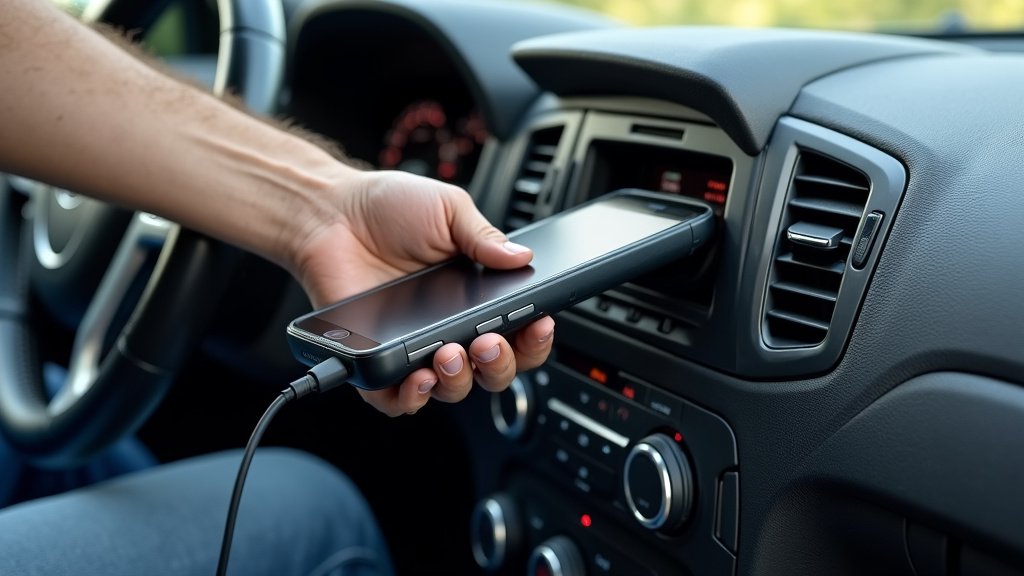
- Connect the DC-to-DC Charger: Plug one end of the DC-to-DC charger into the 12V accessory port.
- Connect to Your Power Station: Connect the other end of the DC-to-DC charger to the DC input port on your portable power station. Ensure the connection is secure.
- Verify Charging: Check the display on your power station. It should indicate that it’s receiving power and show the charging rate. If it doesn’t, disconnect and recheck your connections.
Connecting Directly to the Car Battery (Advanced)
If you’re using a charger designed for direct battery connection, the process is slightly different and requires more caution. Ensure the engine is running before you begin connecting.
- Identify Battery Terminals: Locate your car battery. Identify the positive (+) and negative (-) terminals. Locate your car battery. Identify the positive (+) and negative (-) terminals. Our guide on charging via the 12V cigarette lighter also covers direct battery connections.
- Connect Positive Terminal: Attach the positive (red) connector from your DC-to-DC charger to the positive (+) terminal of your car battery.
- Connect Negative Terminal: Attach the negative (black) connector from your DC-to-DC charger to the negative (-) terminal of your car battery. Some recommend connecting to a chassis ground instead of the negative terminal to reduce the risk of sparks near the battery.
- Verify and Secure: Double-check all connections. Ensure they are tight and won’t come loose while driving. Then, connect the charger to your power station as described above.
We found that connecting directly to the battery can offer faster charging speeds. However, it also carries a higher risk if done incorrectly. Always follow the charger manufacturer’s instructions precisely.
Important Considerations and Safety Precautions
While charging your power station with your car’s alternator is feasible, it’s crucial to do it safely. The biggest concern is draining your car’s 12V battery. If you drain it too much, your car won’t start, leaving you stranded. Many experts suggest monitoring your car’s battery voltage.
Here’s what you need to keep in mind:
- Don’t Over-Discharge Your Car Battery: A healthy car battery typically sits around 12.6 volts when the engine is off. When the engine is running and the alternator is charging, the voltage should be higher, usually between 13.5 and 14.5 volts. If you see the voltage drop significantly below 12 volts while charging your power station, it’s time to stop. We found that running your car for at least 30 minutes before and during charging helps maintain battery health.
- Alternator Output Limits: Your car’s alternator has a maximum output rating, usually measured in amps. If you’re running many accessories (like lights, stereo, air conditioning) along with charging your power station, you could be nearing the alternator’s limit.
- Driving vs. Idling: Charging is generally more efficient when your car is driving at higher RPMs than when it’s idling. The alternator spins faster, producing more power. So, if you need to charge, a short drive is often better than just idling for an extended period.
- Heat Management: Both your car’s alternator and your power station can generate heat during charging. Ensure both have adequate ventilation. Don’t cover them or place them in enclosed, hot spaces.
When to Avoid Charging from Your Car
There are times when you should probably skip charging your power station from your car. If your car battery is already old or in poor condition, it might not have enough reserve power. We found that car batteries typically last 3-5 years. If yours is nearing that age, be extra cautious.
Also, if you’re in extremely cold weather, your car battery’s performance can be reduced. Cold temperatures make it harder for the battery to deliver power. In such conditions, it’s best to rely on other charging methods if possible. If you must charge from your car, do so for shorter periods and monitor the battery voltage closely.
Understanding Charging Speeds and Efficiency
The speed at which your power station charges from your car’s alternator can vary greatly. Several factors influence this. The primary factor is the output capacity of your car’s alternator. A larger alternator (e.g., 100 amps or more) can supply more power than a smaller one (e.g., 50-70 amps). We found that most passenger cars have alternators capable of providing sufficient power for charging a typical power station.
The efficiency of your DC-to-DC charger also plays a role. Some chargers are more efficient at converting the car’s 12V power into the correct voltage and amperage for your power station. The charging specifications of your power station are also critical. If your power station only accepts a low DC input (e.g., 50W), it will charge slowly regardless of how much power your alternator can provide. You can usually find the maximum DC input rating in your power station’s manual.
Here’s a simple comparison:
| Factor | Impact on Charging Speed | Notes |
|---|---|---|
| Car Alternator Output | Higher output = Faster charging | Check your car’s alternator specs. |
| DC-to-DC Charger Rating | Higher wattage charger = Potentially faster charging | Must be compatible with your power station. |
| Power Station DC Input Limit | Lower limit = Slower charging | This is often the bottleneck. |
| Engine RPMs | Higher RPMs (driving) = More power | Idling is less efficient. |
| Vehicle Electrical Load | More accessories running = Less power for the power station | Turn off unnecessary electronics. |
Alternative Charging Methods for Your Power Station
While charging from your car is a great backup, it’s not the only off-grid solution. Solar panels are a very popular and sustainable way to recharge portable power stations. Many power stations are designed to accept solar input directly, or you can use a solar charge controller.
Other methods include:
- Wall Outlet Charging: The standard method, best done at home or at a campsite with power.
- USB Charging: Some smaller power stations can be charged via a USB port, though this is very slow and usually only for topping off.
- Wind Turbines: Less common for portable units but an option for more extensive off-grid setups.
We found that solar charging is often the most convenient and eco-friendly option for extended trips. However, understanding how to use your car’s alternator is an excellent skill to have for those times when solar isn’t an option.
Checklist for Safe Car Alternator Charging
Before you plug in and start charging, run through this quick checklist to ensure you’re doing it safely:
- Confirm Compatibility: Make sure your DC-to-DC charger is compatible with your power station.
- Gather All Cables and Adapters: Have everything you need ready before you start.
- Engine Running: Always start your car’s engine before connecting anything.
- Secure Connections: Double-check all physical connections are firm.
- Monitor Car Battery Voltage: Keep an eye on your car’s battery health.
- Ventilation: Ensure good airflow around your car’s alternator and your power station.
Conclusion
Charging your portable power station using your car’s alternator is definitely achievable and a smart move for off-grid power needs. Remember, it’s not a direct plug-in; you’ll need the right DC-to-DC charger and cables. Always prioritize your car’s battery health by monitoring voltage, and ensure your setup has adequate ventilation. This method offers great flexibility, especially when you’re traveling. Ready to give it a try? Make sure you have all your adapters in hand before your next adventure.
Frequently Asked Questions
How long should I run my car to charge my power station?
We found that running your car for at least 30 minutes before and during charging can help maintain your car’s battery health. If you need a significant charge, consider taking your car for a short drive rather than just idling, as higher engine RPMs produce more power.
Can I use a standard car inverter to charge my power station?
No, you cannot use a standard car inverter. Inverters convert your car’s 12V DC power to 120V AC power, which is what your power station’s wall charger uses. You need a DC-to-DC charger that directly inputs 12V power into your power station’s DC input port.
What happens if I drain my car battery too much?
Draining your car battery too much can leave you stranded, as your car won’t have enough power to start. We highly recommend using a voltage meter to monitor your car’s battery, stopping charging if the voltage drops too low, typically below 12 volts.
Is charging my power station faster when driving or idling?
Charging is generally more efficient and faster when your car is driving at higher RPMs, like on the highway, compared to idling. The alternator spins faster when the engine is revved higher, producing more electrical power for charging.
My power station isn’t charging from my car, what could be wrong?
First, double-check all your connections to ensure they are secure. Make sure your car’s engine is running and that your DC-to-DC charger is compatible with your power station. You should also verify that the charger itself is functioning correctly and that your power station’s DC input isn’t damaged.