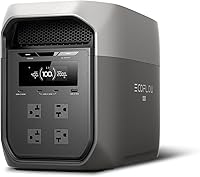
EcoFlow DELTA 2 Max vs DELTA 3 Max: Which Should You Choose? (November 2026)
Pick the DELTA 3 Max if you want the newer 2048Wh, 2400W generation with 3400W X-Boost and faster 0 to 80 percent charging in 1.13 hours, and pick the DELTA 2 Max if you already own DELTA 2 Max batteries or prefer the older Max platform. We compared the equivalent capacity Max models across two product generations, and the choice is mostly about output headroom, charging speed, size and expansion you already own.
On this page (12 sections)
- EcoFlow DELTA 2 Max vs DELTA 3 Max: the quick verdict
- The two side by side
- Capacity and runtime at 2048Wh
- Output: 2400W standard and 3400W X-Boost
- Charging speed and the 1.13 hour figure
- Home backup and the 10ms transfer time
- Size, weight and moving the station
- Solar charging and the 220W panel bundle
- Expansion batteries and staying in one generation
- App control, care and long term use
- Who should buy which
- Final verdict on DELTA 2 Max vs DELTA 3 Max
Pick the DELTA 3 Max if you want the newer 2048Wh, 2400W generation with 3400W X-Boost and faster 0 to 80 percent charging in 1.13 hours, and pick the DELTA 2 Max if you already own DELTA 2 Max batteries or prefer the older Max platform. In this ecoflow delta 2 max vs delta 3 max comparison, capacity is not the main divider.
Both Max generations sit around 2048Wh, so you should decide on output, charging, size, expansion and what you already own.
We checked the specs for the DELTA 3 Max models in this guide. EcoFlow positions the DELTA 3 Max for home backup, RV trips and camping, with a LiFePO4 battery rated for 10 years of daily use.
The DELTA 2 Max generation comes from the prior Max line, and it still matters if your current setup uses its batteries.
Our score weighs specs, features and buyer feedback against what you are shopping for. Scores are one per product across the site, so the same DELTA 3 Max score follows the product wherever it appears.


EcoFlow DELTA 2 Max vs DELTA 3 Max: the quick verdict
The DELTA 3 Max is the better default buy for most new buyers, while the DELTA 2 Max wins only on ownership and platform continuity. The newer model gives you 3400W X-Boost, X-Stream charging to 80 percent in 1.13 hours and a 10ms transfer time for home backup.
Those gains matter if you recharge often or run high demand appliances.
The DELTA 2 Max is not a poor station. It is the prior generation at the same capacity class, so it can still serve home backup and RV use well.
If you already have DELTA 2 Max extra batteries, switching generations may cost more than it saves you.
Look at the wider EcoFlow range before you decide. Our best EcoFlow power station for 2000W loads guide shows how 2400W and 3000W models compare for large appliances.
It helps you see whether you need standard DELTA 3 Max output or step up to a Plus model.
The two side by side
Both sit at 2048Wh, but the DELTA 3 Max adds newer charging and output figures. The DELTA 2 Max generation represents the older Max platform, while the DELTA 3 Max covered here lists 2400W output and up to 3400W in X-Boost mode.
That output gap is the clearest spec difference for running demanding loads.
| Point | DELTA 2 Max generation | DELTA 3 Max covered here |
|---|---|---|
| Capacity | 2048Wh class | 2048Wh |
| Standard output | Older Max platform | 2400W |
| Boost output | Older Max platform | 3400W X-Boost |
| Charging to 80 percent | Prior generation speed | 1.13 hours |
| Transfer time | Prior generation | Under 10ms |
| Battery type | Prior generation platform | LiFePO4, 10 years of daily use |
| Solar panel in box | Depends on bundle | Optional, or 220W in one bundle |
| Product | Best for | Capacity | Output | Weight | Our score |
|---|---|---|---|---|---|
| EF ECOFLOW Portable Power Station DELTA | expanded home backup | 2048Wh | 3000W | 49 pounds | 9.6 |
| EF ECOFLOW DELTA 3 MAX Portable Power | camping with solar | 2048Wh | 2400W | 19.5 x 9.4 x 12 inches | 9.6 |
| EF ECOFLOW DELTA 3 Max Portable Power | standard home backup | 2048Wh | 2400W | 9.4 x 12 x 19.44 inches | 9.2 |
| EF ECOFLOW Portable Power Station River | small portable loads | 572Wh | 990W | 8.4 kg | 9.1 |
For a fair read, compare the DELTA 3 Max with the EcoFlow DELTA 3 Max review on this site. That review focuses on the same 2048Wh and 2400W figures, so you can see the model in depth before you compare generations.
Capacity and runtime at 2048Wh
At 2048Wh, runtime depends on your load more than on the generation. A 100W load uses about one twentieth of the stored energy each hour in theory, while a 1000W load uses about half in the same time.
Real runtime is lower once you allow for conversion losses and the reserve you want to keep.
That math is why the same station can last a night for lights and phones, yet run a microwave for a much shorter spell. EcoFlow lists a 10 hours runtime figure for the standard DELTA 3 Max, but that depends on the test load.
Treat any single runtime number as a guide, not a promise for your appliances.
If your outage plan needs more than 2048Wh, expansion matters more than picking between these two. Check the best expansion battery for EcoFlow Delta guide before you buy extra storage.
Battery compatibility can lock you into a generation.
Output: 2400W standard and 3400W X-Boost
The DELTA 3 Max gives you 2400W of standard output with up to 3400W in X-Boost mode. EcoFlow says that range powers 99 percent of appliances, including fridges, microwaves and power tools.
You should still add up the watts for the exact items you plan to run together.
A fridge may draw more at startup than while it runs, and a microwave or heater can push a station hard. X-Boost helps with brief peaks, but it does not create free energy.
If a load sits above 2400W for a long time, you are relying on the boost limits in the manual.
This is where the DELTA 3 Max Plus class with 3000W output and 3800W X-Boost pulls ahead. If your must-run list includes several large appliances at once, that extra headroom may be worth more than the generation change alone.
Compare it in our DELTA 3 Plus vs DELTA 3 Max guide.
Charging speed and the 1.13 hour figure
The DELTA 3 Max reaches 80 percent in 1.13 hours using X-Stream technology. That speed helps after an outage, before a road trip or between campsite stops.
You spend less time tied to a wall outlet and more time using the station.
The Plus class goes further, with 80 percent in 43 minutes from an AC wall outlet. That is a real step up if fast turnaround is your top need.
For most home backup use, 1.13 hours to 80 percent is already quick enough for a station you keep topped up.
Charging method matters as much as the headline time. Wall charging is fastest, solar depends on sun and panel size, and car charging is slower.
Keep the station charged before storm season, then use solar or car power to top it up on the road.
Home backup and the 10ms transfer time
The DELTA 3 Max switches to battery in under 10ms, which protects sensitive devices during an outage. EcoFlow names PCs and medical equipment as the kind of loads that benefit from that fast transfer.
Ultra-quiet operation also helps if the station runs at night.
A fast transfer does not mean unlimited runtime. At 2048Wh, you still need to choose which circuits or appliances matter most.
A fridge, lights, phones and a router are a sensible core set, while large heaters or a full kitchen load will drain the battery quickly.
Set up your priority list before an outage, not during one. Plug the essentials in first, then add loads only if the battery level and output allow it.
The EcoFlow app helps you monitor levels and set charging schedules.
Size, weight and moving the station
The standard DELTA 3 Max measures 9.4 x 12 x 19.44 inches, with a taller footprint than the bundle listing at 19.5 x 9.4 x 12 inches. The layout differs by bundle, so measure your storage space and vehicle cargo area before you order.
A station that fits in a closet may still block a car boot.
EcoFlow calls the DELTA 3 Max lighter and durable, built to carry from home to RV or campsite. Even so, a 2048Wh station is a two hand lift for many people.
Plan where it will live, how you will move it and whether stairs are involved.
Portability is a trade off against capacity. The River 3 Max at 572Wh and 990W is far easier to carry, but it holds less than a third of the energy.
If you need to move power often and run small loads, a smaller unit may serve you better than either Max model.
Solar charging and the 220W panel bundle
One DELTA 3 Max bundle includes a 220W solar panel, while the standard station lists solar as optional. That bundle suits camping and RV use where you want solar input from day one.
The panel is bifacial in the bundle details, which can help capture light from both sides.
Solar charging is slow compared with wall charging. A 220W panel will not refill 2048Wh quickly in cloudy weather or at low sun angles.
Think of solar as a way to extend a trip or top up during the day, not as a fast recharge.
If you already own panels, check their voltage and wattage against the station limits in the manual. Matching an existing panel to the right generation matters more than buying a bundle you may not need.
Keep cables and connectors with the station so setup is quick.
Expansion batteries and staying in one generation
Expansion can lock you to a generation, so check battery compatibility before you switch from DELTA 2 Max to DELTA 3 Max. The DELTA 3 Max Plus class expands from 2kWh to 10kWh with EcoFlow extra batteries.
That scale suits whole day camping, long RV trips or extended home backup, but it adds cost and weight.
If you own DELTA 2 Max batteries, the DELTA 2 Max may be the cheaper path to more runtime. Battery lines in the product data include DELTA 2 Max Extra Battery and D3MPlus Extra Battery as separate items.
Do not assume they cross over.
The same caution applies to cables and adapters. Product data lists models such as DELTA 3 Max, DELTA 2 Max and DELTA 3 Max Plus as separate units.
Check each battery and cable against the exact station model before you add capacity.
App control, care and long term use
The DELTA 3 Max uses the EcoFlow app to monitor energy use, set priorities and schedule charging. That helps you save on electricity costs by charging at cheaper times, and it helps you protect your most important loads.
App control is a daily convenience, not just a backup feature.
EcoFlow rates the LiFePO4 battery for 10 years of daily use. That chemistry is known for long cycle life compared with older lithium types, and it suits a station you use often.
Store the station at a moderate charge, keep vents clear and follow the manual for temperature limits.
Care is mostly common sense. Charge it before long storage, check the level every few months and keep it dry.
Wipe vents and connectors gently, and never block airflow while it runs under load. A station that stays topped up and cool will be ready when you need it.
Who should buy which
Buy the DELTA 3 Max if you are starting fresh, and keep the DELTA 2 Max if your current batteries and setup already work. New buyers get faster charging, 3400W X-Boost and the 10ms transfer time from the newer generation.
Owners of DELTA 2 Max expansion batteries get more value from staying in that line.
Choose the DELTA 3 Max Plus class if you need 3000W output or expansion to 10kWh. Choose the standard DELTA 3 Max if 2400W covers your loads and you want a lower step in size or cost.
Choose the 220W panel bundle if solar charging is part of your plan from the start.
If you are still torn between brands, our Is Jackery Better Than EcoFlow? guide compares the wider field. For EcoFlow owners, the DELTA 2 Max vs DELTA Pro guide also shows how the older Max sits below the Pro class.
Final verdict on DELTA 2 Max vs DELTA 3 Max
For most new buyers, the DELTA 3 Max is the pick in this ecoflow delta 2 max vs delta 3 max comparison. It keeps the same 2048Wh capacity class, adds 2400W output with 3400W X-Boost, charges to 80 percent in 1.13 hours and transfers in under 10ms for home backup.
Those are practical gains you will feel in daily use.
Pick the DELTA 2 Max only if you already own its expansion batteries, its cables or a bundle that suits your setup. Switching generations to gain speed may not pay if it strands batteries you already paid for.
Check compatibility first, then compare the total cost of the station plus the storage you need.
Start with your must-run loads, add up their watts and estimate runtime at 2048Wh. If that plan fits, the DELTA 3 Max is the cleaner choice.
If it does not fit, step up in output or expansion rather than hoping X-Boost will cover a steady overload.
Frequently asked questions
Is the EcoFlow DELTA 3 Max better than the DELTA 2 Max?
The DELTA 3 Max is the newer generation at the same 2048Wh capacity, with 2400W output, 3400W X-Boost and 0 to 80 percent charging in 1.13 hours. The DELTA 2 Max remains a strong choice if you already own its expansion batteries or want the older platform.
How much capacity do both Max models share?
Both the DELTA 2 Max class and the DELTA 3 Max covered here are built around 2048Wh. That shared capacity means runtime for a given load is broadly similar, so output, charging speed and expansion decide the better fit.
Can the DELTA 3 Max run a fridge and a microwave at once?
EcoFlow says the DELTA 3 Max handles 99 percent of appliances with up to 3400W X-Boost, including fridges and microwaves. Check the combined watts of your exact appliances against the 2400W standard output before you rely on both at the same time.
Which is better for home backup during an outage?
The DELTA 3 Max uses a transfer time under 10ms and ultra-quiet operation, which EcoFlow positions for sensitive devices like PCs and medical equipment. Prioritize the loads you need first, then check that 2048Wh covers your overnight or outage runtime target.
Should I buy the DELTA 3 Max with a solar panel?
Buy the bundle if you plan to charge off grid for camping or RV use, since it includes a 220W solar panel. Skip the panel if you mainly charge from a wall outlet at home and already own solar gear.