EcoFlow RIVER 3 Plus vs Max Plus: Which Is Better? (October 2026)
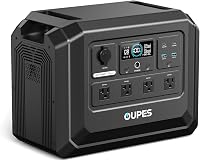
Choose the RIVER 3 Plus for a lighter 286Wh setup or the RIVER 3 Max Plus bundle for 858Wh of capacity. Both use the RIVER 3 Plus power station, so the key difference is the included expansion battery.
On this page (7 sections)
- EcoFlow RIVER 3 Plus vs Max Plus: what changes?
- Which capacity gives you longer runtime?
- Does the Max Plus have more output?
- How should you choose the expansion battery?
- Which setup is easier to carry and store?
- When should you choose a larger power station?
- Which EcoFlow RIVER 3 configuration should you choose?
Choose the RIVER 3 Plus for a 286Wh starting setup or the RIVER 3 Max Plus bundle for 858Wh and longer potential runtime. The difference in the ecoflow river 3 plus vs max plus choice is the expansion battery included, not a different core power station.
The RIVER 3 Plus has 286Wh of capacity. Add an EB300 for the 572Wh RIVER 3 Max configuration, or an EB600 for the 858Wh RIVER 3 Max Plus configuration.

 Best for carrying protection
MRINCA Carrying Case Compatible with ECOFLOW RIVER
EcoFlow RIVER 3 Plus vs Max Plus: what changes?
The Max Plus setup adds an EB600 expansion battery to the RIVER 3 Plus, bringing total capacity to 858Wh. The RIVER 3 Plus on its own is 286Wh.
The expansion battery clips on through pogo pins, so the added capacity does not require extra cables or screws. EcoFlow also offers an EB300, which creates a 572Wh setup called RIVER 3 Max.
That makes “RIVER 3 Plus Max” and “RIVER 3 Max Plus” easy to mix up. The shorter name, RIVER 3 Max, refers to 572Wh, while Max Plus refers to 858Wh.
| Product | Best for | Capacity | Output | Expansion | Our score |
|---|---|---|---|---|---|
| EF ECOFLOW Portable Power Station River | a compact setup | 286Wh | 600W, up to 1200W with X-Boost | EB300 or EB600 | 9.7 |
| MRINCA Carrying Case Compatible with ECOFLOW RIVER | carrying protection | 9.6 | |||
| EF ECOFLOW Portable Power Station DELTA | larger backup needs | 2048Wh | 3000W | Up to 10kWh | 9.6 |
| EF ECOFLOW River 3 Plus Portable Power | a 572Wh step-up | 9.5 |
Which capacity gives you longer runtime?
The 858Wh Max Plus configuration stores more energy for devices that need longer run time between charges. It has three times the capacity of the 286Wh RIVER 3 Plus by itself.
Capacity is not a promise of a fixed number of hours. Runtime changes with the device’s draw, conversion losses, and other connected loads, so list the devices you plan to power and how long you need each one to run.
For example, a device drawing 50W for 4 hours needs about 200Wh before accounting for power-conversion losses. That estimate suggests whether 286Wh may be enough, but it does not guarantee the actual runtime.
RIVER 3 Plus vs RIVER 3 Max
The RIVER 3 Plus gives you 286Wh, while adding EB300 brings the combined setup to 572Wh. The EB300 itself adds 286Wh and can also power small devices on its own through its 140W USB-C port.
This middle configuration can suit you if the base unit feels too limited but 858Wh would be more capacity than you expect to use. It also lets you add the battery after starting with the RIVER 3 Plus.
RIVER 3 Max vs RIVER 3 Max Plus
RIVER 3 Max uses the EB300 for 572Wh total. RIVER 3 Max Plus uses the EB600 for 858Wh total, a 286Wh increase over the Max configuration.
Think about your longest likely stretch without charging. If your devices use a combined 100W, the extra 286Wh can provide more operating time, though real results depend on the connected equipment and conversion losses.
Does the Max Plus have more output?
The expansion bundle increases stored energy; the details identify the RIVER 3 Plus as the base power station. It has 600W steady output and can reach 1200W with X-Boost.
More capacity can help run a suitable device for longer, but it does not automatically make every device compatible. Check each device’s power draw and startup needs against the station’s output limits before choosing a configuration.
The RIVER 3 Plus has 7 outlets, including 3 UPS-supported AC outlets, 2 USB-A ports, a USB-C port, and a car charger output. The EB300 adds a 140W USB-C port for separate use.
If you are comparing the Plus with the wireless variant, our EcoFlow RIVER 3 Plus vs RIVER 3 Plus Wireless comparison covers that choice. It helps clarify which family setup matches your intended use.
How should you choose the expansion battery?
Choose EB300 for 572Wh total or EB600 for the 858Wh Max Plus setup. Match the capacity to your planned devices and the time between recharges.
Both expansion choices use pogo pin connections with the RIVER 3 Plus. EcoFlow describes the EB300 as a 286Wh addition and the EB600 as a 572Wh addition.
You can start with the 286Wh station and expand later. This staged approach means you can learn how much capacity your routine needs before adding a battery, while buying the bundle up front gives you the larger setup from the start.
The EcoFlow RIVER 3 Plus review covers the base station’s features, including its UPS support, outlets, and charging options. Read it if your decision depends on the core unit rather than expansion capacity.
Which setup is easier to carry and store?
The standalone RIVER 3 Plus is the simpler choice when you want to carry less equipment. The station weighs 10.4 lb and measures 9.2 x 9.1 x 5.8 inches.
Adding an expansion battery adds a separate piece of equipment to the setup. Plan where you’ll store it and how you’ll move the combined system, especially if you expect to carry it between a vehicle and a campsite.
A compatible carrying case can help organize transport for the RIVER 3 or RIVER 3 Plus. The MRINCA RIVER carrying case has a padded shoulder strap, storage pockets, and a top-loading zipper for access to the ports.
The EcoFlow RIVER 2 Max review is useful if you’re also considering an older RIVER model. Compare its capacity and features against your current runtime needs before deciding.
When should you choose a larger power station?
Consider a larger unit when your device list or runtime target exceeds what an 858Wh RIVER setup can cover. The DELTA 3 Max Plus starts at 2048Wh and is designed for larger backup needs.
It weighs 49 lb, so it is a different kind of choice from the 10.4 lb RIVER 3 Plus. Its capacity can expand up to 10kWh with compatible EcoFlow extra batteries.
For a wider look at the brand’s portable stations, see our guide to the best EcoFlow portable power station. If you’re weighing EcoFlow against another brand, our EcoFlow and Jackery comparison explains the broader tradeoffs.
Which EcoFlow RIVER 3 configuration should you choose?
Choose the RIVER 3 Plus if 286Wh meets your expected use, RIVER 3 Max for 572Wh, or RIVER 3 Max Plus for 858Wh. Your runtime target and tolerance for carrying extra capacity should decide.
Pick the RIVER 3 Plus when portability and a smaller starting capacity matter most. Choose Max Plus when longer device runtime is the priority and your power draw makes the additional 572Wh over the base unit useful.
If you are between those options, the 572Wh Max setup offers a middle step. Estimate the watt-hours you need, then choose the lowest capacity that covers your normal use with room for uncertainty.
For longer runtime, choose RIVER 3 Max Plus; for a lighter starting setup, choose RIVER 3 Plus. The right ecoflow river 3 plus vs max plus choice is the one sized to your devices, hours of use, and charging opportunities.
Frequently asked questions
What is the difference between RIVER 3 Plus and RIVER 3 Max Plus?
RIVER 3 Plus is the 286Wh power station by itself. RIVER 3 Max Plus is the 858Wh configuration, using the RIVER 3 Plus with an EB600 expansion battery.
The RIVER 3 Max configuration is 572Wh with an EB300, so check which bundle capacity matches your runtime needs.
Can you expand the RIVER 3 Plus later?
Yes. The RIVER 3 Plus works with an EB300 or EB600 expansion battery, connected with pogo pins.
EcoFlow describes the resulting configurations as RIVER 3 Max at 572Wh with EB300 and RIVER 3 Max Plus at 858Wh with EB600.
Is the RIVER 3 Max Plus a separate power station?
RIVER 3 Max Plus refers to the 858Wh setup built around the RIVER 3 Plus and EB600 expansion battery. The underlying power station remains the RIVER 3 Plus, with added stored energy from the clipped-on battery.
Which EcoFlow RIVER 3 setup is better for longer runtime?
The 858Wh RIVER 3 Max Plus gives you more stored energy than the 286Wh RIVER 3 Plus or 572Wh RIVER 3 Max. Actual runtime depends on the connected device and power use, so estimate from the wattage and hours you need rather than capacity alone.
Does the EB300 work without the RIVER 3 Plus?
Yes. The EB300 can be used on its own for small devices through its 140W USB-C port.
Connected to the RIVER 3 Plus, it adds 286Wh and brings the combined capacity to 572Wh.