OUPES Mega 1 Lite vs Mega 1: Which Should You Choose? (October 2026)
Choose the Mega 1 Lite if you want a 1,024Wh station with 2,000W output and a 26.7 lb weight. The available options here package that same station alone or with a 100W panel or two 240W panels; no Mega 1 specifications are available for a direct model comparison.
On this page (6 sections)
Choose the Mega 1 Lite if you want a 1,024Wh station with 2,000W rated output and a 26.7 lb weight. The available options here package that same station by itself or with solar panels; they don't provide enough information to compare it directly with the Mega 1.
The standalone station supports up to 800W solar input. The two solar bundles include either one 100W panel or two 240W panels, so the clearest choice is how much solar equipment you want included.
We checked the available specifications for the Mega 1 Lite options. Since Mega 1 specifications aren't available here, treat this as a choice among Lite configurations rather than a complete Mega 1 versus Mega 1 comparison.
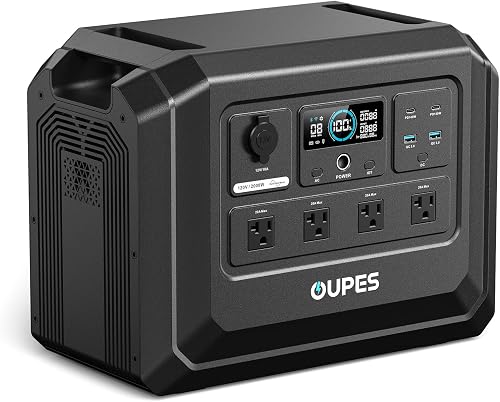 Best for a lighter standalone station
OUPES Mega 1 Lite Portable Power Station
 Best for a compact solar starter kit
OUPES Mega 1 Lite Solar Generator
OUPES Mega 1 Lite vs Mega 1: what can you compare?
The Mega 1 Lite options share a 1,024Wh battery and 2,000W rated output, while the Mega 1 specifications aren't available for a reliable side-by-side comparison. The named product options differ mainly in their included solar equipment.
The Mega 1 Lite has a 4,500W surge capacity, two 140W USB-C PD ports, and 9 total ports. Its listed weight is 26.7 lb, and it supports up to 800W solar input.
Those facts help assess the Lite, but they don't tell you how its capacity, output, weight or expansion options compare with the Mega 1. If the Mega 1 is the model you have in mind, verify its exact specifications before deciding.
For broader context on the brand's models, see our best OUPES portable power station guide. It can help you compare options by intended use.
What does “Lite” mean in this comparison?
The available details identify the unit as the OUPES Mega 1 Lite, model S1 Lite. They don't explain what the “Lite” name means relative to the Mega 1.
Don't assume it means lower capacity, different battery chemistry or fewer expansion options. Compare those specific details for both models before buying, especially if you need to power a particular appliance or add batteries later.
Which Mega 1 Lite package should you choose?
Choose the standalone station if you want to select solar panels separately, the 100W bundle for a smaller included panel, or the 480W kit for a larger panel array. All three options center on the same 1,024Wh Mega 1 Lite.
The standalone unit weighs 26.7 lb and includes AC and car charging cables. It doesn't include a solar panel, so plan for a separate compatible panel if solar charging is part of your setup.
The 100W solar bundle includes one foldable panel with an adjustable kickstand. It gives you a panel to start with, but its rated wattage is lower than the pair of 240W panels in the larger kit.
The 480W bundle includes two 240W panels. The station can accept up to 800W of solar input, so this kit's combined panel rating stays below that maximum.
Is the standalone Mega 1 Lite enough?
The standalone option makes sense if you mostly recharge from a wall outlet or already own compatible solar panels. OUPES describes 1,400W AC input and a 46-minute charge from 0% to 100% under its stated conditions.
It also supports app control over Wi-Fi or Bluetooth, and OUPES describes a less-than-20ms UPS switchover. Those features may matter for home backup, but confirm your devices' power draw and the runtime you need.
When does the 100W solar bundle fit?
Choose the 100W bundle if you want a panel included but don't need the larger panel array in the 480W kit. The foldable panel has monocrystalline cells and an adjustable kickstand.
A 100W rating doesn't guarantee a fixed charging speed. Sunlight, shade, angle and conditions affect panel output, so plan for slower charging than a larger array can provide in comparable conditions.
Who should choose the 480W bundle?
The 480W bundle suits someone who wants two 240W panels included and has space to carry and position them. OUPES says the station can take up to 800W of solar input, leaving room below that limit for additional compatible panel capacity.
The stated solar recharge time for this kit is 2.5–3 hours under optimal sun. Treat that as a best-condition claim, not a promise for cloudy weather, shade or every campsite.
How does the Mega 1 Lite compare on portability and output?
The station weighs 26.7 lb and delivers 2,000W rated output, so it combines a carryable unit with capacity for many high-wattage devices. Whether it suits your trip depends on what you plan to run and how often you'll move it.
The listed dimensions are 15.1 x 9.1 x 11.6 in. That footprint may fit a vehicle storage area, but measure the actual space and leave room for cables and airflow.
A 2,000W rating doesn't mean every appliance will work. Check both its running wattage and startup surge, especially for devices with motors or heating elements; the Mega 1 Lite's stated surge capacity is 4,500W.
The 1,024Wh battery also sets a limit on runtime. Add up the energy needs of your devices and account for losses before relying on it for an overnight or extended outage.
If you're comparing capacity, output and portability across different models, our guide on how to choose the right portable power station lays out the main tradeoffs. Use it to match the station to your planned loads.
What charging and backup features matter?
The Mega 1 Lite offers fast AC charging, solar input up to 800W and a UPS feature, but those capabilities serve different needs. Choose based on how you'll recharge and which devices need backup.
OUPES specifies 1,400W AC input and a claimed 46-minute charge from empty to full. The station also supports a 700W slow-charge setting through app control, which can be useful when you want to reduce the charging rate.
For solar charging, the station has an Anderson input and supports up to 800W. The 100W and 480W bundles provide different amounts of panel capacity, but real output changes with sun and setup.
The UPS switchover is specified at less than 20ms. Consider the device's own backup requirements and test your setup before relying on it for sensitive equipment, since the switchover figure alone doesn't guarantee compatibility.
The guide to choosing a portable power station for your needs can help you build a load list and decide which charging method matters most. Include the devices you need during an outage, not just the ones you use outdoors.
What should you check before choosing Mega 1 or Mega 1 Lite?
Compare the exact model specifications, included equipment and your planned loads before you choose. The available Mega 1 Lite facts don't tell you how the Mega 1 differs.
Check these points for both models:
- Battery capacity in watt-hours.
- Rated AC output and surge capacity.
- Unit weight and dimensions.
- Solar input limit and connector type.
- Whether extra batteries are supported.
- Charging input and time.
- UPS switchover details and device compatibility.
- Included cables, panels and warranty terms.
Then compare those details with the appliances you need to run. A higher output rating won't help if the battery doesn't last long enough, and a larger panel kit may be a poor fit if you can't carry or position it.
Which OUPES Mega 1 Lite should you choose?
Pick the standalone Mega 1 Lite for a station-first setup, the 100W bundle for a modest panel included, or the 480W kit for more solar capacity out of the box. Choose between Mega 1 and Mega 1 Lite only after checking comparable specifications for both.
For the standalone option, see the OUPES Mega 1 Lite Portable Power Station. The one-panel bundle is the OUPES Mega 1 Lite Solar Generator, and the larger kit is the OUPES Mega 1 Lite Solar Generator.
Measure your storage space, list the devices you need to power, and decide how much panel setup you can manage. Those three checks make the Lite options easier to compare with the Mega 1 once you have its specifications.
Frequently asked questions
Is the OUPES Mega 1 Lite the same as the Mega 1?
The available product details identify these options as Mega 1 Lite models, not the Mega 1. They don't provide the Mega 1's capacity, output, weight or expansion details, so a full specification comparison isn't possible here.
Check the exact model name and specifications before choosing between the two.
How much power does the OUPES Mega 1 Lite provide?
The Mega 1 Lite has a 1,024Wh battery, 2,000W rated AC output and 4,500W surge capacity. Those figures describe stored energy and inverter output, but they don't tell you how long a specific appliance will run.
Check the appliance's wattage and allow for conversion losses.
Which Mega 1 Lite bundle includes more solar panels?
The 480W bundle includes two 240W panels, while the smaller solar bundle includes one 100W panel. The standalone station includes no panel in the listed package.
Actual solar input varies with sunlight, panel placement and conditions.
Can the Mega 1 Lite power a home during an outage?
It can provide backup power to compatible devices within its 2,000W rated output and available battery capacity. OUPES describes a less-than-20ms UPS switchover, but you should check device startup needs and runtime.
It isn't a substitute for a professionally installed whole-home backup system.
How do I choose between the Mega 1 Lite options?
Choose the standalone station if you already have compatible panels or want to select them separately. Pick the 100W bundle for a small included panel, or the 480W bundle if you want two 240W panels included.
Compare carry space, setup area and expected solar use before deciding.


