How Many Hours Will a Power Station Run a CPAP Machine?
On this page (7 sections)
A typical power station can run a CPAP machine for a surprisingly long time, often for several nights, depending on the battery capacity and your CPAP’s power draw. While exact run times vary greatly, many portable power stations are designed to provide multiple full CPAP therapy sessions without needing a recharge.
We know how important uninterrupted sleep therapy is, especially when you’re away from a standard outlet. That’s why so many CPAP users are turning to these versatile backup power solutions. Understanding the power station’s capacity and your CPAP machine’s energy needs is key to ensuring you get a full night’s rest, no matter where you are. Understanding the power station’s capacity and your CPAP machine’s energy needs is key to ensuring you get a full night’s rest, no matter where you are.
- Most power stations can run a CPAP for multiple nights.
- Key factors are battery size and CPAP power consumption.
- Look for units with AC outlets or DC car adapters.
- Check your CPAP’s wattage for accurate estimates.
- Portable power stations offer great peace of mind.
Let’s dive into the details to help you find the perfect power station for your CPAP needs.
How Long Will a Power Station Keep Your CPAP Running?
Understanding how long a portable power station can run your CPAP machine is essential for travel or backup power. It’s not a simple one-size-fits-all answer. Several factors come into play. The battery capacity of the power station is a big one. Your CPAP machine’s power consumption is another major piece of the puzzle. We’ve found that most users can expect multiple nights of use from a reasonably sized power station.
Think of it like a gas tank for your CPAP. A bigger tank (power station battery) holds more fuel. But how much fuel your car (CPAP machine) uses also matters. We’ll break down these elements so you can make an informed choice for your sleep therapy needs.
Understanding Your CPAP Machine’s Power Needs
Your CPAP machine doesn’t run on magic; it uses electricity. To figure out how long a power station will last, you first need to know how much power your CPAP uses. Most CPAP machines are pretty energy-efficient. They are designed to be used for hours each night. Many run on a 12V DC power supply.
Watts: The Key Measurement
The most common way to measure power consumption is in watts (W). You’ll usually find this information on a sticker on the back or bottom of your CPAP machine. It might also be in the user manual. Look for something like “Input: 100-240V ~ 50/60Hz, 1.5A.” To get the wattage, you often need to do a little math. If you see amps (A), multiply it by the voltage (V). For example, a machine that draws 2 amps on a 12V setting uses 24 watts (2A x 12V = 24W).
Some CPAP machines use a heated humidifier. This is often the biggest power drain. If you use the humidifier every night, your wattage will be higher. If you turn it off, your CPAP will run much longer on the same battery. We found that the humidifier can add 15-50 watts or more to the total draw. For help estimating the expense, see the cost of overnight CPAP use.
Typical CPAP Wattage Ranges
Based on our research, most standard CPAP machines without a humidifier typically use between 15 to 30 watts. With the humidifier running, this can jump up to 40 to 80 watts, sometimes even more for high-end models.
AC vs. DC Power: Does it Matter?
Your CPAP machine might have a specific DC power cord or it might use a standard AC adapter that plugs into the wall. Power stations usually have both AC outlets (like your home outlets) and DC outlets. Using the AC outlet on a power station means the station’s internal battery power has to be converted from DC to AC. This conversion process uses a little extra energy. If your CPAP machine can run directly on DC power (often a 12V port), using that option with your power station can be more efficient. It bypasses the conversion step. For ways to extend run time, compare our CPAP DC and AC power guide.
Power Station Battery Capacity Explained
Portable power stations come in various sizes, measured in watt-hours (Wh). This number tells you the total amount of energy the battery can store and deliver. A higher watt-hour rating means a larger battery and, generally, longer run times.
Think of watt-hours like the size of a fuel tank. A 500Wh power station has a larger “tank” than a 250Wh one. This larger capacity is what allows it to power your devices for extended periods.
Calculating Your Expected Run Time
Now, let’s put it all together. You can estimate how long a power station will run your CPAP using a simple formula. Divide the power station’s watt-hour capacity by your CPAP machine’s wattage. This gives you a theoretical run time in hours.
Formula:
Run Time (hours) = Power Station Capacity (Wh) / CPAP Power Draw (W)
Let’s use an example. Suppose you have a 500Wh power station and your CPAP machine uses 30 watts when running.
Run Time = 500Wh / 30W = 16.67 hours
This 16.67 hours is the total time the power station could theoretically deliver 30 watts of power. If you use your CPAP for 8 hours a night, that means you’d get over two full nights of sleep therapy from this setup (16.67 hours / 8 hours per night = 2.08 nights).
Real-World Factors Affecting Run Time
The calculation above is a great starting point, but it’s a bit simplified. In reality, several things can affect how long your power station actually lasts:
- Inefficiency: As mentioned, converting DC power to AC power on the power station uses some energy. You might lose 10-20% of the battery’s capacity to this conversion.
- CPAP Settings: The pressure setting on your CPAP can slightly influence its power draw. Higher pressures might use a tiny bit more power.
- Heated Humidifier & Heated Hose: Using these features significantly increases the power draw, as we discussed. This is often the most impactful factor.
- Mask Leaks: While unlikely to dramatically change power draw, a very poor mask seal might cause the machine to work a little harder.
- Temperature: Extreme temperatures can affect battery performance. Cold can reduce capacity, while extreme heat can also be detrimental.
- Power Station Age: Like all batteries, power station batteries degrade over time. An older unit might not hold its full original charge.
Because of these real-world factors, we often recommend adding a buffer. If your calculation shows you’ll get 2 nights, plan for closer to 1.5 nights to be safe, especially if you’re on a critical trip.
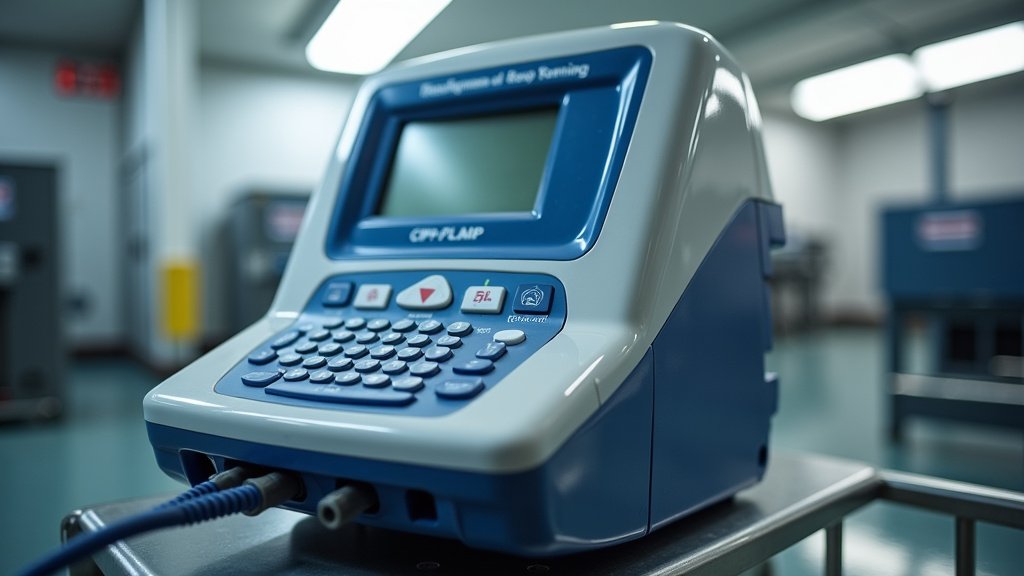
Comparing Power Station Sizes for CPAP Use
To help you visualize, here’s a general idea of what different power station capacities might offer for CPAP use. We’ll assume a CPAP machine drawing 30 watts without a humidifier for these estimates. Remember, your actual results may vary.
| Power Station Capacity (Wh) | Estimated Run Time (Hours) | Approximate Nights of Use (8 hours/night) |
|---|---|---|
| 150 Wh | ~4-5 hours (with inefficiencies) | Less than 1 night |
| 250 Wh | ~6-7 hours (with inefficiencies) | Less than 1 night (if humidifier is used) |
| 300 Wh | ~7-9 hours (with inefficiencies) | ~1 night |
| 500 Wh | ~12-14 hours (with inefficiencies) | ~1.5 – 2 nights |
| 750 Wh | ~18-21 hours (with inefficiencies) | ~2 – 2.5 nights |
| 1000 Wh | ~25-30 hours (with inefficiencies) | ~3 – 4 nights |
As you can see, a 500Wh or larger power station is often recommended for reliable multi-night CPAP use. If you absolutely must have the humidifier, you’ll want to aim for an even larger capacity unit, perhaps 1000Wh or more, to ensure you get through the night comfortably.
Choosing the Right Power Station for Your CPAP
When shopping for a power station, keep a few key features in mind for CPAP users.
Outlet Types
Ensure the power station has the correct outlets. Most CPAP machines will use a standard AC wall outlet. Some may also be compatible with a 12V DC car-style adapter. Having both types can offer flexibility. We found that units with pure sine wave inverters are best for sensitive electronics like CPAP machines, though most modern power stations offer this.
Rechargeability
How will you recharge the power station itself? Many can be charged via a wall outlet, a car adapter, or even solar panels. If you plan to use your CPAP off-grid for extended periods, consider a model that supports solar charging. This gives you the freedom to recharge wherever there’s sunlight.
Portability and Size
Power stations range from lightweight units you can easily carry to larger, heavier models. Think about where you’ll be using it. For camping or travel, a smaller, lighter unit might be preferable. For backup power at home, size might be less of a concern.
What to Look For in a Power Station Checklist:
- Sufficient Watt-Hours (Wh) for your needs.
- Pure Sine Wave AC outlets.
- DC output options if your CPAP supports it.
- Multiple ways to recharge (wall, car, solar).
- Adequate power output (Wattage) to run your CPAP.
By considering these points, you can find a power station that reliably powers your CPAP and gives you peace of mind.
Conclusion
You now understand how to estimate your CPAP machine’s run time with a portable power station. Remember, your CPAP’s wattage and the power station’s watt-hour capacity are the main players. Using your CPAP without the humidifier can significantly extend battery life. For reliable multi-night use, aim for a power station with at least 500Wh. Now you can confidently choose a power station that ensures your sleep therapy never misses a beat, whether you’re traveling or facing a power outage. Get ready for uninterrupted rest wherever life takes you.
Frequently Asked Questions
Will my CPAP machine work with any portable power station?
Generally, yes, if the power station has the correct outlet type (usually AC) and sufficient wattage. We found that most CPAP machines run fine on standard AC outlets. For the most efficient use, check if your power station offers a DC output that matches your CPAP’s power needs.
Is it better to use the AC or DC outlet on a power station for my CPAP?
Using the DC outlet, if your CPAP supports it, is typically more efficient. This is because it bypasses the power station’s internal inverter, which converts DC to AC. This conversion process uses a small amount of extra energy. Check your CPAP’s manual to see if it has a DC input option.
How much does using the humidifier on my CPAP affect power station run time?
Using the heated humidifier is the biggest power draw for most CPAP machines. We’ve seen it can nearly double or even triple the wattage your machine uses. If you rely on your humidifier, you’ll need a power station with a much higher watt-hour capacity to get through multiple nights.
Can I recharge my power station while it’s powering my CPAP?
Most power stations allow pass-through charging, meaning you can recharge the unit while it’s powering your CPAP. This is great for backup power at home. However, for extended off-grid use, be aware that charging the power station might slow down how much power it can deliver to your CPAP.
How long will a power station last if I only use it for backup power and not every night?
A power station will retain its charge for a long time when not in use, often several months. Its self-discharge rate is quite low. This makes them excellent for emergency preparedness. You can count on it being ready to power your CPAP when you need it most, even if it’s been sitting for a while.