How Many Watts Does a Space Heater Draw from a Power Station?
On this page (6 sections)
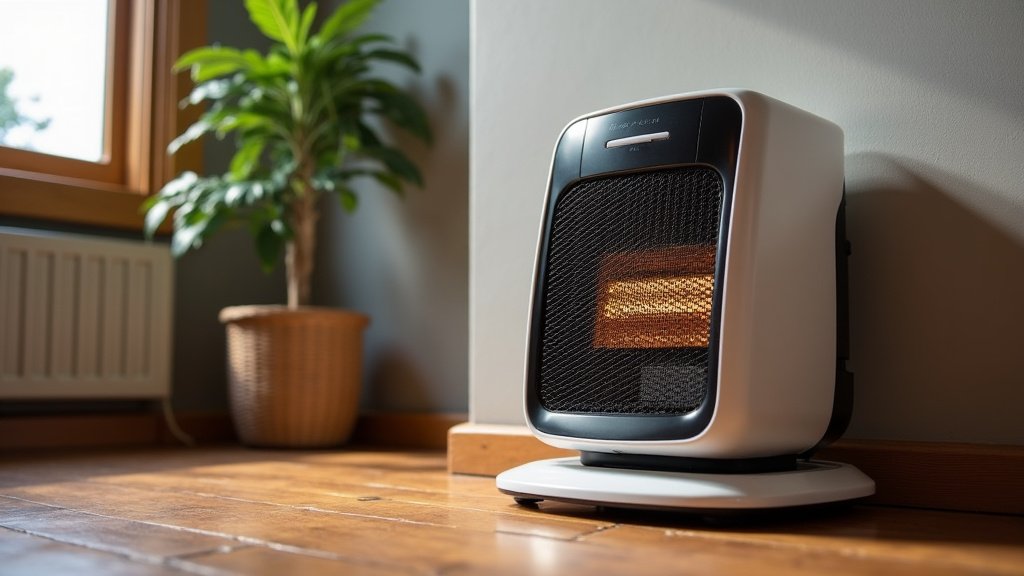
How many watts does a space heater draw from a power station? It depends! Most portable space heaters operate between Whether a portable power station can run a space heater depends on matching their power needs; our guide explains how.750 to 1500 watts. This is a common range for models you’d plug into a standard wall outlet. The exact wattage impacts how quickly and effectively your heater warms a room. Knowing this helps you plan your power needs. It’s key to avoid tripping breakers or overloading your power source.
When considering a power station’s capacity, think about its wattage output. A higher wattage heater will consume more power. This means your power station needs to have a sufficiently high continuous output rating. You’ll also want to check the “surge” or “peak” output. Some heaters use a bit more power for a moment when they first turn on. Understanding these numbers prevents disappointment. We found that matching heater needs to power station capability is vital for reliable heating.
- Space heaters typically use 750 to 1500 watts.
- Higher wattage means more power consumption.
- Check your power station’s continuous and surge output.
- Matching heater watts to power station capacity is key.
- This prevents overloading and ensures steady heat.
Let’s break down exactly what wattage means for your space heater and power station setup.
So, you’re wondering about the power requirements for your space heater when using a portable power station. It’s a super common question! The main thing to understand is that space heaters are energy-hungry appliances. Their wattage directly tells you how much electricity they need to operate.
Understanding Your Space Heater’s Power Needs
The wattage of your space heater is its power consumption rating. It’s usually printed on a sticker on the back or bottom of the unit. You’ll often see numbers like 750W, 1000W, or 1500W. This number tells you how many watts of power the heater uses every hour it’s running.
Standard Wattage Ranges for Space Heaters
Most portable electric space heaters fall into a few common wattage categories. We found that the vast majority are designed for standard household outlets. These typically have a maximum draw.
- 750 Watts: These are often smaller, more basic heaters. They provide a gentle warmth for very small spaces or to take the chill off.
- 1000 Watts: A good middle-ground option. They can heat a small to medium-sized room more effectively than 750W models.
- 1500 Watts: This is the maximum you’ll usually find on heaters designed for a standard 120V outlet. They offer the most powerful heating.
Why Wattage Matters for Your Power Station
Your power station has a limited amount of energy it can supply. Think of it like a gas tank for electricity. If your space heater needs more power (higher wattage) than your power station can give, you’ll run into problems. The power station might shut down to protect itself. Or, it might not be able to power the heater at all.
Continuous vs. Surge Wattage
Power stations have two important output ratings: continuous and surge. The continuous rating is the amount of power it can supply steadily over time. The surge rating is a temporary boost for appliances that need extra power when they first start up. Many electric heaters don’t have a huge surge, but it’s good to be aware of.
How Space Heater Wattage Affects Power Station Usage
The higher the wattage of your space heater, the faster it will drain your power station’s battery. This is a straightforward relationship. A 1500-watt heater will use power much more quickly than a 750-watt heater.
Calculating Runtime: The Basic Formula
To estimate how long your power station will last, you need two key pieces of information: the power station’s capacity (in watt-hours, Wh) and your space heater’s wattage. A simple formula helps here.
Runtime (hours) = Power Station Capacity (Wh) / Heater Wattage (W)
For example, if you have a 500Wh power station and a 500W heater, you might expect about 1 hour of runtime. However, this is an ideal scenario. Many factors can affect this.
Real-World Runtime Considerations
That basic formula is a good starting point, but actual runtime is often less. Power stations aren’t 100% efficient. Some energy is lost as heat during conversion. Also, your power station’s battery health affects its true capacity. We found that many manufacturers recommend reducing the expected runtime by 10-20% to be more realistic.
The Role of Power Station Capacity (Wh)
The Watt-hour (Wh) rating is crucial. It’s the total amount of energy stored in the power station’s battery. A higher Wh number means more stored energy and longer potential runtime for your appliances. Matching this to your heater’s wattage is key for effective use.
| Space Heater Wattage | Estimated Power Station Drain per Hour | Impact on Runtime |
|---|---|---|
| 750 Watts | 750 Wh | Faster drain; shorter runtime on smaller power stations. |
| 1000 Watts | 1000 Wh | Moderate drain; suitable for medium-sized power stations. |
| 1500 Watts | 1500 Wh | Significant drain; requires a large power station for extended use. |
Choosing the Right Power Station for Your Space Heater
Selecting the correct power station involves looking at its specifications carefully. You don’t want to buy a station only to find it can’t handle your heater.
Matching Continuous Output Wattage
This is the most important number to check. Your power station must have a continuous output wattage rating that is equal to or higher than your space heater’s wattage. If your heater is 1500W, your power station needs to provide at least 1500W continuously.
Many common power stations have continuous outputs of 500W, 1000W, 1500W, or even 2000W. You can see how a 1500W heater needs a power station rated for at least that much.
Considering Surge Wattage Requirements
While most space heaters don’t have extreme surge needs, it’s worth checking your heater’s manual. Some older or specific types might have a brief spike. Ensure your power station’s surge rating can handle this momentary increase. For most modern ceramic or oil-filled heaters, the surge is minimal and often covered by the continuous rating.
Battery Capacity (Wh) is King for Longevity
Even if your power station can output the required wattage, its battery capacity determines how long it will last. A higher Wh rating is essential if you plan to run the heater for more than an hour or two.
For instance, if you have a 2000Wh power station and a 1000W heater, you could theoretically run it for 2 hours (2000 Wh / 1000 W = 2 hours). Again, remember efficiency losses mean it might be a bit less.
Practical Tips for Using Space Heaters with Power Stations
Running a space heater can be a significant drain on a power station. Here are some tips to help you use them wisely.
Optimize Your Heater’s Settings
Many space heaters have adjustable thermostat settings and different heat levels (e.g., low, medium, high). Using a lower heat setting (like 750W if your heater has that option) will drastically reduce power consumption. This can significantly extend your power station’s runtime.
Consider Room Size and Insulation
A powerful heater in a tiny, well-insulated room will reach its target temperature faster and cycle off more often. This conserves power. Conversely, a large, drafty room will make the heater run constantly, draining your power station quickly. We found that focusing on heating a smaller, enclosed space is much more efficient.
Pairing Heater and Power Station Wisely
When shopping for a power station, think about your primary use. If you mainly want to run a 1500W heater for extended periods, you’ll need a large capacity (2000Wh+) power station with a high continuous output (1500W+). For occasional, shorter heating needs in a small space, a smaller power station might suffice.
Here’s a quick checklist to help you:
- Check your space heater’s wattage (usually 750-1500W).
- Look at your power station’s continuous output wattage.
- Ensure the power station’s output meets or exceeds the heater’s wattage.
- Note the power station’s battery capacity (Wh) for runtime estimates.
- Consider using lower heat settings or targeting smaller rooms.
- Be realistic about runtime; expect a bit less than ideal calculations.
Conclusion
You’ve learned that most space heaters use between 750 and 1500 watts, a key factor for your power station. Matching your heater’s wattage to your power station’s continuous output is essential to avoid overloads. Remember that the power station’s Watt-hour (Wh) capacity directly dictates how long you can run the heater. By understanding these specifications and considering practical tips like lower heat settings and room insulation, you can effectively power your portable heating solution. Make sure to check both your heater’s label and your power station’s manual before you plug in.
Frequently Asked Questions
Can a small power station run a 1500-watt space heater?
Generally, no. A 1500-watt space heater requires a power station with a continuous output rating of at least 1500 watts. Smaller power stations typically don’t meet this demand, and trying to run a high-wattage heater on an insufficient station will likely cause it to shut down.
How long will a 1000Wh power station run a 1000-watt heater?
Theoretically, a 1000Wh power station could run a 1000-watt heater for about 1 hour. However, real-world usage is often less due to energy conversion losses and battery efficiency. Expect closer to 45-50 minutes of runtime for a more realistic estimate.
Do I need to worry about surge wattage for my space heater?
For most modern space heaters, surge wattage requirements are minimal and often covered by the continuous output rating. However, it’s always wise to check your heater’s manual. If it specifies a surge requirement, ensure your power station’s surge capacity can handle that brief power spike.
What is the difference between Watt-hours (Wh) and Watts (W) for a power station?
Watts (W) indicate the rate of power a device can deliver at any given moment, like how much water flows through a pipe per second. Watt-hours (Wh) represent the total energy stored, akin to the total volume of water in a tank. You need sufficient Watts for operation and sufficient Watt-hours for longevity.
Can I use a space heater if my power station’s wattage is lower than the heater’s?
No, you should not. Using a space heater with a power station that has a lower continuous output wattage than the heater’s requirement is unsafe and can damage both appliances. The power station is not designed to supply that much power, and it will likely shut itself off or overheat.