How Many Watts Does an Air Conditioner Draw from a Power Station?
On this page (7 sections)
How many watts does an air conditioner draw from a power station? If you are sizing a unit for an RV, see our guide to powering an RV air conditioner with a portable power station. Your air conditioner can draw anywhere from 750 to 1,500 watts, sometimes more. This depends on its size, efficiency, and cooling power. Smaller window units use less power than larger central air systems. Understanding this wattage helps you manage your electricity bills.
It’s important to know that not all AC units use the same amount of energy. An older, less efficient model will likely use more watts than a newer, Our guide on matching your AC’s needs to your power station’s specs can help you understand wattage requirements.ENERGY STAR certified one. The type of AC you have also plays a big role in its power draw. We found that knowing these details can help you make smarter choices.
- Air conditioners typically use 750-1500 watts.
- Larger units use more energy than smaller ones.
- Efficiency ratings greatly affect power consumption.
- ENERGY STAR models are generally more power-saving.
- Your AC’s wattage impacts your electricity bill.
Let’s walk through exactly how to figure out your AC unit’s power needs and what affects them.
Understanding Your Air Conditioner’s Power Needs
So, what exactly determines how much power your air conditioner pulls? It’s not a one-size-fits-all answer. Think of it like choosing a car – a small sedan uses less gas than a large truck, right? Your AC unit works similarly. The wattage it consumes depends on several key factors.
We’ve found that understanding these factors can help you make smarter energy choices. It can even help you save money on your electricity bills. Let’s break down what makes your AC tick and how much electricity it needs to do its job effectively.
The Key Factors Influencing AC Wattage
Several elements contribute to the power your air conditioner needs. It’s a combination of the unit itself and how you use it. Let’s look at the biggest players. Our guide to choosing a power station size for home backup can help you determine your AC’s needs.
Size Matters: AC Unit Capacity
The physical size and cooling capacity of your air conditioner are primary drivers of its wattage. A larger unit needs more power to cool a bigger space. A 15,000 BTU window unit will naturally draw more watts than a 5,000 BTU model.
For central air conditioning systems, the entire home’s square footage is considered. A whole-house system is designed to cool many rooms. This means it requires a much higher wattage than a portable AC unit designed for a single room. Many experts recommend sizing your AC appropriately for the space it needs to cool.
Efficiency Ratings: ENERGY STAR and Beyond
The efficiency of your AC unit is another huge factor. Newer models are often designed to be more energy-efficient. An ENERGY STAR certified unit means it meets strict energy efficiency guidelines set by the U.S. Environmental Protection Agency. These units use less energy than models that aren’t certified.
Look for the Seasonal Energy Efficiency Ratio (SEER) rating. A higher SEER rating indicates a more efficient unit. For example, a unit with a SEER of 16 is more efficient than one with a SEER of 10. We found that investing in a higher SEER unit can lead to significant savings over time.
Type of Air Conditioner
Different types of air conditioners have different power requirements. This is because of their design and how they operate.
Window Air Conditioners
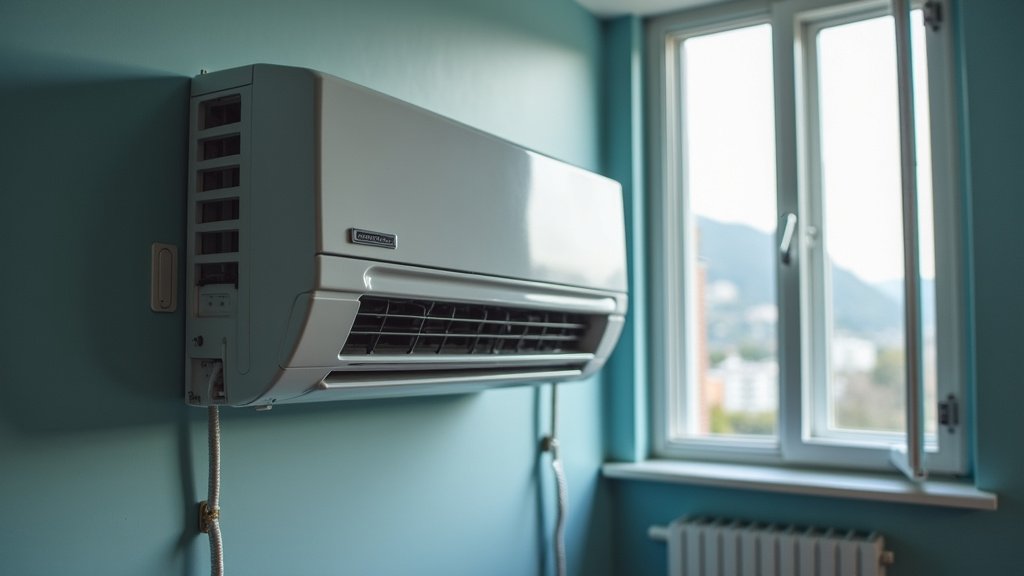
Window units are generally the least power-hungry type. They are designed for single rooms. A typical window AC might use anywhere from 500 to 1,500 watts. This range depends heavily on the unit’s size (BTUs) and age.
Portable Air Conditioners
Portable ACs often use a bit more energy than window units of similar cooling capacity. This is because the compressor is inside the room, generating some heat. They also require a vent hose to expel hot air. A portable unit might draw between 700 to 1,800 watts.
Ductless Mini-Split Systems
These systems are highly efficient. They consist of an outdoor unit and one or more indoor units. Mini-splits allow for zone cooling, meaning you only cool the rooms you’re using. Because of this targeted cooling, they can be very energy-efficient. Power draw can vary widely but is often comparable to or better than central systems for the same cooling load.
Central Air Conditioning Systems
Central AC units are the most powerful and often draw the most electricity. They cool an entire home. A central AC system can use anywhere from 2,000 to 5,000 watts or even more, depending on the size and efficiency of the unit. These systems typically require a dedicated circuit to handle their high power draw.
Age and Maintenance of the Unit
Older air conditioners tend to be less efficient than their modern counterparts. Components wear down over time. This can lead to increased energy consumption. Think of it like an old car needing more gas to go the same distance.
Regular maintenance is also key. Dirty air filters restrict airflow. This makes the AC work harder and use more energy. Keeping your filters clean and having your unit serviced annually can help it run efficiently. We found that simple maintenance can prevent energy waste.
Thermostat Settings and Usage Habits
How you use your AC significantly impacts its power draw. Setting your thermostat too low means the AC will run longer and harder to maintain that temperature. Many experts recommend setting your thermostat around 78°F when you’re home. This provides a good balance between comfort and energy savings (U.S. Department of Energy).
Using a programmable or smart thermostat can help. You can set it to raise the temperature when you’re away or sleeping. This reduces unnecessary cooling. Also, using fans to circulate air can make you feel cooler. This allows you to set the thermostat a few degrees higher. We found that small adjustments in thermostat settings can make a big difference.
Ambient Temperature and Humidity
The outside temperature and humidity levels play a role. On extremely hot or humid days, your AC has to work much harder to cool your home. This means it will draw more power. High humidity makes the air feel warmer. The AC must remove moisture from the air before it can effectively cool it.
Similarly, if your home isn’t well-insulated or has air leaks, warm air will constantly seep in. Your AC will then need to run more often to combat this. Improving insulation and sealing leaks can reduce the workload on your AC. It’s like trying to fill a leaky bucket – you have to keep adding water.
How to Find Your AC Unit’s Wattage
You might be wondering, “How do I know exactly how many watts my AC uses?” Fortunately, it’s usually quite straightforward to find this information.
Check the Unit’s Nameplate or Label
The easiest way to find your AC’s power consumption is to look at the unit itself. Most air conditioners have a metal plate or sticker attached to them. This is called a nameplate or data plate.
This label contains vital information about the unit. You should be able to find the amperage (A) and voltage (V) ratings. Some labels might even list the wattage (W) directly. If wattage isn’t listed, you can calculate it yourself.
Calculating Wattage if Not Directly Listed
If your AC’s nameplate only provides voltage and amperage, you can easily calculate the wattage. The formula is simple: Watts = Volts x Amps.
For example, if your AC unit runs on 120 volts and draws 10 amps, its wattage would be 120V * 10A = 1,200 watts. If it runs on 240 volts and draws 15 amps, it would be 240V * 15A = 3,600 watts. Keep in mind that this is the approximate running wattage. The starting wattage (when the compressor kicks on) can be higher, but it’s brief.
Consult Your Owner’s Manual
Your air conditioner’s owner’s manual is another excellent resource. It will typically list the unit’s specifications, including its power consumption. If you can’t find the manual, you can often search for it online using the unit’s model number.
Check the Manufacturer’s Website
Manufacturers usually provide detailed specifications for their products on their websites. You can search for your specific AC model number to find its power requirements. This is a reliable way to get accurate wattage information.
AC Wattage vs. Other Appliances
It’s helpful to put your AC’s power draw into perspective. How does it compare to other common household appliances? This can help you understand its impact on your overall electricity usage.
Here’s a general comparison of wattage for common appliances:
| Appliance | Typical Wattage Range |
|---|---|
| Window AC Unit (small) | 500 – 1,000 watts |
| Window AC Unit (large) | 1,000 – 1,500 watts |
| Central AC Unit | 2,000 – 5,000+ watts |
| Refrigerator | 100 – 200 watts (running) |
| Microwave Oven | 800 – 1,500 watts |
| Television (LED) | 50 – 150 watts |
| Desktop Computer | 100 – 300 watts |
| Hair Dryer | 1,200 – 1,800 watts |
As you can see, air conditioners, especially central units, are among the biggest energy consumers in most homes. This is why understanding their wattage is so important for managing your electricity bill.
Steps to Manage Your AC’s Energy Consumption
Now that you know more about AC wattage, what can you do to manage it? Here’s a quick checklist to help you keep your energy use in check.
- Check Your AC’s Energy Guide label. This shows its estimated yearly energy consumption.
- Clean or replace air filters regularly. Aim for once a month during peak season.
- Use a programmable or smart thermostat. Set it to higher temps when you’re away.
- Ensure your home is well-insulated. Seal air leaks around windows and doors.
- Consider ENERGY STAR certified models. When it’s time for an upgrade, look for this label.
- Use fans to supplement cooling. Circulating air makes it feel cooler, allowing higher thermostat settings.
Conclusion
Understanding your air conditioner’s wattage is key to managing your home’s energy use. We’ve seen that factors like size, efficiency, and type all influence how many watts your AC draws. While a central system might pull thousands of watts, smaller window units use much less. By checking your unit’s nameplate and applying the simple formula (Watts = Volts x Amps), you can pinpoint your AC’s power needs. Take the next step by implementing energy-saving tips like regular filter cleaning and smart thermostat use. You’ll be well on your way to a cooler home and a lower electricity bill.
Frequently Asked Questions
What’s the difference between running watts and starting watts for an AC?
Running watts are the consistent amount of power your AC uses when it’s actively cooling. Starting watts, also known as surge watts, are the much higher, brief burst of energy needed to get the compressor running. This surge typically lasts only a fraction of a second but is important to consider for circuit capacity.
Can an old AC unit really use significantly more watts than a new one?
Yes, older AC units often consume more watts because their components wear down over time, leading to decreased efficiency. Newer models, especially ENERGY STAR certified ones, are designed with improved technology to use less energy for the same cooling output.
Does running my AC on a hotter day increase its wattage draw?
Absolutely. On hotter days, your air conditioner has to work much harder to maintain your desired cool temperature against the greater heat difference. This increased workload means it will draw more watts from the power station to compensate.
How does a portable AC’s wattage compare to a window AC?
Portable air conditioners often draw a bit more wattage than window units of a similar cooling capacity. This is partly because their compressors are located inside the room, generating heat, and they also need energy for their exhaust hoses.
If I have multiple AC units, how do I know if my home’s electrical system can handle the total wattage?
You’ll need to sum the wattage of all your AC units and compare it to the total capacity of your home’s electrical panel and the circuits they are connected to. If the combined wattage is too high, you risk overloading circuits, which can be a fire hazard and cause breakers to trip. Consulting a qualified electrician is highly recommended in this scenario.