How to Charge a Power Station While Driving an RV?
On this page (8 sections)
Yes, you can charge a power station while driving an RV, and it’s a smart way to keep your gear powered up on the go. By using your RV’s alternator and a few key components, you can ensure your portable power station is ready to use whenever you stop. This method taps into your RV’s existing electrical system to provide a convenient charging solution.
Many RVers find that charging their power station directly from the vehicle’s engine is much more efficient than relying solely on shore power or solar panels when traveling. If you need power for a breast pump on the road, plan your charging setup ahead. It means you can arrive at your destination with a fully charged battery, ready for anything. Research shows this is a popular and effective method for managing RV power needs.
- Use your RV’s alternator to charge your power station.
- Connect via the RV’s 12V system.
- Requires a few basic electrical components.
- Keeps your power station charged while you drive.
- Ideal for off-grid RV adventures.
Let’s walk through exactly how you can set up your RV to charge your power station while you’re on the road. We’ll cover the components you’ll need and the simple steps involved. Follow this step-by-step guide for connecting your solar panels to your power station for efficient charging.
Keeping Your Power Station Charged on the Road
Charging your power station while driving your RV is entirely achievable. You can harness your RV’s alternator to keep your portable battery topped off. This method offers a reliable way to ensure power without needing to plug into shore power. If you camp without shore power, follow these tips to keep your power station dry. It’s about making your travel time work for you.
Understanding the Basics: Your RV’s Power Source
Your RV’s engine is more than just for getting you from point A to point B. When the engine is running, your alternator is hard at work. This component is essentially a generator. It converts mechanical energy from the engine into electrical energy. This electricity then powers your RV’s various systems and recharges its batteries.
How Your RV’s Alternator Works
Think of the alternator like a tiny power plant on your engine. It spins as the engine runs. Inside, magnets and coils create an electrical current. This current is then regulated. It flows to charge your RV’s starter battery. It also powers accessories that are running while the engine is on.
The RV’s 12-Volt System
Most RVs operate on a 12-volt DC electrical system. This is similar to your car’s system. Your power station also typically runs on or charges from 12-volt DC power. This common voltage makes it straightforward to connect components. You’re essentially tapping into the same kind of power your RV already uses.
Components You’ll Need for the Setup
To charge your power station from your RV, you’ll need a few specific items. These aren’t overly complicated. They help safely transfer power from your RV’s charging system to your power station. Having the right gear is key to a smooth and efficient charging process.
The Importance of a DC-to-DC Charger
A DC-to-DC charger is your most important piece of equipment. It’s designed specifically for this purpose. It takes the fluctuating voltage from your RV’s alternator. It then converts it to a stable, optimal charging voltage for your power station. Many experts suggest this is the safest way to charge. It protects both your RV’s electrical system and your power station’s battery.
Why is this so important? Your RV’s alternator output can vary. It can also be quite high. Directly connecting your power station without regulation could potentially damage its internal battery management system. A DC-to-DC charger acts as a smart buffer. It ensures the correct amount of power is delivered. This is according to guidelines from battery manufacturers (Battery University).
Understanding Input Ports on Your Power Station
Next, you need to know how your power station accepts power. Most portable power stations have a dedicated DC input port. This is often a XT60 or similar connector. Some might also have a cigarette lighter style input. You’ll need to find out which type your specific model uses. This will determine the type of adapter or cable you need to connect to your DC-to-DC charger.
Wiring and Connectors
You’ll need some quality wiring to connect your components. The gauge of the wire is important. It needs to be thick enough to handle the current without overheating. Proper connectors are also essential. These ensure a secure and safe electrical connection.
For a robust connection, consider using Anderson Powerpole connectors. They are very popular in the RV and solar communities. They are designed for high current applications. They also allow for easy plug-and-play setup. You can find them in various sizes to match your wiring.
Optional: Fuses and Circuit Breakers
For added safety, consider installing an inline fuse or circuit breaker. This acts as a fail-safe. If there’s a surge or a short circuit, the fuse will blow or the breaker will trip. This protects your equipment. It prevents potential damage to your RV’s electrical system. Many DC-to-DC chargers have built-in protection. But an extra layer never hurts.
Step-by-Step: Connecting Your Power Station
Setting up the charging system is a straightforward process. It involves connecting a few key components. Let’s walk through the typical steps. You can visualize how it all comes together. This makes the process less daunting.
Step 1: Identify Your RV’s 12V Power Source
You’ll need to tap into your RV’s 12-volt system. The easiest place is often near your RV’s house batteries. Many RVs have a dedicated 12V accessory outlet or a fuse block. You can also tap directly into the positive and negative terminals of your house battery. Be sure to use appropriate methods for connecting to your battery terminals.
If you’re unsure about locating a suitable 12V source, consult your RV’s owner manual. Alternatively, a qualified RV technician can help. They can identify the best and safest connection points in your specific RV. Improper connections can lead to electrical issues.
Step 2: Wire Your DC-to-DC Charger
Connect the input side of your DC-to-DC charger to your RV’s 12-volt power source. Use appropriately sized wiring and connectors. Ensure correct polarity: positive to positive, and negative to negative. If you’re using an inline fuse, install it on the positive wire. Keep the fuse close to the power source.
The output side of the DC-to-DC charger will have its own connection point. This is where you’ll connect the cable that goes to your power station. Again, ensure you use the correct wire gauge and connectors. Some DC-to-DC chargers have pre-attached cables.
Step 3: Connect to Your Power Station
Now, connect the output cable from your DC-to-DC charger to your power station’s DC input port. Make sure the power station is turned off or in a standby mode before connecting. Once everything is securely connected, you can turn on your RV’s engine.
The DC-to-DC charger will sense the alternator’s voltage and begin charging your power station. Your power station’s display should indicate that it’s receiving a charge. It’s a good idea to monitor the charging process initially. Watch for any unusual lights or sounds.
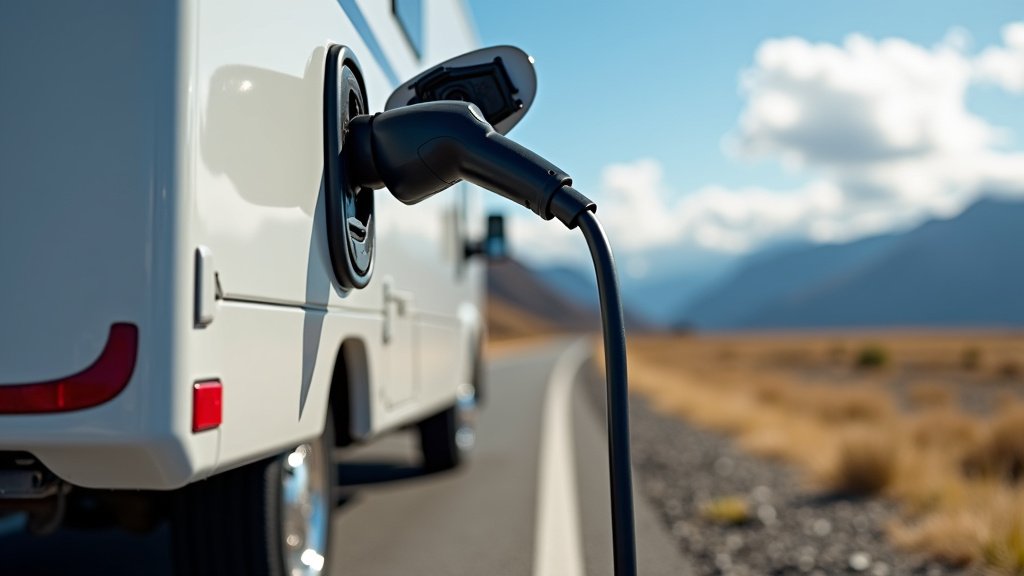
Important Considerations for Safe Charging
Safety is always the top priority when dealing with electrical systems. Taking a few precautions will ensure your setup works well. It will also prevent any potential problems. Think of it like packing the right gear for a hike – it makes the experience much better.
Monitor Your RV Battery Voltage
While your power station is charging, your RV’s alternator is also keeping your RV’s main battery topped up. You don’t want to drain your RV’s starter battery too much. Most DC-to-DC chargers have a low-voltage disconnect feature. This prevents them from drawing too much power. It ensures your RV’s engine will still start. Research has shown that deep cycling starter batteries can shorten their lifespan (Interstate Batteries).
Check for Overheating
During extended drives, check the wiring and connectors for any warmth while charging. If anything feels excessively hot to the touch, stop the charging process immediately. Turn off your RV engine and investigate the connection. This is usually a sign of a loose connection or undersized wiring.
Power Station Settings
Some power stations allow you to adjust their charging current or input voltage limits. Consult your power station’s manual. Ensure the settings are appropriate for charging from an RV’s alternator. If your power station allows you to set a maximum input amperage, ensure it’s within the safe limits of your DC-to-DC charger and wiring.
A Quick Checklist for Your Setup
Here’s a simple checklist to help you get ready to charge your power station while driving:
- Confirm your power station’s DC input type and voltage requirements.
- Purchase a suitable DC-to-DC charger.
- Gather appropriate gauge wiring and connectors (e.g., Anderson Powerpoles).
- Locate a safe 12V power source in your RV.
- Install an inline fuse or circuit breaker for added protection.
- Test the charging setup before a long trip.
Testing Your Setup
Before you head out on a long journey, it’s wise to test your charging system. Connect everything up while parked. Start your RV’s engine and let it run for a while. Verify that your power station is charging. Check that the voltage readings on your power station are stable. This initial test run is a great way to catch any minor issues.
Think of it like a trial run. You wouldn’t want to discover a problem halfway to your destination. This ensures everything is working as expected. It gives you peace of mind for your travels. You’ll be confident knowing your power station will be ready when you need it.
Conclusion
You’ve learned that charging your power station while driving your RV is entirely doable. By using your RV’s alternator and a DC-to-DC charger, you create a reliable charging system. This setup ensures you arrive at your destination with power ready to go. Remember to prioritize safety by checking connections and monitoring your RV’s battery. Now you have the knowledge to build your mobile charging solution. Take the first step by identifying the right DC-to-DC charger for your needs and get ready for more powered adventures.
Frequently Asked Questions
Can I just plug my power station directly into my RV’s 12V outlet?
While some RVs have a 12V outlet, directly plugging in your power station isn’t recommended. The voltage from your RV’s alternator can fluctuate. This could potentially damage your power station’s battery or charging system. A DC-to-DC charger provides the necessary regulation for safe charging.
How much power can I expect to get while driving?
The charging speed depends on several factors. Your RV’s alternator output and the capacity of your DC-to-DC charger are key. You can typically expect a steady charge that keeps your power station topped off. It might not be as fast as a wall charger, but it’s enough to maintain your battery level.
Will charging my power station drain my RV’s starter battery?
Most quality DC-to-DC chargers have a low-voltage disconnect. This feature prevents them from drawing too much power. It ensures there’s always enough charge left to start your RV’s engine. You should still monitor your RV battery voltage, especially on longer drives.
What if my power station doesn’t have a dedicated DC input port?
If your power station lacks a specific DC input, you might need an adapter. Some models can accept a charge via a USB-C PD (Power Delivery) port if it supports higher wattages. You’ll need to consult your power station’s manual to see if this is an option and what accessories are recommended.
Is it safe to leave the charging system connected all the time?
It’s generally safe to leave the system connected while your RV is running and parked. However, always disconnect the power station from the charger when your RV is not in use. This prevents any unintended drain on your RV’s battery system. It also protects your equipment.