How to Compare Portable Power Station Specs Before Buying?
On this page (9 sections)
- Understanding Portable Power Station Specifications
- Decoding the Core Power Specs
- Checking Port Types and Outputs
- Evaluating Recharge Speed and Methods
- Comparing Battery Chemistry: LiFePO4 vs. Lithium-Ion
- Assessing Portability, Weight, and Build
- Creating Your Comparison Checklist
- Conclusion
- Frequently Asked Questions
To compare portable power station specs, first match the unit’s watt-hour (Wh) capacity to your needs and consider whether full discharge before recharging is necessary and ensure its continuous output wattage can handle your largest appliance. This is the most reliable method we found for avoiding buyer’s remorse.
You’ll also need to consider port types, charging speed, and battery chemistry for a complete picture. Many experts recommend thinking beyond the numbers to your actual real-world usage scenarios, like camping trips or home backup.
- Check the watt-hour (Wh) rating for total capacity and the continuous wattage for what it can power.
- Match the port selection (USB-C, AC, DC) to your specific devices.
- Look at recharge times via wall, solar, or car.
- Consider battery type (LiFePO4 vs. Li-ion) for longevity and safety.
- Factor in portability, weight, and extra features like an app or lighting.
Let’s walk through exactly how to analyze each of these specifications so you can confidently choose the right power station for your life.
Understanding Portable Power Station Specifications
Before you buy, you need to decode the spec sheet. Think of it like reading a nutrition label for energy. We found that focusing on just two numbers first—watt-hours and continuous watts—gives you the clearest starting point. Everything else builds on this foundation.
Decoding the Core Power Specs
These two specs determine what you can plug in and for how long. Get these wrong, and your new power station might not even turn on your coffee maker.
Watt-Hour (Wh) Capacity: Your Fuel Tank Size
Watt-hours measure total energy storage. Think of it like the gas tank in your car. A bigger tank means you can drive farther. A larger Wh rating means your power station can run devices longer. A 500Wh unit holds twice the energy of a 250Wh model.
How to Calculate Your Needs
List the devices you want to power during an outage or camping trip. Find their wattage (usually on a label or in the manual). Multiply the device’s watts by the hours you want to use it. For example, a 60-watt laptop used for 5 hours needs 300 watt-hours (60W x 5h = 300Wh).
We recommend adding about 20% to your calculated total. This gives you a buffer for efficiency losses and ensures you’re not draining the battery completely every time. The U.S. Department of Energy suggests this practice for reliable backup planning.
Continuous vs. Peak Wattage: The Power Flow
This spec tells you what the station can actually power. Continuous wattage is the amount of power it can deliver steadily, like a reliable stream. Peak (or surge) wattage is a short burst of power for startup, like the kick needed to start a motor.
If a device needs 1000 watts to run, your power station must have at least a 1000W continuous output. If it needs a 1500W surge to start, the station’s peak wattage should handle that too. If you ignore this, your power station’s overload protection will trip, and your device won’t turn on.
Checking Port Types and Outputs
What good is power if it doesn’t fit your plug? The right port selection means you can charge everything from your phone to your mini-fridge without hunting for adapters.
Matching Ports to Your Devices
Walk through your essential electronics. Do you need USB-C for your laptop? Standard USB-A for your lights? A 12V car port for a portable cooler? How many AC outlets for household plugs? Make a simple checklist.
Many experts point out that having the right number of ports is just as important as the power output. You don’t want to be constantly unplugging one device to charge another during a blackout.
Understanding Output Ratings
Each port type has its own power limit. A USB-C port might offer 100W for fast laptop charging, while another USB-C port might only do 18W for a phone. The total power drawn from all ports combined can’t exceed the unit’s continuous wattage.
Evaluating Recharge Speed and Methods
How quickly you can refill the tank determines how useful the power station is for back-to-back uses or during extended outages. A slow recharge can leave you stranded.
Wall Outlet Charging
This is the fastest way. Look for the estimated recharge time from 0% to 100%. Some high-capacity units can take 7+ hours. If speed matters, check for models that support “rapid recharge” or dual charging from two wall adapters.
Solar Charging Potential
For true off-grid use, solar input is key. The spec will list the maximum solar input in watts. More watts mean faster charging. Pairing a 200W solar input with a 100W panel will be much slower than with a 200W panel.
We found that NREL studies on portable solar emphasize the importance of matching panel wattage to the station’s input limit for optimal results. Always check the compatibility.
Comparing Battery Chemistry: LiFePO4 vs. Lithium-Ion
The battery type is the heart of the unit. It impacts weight, lifespan, safety, and price. The two main players today are Lithium-Ion (Li-ion) and Lithium Iron Phosphate (LiFePO4).
| Feature | Lithium-Ion (Li-ion) | Lithium Iron Phosphate (LiFePO4) |
|---|---|---|
| Lifespan (Cycles) | 500-800 cycles | 3000-6000 cycles |
| Weight | Lighter | Heavier for same capacity |
| Safety | Lower thermal runaway risk | Very high thermal stability |
| Price | More affordable | Higher initial cost |
| Best For | Occasional use, portability | Frequent use, home backup |
Many long-term users and experts in the energy storage field now recommend LiFePO4 for its longevity. The higher upfront cost often pays for itself if you use the station regularly.
Assessing Portability, Weight, and Build
A powerful station is useless if you can’t move it. Weight and design directly affect usability in different scenarios.
Weight vs. Capacity Trade-off
Expect roughly 10-15 pounds for every 1,000Wh of capacity. A 2,000Wh home backup unit could weigh 45+ pounds. A 500Wh camping unit might be a manageable 15 pounds. Decide where you’ll use it most.
Physical Design and Durability
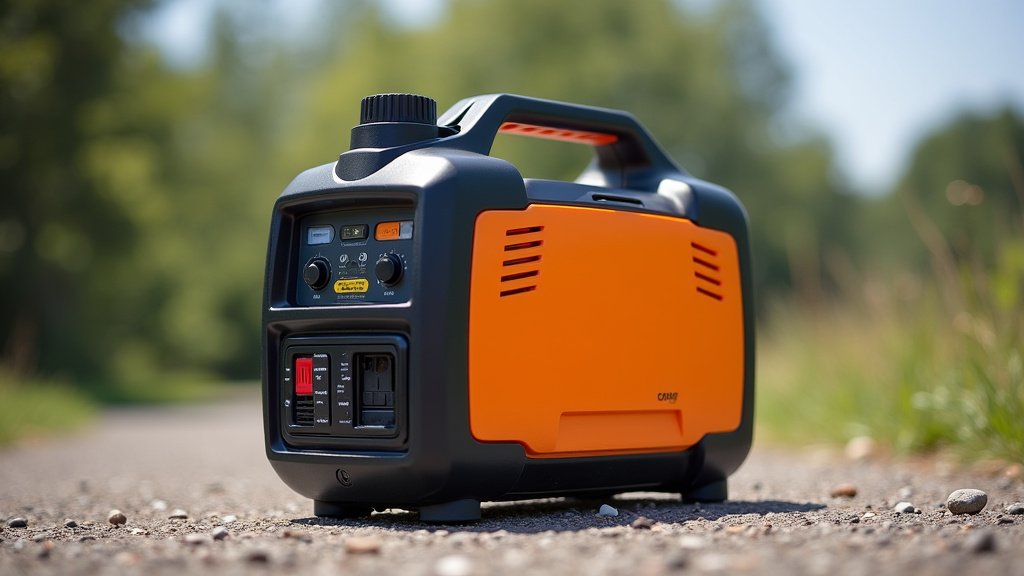
Look for reinforced handles, sturdy feet, and a rugged case if you plan outdoor adventures. Some models feature built-in lights, wheels, or even companion apps for remote monitoring. These extras add convenience but can also add cost.
Creating Your Comparison Checklist
Before you click “buy,” run through this final list. It helps ensure you’ve covered all your bases.
- My total watt-hour (Wh) need is at least ______.
- The continuous wattage (______W) exceeds my largest device’s requirement.
- It has enough ports for all my devices: ______.
- I can recharge it via my preferred method (wall/solar/car) in ______ hours.
- The battery type (LiFePO4 or Li-ion) fits my usage frequency and budget.
- The weight (______ lbs) is manageable for my intended location.
Taking ten minutes to fill this out prevents costly mistakes. It shifts your focus from flashy marketing to real-world performance that matches your life.
Conclusion
You now have a clear framework for comparing portable power station specs before you buy. For a broader checklist of purchase priorities, see our guide to what to look for when buying. Start with watt-hours and continuous wattage as your foundation, then layer in port selection, recharge speed, and battery chemistry. Think about your actual use case — camping, home backup, or both. Weight and design matter more than you might think for everyday carry. We found that filling out the comparison checklist in this article saves time and prevents expensive mistakes. Your next step is simple: grab that checklist, list your essential devices, and match them to the specs that fit your life.
Frequently Asked Questions
Can I use a portable power station to power my refrigerator during an outage?
Yes, but you need to match the power station’s continuous wattage and peak wattage to your refrigerator’s requirements. A standard fridge typically draws 150-400 watts continuously, with a startup surge up to 1,200 watts. Make sure the station can handle that surge, or the compressor won’t start.
What’s the difference between LiFePO4 and lithium-ion batteries in portable power stations?
LiFePO4 batteries last significantly longer — often 3,000 to 6,000 cycles compared to 500-800 for lithium-ion. They’re also safer and more stable under heat. The tradeoff is that LiFePO4 units tend to be heavier and cost more upfront, but they pay off if you use the station regularly.
How many watt-hours do I need for a camping trip?
It depends on your devices. A typical camping setup with a mini-fridge, phone charging, and LED lights might need 300-500 watt-hours. We recommend listing each device, checking its wattage, multiplying by hours of use, and adding 20% as a buffer for efficiency losses.
Is solar charging reliable enough for off-grid use?
Solar charging works well if you match the panel wattage to the station’s solar input rating. A 200W input paired with a 200W panel will charge much faster than with a 100W panel. Keep in mind that weather, angle, and sunlight hours all affect charging speed in real-world conditions.
Do I need to buy a separate solar panel for my portable power station?
Most portable power stations do not include a solar panel in the box, so you’ll likely need to purchase one separately. Check the station’s maximum solar input wattage and buy a panel that matches or comes close to that limit. Some brands sell bundles that include both the station and a compatible panel.