How to Power a CPAP Machine for a Week without Electricity?
On this page (10 sections)
- Keeping Your CPAP Running Off-Grid for a Full Week
- Understanding Your CPAP’s Power Needs
- Portable Power Stations: Your All-in-One Solution
- Deep-Cycle Marine Batteries and Inverters: A DIY Approach
- CPAP Batteries: Dedicated Backup Power
- Solar Generators: Sustainable Power on the Go
- Tips for Conserving CPAP Power
- Pre-Trip Checklist: Are You Ready?
- Conclusion
- Frequently Asked Questions
Yes, you absolutely can power your CPAP machine for a week without electricity by using portable power solutions. Many people successfully use battery packs or generators to keep their CPAP running during power outages or stealth camping trips. Planning ahead is key to ensuring you have uninterrupted sleep therapy.
When the grid goes down, your CPAP doesn’t have to. We know how unsettling it can be to think about being without your essential sleep machine. Luckily, there are several reliable backup power options available that can keep you breathing easy, even for an extended period. These solutions are designed for situations just like this.
TL;DR:- Use a portable power station designed for CPAP machines.
- Consider a deep-cycle marine battery with an inverter.
- A solar generator can recharge your backup power.
- Always test your backup power source beforehand.
- Check your CPAP’s DC adapter compatibility.
Let’s walk through exactly how you can keep your CPAP powered up for a whole week when you don’t have access to a wall outlet. We’ve gathered the most effective methods to ensure you’re prepared.
Keeping Your CPAP Running Off-Grid for a Full Week
So, you’re wondering how to keep your CPAP machine humming along when the power goes out for an extended period, like a whole week. It’s a common concern, especially if you rely on your CPAP for restful sleep and overall health. We’ve researched the best ways to ensure your therapy isn’t interrupted, even without a wall outlet in sight.
The good news is that keeping your CPAP powered is absolutely achievable. With the right preparation and equipment, you can maintain your sleep apnea treatment without stress. It’s all about choosing the right backup power solution for your needs. Let’s get into the details.
Understanding Your CPAP’s Power Needs
Before we dive into the power solutions, it’s essential to understand how much energy your CPAP machine uses. This will help you determine the capacity you’ll need from any backup power source. Most CPAP machines run on either AC (wall power) or DC (direct current) power.
Wattage: Your CPAP’s Energy Appetite
The amount of power your CPAP uses is measured in watts. This can vary depending on the machine’s model and whether you use a humidifier. A typical CPAP machine might use between 30 and 60 watts. However, using the heated humidifier can significantly increase that, sometimes pushing it up to 90 watts or more (Philips Respironics). It’s always best to check your machine’s manual or the power supply brick for its exact wattage requirements.
Voltage: AC vs. DC Power
Most CPAP machines can run on either AC power (what comes from your wall outlet) or DC power. Many machines come with a DC adapter specifically for use in cars or with battery packs. If your machine has a DC input, it can often run more efficiently directly from a DC power source. This bypasses the need for an inverter, which can save precious battery life.
Portable Power Stations: Your All-in-One Solution
Portable power stations have become incredibly popular for this exact situation. They are essentially large rechargeable batteries with built-in inverters and multiple output ports. Think of them as a portable, silent generator. Many are specifically designed with CPAP users in mind.
How Much Capacity Do You Need?
To power a CPAP for a week (seven nights), you need to calculate the total energy needed. Let’s assume your CPAP uses 50 watts and you use it for 8 hours per night. That’s 50 watts * 8 hours = 400 watt-hours (Wh) per night. For seven nights, you’d need 400 Wh * 7 nights = 2800 Wh. This is a good starting point for looking at power station capacities.
However, it’s wise to get a unit with a higher capacity than your minimum calculation. This accounts for inefficiencies in the inverter and ensures you have extra power. A unit with at least 3000 Wh capacity would be a safe bet for a week of CPAP use, especially if you use a humidifier.
Features to Look For in a Power Station
When selecting a power station, consider these points:
- Capacity (Wh): As discussed, aim for a higher capacity for a full week.
- Output Ports: Ensure it has AC outlets and ideally a DC output port if your CPAP can use it.
- Rechargeability: How long does it take to recharge? Can it be recharged via solar panels?
- Portability: How heavy is it? Some larger units can be quite heavy.
- Noise Level: Most are silent, unlike gas generators.
Recharging Your Power Station
A significant advantage of many portable power stations is their ability to be recharged. The most convenient method for off-grid use is often The most convenient method for off-grid use is often solar charging.solar charging. You can purchase compatible solar panels to keep your power station topped up, especially if the sun is shining during your outage. If your panels need to sit farther away, see how to extend solar cables without power loss.
Some power stations can also be used for recharging a power station from a car’s 12V outlet (while the car is running) or a standard wall outlet when power is restored. This flexibility is key for long-term preparedness.
Deep-Cycle Marine Batteries and Inverters: A DIY Approach
For those comfortable with a bit more hands-on setup, a deep-cycle marine battery paired with a power inverter can be a robust solution. This is a more traditional approach, often seen as a reliable backup.
What is a Deep-Cycle Battery?
Unlike car batteries, which are designed for short, powerful bursts of energy, deep-cycle batteries are built to provide a steady amount of power over a long period. Marine batteries are a common type of deep-cycle battery. They can handle being discharged significantly and then recharged many times without damage.
Sizing Your Battery and Inverter
The capacity of a deep-cycle battery is measured in amp-hours (Ah). To figure out what you need, you’ll convert your CPAP’s wattage to amps. For example, a 60-watt CPAP running on 120 volts would draw 60W / 120V = 0.5 amps. Over 8 hours, that’s 4 Ah. For 7 nights, you’d need around 28 Ah.
However, this is for DC power. If you’re using an inverter to convert DC to AC, you’ll lose some power. Also, you shouldn’t drain a deep-cycle battery completely, as this shortens its lifespan. Many experts recommend not discharging below 50% (Marine How To). So, for our example, you’d want a battery with at least 56 Ah capacity (28 Ah needed * 2 for 50% discharge).
For the inverter, you’ll need one that can handle the wattage of your CPAP, plus a little extra. If your CPAP is 60 watts, a 150-watt or 300-watt inverter should be sufficient. Make sure it’s a pure sine wave inverter, as these are better for sensitive electronics like CPAP machines.
Connecting Everything Safely
You’ll need appropriate battery cables to connect the battery to the inverter. Ensure all connections are tight and secure. A common setup is to use a 12V deep-cycle battery connected to a 12V DC to 120V AC pure sine wave inverter. The CPAP machine then plugs into the inverter’s AC outlet.
Safety Note: Always ensure you are working in a well-ventilated area when dealing with batteries. Also, be mindful of the electrical connections to prevent shorts.
CPAP Batteries: Dedicated Backup Power
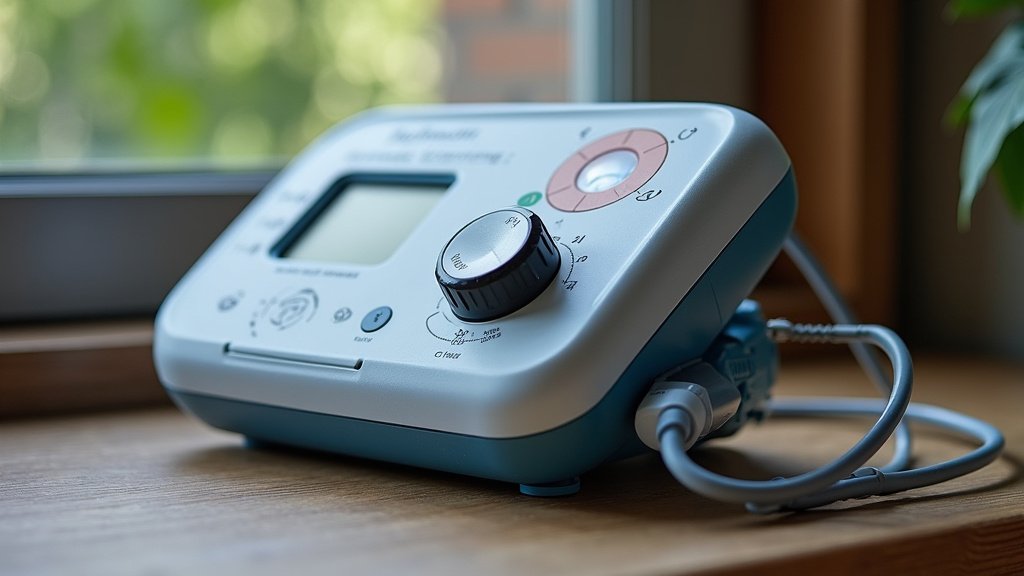
These are often the most straightforward option for CPAP users. Dedicated CPAP batteries are specifically designed to power your machine for extended periods. They are generally lighter and more compact than full portable power stations.
How They Work
These batteries typically connect directly to your CPAP machine, often using a DC connection. Many models offer multiple hours of run time on a single charge. Some are designed to run your machine for several nights. They usually have built-in chargers, so you can recharge them from a wall outlet when available.
Battery Life and Capacity
The “hours of use” advertised by these batteries can be a bit misleading. It depends heavily on the CPAP machine’s wattage and whether you’re using a humidifier. Always look for reviews or specifications that mention CPAP run times. For a week-long backup, you might need to purchase multiple CPAP batteries or a larger capacity model.
For example, a battery rated for 20-30 hours of CPAP use might get you through one or two nights, depending on your machine’s settings. To cover seven nights, you would likely need to factor in recharging opportunities or multiple units.
Solar Generators: Sustainable Power on the Go
A solar generator is essentially a portable power station that comes with, or is designed to work with, solar panels. This makes it an excellent choice for extended outages where you can’t rely on the grid for recharging.
The Components of a Solar Generator
A solar generator system includes the power station (battery and inverter) and one or more solar panels. The panels capture sunlight and convert it into electricity, which then charges the battery in the power station. This allows you to replenish your power source using the sun’s energy.
Maximizing Solar Charging
The effectiveness of solar charging depends on several factors:
- Sunlight Intensity: More sun means faster charging.
- Panel Size and Efficiency: Larger or more efficient panels generate more power.
- Panel Orientation: Facing panels directly towards the sun will maximize output.
- Weather: Clouds, rain, or snow will reduce charging efficiency.
For a full week of power, you’ll want a robust solar panel setup that can reasonably recharge your power station daily, even with less-than-ideal conditions. Many companies offer kits designed to work together (Goal Zero, Jackery, etc.).
Tips for Conserving CPAP Power
Regardless of your backup power source, conserving energy will extend its life. Every little bit helps when you’re trying to last a week.
Humidifier and Heated Hose Settings
The humidifier and heated hose are significant power draws. If you are in a situation without electricity, consider turning off or significantly reducing the humidity and heat settings on your CPAP. While this might make your therapy slightly less comfortable, it will drastically reduce power consumption. Many experts suggest this as a primary conservation method (American Sleep Apnea Association).
Leakage and Mask Fit
A mask that leaks forces your CPAP machine to work harder to maintain the prescribed pressure. Ensure your mask fits snugly and correctly before you rely on battery power. Less leakage means the machine runs more efficiently.
Avoid Unnecessary Features
Some CPAP machines have features like expiratory pressure relief (EPR) or heated humidification. If your backup power is limited, disabling these can save energy. Check your machine’s settings menu or your user manual for options to turn off these power-hungry features.
Pre-Trip Checklist: Are You Ready?
Before any potential power outage, or if you plan to use your CPAP away from traditional power sources, go through this checklist:
- Test your backup power source with your CPAP machine before you need it.
- Fully charge your portable power station or battery pack.
- Check your CPAP’s DC adapter compatibility if you plan to use a DC source.
- Pack all necessary cables and adapters for your chosen power solution.
- Know how to adjust your CPAP’s settings to conserve power (e.g., turn off humidifier).
- Have a backup plan for recharging your power source if possible (e.g., solar panels).
Conclusion
Powering your CPAP for a week without electricity is entirely achievable with the right preparation. You’ve learned about understanding your CPAP’s energy needs, exploring options like portable power stations and DIY battery setups, and maximizing their use with solar charging. Remember, conservation is key; reducing power-hungry features like humidifiers can make a big difference. Don’t wait for an outage. Your next step is to research specific products that fit your CPAP’s wattage and your budget. Test any backup power solution before you actually need it to ensure it works for your machine.
Frequently Asked Questions
What’s the most reliable way to power my CPAP for a full week?
For a full week, a large-capacity portable power station (3000Wh or more) is often the most reliable and user-friendly option. It provides ample power and can often be recharged with solar panels if needed, offering a robust solution for extended outages.
Can I use my CPAP machine in a car overnight?
Yes, you can often power your CPAP from a car’s 12V outlet using a compatible DC adapter, provided the car is running periodically to recharge the car battery. However, this is not ideal for multiple nights as it can drain the car battery, and you would need to run the engine frequently.
How can I check if my CPAP machine is compatible with a DC power source?
Check your CPAP machine’s user manual or the power supply brick for specifications regarding DC power input. Many machines come with a specific DC cord or adapter, and the manual will list the required voltage (usually 12V or 24V) and wattage.
How much battery capacity do I really need for a week without a humidifier?
If your CPAP uses about 50 watts and you run it for 8 hours a night with the humidifier off, you’ll need around 400 watt-hours per night. For seven nights, that’s 2800 watt-hours. To be safe and account for inefficiencies, aim for a power source with at least 3000 Wh capacity.
Is a pure sine wave inverter really necessary for my CPAP?
Yes, a pure sine wave inverter is highly recommended for CPAP machines. These inverters produce clean power similar to what you get from a wall outlet, which is essential for the sensitive electronics in your CPAP. Modified sine wave inverters can sometimes damage the machine or cause it to run inefficiently.