Anker SOLIX C1000 vs EcoFlow DELTA 2: Which Is Better? (November 2026)
Choose the Anker SOLIX C1000 when its 1,056Wh capacity, 1,800W output and included car charging cable fit your backup or camping needs. Compare the exact EcoFlow DELTA 2 configuration for capacity, output, charging and expansion before you decide.
On this page (10 sections)
- Anker SOLIX C1000 vs EcoFlow DELTA 2: which should you choose?
- Which power station has the better capacity?
- Does output matter more than capacity?
- Which model is better for camping and RV use?
- How do the charging options compare?
- Which Anker model is better for backup?
- Can the C1000 Gen 2 expand like the original?
- What should you check before buying?
- Is EcoFlow better than Anker for portable power?
- Anker SOLIX C1000 vs EcoFlow DELTA 2 final choice
Choose the Anker SOLIX C1000 when its 1,056Wh capacity, 1,800W output and included car charging cable fit your backup or camping needs. The Anker SOLIX C1000 vs EcoFlow DELTA 2 decision should come down to capacity, continuous output, charging options, portability and the exact EcoFlow configuration you are considering.
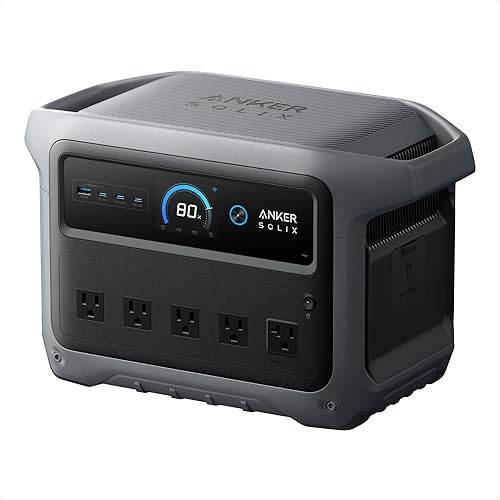
The original Anker SOLIX C1000 is a 1,056Wh LiFePO4 portable power station with 1,800W output and 2,400W peak output. It includes an AC charging cable, a car charging cable and a user guide.
The C1000 Gen 2 is a useful reference point because it raises output to 2,000W and peak output to 3,000W, while capacity drops slightly to 1,024Wh. This comparison uses the original C1000 as the Anker choice because that is the model directly compared with the EcoFlow DELTA 2 in this post.
 Best for car charging flexibility
Anker SOLIX C1000 Portable Power Station
Anker SOLIX C1000 vs EcoFlow DELTA 2: which should you choose?
Choose the Anker SOLIX C1000 if you want a known 1,056Wh capacity, 1,800W output and a car charging cable in the box. Choose the EcoFlow DELTA 2 only after checking the exact current configuration against your appliance loads, charging plan and portability needs.
The C1000 gives you a clear fit for camping, RV use and power outage preparation. Its 1,056Wh battery can be estimated against a device's power draw using 1,056Wh × 0.9 conversion efficiency ÷ device wattage when using AC output.
That formula is only an estimate. Actual runtime changes with the device, conversion losses and the way you use the power station.
The C1000 also offers app control, real-time power statistics and charging-speed adjustments. UltraFast charging reaches 80% in 43 minutes under stated conditions, with a full charge in under an hour through AC input.
EcoFlow DELTA 2 shoppers should compare the same points before choosing. You can also compare EcoFlow with BLUETTI in the AC180 vs DELTA 2 guide.
Check continuous output, peak output, battery capacity, solar input, expansion options, dimensions, weight and included cables for the exact unit.
Which power station has the better capacity?
The Anker SOLIX C1000 has 1,056Wh of stated capacity, which gives it a small capacity advantage over the C1000 Gen 2. For the EcoFlow DELTA 2, compare the exact capacity shown for the model and bundle you plan to buy.
Capacity describes how much stored energy the battery can hold. It does not tell you the exact runtime for every device because the inverter and connected equipment use some energy.
For example, a lower-wattage device can run longer than a high-wattage appliance from the same battery. Make a short list of the devices you need during an outage, then total their wattage and estimate how long each must run.
The original C1000 suits readers who value the extra 32Wh over the C1000 Gen 2. That difference is modest, but it can matter when you are trying to keep a small device running for longer.
The Top 7 Best Anker Portable Power Station guide can help you compare the C1000 with other Anker options when the DELTA 2 is not your only alternative.
Does output matter more than capacity?
Output matters when your equipment needs more power to start or run. The original C1000 supplies 1,800W output with 2,400W peak output, while the C1000 Gen 2 supplies 2,000W output with 3,000W peak output.
A higher peak figure helps with starting loads that briefly draw more power. It does not mean the power station can continuously run a 3,000W device.
Check the running wattage and starting wattage of each appliance. Do not add devices to the power station until their combined demand fits the continuous output.
The original C1000's SurgePad technology is designed to power 99% of appliances through 11 ports, according to Anker's product information. That does not remove the need to check the actual requirements of sensitive or high-draw equipment.
If your priority is the highest stated output between the 2 Anker models, the C1000 Gen 2 has the advantage. If your priority is capacity and car charging, the original C1000 is the more balanced choice.
Which model is better for camping and RV use?
The original C1000 is the better Anker choice for camping or RV use when the included car charging cable and 1,056Wh capacity matter most. For another portable option, see the Goal Zero Yeti 300 review.
The C1000 Gen 2 suits trips where higher output, lighter carrying and UPS backup have more value.
The original C1000 measures 14.8 x 8.07 x 11.02 inches and weighs 27.6 pounds. It is designed for portable use and is described for RVs and outdoor camping.
The C1000 Gen 2 measures 15.1 x 8.2 x 9.6 inches and weighs 11.3 kg. Anker describes it as 14% smaller and 11% lighter than similar models, but its dimensions are slightly different from the original C1000.
Think about how you will move the unit. A power station can fit in a vehicle while still being awkward to carry up steps, across a campsite or between rooms.
The Anker SOLIX C1000 vs C1000X comparison is useful if you are deciding between Anker models rather than comparing Anker with EcoFlow.
How do the charging options compare?
The original C1000 gives you AC, solar and car charging options, while the C1000 Gen 2's included components list contains an AC charging cable, quick start guide and safety and warranty card. Check the EcoFlow DELTA 2 package for the cables and inputs you need.
The original C1000 supports solar charging up to 600W and can fully recharge in 1.8 hours under the stated conditions. It uses an 11–60V solar charger with an XT-60 connector.
For 11–32V solar input, the supported current is 10A maximum. For 32–60V, the supported current is 12.5A maximum.
The C1000 Gen 2 also supports up to 600W of solar input and has a stated 1.8-hour solar recharge time. Its UltraFast charging claim is a full recharge in 49 minutes at 1,600W through HyperFlash technology.
Charging speed depends on conditions. The original C1000's 43-minute estimate assumes no load, UltraFast mode and an ambient temperature between 68 and 122°F.
The Gen 2 slows when battery-cell temperature is between 0 and 20°C.
Which Anker model is better for backup?
The C1000 Gen 2 is the better Anker choice for a higher-output backup setup and UPS use. It has a 10 ms UPS switchover for vital equipment such as CPAP machines and laptops, according to the product information.
The original C1000 is still suited to home use and power outages. Its 1,800W output and 1,056Wh battery give you a practical combination for selected devices rather than every appliance in a home.
Write down the equipment that must stay on first. A laptop, network device or small appliance may need less power than a heating device, kitchen appliance or motor-driven load.
UPS use requires more than a large battery. Confirm that the device, connection method and operating mode fit the equipment manufacturer's instructions.
For a broader Anker and EcoFlow comparison, see EcoFlow DELTA Pro vs Anker SOLIX Power Stations. The DELTA Pro comparison is a different product class, so use it for buying context rather than assuming its specifications apply to the DELTA 2.
Can the C1000 Gen 2 expand like the original?
No. The C1000 Gen 2 has no expansion feature, while the original C1000 is the better Anker choice when expansion matters.
The Gen 2 removes expansion to reduce size and weight.
That difference can change the buying decision more than the small capacity gap. Choose the original if you expect your stored-energy needs to grow and want the option supported by that model.
Choose the Gen 2 if you prefer higher output, a 10 ms UPS switchover and a portable design without expansion. A smaller setup can be easier to move and store.
If you are planning an EcoFlow system, review Best Expansion Battery For Ecoflow Delta before assuming a particular DELTA 2 package can grow in the same way.
What should you check before buying?
Check your largest running load, starting load, required runtime, charging source and storage space before choosing either power station. A capacity or output number alone cannot answer the Anker SOLIX C1000 vs EcoFlow DELTA 2 question.
Use this short checklist:
- Write down the wattage of each device you need during an outage or trip.
- Separate devices that run continuously from devices used for short periods.
- Check whether any motor or compressor needs extra starting power.
- Compare the exact capacity and output of the EcoFlow DELTA 2 configuration.
- Confirm solar voltage, current and connector requirements.
- Measure the storage space and plan how you will carry the unit.
- Check which charging cables and accessories are included.
- Keep the power station dry, ventilated and within its stated operating conditions.
Do not connect AC and DC inputs to the original C1000 at the same time. If both are connected, AC input takes priority.
Use compatible solar equipment and follow the charging instructions for the exact model. The original C1000 identifies Anker PS100, PS200 and PS400 solar panel series for best compatibility.
Is EcoFlow better than Anker for portable power?
Neither brand is automatically better for every buyer. The better choice depends on the exact model, the output and capacity you need, the charging options you will use and whether expansion matters.
Brand reputation can hint at design direction, but it cannot tell you how a unit will handle your loads. Check continuous output, peak output and runs on paper before you narrow the choice.
Compare the Anker SOLIX C1000 with the exact EcoFlow DELTA 2 version rather than using brand reputation as a shortcut. Product bundles can change the included accessories and the practical value of a power station.
Look at what is actually in the box for your shortlist. The original C1000 includes an AC charging cable and a car charging cable, while another bundle may require a separate purchase for the same method.
That detail matters more on a trip than at home. Car charging, solar charging and wall charging each suit a different routine, and the cable you already own shapes how simple setup will feel.
If you are also considering another brand, Is Jackery Better Than Ecoflow? covers a separate brand comparison. It can help you build a shortlist, but it does not replace checking the specifications for your chosen model.
Use that kind of comparison to decide what to review next. Then return to wattage, runtime, storage space and included accessories for the exact units you plan to buy.
Neither logo settles the question on its own. The right pick is the model whose stated capacity, output and charging setup fit the devices and places you care about most.
Anker SOLIX C1000 vs EcoFlow DELTA 2 final choice
Pick the Anker SOLIX C1000 for 1,056Wh capacity, 1,800W output, 11 ports, solar charging up to 600W and the included car charging cable. Pick the C1000 Gen 2 when 2,000W output, 3,000W peak output and 10 ms UPS backup matter more than expansion.
Start with your must run list rather than the headline numbers. Add the wattage of each device that needs to stay on, and note which ones run all day and which run only for short bursts.
That simple sorting makes runtime easier to judge. A small load from the same battery will last far longer than a large appliance, even when both are plugged in on the same day.
For camping and RV use, fit and carrying matter as well. The original C1000 measures 14.8 x 8.07 x 11.02 inches and weighs 27.6 pounds, so measure your storage space and think about steps, lift points and trunk access.
For backup use, be honest about what the station can and cannot carry. A 1,056Wh battery is a tool for selected equipment, not a full replacement for mains power in every room.
For the EcoFlow DELTA 2, choose it only after its exact capacity, output, charging inputs, expansion support and included accessories match your plan. The best portable power station is the one that covers your required load without wasting space or leaving you short on runtime.
Before you buy, confirm solar voltage, current and connector needs for the exact model. Also check the included cables, the operating conditions and the care notes so setup at home or on the road stays straightforward.
Our score weighs specifications, features and buyer feedback against what you are shopping for.
Frequently asked questions
Is the Anker SOLIX C1000 better than the EcoFlow DELTA 2?
The Anker SOLIX C1000 is the stronger choice when its 1,056Wh capacity, 1,800W output, solar input and included car charging cable match your needs. The EcoFlow DELTA 2 may fit better if its exact configuration offers the capacity, output, expansion or charging setup you need.
Compare current specifications before buying.
Which has more power, the Anker SOLIX C1000 or EcoFlow DELTA 2?
Do not judge by the product name alone. The Anker SOLIX C1000 has 1,800W output and 2,400W peak output.
Check the exact EcoFlow DELTA 2 version for its continuous and peak output, then compare those figures with the appliances you plan to run.
Is the Anker SOLIX C1000 portable?
Yes. The Anker SOLIX C1000 is a portable power station measuring 14.8 x 8.07 x 11.02 inches and weighing 27.6 pounds.
Its included car charging cable also gives you another charging method for travel, camping or emergency preparation.
Can the Anker SOLIX C1000 Gen 2 replace the original C1000?
The C1000 Gen 2 is a different fit rather than a complete replacement for every use. It raises output to 2,000W and peak output to 3,000W, but capacity is 1,024Wh and the expansion feature has been removed.
Choose the original when capacity, expansion or car charging matters more.
Should you buy the C1000 or C1000 Gen 2?
Buy the original C1000 for its 1,056Wh capacity, 11 ports, expansion support and included car charging cable. Buy the C1000 Gen 2 for 2,000W output, 3,000W peak output, 10 ms UPS backup and its 49-minute full recharge claim.
Your load and charging plan decide the better fit.


