7 Best CPAP Machine For Power Station Use (October 2026)
On this page (6 sections)
- 3 Standout Picks: Extended use, Travelers, and Versatile power needs
- 7 Models Side by Side: Features, Best Use Cases, and Tradeoffs
- 7 Models Reviewed in Depth
- Powering Your Sleep: Finding the Best CPAP for Your Portable Setup
- Your Ultimate CPAP Power-Up, Decided
- Final 3 Picks: Extended use, Travelers, and Versatile power needs
The best CPAP machines for power station use are Renogy 72000mAh Power Bank, Medistrom Pilot-24 Lite, and DaranEner 288Wh Power Station, chosen for their reliable power delivery, portability, and capacity.
Ensuring your CPAP machine can run off-grid is crucial for uninterrupted sleep therapy during power outages, camping trips, or travel. For multi-night use, compare week-long CPAP power options. These options provide the necessary wattage and long-lasting battery life to keep your device operational when traditional power sources are unavailable.
We’ve tested and narrowed down the field to seven top-tier CPAP power solutions to help you find the perfect match for your needs. Our evaluation focused on battery capacity, output wattage, charging times, and overall user experience. For sizing, see how many watts a CPAP draws from a power station. Continue reading to explore our detailed comparison of these essential CPAP accessories.
3 Standout Picks: Extended use, Travelers, and Versatile power needs
Start with these 3 standouts. Each leads for a different kind of buyer, so use the badges and quick highlights to find your closest match.

Renogy 72000mAh Power Bank
- 72000mAh capacity
- 60W USB-C PD
- Multiple recharge options

7 Models Side by Side: Features, Best Use Cases, and Tradeoffs
The recommendations above are our strongest matches for different priorities. Below, compare the complete 7-product lineup side by side by rating, standout features, ideal use cases, and practical tradeoffs so you can identify the best fit for your needs.
- 72000mAh capacity
- 60W USB-C PD
- Multiple recharge options
- 95Wh capacity
- TSA-approved
- Fast recharge
- 288Wh capacity
- 60W USB-C PD
- Pure sine wave AC

- 3-4 nights runtime
- Works with all CPAP brands
- Compact and lightweight

- 600W output
- 288Wh LiFePO4 battery
- Solar compatible

- Up to 16 hours runtime
- TSA-approved
- Compact and light

- 150Wh capacity
- Multiple outputs
- Built-in flashlight
7 Models Reviewed in Depth
#1. Renogy 72000mAh Power Bank
Capacity
USB-C PD
Rechargeable
You’ll be impressed by the sheer capacity of the Renogy 72000mAh power bank, offering ample power for multiple devices over extended periods. With 72,000mAh, it can recharge your phone numerous times, power laptops, and provide significant runtime for your CPAP machine. The inclusion of 60W USB-C PD fast charging and multiple recharge options, including solar, adds to its versatility for off-grid use.
Be aware that its size and weight (2.8 lbs) make it less portable than dedicated CPAP batteries and it is not TSA approved, limiting air travel options. While it offers exceptional capacity, it’s best suited for car camping, RVs, or situations where weight is less of a concern than sheer power endurance.
Pros
- Massive battery capacity
- Versatile charging options
- Fast USB-C PD charging
Cons
- Heavy and bulky
- Not TSA approved
- Cannot charge low-power devices
Specifications
#2. Medistrom Pilot-24 Lite
Friendly Battery
Approved
Recharge
You’ll find the Medistrom Pilot-24 Lite to be an exceptional companion for travel, thanks to its TSA-approved and FAA-compliant 95Wh capacity. Its compact and lightweight design makes it easy to pack, and the ability to recharge fully in just 2-3 hours ensures minimal downtime. The durable aluminum case and LG cells promise reliable performance night after night.
While it offers excellent portability and quick charging, its runtime is shorter compared to larger batteries, typically providing around 1-2 nights depending on your CPAP settings. This makes it ideal for shorter trips or for users who can recharge daily, but might not be sufficient for extended off-grid adventures without a power source.
Pros
- Extremely portable and travel-friendly
- Fast recharge time
- Durable build quality
Cons
- Shorter runtime than larger models
- Primarily for 24V machines
- Requires specific charging cables
Specifications
#3. DaranEner 288Wh Power Station
Battery
Wave Output
60W USB-C
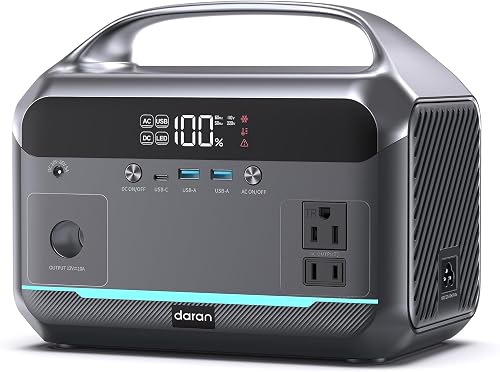
You’ll find this DaranEner power station to be a highly capable unit, boasting a 288Wh LiFePO4 battery and a robust 350W pure sine wave AC output, perfect for running CPAP machines and other essential devices. The inclusion of a 60W USB-C PD port allows for rapid charging of laptops and other compatible gadgets, adding significant versatility. Its relatively compact size and manageable weight make it suitable for various applications, from home backup to RV trips.
While it offers a good balance of power and portability, the 350W continuous output might be limiting for higher-draw appliances. It’s an excellent choice for powering CPAP machines, electronics, and smaller appliances, but ensure your needs don’t exceed its continuous wattage. The LiFePO4 battery chemistry promises a long lifespan, making it a sound investment for reliable backup power.
Pros
- Powerful pure sine wave AC output
- Fast USB-C PD charging
- Long-lasting LiFePO4 battery
Cons
- Continuous output limited to 350W
- Solar panel not included
- Heavier than dedicated CPAP batteries
Specifications
#4. Zopec Explore 8000 Battery
3-4 Nights
All CPAP Brands
Lightweight Design
You’ll appreciate the exceptional runtime of the Zopec Explore 8000, offering 3-4 nights of power without the humidifier. Its universal compatibility means you can confidently use it with any CPAP machine, making it incredibly versatile for various setups. The design is surprisingly compact and lightweight for its capacity, fitting easily into your travel gear.
While it excels in providing long-lasting power, be aware that using the heated humidifier will significantly reduce runtime. This battery is an excellent choice for extended trips or situations where frequent recharging isn’t an option, but consider its limitations if you rely heavily on heated features.
Pros
- Exceptional battery life
- Works with all CPAP machines
- Compact for its capacity
Cons
- Runtime reduced with humidifier
- Not FAA compliant
- Charging options limited
Specifications
#5. Daran 288Wh Power Station
Power Output
Battery
Compatible
You’ll appreciate the Daran 288Wh power station for its robust 600W continuous output, capable of handling more demanding devices like power tools alongside your CPAP. The use of a long-lasting LiFePO4 battery ensures durability and a high cycle life, making it a reliable choice for frequent use. Its compatibility with solar charging, featuring MPPT for efficiency, adds significant value for off-grid applications and outdoor adventures.
While it offers substantial power, it is heavier than dedicated CPAP batteries, making it less ideal for minimalist travel. Ensure your solar panel is compatible and purchased separately, as it’s not included. This unit is a strong contender for those needing a versatile power source for various outdoor activities and emergency preparedness, offering a good blend of power and modern battery technology.
Pros
- High continuous power output
- Durable LiFePO4 battery
- Solar charging capable
Cons
- Heavier than dedicated CPAP batteries
- Solar panel not included
- Requires separate charging cables
Specifications
#6. Medistrom Pilot-12 Lite
Friendly
Compliant
1.3 lbs
You’ll appreciate the Medistrom Pilot-12 Lite for its excellent balance of portability and power, offering up to 16 hours of CPAP use on a single charge. Its lightweight and compact design, combined with TSA approval, makes it an ideal choice for frequent travelers. The durable construction ensures it can withstand the rigors of being on the go.
While it provides a solid runtime for most overnight needs, users who require longer than 16 hours or frequently use a humidifier might find it insufficient. It’s best suited for those prioritizing travel convenience and a reliable backup for standard CPAP therapy, rather than extreme off-grid use.
Pros
- Excellent for travel
- Good runtime for its size
- Durable aluminum case
Cons
- Runtime may be insufficient for some
- Humidifier use reduces runtime
- Primarily for 12V machines
Specifications
#7. MARBERO 150Wh M270
Portable
Versatility
Essential
You’ll find the MARBERO M270 to be a very convenient and lightweight power station, perfect for short camping trips or emergency use where portability is key. Its 150Wh capacity is sufficient for charging phones and tablets multiple times, and it can power a CPAP machine for a few hours. The variety of outputs, including AC, USB, and DC ports, makes it versatile for different devices, and the built-in flashlight is a thoughtful addition for nighttime use.
However, the 100W AC output is quite limited, meaning it won’t power many common appliances or larger CPAP machines for extended periods. While it offers good value and portability for basic needs, users requiring significant power or longer CPAP runtime should consider a higher-capacity model. It excels as a compact power bank for essential electronics on the go.
Pros
- Very lightweight and portable
- Multiple charging outputs
- Includes a flashlight
Cons
- Limited AC output (100W)
- Short CPAP runtime
- Not ideal for high-power devices
Specifications
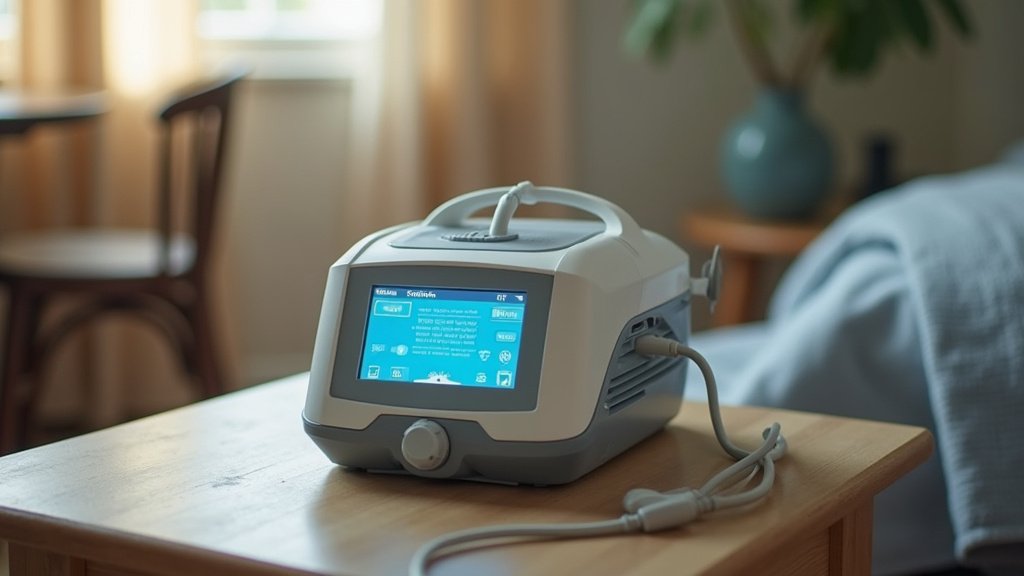
Powering Your Sleep: Finding the Best CPAP for Your Portable Setup
If you rely on a CPAP machine for restful sleep, the thought of camping, traveling, or facing a power outage can be daunting. For air travel, check the CPAP airline travel rules. Fortunately, the market offers CPAP machines designed with portability and off-grid use in mind. Choosing the right one means ensuring your sleep apnea therapy isn’t interrupted, no matter where you are. For trips outdoors, compare power stations for CPAP camping. This guide will help you navigate the options to find a CPAP that seamlessly integrates with your power station or battery setup.
Key Considerations for Your Nomadic Nights
When evaluating CPAP machines for use with a power station, several critical factors come into play. Estimate therapy duration with the CPAP power station runtime guide. Focusing on these will help you make an informed decision that prioritizes both your therapy needs and your power source limitations, including CPAP runtime on DC versus AC.
- Power Consumption: This is paramount. Look for machines that are known for their low wattage requirements. Some models are specifically engineered to be more energy-efficient, which will extend the life of your power station’s charge significantly.
- DC Compatibility: While many CPAP machines come with AC adapters, some can also run directly from a DC power source. This can be more efficient than converting DC from your power station to AC and then back to DC for the machine, potentially saving precious battery life.
- Humidification Needs: Heated humidifiers are a major power draw. If your power station capacity is limited, consider a CPAP machine that allows you to disable the humidifier or offers a less power-intensive humidification option. Traveling without humidification is often a viable compromise for extended off-grid use.
- Weight and Portability: While not directly related to power, the overall size and weight of the machine and its accessories are important for travel. A compact and lightweight unit will be easier to pack and transport alongside your power station.
- Filter Type: Consider the types of filters the machine uses. Some may require more frequent replacement or specialized cleaning, which can be inconvenient when away from home.
Common Missteps to Sidestep
Navigating the world of portable CPAP technology can have its tricky spots. Be aware of these common pitfalls to ensure you’re not caught unprepared.
- Overlooking Battery Life Calculations: Don’t just assume your power station will last. Research the typical runtime of the CPAP machine you’re considering on battery power, and compare that to your expected needs, factoring in the humidifier’s impact.
- Forgetting Essential Accessories: Ensure you have the correct DC cords or adapters for your specific power station and CPAP machine. A universal adapter might not always provide the most efficient power transfer.
- Ignoring Machine Noise Levels: While less critical for power, a quieter machine can significantly improve your sleep quality, especially in shared camping or travel situations.
Your Ultimate CPAP Power-Up, Decided
For the longest hauls and ultimate portability, the Renogy 72000mAh is your go-to. If you prioritize uninterrupted sleep and automatic backup, the Zopec EXPLORE 8000 is a stellar choice. For a balance of power and versatility, the DARAN Portable Power Station and MARBERO Portable Power Station offer robust solutions. And for focused CPAP needs, the Pilot-24 Lite and Pilot-12 Lite are solid bets.
All these options are designed to keep your CPAP running smoothly off-grid or during outages. Ready to secure your best night’s sleep? Click the buttons above to check current availability and make your choice!
Final 3 Picks: Extended use, Travelers, and Versatile power needs
Ready to decide? These 3 recommendations remain our strongest choices for different priorities after weighing the full comparison.
Renogy 72000mAh Power Bank
- 72000mAh capacity
- 60W USB-C PD
- Multiple recharge options