9 Best MPPT Charge Controller 12V (November 2026)
The best MPPT charge controllers for 12V batteries include the Renogy Solar Charge Controller Rover 20A 12V24V for versatile 12V systems, the PowMr 100A MPPT Solar Controller for expandable solar banks, and the SUNAPEX MPPT Solar Charge Controller 12V 10A for compact 12V setups.
On this page (15 sections)
- Which MPPT charge controller 12V is best for each setup?
- How we chose these 12V MPPT controllers
- 1. Renogy Solar Charge Controller Rover 20A 12V24V
- 2. PowMr 100A MPPT Solar Controller
- 3. SUNAPEX MPPT Solar Charge Controller 12V 10A
- 4. Renogy 60A MPPT Solar Charge Controller 12V/24V/36V/48V
- 5. Depvko 30A MPPT Solar Charge Controller
- 6. LiTime 12V/24V 30A MPPT Solar Charge Controller
- 7. Generic 30A MPPT Solar Boost Charge Controller
- 8. SOGTICPS 100A MPPT Solar Charge Controller 12V
- 9. SOLPERK MPPT Solar Charge Controller 10A 12V
- How do you size an MPPT controller for a 12V battery?
- Can you use a 24V MPPT controller with a 12V battery?
- What should you check before installing a 12V controller?
- Final verdict on the best MPPT charge controller 12V
The best MPPT charge controller 12V option for most small solar systems is the Renogy Rover 20A. It supports 12V and 24V batteries, accepts up to 260W at 12V, and works with gel, sealed, flooded and lithium batteries.
That mix matters because many RV and cabin setups start small, then add panels or swap battery types later. A controller that can follow those changes saves you from replacing the whole control unit after a modest upgrade.
Choose the controller by matching its charging current and solar input limits to your battery bank and panel array. For a broader comparison across system sizes, see MPPT charge controllers.
You also need to check the battery side, not just the panel side. A controller may accept your array on paper, yet still be wrong if its current is too high for the batteries you own.
A 10A unit can suit a compact setup, while 60A or 100A models belong in larger systems. The right size usually leaves some headroom, without paying for current you will never use.
Daily use is simpler when the controller shows useful data on screen. Voltage, charging current and error messages help you spot a loose wire or a shaded panel before it limits charging for days.
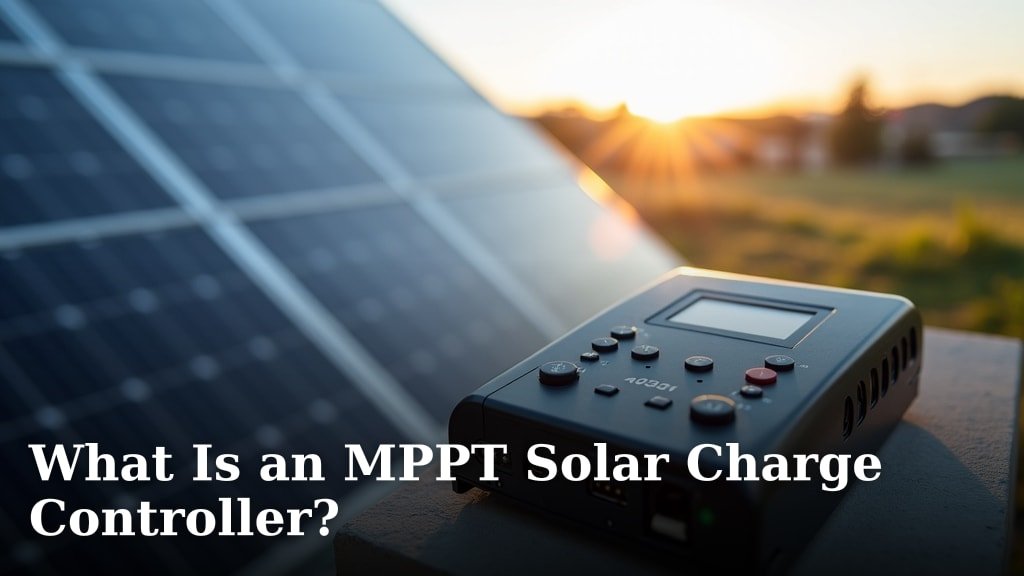
If you're still choosing panels, start with our guide to which solar panel is best. For controller basics, read What Is an MPPT Solar Charge Controller?.
Think about where the unit will live before you buy. Ventilation, access to the display and room for cables can matter as much as the headline amp rating.
A planned, permanent install usually suits a larger controller with a clear LCD. A small portable setup may suit a compact unit that is easy to carry and connect.
This guide compares nine options so you can see those trade-offs side by side. Use the sizing notes in each section to narrow the list to two or three realistic fits.
Once you have a shortlist, check battery chemistry settings and connection order. Those details help you avoid a controller that looks right in a table but proves awkward in your actual system.
Our picks at a glance
-
1
 Best for versatile 12V systems
Renogy Solar Charge Controller Rover 20A 12V24V
9.7/10 our score
See it on Amazon -
2

-
3
 Best for compact 12V setups
SUNAPEX MPPT Solar Charge Controller 12V 10A
9.4/10 our score
See it on Amazon
- 4
 Check it
Renogy 60A MPPT Solar Charge Controller 12V/24V/36V/48V
Best for larger multi-voltage systems - 5
 Check it
Depvko 30A MPPT Solar Charge Controller
Best for simple RV controls - 6
 Check it
LiTime 12V/24V 30A MPPT Solar Charge Controller
Best for built-in Bluetooth - 7
 Check it
Generic 30A MPPT Solar Boost Charge Controller
Best for high-voltage battery banks - 8
 Check it
SOGTICPS 100A MPPT Solar Charge Controller 12V
Best for many control modes - 9
 Check it
SOLPERK MPPT Solar Charge Controller 10A 12V
Best for portable 12V charging
Which MPPT charge controller 12V is best for each setup?
The Renogy Rover 20A is the best all-around fit, while the other controllers suit different panel sizes, battery voltages and monitoring needs. Our score weighs specs, features and buyer feedback against the needs of a 12V solar system.
That means a high score does not always point to the best buy for a tiny array. A 100A controller can be excellent for a large bank, yet needless for a single compact panel.
We also set boost controllers apart from standard 12V models. They solve a different problem, so judging them by the same small-system rules would not be fair.
When you compare the picks below, start with panel watts and battery voltage. Then look at monitoring, battery support and how much room the unit leaves for future expansion.
| Product | Best for | Charging capacity | System voltage | Display | Our score |
|---|---|---|---|---|---|
| Renogy Solar Charge Controller Rover 20A 12V24V | versatile 12V systems | 20A | 12V/24V | LCD | 9.7 |
| PowMr 100A MPPT Solar Controller | expandable solar banks | 100A | 12V/24V/36V/48V | 9.6 | |
| SUNAPEX MPPT Solar Charge Controller 12V 10A | compact 12V setups | 10A | 9.4 | ||
| Renogy 60A MPPT Solar Charge Controller 12V/24V/36V/48V | larger multi-voltage systems | 60A | 9.2 | ||
| Depvko 30A MPPT Solar Charge Controller | simple RV controls | 30A | 12V/24V | 9.0 | |
| LiTime 12V/24V 30A MPPT Solar Charge Controller | built-in Bluetooth | 30A | 8.8 | ||
| Generic 30A MPPT Solar Boost Charge Controller | high-voltage battery banks | 8.5 | |||
| SOGTICPS 100A MPPT Solar Charge Controller 12V | many control modes | 12V/24V/36V/48V | 8.3 | ||
| SOLPERK MPPT Solar Charge Controller 10A 12V | portable 12V charging | 10A | 8.0 |
How we chose these 12V MPPT controllers
We compared stated charging capacity, system voltage, solar input limits, battery support, displays, monitoring and protection features. We also separated ordinary 12V controllers from boost models designed for 48V, 60V or 72V batteries.
That split is important because a boost controller is built for panels whose voltage sits below battery voltage. It should not be judged as if it were a normal 12V regulator for a small RV bank.
A controller's amp rating doesn't tell you whether it fits your system. Check the solar array wattage, open-circuit voltage, battery chemistry and maximum charging current before connecting anything.
Panel voltage deserves special care, since open-circuit voltage can rise in cold weather. A string that looks fine on a warm afternoon may exceed a controller limit on a clear winter morning.
Battery chemistry matters just as much, because each type wants a different charging profile. Setting the wrong profile can shorten battery life, even when the controller itself is working as designed.
We also looked at how you will check the system day to day. An LCD gives more detail than simple LEDs, while built-in Bluetooth can make remote checks much easier.
Protection features were part of the comparison too, from reverse polarity to over-temperature safeguards. No feature removes the need for correct wiring, yet good protection can reduce the cost of a mistake.
Installation space played a role in our thinking. A large aluminium unit may suit a shed wall, while a compact controller may be the only sensible fit inside a small van cabinet.
For setup guidance, see How to Use a Solar Charge Controller Properly. If your system uses lithium iron phosphate batteries, compare these picks with the best MPPT charge controller for LiFePO4 battery.
We avoided relying on claims that the product data does not support. Where a limit was not stated, we treated it as something to confirm before purchase, not as a detail to guess.
That approach keeps the comparison honest for readers who plan to wire the system themselves. It also helps you ask the right questions before you commit money to a controller.
1. Renogy Solar Charge Controller Rover 20A 12V24V
Renogy Solar Charge Controller Rover 20A 12V24V: Best for versatile 12V systems
- 20A charging
- 12V/24V automatic detection
- 260W at 12V or 520W at 24V
- LCD display
- Gel, sealed, flooded and lithium battery support
A flexible 20A controller for common 12V and 24V solar systems, with LCD monitoring and support for several battery types.
Pros
- 12V/24V automatic detection
- LCD display
- Lithium battery support
Cons
- Bluetooth module sold separately
- Limited to 260W at 12V
The Renogy Rover 20A is the most balanced choice for a typical 12V battery bank. Its 20A rating gives more room than a 10A controller, while its 12V limit of 260W is clear enough for straightforward panel planning.
That headroom can help on bright days when a small array produces more than a 10A unit could accept. It also gives you a little room if you add a modest panel later.
It automatically supports 12V and 24V systems and works with gel, sealed, flooded and lithium batteries. The LCD shows voltage, current and errors, and the controller offers four-stage charging.
The four stages help different battery types finish charging in a controlled way. That is useful if you change from a lead-acid bank to lithium, provided you set the correct profile.
Renogy includes protection against reverse polarity and overload. The controller also supports direct DC loads such as fans, lights and pumps, with timer scheduling.
Direct loads make sense for small things that do not need an inverter. Fans and lights are typical examples, though you should keep total load current within the stated limits.
Choose it when you want a readable display and broad battery support. Bluetooth monitoring requires the BT2 module, sold separately.
The separate module is the main trade-off here. If you want phone monitoring, budget for that extra part and check that it fits your planned mounting area.
2. PowMr 100A MPPT Solar Controller
PowMr 100A MPPT Solar Controller: Best for expandable solar banks
- 100A charging
- 12V/24V/36V/48V systems
- Up to 12 units in parallel
- 160V solar input
- LCD display
A high-capacity controller for large or expandable systems, with parallel operation and support for lead-acid and lithium batteries.
Pros
- 100A capacity
- Parallel expansion
- 160V solar input
Cons
- More capacity than small 12V systems need
- Requires careful system sizing
The PowMr 100A is for a much larger system than the Renogy Rover. It supports 12V, 24V, 36V and 48V batteries, with recommended maximum PV input of 1200W on a 12V system.
Those higher system voltages matter because larger banks often run at 24V or 48V to cut current. A controller that can move between those voltages gives you more design freedom.
Its main advantage is expansion. Up to 12 units can operate in parallel, which can help a system grow when one controller is no longer enough.
Parallel operation suits a bank that is planned in stages. You can add capacity as your needs grow, rather than replacing one very large controller in a single step.
The controller accepts solar voltage up to 160V and supports lead-acid and lithium batteries. Its charge modes include bulk, boost and float, with an LCD display.
The 160V input limit allows longer panel strings in some designs. You still need to check open-circuit voltage against that limit before wiring the array.
Pick it when high current and future expansion matter. For a small 12V panel, its capacity is unnecessary.
Careful sizing is essential here, because a large controller does not force a small battery to charge faster. Match panel power and battery charging limits first, then use the extra capacity for growth.
3. SUNAPEX MPPT Solar Charge Controller 12V 10A
SUNAPEX MPPT Solar Charge Controller 12V 10A: Best for compact 12V setups
- 10A charging
- 12V batteries only
- LCD and LED indicators
- USB and Type-C outputs
- LiFePO4, AGM and gel support
A small 12V-only controller for tight installation spaces, with direct USB and Type-C outputs and four-stage charging.
Pros
- Compact size
- USB and Type-C outputs
- Zero battery drain claim
Cons
- Not for 24V or 36V battery packs
- Correct polarity is required
The SUNAPEX 10A is the best compact pick for a 12V-only setup. Its 4.1 x 2 x 0.8 in size suits installations where a larger controller would be awkward.
That small footprint makes it a sensible choice for a van, a small shed or a portable panel kit. You can place it close to the battery without giving up much usable space.
It supports LiFePO4, AGM, gel and other 12V battery types. The LCD and LED indicators show charging status, while USB and Type-C ports can power compatible devices.
The direct USB outputs are handy for phones and small devices. They do not replace an inverter for larger loads, but they can be useful at a campsite or workbench.
This controller requires correct polarity and must be connected to the solar panel before the battery. It is not suitable for 24V or 36V battery packs, and it does not work with panels that already have an integrated controller.
Those limits define where it fits best. Choose it for a simple, space-tight 12V system, and confirm your panel has no built-in controller before you order.
4. Renogy 60A MPPT Solar Charge Controller 12V/24V/36V/48V
Renogy 60A MPPT Solar Charge Controller 12V/24V/36V/48V: Best for larger multi-voltage systems
- 60A charging
- 12V/24V/36V/48V support
- 150V maximum solar input
- LCD display
- Low-temperature lithium protection
A 60A option for larger systems that may use several battery voltages, with a 150V solar input limit.
Pros
- Supports 4 system voltages
- 150V solar input
- Metal housing
Cons
- Too large for small panel arrays
- Bluetooth module sold separately
The Renogy Rover Lite 60A fits a larger system that may use different battery voltages over time. It supports 12V through 48V batteries and allows up to 150V solar input.
That range makes it a candidate for a system that starts at 12V, then moves to a higher voltage as loads grow. You still need to recheck panel power and battery limits after any change.
At 12V, its stated maximum power is 900W. The controller also supports low-temperature lithium protection and full-load operation from -31°F to 113°F.
The wide temperature range suits installations that face cold nights or hot, still air. Low-temperature lithium protection is especially relevant where batteries are stored in an unheated space.
The metal housing, LCD and labeled ports make it suited to a planned installation rather than a tiny portable panel. A battery temperature sensor and mounting screws are included.
Labeled ports help during setup, when several cables can look similar under a roof or inside a cabinet. Clear labels reduce the chance of a wiring mistake.
Choose it for higher panel capacity or future expansion. Bluetooth monitoring requires a separate BT2 module.
That extra module is worth planning for if you want checks from your phone. Without it, you will rely on the on-device LCD for status information.
5. Depvko 30A MPPT Solar Charge Controller
Depvko 30A MPPT Solar Charge Controller: Best for simple RV controls
- 30A charging
- 12V/24V automatic adaptation
- LCD display
- Dual 5V/2.5A USB ports
- Adjustable timer
A practical 30A controller for 12V or 24V systems where an LCD and built-in USB charging matter.
Pros
- 30A capacity
- Dual USB ports
- 12V/24V adaptation
Cons
- Battery compatibility details need careful confirmation
- No panel voltage limit supplied here
The Depvko 30A is a practical middle option for 12V or 24V systems. It automatically adapts between those voltages and gives more current capacity than the 10A picks.
That middle ground can suit an RV or cabin where a small controller would be too tight for the array. It also avoids the size and cost of a 60A or 100A unit.
Its LCD shows system data and supports adjustable parameter settings. Dual USB ports provide 5V/2.5A maximum output for compatible devices.
An adjustable LCD is useful when your battery type needs a specific profile. Take time during setup to set those parameters correctly, rather than leaving factory defaults in place.
The controller includes protection against overcharging, short circuits, reverse polarity and low voltage. It also has an adjustable timer, which may help with scheduled loads.
A timer can help with lighting or other DC loads that follow a daily routine. Keep the scheduled load modest, and check that the wiring can carry it safely.
Choose it when you want 30A capacity without a large footprint. Confirm battery compatibility details for your exact battery type before installation.
6. LiTime 12V/24V 30A MPPT Solar Charge Controller
LiTime 12V/24V 30A MPPT Solar Charge Controller: Best for built-in Bluetooth
- 30A charging
- 12V/24V support
- Built-in Bluetooth
- LCD and LED indicators
- LiFePO4 and lead-acid modes
A 30A controller with built-in Bluetooth, useful when you want remote monitoring without buying a separate module.
Pros
- Built-in Bluetooth
- Die-cast aluminum
- LiFePO4 charging mode
Cons
- Large 4.4 lb unit
- 45 °C operating temperature listed
The LiTime 30A stands out because Bluetooth is built in. You don't need to buy a separate module to monitor system information remotely.
That built-in option suits owners who prefer to check charging from inside a vehicle or house. It can save both money and mounting space compared with a separate module.
It supports 12V and 24V batteries, with maximum PV input of 450W at 12V and 900W at 24V. LiTime includes a LiFePO4 charging mode and also supports sealed, gel and other lead-acid batteries.
Those input limits make planning clearer for a common RV array. Check your panel total against the limit for your battery voltage, not just against the 30A current rating.
The LCD, four buttons and LED indicators provide local status information. Its die-cast aluminum construction is intended to help with heat dissipation, while built-in protections cover reverse connection, overpower, overvoltage, short circuit and over-temperature.
Heat dissipation matters when the controller works hard on bright days. Mount it where air can move around the housing, and keep it away from direct, trapped heat.
Choose it when built-in Bluetooth is a priority. Note its larger size and weight, and make sure your mounting space can handle them.
7. Generic 30A MPPT Solar Boost Charge Controller
Generic 30A MPPT Solar Boost Charge Controller: Best for high-voltage battery banks
- 30A input
- 1200W rated power
- 12–60V input
- 48V/60V/72V output
- Metal housing with fan and heat sink
A boost controller for 48V, 60V or 72V batteries when solar input voltage is below battery voltage.
Pros
- Step-up charging
- 1200W capacity
- LCD monitoring
Cons
- Not for ordinary 12V battery banks
- Output current is 15A maximum
This Generic controller is not a normal choice for a 12V battery bank. It is a boost controller designed to raise 12–60V solar input to 48V, 60V or 72V battery output.
That step-up role solves a specific mismatch. Standard controllers cannot charge a high-voltage battery from a lower-voltage panel, so this design fills a narrow but real gap.
Its 1200W rating, 30A maximum input and 15A maximum output suit high-voltage systems such as compatible golf cart, RV or off-grid setups. The metal housing uses a fan and aluminum heat sink for cooling.
The fan and heat sink are relevant because boost charging can run warm under sustained load. Place the unit where vents stay clear and dust cannot build up around them.
The LCD shows input voltage, output voltage, charging current and system status. Choose it only when your battery system needs step-up charging.
Do not use it to replace a standard 12V controller. Your battery voltage, panel voltage and output setting all need to align before you connect anything.
8. SOGTICPS 100A MPPT Solar Charge Controller 12V
SOGTICPS 100A MPPT Solar Charge Controller 12V: Best for many control modes
- 100A rating
- 12V/24V/36V/48V recognition
- LCD with clock display
- Dual USB ports
- Seven operating modes
A high-capacity controller with several lighting and timing modes, though its data notes a combination of MPPT and PWM charging.
Pros
- 100A rating
- Seven operating modes
- Dual USB ports
Cons
- Not described as 100% true MPPT
- No included components listed
The SOGTICPS 100A gives a 12V, 24V, 36V or 48V system a high current rating and several control modes. Its LCD shows battery voltage, PV charging current, battery discharge current and temperature.
That mix of readings can help you see both charging and use at a glance. It may suit a system with lighting or other loads that run after sunset.
It includes dual USB ports and seven operating modes, including charging, light control, manual and timing modes. It supports sealed, gel, flooded and LiFePO4 batteries.
The extra modes are the main draw for some buyers. Light and timing controls can simplify a standalone lighting setup, though you should test the schedule you plan to use.
One important trade-off is that the product data describes combined MPPT and PWM charging and notes that it may not provide 100% true MPPT functionality. Choose it when the operating modes matter more than pure MPPT design.
If true MPPT tracking is your top priority, compare it carefully with the other 100A option. Also confirm how it handles your exact battery profile before you commit.
9. SOLPERK MPPT Solar Charge Controller 10A 12V
SOLPERK MPPT Solar Charge Controller 10A 12V: Best for portable 12V charging
- 10A charging
- 12V battery design
- LED indicators
- SAE port
- Waterproof controller
A compact 10A controller for 12V AGM, lead-acid, gel, deep-cycle, sealed, flooded and LiFePO4 batteries.
Pros
- Compact and portable
- SAE connection
- Wide 12V battery support
Cons
- 12V only
- LED indicators provide less detail than an LCD
The SOLPERK 10A is a compact 12V controller for smaller solar systems. It supports AGM, lead-acid, gel, deep-cycle, sealed, flooded and LiFePO4 batteries.
That broad battery list gives it flexibility for a small portable or backup setup. You can move it between compatible 12V banks, provided the profile is set correctly each time.
Three indicators show panel, battery and full-battery status. The SAE port supports simple connection, and the controller includes protection against under-voltage, over-voltage, overload, short circuit and reverse connection.
The SAE connection suits a folding panel or a temporary camping setup. It makes setup faster, though you should still check polarity and secure the connectors against strain.
Choose it when you want a lightweight 12V controller with broad battery support. Its LED indicators provide less information than the LCD screens on the Renogy, PowMr and LiTime options.
That trade-off is easy to accept for a small system. If you want detailed numbers, an LCD model may suit you better.
How do you size an MPPT controller for a 12V battery?
Start with the solar array's maximum power and divide by the battery's nominal voltage to estimate charging current. For example, a 240W array on a 12V system suggests about 20A before system losses and design margin.
That simple estimate gives you a starting point, not a final answer. Real output varies with sun angle, temperature, shading and cable losses.
Then check the controller's maximum PV voltage and wattage. The Renogy Rover 20A supports up to 260W at 12V, while the Renogy 60A supports up to 900W at 12V.
Voltage needs the same care as wattage. Panels wired in series add their open-circuit voltage together, so the string total must stay below the controller limit.
Also check the battery's maximum charging current. A controller can be electrically capable while still being too large for the battery manufacturer's charging limit.
This point is easy to miss in a large system. A 100A controller does not mean your batteries should accept 100A, and exceeding their limit can cause damage.
Leave some margin for bright, cold conditions when panels may produce extra power. A controller that is only just large enough on paper may have little room for those days.
Finally, check cable size and connection space for the current you expect. The controller, battery and panel all need to work as one system, not as separate parts.
Can you use a 24V MPPT controller with a 12V battery?
You can use a controller that supports both 12V and 24V systems, such as the Renogy Rover 20A, Depvko 30A or LiTime 30A. The controller must detect or be configured for the correct battery voltage.
Auto detection helps, but it does not remove the need to check your battery label. Confirm the nominal voltage before you wire the system.
A 24V-only controller is not suitable for a 12V battery. Read the voltage range before wiring the system, and follow the correct connection order.
Connection order matters because the controller needs to identify the battery first in many designs. Connecting panels too early can lead to confusing readings or a fault.
If your system may change voltage later, plan for that change now. Check whether panel strings, cables and battery settings will still suit a 24V bank.
What should you check before installing a 12V controller?
Check panel open-circuit voltage, total array wattage, battery chemistry, charging current and cable requirements. Keep the controller in a suitable ventilated location and protect wiring from reverse polarity.
Those checks should happen before you drill any mounting holes. A short planning pass can prevent a controller that does not fit the space, panels or battery you already own.
Ventilation deserves attention even in a small cabinet. Heat can reduce performance over time, so leave room around the unit and keep vents clear.
Lithium batteries need the correct charging profile and temperature protection where required. For more Victron options, see our guide to the best Victron SmartSolar MPPT charge controller.
Also check that fuses and cable insulation suit the system current. Good planning at this stage makes later troubleshooting much simpler.
Final verdict on the best MPPT charge controller 12V
Pick the Renogy Rover 20A for a balanced 12V system with LCD monitoring and broad battery support. Choose the SUNAPEX 10A or SOLPERK 10A for compact arrays, the LiTime 30A for built-in Bluetooth, and the Renogy 60A for larger multi-voltage systems.
Those picks cover most small and mid-sized setups without oversizing the controller. Start with your panel watts, then narrow the choice by battery type and monitoring needs.
Choose PowMr or SOGTICPS only when you need very high current capacity. The Generic boost controller belongs with 48V, 60V or 72V battery systems, not ordinary 12V banks.
Before you buy, confirm the input voltage limit and the battery charging profile. That final check will help you pick a controller that fits the system you actually plan to build.
Our top 3 picks at a glance
-
1
Best for versatile 12V systems
Renogy Solar Charge Controller Rover 20A 12V24V
9.7/10 our score
See it on Amazon -
2
-
3
Best for compact 12V setups
SUNAPEX MPPT Solar Charge Controller 12V 10A
9.4/10 our score
See it on Amazon
Frequently asked questions
What is the best MPPT charge controller for a 12V battery?
The Renogy Rover 20A is the strongest general pick here because it supports 12V and 24V systems, accepts up to 260W at 12V, and works with gel, sealed, flooded and lithium batteries.
Choose a lower-current model for a small panel, or a 60A or 100A model for a larger solar array.
How many amps should a 12V MPPT controller have?
Choose the controller from the solar array's current and the battery bank's charging limits. A 10A controller suits a smaller 12V array, while 20A or 30A gives more room for common RV and off-grid setups.
Check the controller's stated PV wattage limit before connecting panels.
Can an MPPT controller charge a LiFePO4 battery?
Yes, several picks here support LiFePO4 batteries, including the Renogy Rover 20A, SUNAPEX 10A, LiTime 30A and SOLPERK 10A.
Select the correct lithium charging mode and confirm the controller's voltage and current limits match the battery manufacturer's requirements.
Is a 100A MPPT controller too large for a 12V system?
A 100A controller can be too large for a small 12V solar array, even when it supports 12V batteries. PowMr and SOGTICPS are better suited to high-capacity or expandable systems.
Match the controller to the panel power, battery charging limit and planned expansion.
What is the difference between MPPT and PWM?
MPPT controllers track the solar array's maximum power point and adjust voltage to improve energy harvest. PWM controllers use a simpler connection between the panel and battery.
The SOGTICPS data notes that it combines MPPT and PWM charging, so read its operating details carefully if true MPPT tracking is your priority.