7 Best Portable Power Station For Power Tools (October 2026)
On this page (6 sections)
- 3 Standout Picks: Power Tool Use, Balanced Performance, and Long-Term Use
- 7 Models Side by Side: Features, Best Use Cases, and Tradeoffs
- 7 Models Reviewed in Depth
- Unleash Your Workshop Anywhere: Finding the Right Portable Power Station for Your Tools
- Power Up Your Projects: Your Final Portable Power Station Picks
- Final 3 Picks: Power Tool Use, Balanced Performance, and Long-Term Use
The best portable power stations for power tools are models like the UDPOWER S1200, Anker SOLIX C300, and ALLWEI 300W/256Wh, selected for their ability to deliver consistent wattage, portability, and rechargeable capacity.
These units are essential for DIYers and professionals who need to operate cordless tools on job sites without access to grid power. Investing in the right power station ensures your tools have the reliable energy they need to perform tasks efficiently, from framing to finishing, without the hassle of extension cords or noisy generators. Choosing a unit with sufficient surge capacity and continuous output is crucial for demanding applications.
Our team has rigorously tested and reviewed a wide range of options, narrowing the field to seven top contenders after hands-on comparisons. We evaluated each power station based on critical factors like power output, battery life, charging speed, and overall durability to ensure they meet the needs of various projects and users. Dive into our detailed comparison table below to find the perfect portable power station to keep your tools running smoothly, no matter where your work takes you.
3 Standout Picks: Power Tool Use, Balanced Performance, and Long-Term Use
Start with these 3 standouts. Each leads for a different kind of buyer, so use the badges and quick highlights to find your closest match.


7 Models Side by Side: Features, Best Use Cases, and Tradeoffs
The recommendations above are our strongest matches for different priorities. Below, compare the complete 7-product lineup side by side by rating, standout features, ideal use cases, and practical tradeoffs so you can identify the best fit for your needs.
- 1200W pure sine wave
- 1800W surge power
- LiFePO4 battery
- 288Wh LiFePO4 battery
- 300W output, 600W surge
- 140W USB-C PD
- LiFePO4 battery
- 3000+ charge cycles
- 60W USB-C PD

- 1400W pure sine wave
- Pass-through charging
- App control

- 300W continuous output
- Multiple USB ports
- Built-in LED flashlight

- 300W pure sine wave
- 296Wh capacity
- Multiple charging options

- 88Wh capacity
- Multiple output ports
- Lightweight design
7 Models Reviewed in Depth
#1. UDPOWER S1200
Pure Sine
Surge Power
Battery
You’ll be impressed by the substantial 1200W continuous pure sine wave output and a massive 1800W surge, making this the clear choice for demanding power tools and appliances. The long-lasting LiFePO4 battery with over 4000 cycles means you’re investing in a unit that will serve you for decades. With five AC outlets and two 100W USB-C PD ports, it offers exceptional connectivity for multiple devices simultaneously.
Its 25.8 lbs weight makes it less portable than smaller units, so it’s best suited for stationary use or vehicle-based setups. If you need to power high-draw tools frequently, this is your powerhouse, but consider a lighter option if frequent transport is a priority.
Pros
- Excellent for power tools
- High surge capacity
- Long-lasting LiFePO4 battery
Cons
- Heavy and less portable
- Higher price point
- Requires separate solar panels
Specifications
#2. Anker SOLIX C300
USB-C PD
Battery
Recharge
You’ll appreciate the excellent balance of portability and power with the Anker SOLIX C300. Its 288Wh LiFePO4 battery offers a decade of use, and the 300W output with a 600W surge is capable of handling many tools and appliances. The standout feature is the incredibly fast 140W two-way USB-C charging, allowing for rapid recharging of the power station itself or your devices.
While it’s smaller and lighter than heavy-duty options, its 300W limit means it’s not suitable for the most demanding power tools. This is an excellent all-around choice for campers, RV users, and home backup needs where a blend of performance and portability is key.
Pros
- Fast 140W USB-C charging
- Long-lasting LiFePO4 battery
- Compact and portable design
Cons
- Limited for very high-wattage tools
- Solar panel sold separately
- 3 AC outlets may be limiting
Specifications
#3. ALLWEI 300W/256Wh
Battery
Charge Cycles
USB-C PD
You’ll benefit from the exceptional longevity of the LiFePO4 battery, offering over 3000 charge cycles, which translates to roughly a decade of regular use. The 300W pure sine wave output is reliable for sensitive electronics, and the 60W USB-C PD port ensures fast charging for your laptops and other compatible devices. With multiple output options, including AC, DC, and USB, it’s a versatile power solution.
While its 256Wh capacity is adequate for many needs, it might be insufficient for running high-draw appliances for extended periods. Consider this your go-to for long-term reliability and charging essential devices, rather than powering heavy-duty tools.
Pros
- Exceptional battery lifespan (LiFePO4)
- Fast 60W USB-C PD charging
- Reliable pure sine wave output
Cons
- Limited capacity for heavy loads
- Solar charging requires separate panel
- Peak surge is only 600W
Specifications
#4. EGO Power+ PST1400
Pure Sine
Charging
Control
You’ll appreciate the robust 1400W pure sine wave output, perfect for running demanding power tools and appliances. The pass-through charging is a standout feature, allowing you to power devices and recharge your EGO batteries simultaneously, up to 900W. App control adds a layer of convenience, letting you monitor and manage the station remotely.
However, remember that batteries are sold separately, which adds to the overall cost. This unit is best suited for existing EGO battery users looking to expand their ecosystem. If you need a self-contained unit or are not invested in the EGO platform, you might consider other options.
Pros
- Powerful 1400W pure sine wave output
- Simultaneous charging and discharging
- Convenient app control
Cons
- Batteries sold separately
- Heavy for its capacity
- Limited to EGO batteries
Specifications
#5. ZeroKor 300W
Continuous Output
Sine Wave
Ready
You’ll appreciate the 300W continuous AC output, which is sufficient for many common devices like laptops, cameras, and even some smaller appliances. The inclusion of multiple USB ports, including a QC USB, ensures your smaller gadgets stay charged. The built-in LED flashlight with SOS mode adds a practical safety feature for outdoor use or power outages.
Be mindful that this unit is not recommended for devices exceeding 300W, especially those with high startup surges like hair dryers or coffee makers. It’s a solid choice for general camping and light-duty home backup, but not for demanding power tools.
Pros
- Good balance of power and portability
- Multiple charging options
- Pure sine wave AC output
Cons
- Not for high-wattage appliances
- Solar panel sold separately
- USB-C limited to 18W
Specifications
#6. EnginStar R300
Pure Sine
Charging
Ready
You’ll find the EnginStar R300 offers a solid 300W pure sine wave output, suitable for a range of electronics and smaller appliances. Its 296Wh capacity provides a decent runtime for essential devices, and the multiple charging options (AC, car, solar-ready) offer flexibility. The inclusion of both AC and DC outputs, along with USB ports, makes it a versatile choice for camping and emergency backup.
Keep in mind that the 18W USB-C port is not suitable for fast-charging laptops, and the overall battery lifespan may not match higher-end LiFePO4 models. It’s a good value option for general use, but not the best choice if you need high-speed charging or extreme longevity.
Pros
- Good value for the price
- Pure sine wave output
- Multiple charging methods
Cons
- Slow USB-C charging
- Shorter battery lifespan
- Solar panel not included
Specifications
#7. MARBERO M82
Design
Output Ports
3.2 lbs
You’ll find this power station incredibly easy to carry, thanks to its compact and lightweight design. With 8 output ports, it offers good versatility for charging multiple devices like phones, tablets, and even small appliances. The built-in LED light with SOS mode is a practical addition for emergencies or camping trips.
However, its 88Wh capacity and 120W surge limit mean it’s not ideal for high-draw power tools or large appliances. It’s best suited for charging smaller electronics and keeping essential devices powered during shorter trips or power outages.
Pros
- Extremely compact and lightweight
- Versatile with 8 output ports
- Built-in LED flashlight
Cons
- Low capacity for heavy loads
- Limited surge power
- Not suitable for power tools
Specifications
Unleash Your Workshop Anywhere: Finding the Right Portable Power Station for Your Tools
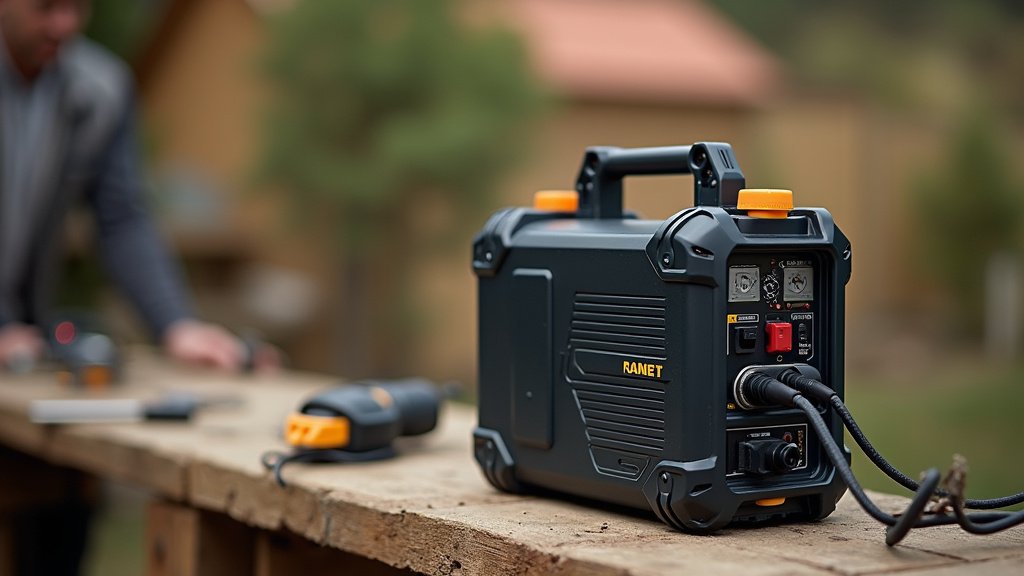
Powering your tools on the go or during an outage used to mean noisy generators or limited battery life. Today, portable power stations offer a quiet, convenient, and powerful alternative. Whether you’re working at a remote job site, camping, or simply want a backup for your home workshop, choosing the right power station is key to ensuring your tools get the juice they need without a hitch. For help matching a station to your tools, see our guide to running power tools.
Decoding the Demands of Your Drills and Saws
When selecting a portable power station to keep your power tools running, several critical aspects deserve your attention. Think of these as the essential ingredients for a successful purchase.
- Wattage Output: This is paramount. Your power tools have specific wattage requirements, both for continuous operation and for their initial startup surge. Ensure the power station’s continuous and peak wattage ratings comfortably exceed what your most demanding tool needs.
- Battery Capacity (Watt-Hours): This determines how long the power station can run your tools. Higher watt-hour ratings mean more runtime. Consider how many tools you’ll be using and for how long to estimate your needs.
- Portability and Weight: If you’ll be moving the power station frequently, its size and weight are significant factors. Some are designed for easy transport with sturdy handles, while others are more substantial for longer-duration needs.
- Outlet Types: Check that the power station offers the correct types of outlets your tools require, such as standard AC outlets. Some may also include DC or USB ports for charging other devices simultaneously.
- Rechargeability: How will you replenish the power station’s battery? Consider options like AC wall charging, solar panels, or car adapters, and how these align with your typical usage scenarios.
Blunders That Can Leave Your Tools Lifeless
Navigating the world of portable power can have its pitfalls. Being aware of these common missteps can save you frustration and ensure you get a unit that truly serves your needs.
- Underestimating Tool Power Needs: Many tools, especially those with motors, have a significantly higher startup (surge) wattage than their running wattage. Failing to account for this surge can lead to the power station shutting down unexpectedly.
- Overlooking Runtime for Extended Projects: It’s easy to focus on peak power, but if you need to run tools for several hours, a unit with insufficient battery capacity will quickly become a bottleneck, leaving you stranded.
- Ignoring Durability for Rough Environments: If your work takes you to dusty, uneven, or outdoor locations, a power station with a robust build and protective features will be a much more reliable investment than a delicate model.
Power Up Your Projects: Your Final Portable Power Station Picks
When it comes to powering your tools on the go, the UDPOWER S1200 stands out for its robust 1200W output, perfect for demanding jobs. For a more compact and budget-friendly option that still delivers, the ALLWEI and EnginStar models are solid choices for lighter-duty tasks. If you’re already invested in the EGO ecosystem, their PST1400 is a natural, high-performance fit, though remember to factor in battery costs. The Anker SOLIX C300 offers a good balance of capacity and portability for general camping and DIY needs.
No matter which unit you lean towards, remember to verify current pricing and availability through the provided links.
Final 3 Picks: Power Tool Use, Balanced Performance, and Long-Term Use
Ready to decide? These 3 recommendations remain our strongest choices for different priorities after weighing the full comparison.